

TL;DR:
- Virtual healthcare is often significantly cheaper and more convenient than traditional urgent care visits.
- Online solutions like telehealth and DPC are ideal for minor conditions, ongoing care, and quick access.
- These services have limitations and should be part of a broader care plan, not a complete replacement for in-person visits.
Many Americans walk out of an urgent care clinic having paid $150 to $300 out of pocket for a minor issue like a sore throat or sinus infection. What most people don’t realize is that a virtual visit for the same condition can cost a fraction of that, sometimes under $75, with no waiting room and no time off work. If you’re uninsured, underinsured, or just too busy to sit in a clinic for two hours, affordable online healthcare isn’t a compromise. It’s a smarter way to get the care you need, when you need it.
Table of Contents
- Understanding online healthcare solutions
- Comparing costs: Online vs. traditional care
- Limitations and risks: What most people miss
- How to choose the right affordable online healthcare option
- The uncomfortable truth about affordable online healthcare
- Get care fast and affordably with Chameleon
- Frequently asked questions
Key Takeaways
| Point | Details |
|---|---|
| Online healthcare saves money | Telehealth services can cost a fraction of traditional urgent care or ER visits. |
| Know the limitations | Not all conditions are treatable online, and emergencies require in-person care. |
| Choose the right fit | Match your needs, symptoms, and insurance status with the best online options available. |
| Avoid common pitfalls | Be aware of coverage gaps and technology barriers before booking virtual visits. |
| Layer your approach | Combine affordable online care with periodic in-person checkups for the best outcomes. |
Understanding online healthcare solutions
With the context established, let’s look at the types of online healthcare solutions and who they’re best suited for.
Telehealth and virtual visits are the most common entry points. A virtual visit means connecting with a licensed provider over video, phone, or secure messaging to get a diagnosis, prescription, or treatment plan. These visits work well for common, non-emergency conditions like infections, rashes, allergies, and mental health check-ins. You can learn more about virtual healthcare basics to understand what to expect before your first appointment.
Direct primary care, or DPC, is a different model. Instead of paying per visit, you pay a flat monthly membership fee, typically $50 to $150, and get unlimited or near-unlimited access to a primary care provider. DPC is especially helpful if you have ongoing health needs or want a consistent relationship with one provider. It’s not insurance, but it fills a real gap for people who want predictable costs.
Here’s a quick look at the main types of affordable online care available today:
- Telehealth platforms: On-demand video or phone visits for acute and minor conditions
- Direct primary care (DPC): Membership-based access to a primary care provider
- Online urgent care: Same-day virtual visits for non-emergency issues like UTIs, ear infections, or rashes
- Mental health apps: Subscription-based therapy and psychiatric care
- Prescription services: Online diagnosis and prescription delivery for chronic or recurring conditions
Who benefits most from these options? If you’re uninsured, virtual care and DPC let you access licensed providers without the shock of a surprise bill. If you’re busy, same-day urgent care online options mean you skip the waiting room entirely. If you have a chronic condition like high blood pressure or diabetes, DPC offers consistent monitoring at a predictable cost.
Research shows that telehealth expands access and offers real convenience and cost savings, though it also carries some risks like overutilization and disparities for users with limited tech access. Understanding these trade-offs helps you use online care wisely rather than just cheaply.
Comparing costs: Online vs. traditional care
After understanding the solution types, it’s critical to know how online options stack up against traditional care on price.
The numbers tell a clear story. A standard telehealth visit for a minor condition typically runs between $40 and $90 without insurance. Compare that to an urgent care visit at $100 to $250, or an emergency room visit that can easily exceed $1,000 for something as simple as a sprained ankle. The savings are real, and they add up fast if you’re managing your health without coverage.

| Care type | Typical cost (no insurance) | Average wait time |
|---|---|---|
| Telehealth visit | $40 to $90 | Under 15 minutes |
| Urgent care clinic | $100 to $250 | 30 to 90 minutes |
| Emergency room | $500 to $2,000+ | 2 to 6 hours |
| DPC membership | $50 to $150/month | Same or next day |
For minor ailments, the math is straightforward. A UTI, sinus infection, or mild skin rash treated online costs a fraction of what you’d pay in person. For chronic condition monitoring, a DPC membership often pays for itself within one or two visits.
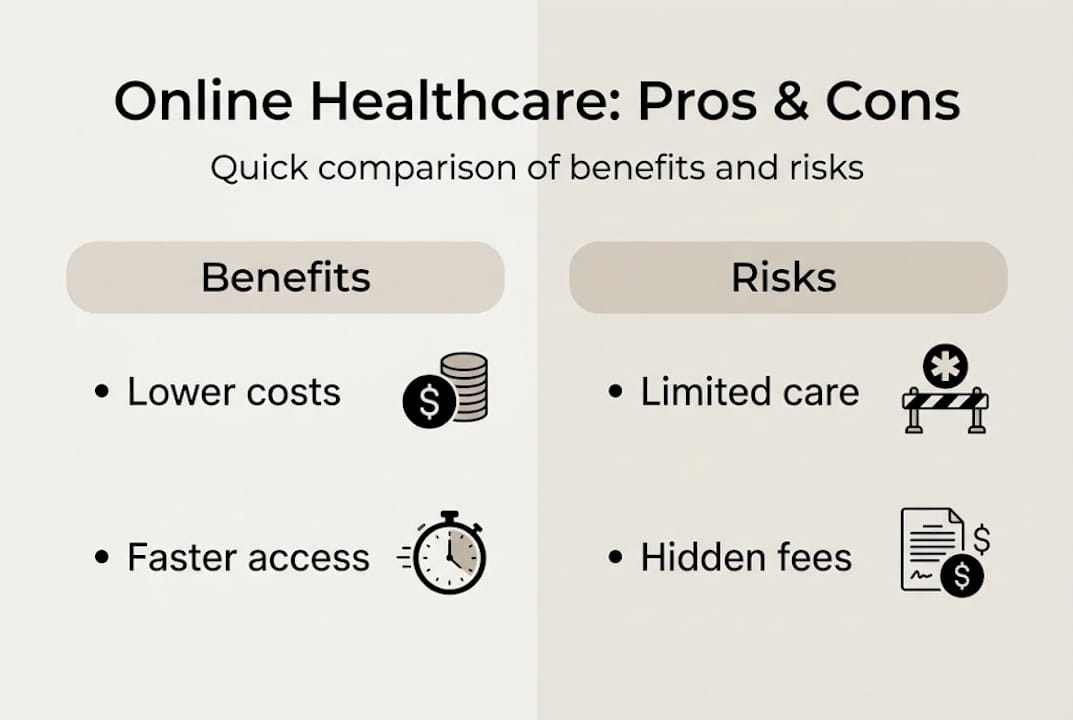
Research confirms that telehealth cost savings are significant compared to traditional care, though hidden costs like platform fees or required follow-ups can narrow that gap. This is why it pays to ask about all fees before you book.
Pro Tip: Before your virtual visit, ask the provider directly whether the quoted fee covers the full consultation, any prescriptions sent to your pharmacy, and follow-up messages. Some platforms charge separately for each.
For those with insurance, many plans now cover telehealth at low or zero copay, especially after 2020. But even without coverage, telemedicine benefits go beyond just cost. You save time, avoid exposure to other sick patients, and often get faster answers. The virtual healthcare pros and cons are worth reviewing so you go in with realistic expectations. And if you want a real-world breakdown of virtual doctor visit savings, the numbers are often more compelling than people expect.
Limitations and risks: What most people miss
Now, let’s dig into what often goes wrong with affordable online healthcare so you can sidestep common errors.
Online care is not a replacement for everything. There are real limits to what a provider can diagnose and treat through a screen. Chest pain, difficulty breathing, severe injuries, and rapidly worsening symptoms all require in-person or emergency care. No reputable telehealth platform will try to manage those situations remotely.
Beyond emergencies, there are subtler gaps. A provider who can’t physically examine you may miss signs that would be obvious in person. Duplicate visits, where you see an online provider and then a specialist who repeats the same tests, can actually increase your total costs. Missing or fragmented medical records are another issue, especially if your online provider doesn’t share notes with your regular doctor.
Research notes that DPC and telehealth are praised for improving access and prevention, but both models have coverage gaps and may worsen disparities for people with limited technology access or complex health needs.
“Telehealth and direct primary care offer real value, but they work best as part of a broader care strategy, not as a standalone solution for every health need.”
Here are the most common pitfalls and how to avoid them:
- Treating emergencies online: If symptoms are severe or worsening fast, go to the ER. Don’t wait for a virtual appointment.
- Skipping follow-up care: Online visits are often a starting point. Follow through with in-person care when your provider recommends it.
- Assuming all conditions qualify: Some telemedicine alternatives exist precisely because certain conditions need hands-on evaluation.
- Ignoring technology barriers: Poor internet, no webcam, or limited digital literacy can make virtual visits frustrating or ineffective. Review technology access issues if this applies to you.
- Forgetting about records: Ask your online provider to send a visit summary to your primary care doctor or keep a copy for yourself.
Pro Tip: If you’re managing a condition that requires lab work or imaging, confirm upfront whether the online provider can order those tests and where you’d go to complete them. This avoids surprises later.
For those navigating doctor care without insurance, knowing these limitations helps you build a care plan that’s both affordable and safe.
How to choose the right affordable online healthcare option
Armed with the pros, cons, and risks, here’s how to make a smart choice for your circumstances.
Not every online solution fits every situation. The key is matching the right tool to your actual need. Research confirms that telehealth and DPC options are not one-size-fits-all, and understanding their strengths and gaps is what separates a good experience from a frustrating one.
Follow these steps to find the right fit:
- Define your need. Is this urgent (symptoms today) or routine (ongoing condition, prescription refill)? Urgent needs point to telehealth or online urgent care. Routine needs may fit DPC better.
- Check your coverage. If you have insurance, confirm what telehealth services are covered and at what cost. If you’re uninsured, look for direct-pay platforms with transparent pricing.
- Compare your options. Look at two or three platforms side by side. Check fees, provider credentials, available conditions, and response times.
- Verify tech requirements. Make sure you have a reliable internet connection and a device with a camera if video is required. Some platforms offer phone-only visits.
- Review all fees. Confirm the total cost before booking, including consultation fees, prescription fees, and any follow-up charges.
Here’s a simple decision matrix to guide you:
| Situation | Best option |
|---|---|
| Minor illness, no insurance | Telehealth direct-pay platform |
| Ongoing condition, want consistency | Direct primary care membership |
| Urgent but non-emergency symptom | Online urgent care or telehealth |
| Mental health support | Subscription therapy app |
| Prescription refill, stable condition | Online prescription service |
If you’re unsure whether your symptoms qualify for virtual care, a good resource is telehealth without insurance, which walks through common scenarios and what to expect. Vetting your provider matters too. Look for licensed practitioners, clear pricing pages, and real patient reviews before you commit.
The uncomfortable truth about affordable online healthcare
Having reviewed practical steps, let’s talk about what most guides skip entirely.
Cheap and good are not the same thing in healthcare. The lowest-cost option might get you a prescription fast, but it won’t catch the underlying issue that keeps bringing you back. We’ve seen this pattern repeatedly: someone uses a $40 telehealth visit five times in a year for recurring infections, never addressing the root cause, and ends up spending more than a single DPC membership would have cost.
The most effective approach isn’t choosing between online and in-person care. It’s layering them. Use virtual care for speed and convenience. Use in-person care for anything that needs a physical exam, lab work, or a deeper look. A good telehealth provider will tell you when you need to be seen in person, and that honesty is worth paying a little more for.
Research shows that DPC models build stronger provider-patient relationships and support prevention, but they still have coverage gaps for complex or specialist needs. The same is true for telehealth. Neither is a complete solution on its own.
Most guides focus on cost per visit. We’d encourage you to think about cost per outcome. Getting the right diagnosis the first time, even if it costs a bit more, almost always saves money in the long run. For practical guidance on building that kind of relationship with a provider, doctor access tips are a good starting point.
Get care fast and affordably with Chameleon
Ready to take the next step? Here’s how to connect with affordable care right now.
At Chameleon Healthcare, we built our platform around one idea: you shouldn’t have to choose between fast care and affordable care. Whether you’re dealing with a sore throat, a rash, a sinus infection, or something that’s been bothering you for weeks, our licensed providers are ready to help, same day, from your phone or computer.
We offer transparent pricing with no surprise bills, no insurance required, and no waiting rooms. You can explore online treatment for common symptoms to see what we treat, or check out our affordable virtual care for individuals page for membership and visit options. If you or someone in your family manages a condition like asthma care online, we have you covered there too. Getting started takes minutes.
Frequently asked questions
Can I use online healthcare if I have no insurance?
Yes, many telehealth and DPC services offer direct-pay options so you can access licensed care without insurance. Telehealth expands access specifically for uninsured users who need affordable, flexible options.
What does online healthcare usually not cover?
Online healthcare does not cover emergencies, complex procedures, or conditions that require physical examination or imaging. Telehealth and DPC both have real coverage gaps that are important to understand before you rely on them.
Is online healthcare really cheaper than urgent care or ER visits?
Yes, online visits often cost several times less than in-person urgent care or ER visits, especially for minor ailments. Telehealth cost savings are well-documented compared to traditional care settings.
Are there affordable online healthcare options for urgent symptoms?
Yes, telehealth platforms provide rapid, low-cost access for urgent but non-life-threatening symptoms like infections, rashes, and minor injuries. Telehealth expands access for exactly these kinds of same-day situations.
How do I know if an online healthcare provider is reputable?
Look for licensed practitioners, clear and upfront pricing, a published privacy policy, and verified patient reviews before choosing any online provider. A reputable platform will always be transparent about who is treating you and what it costs.