

For many families, getting medical care has always meant scheduling an appointment days in advance, arranging transportation, sitting in a waiting room, and hoping the visit is worth the hassle. That picture is changing fast. Virtual visits are making routine family healthcare more accessible, more affordable, and far less stressful, especially for families without insurance. Whether you’re managing a child’s recurring ear infections, following up on a chronic condition, or just need a quick check-in for a sore throat, connecting with a licensed provider from your phone or computer is now a real and practical option.
Table of Contents
- How virtual visits work for families
- Comparing virtual visits to traditional appointments
- Pros and cons: Virtual visits for routine family health
- Cost comparison: Virtual vs traditional family healthcare
- Best practices for families using virtual visits
- Innovative models: Integrating virtual and in-person family care
- Affordable virtual family health solutions with Chameleon
- Frequently asked questions
Key Takeaways
| Point | Details |
|---|---|
| Virtual visits are accessible | Families can book routine care virtually without needing insurance or long wait times. |
| Hybrid models offer optimal results | Combining virtual and in-person appointments maximizes convenience and health outcomes. |
| Cost savings are substantial | Virtual visits save money compared to traditional appointments, with family memberships offering extra value. |
| Tech and privacy require preparation | Set up your tech and review privacy policies to get the safest, most effective care. |
| Virtual care suits most routine needs | Virtual visits work well for routine health issues and chronic management, though certain cases need in-person care. |
How virtual visits work for families
Now that we’ve defined virtual visits, let’s break down exactly how they work for families today. A virtual visit is any medical consultation that happens outside of a traditional office setting using technology. That can mean a live video call with a provider, a secure chat exchange, or even remote monitoring tools that track health data from home.
For families, this opens up a wide range of care options. Telehealth mechanics include synchronous video and chat consultations, remote monitoring, and hybrid models that support family medicine, home visits, NICU engagement, and pediatric programs. You can access online care for everyday health issues like rashes, fevers, sinus infections, and more without leaving your home.
Here’s what a typical virtual visit can cover for your family:
- Routine wellness checks for adults and older children
- Chronic condition follow-ups such as asthma, diabetes, or high blood pressure
- Pediatric consultations for common illnesses like colds, ear infections, and pink eye
- NICU family support through remote engagement with care teams
- Hybrid care coordination that blends virtual check-ins with in-person visits when needed
Remote patient monitoring in pediatrics is also expanding, giving families more ways to stay connected to care between appointments. And with same day doctor visits online now widely available, you don’t have to wait days to get answers.
Comparing virtual visits to traditional appointments
Understanding the basic mechanics of virtual visits sets the stage for comparing them to traditional appointments. The differences are real, but so are the similarities in outcomes.

Research shows that hybrid vs in-person care reveals hybrid visits maintain visit frequency, while in-person visits tend to yield more hours, higher completion rates, and more screenings. However, virtual visits match in-person care for outcomes like BMI management in pediatric obesity programs, and hybrid models help reduce disparities in NICU access for families on public insurance.
| Feature | Virtual visit | In-person visit | Hybrid model |
|---|---|---|---|
| Convenience | Very high | Low to moderate | High |
| Physical exam capability | Limited | Full | Moderate |
| Cost | $40 to $90 | $100 to $200+ | Varies |
| Wait time | Minimal | Often 30 to 60 min | Varies |
| Chronic care outcomes | Comparable | Strong | Strong |
| Insurance required | No | Often yes | Sometimes |
For families navigating neonatal care disparities, hybrid models have shown particular promise in leveling access. As one care researcher put it:
“Hybrid care delivers both the depth of in-person interaction and the convenience of virtual access, making it a practical solution for modern family health needs.”
Exploring the top benefits of affordable telemedicine can help you decide which model fits your family best. And if you’re uninsured, telehealth care without insurance is more available than most families realize.
Pros and cons: Virtual visits for routine family health
Having contrasted virtual and in-person methods, let’s break down the specific pros and cons for everyday family health needs.
Benefits of virtual visits:
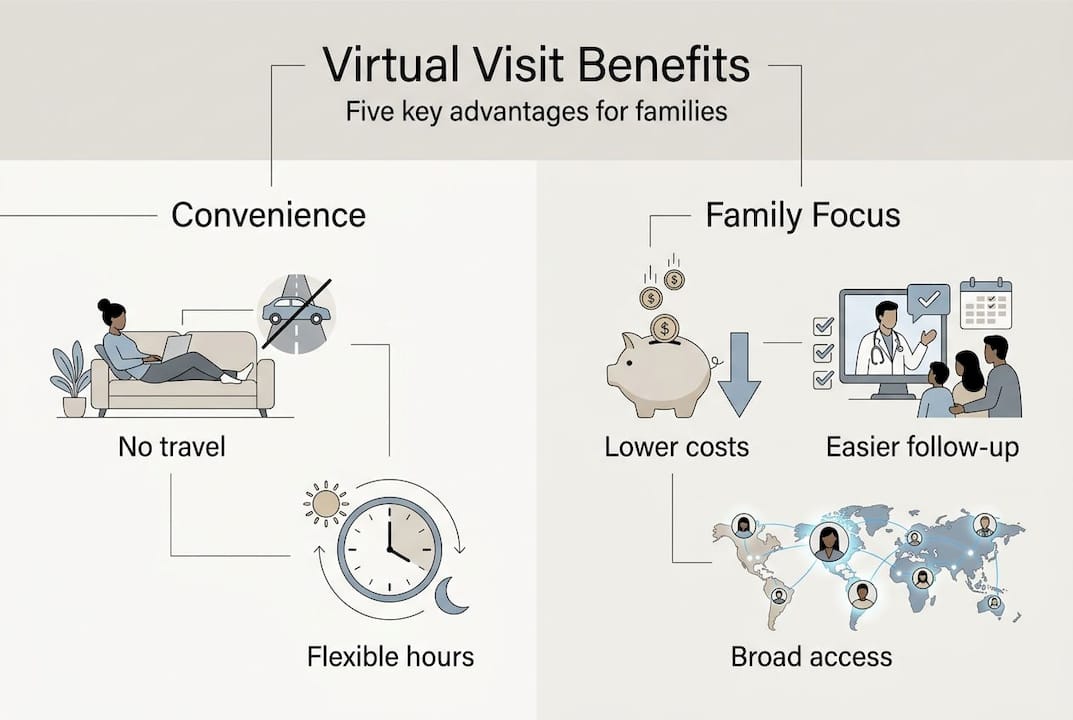
- No transportation needed, which saves time and money
- Flexible scheduling, including evenings and weekends
- Lower cost per visit, especially without insurance
- Reduced exposure to other sick patients in waiting rooms
- Easier access for families in rural or underserved areas
- Quick turnaround for prescriptions and referrals
Drawbacks to keep in mind:
- Physical exams are limited, which matters for certain conditions
- Tech barriers can be a challenge for families with limited digital access
- Privacy concerns exist if sessions happen in shared spaces
- Telehealth limitations for children are real, particularly for infants and toddlers who need hands-on assessment
- Complex psychiatric cases, including eating disorders and borderline personality disorder, may not be well served virtually
- Families with low digital literacy may face extra hurdles
For a sick child with the flu, a virtual visit can be a great first step. But for a newborn with a high fever or a toddler who needs a physical assessment, in-person care is the safer call. Virtual mental health care also requires careful consideration for complex cases. You can even get online cold sore treatment without a traditional office visit for straightforward concerns.
Pro Tip: Always tailor your use of virtual care to your family’s specific needs. If something feels off after a virtual visit, don’t hesitate to request an in-person follow-up. Your instincts as a parent matter.
Cost comparison: Virtual vs traditional family healthcare
With pros and cons in mind, families are especially interested in the cost breakdown. Here’s what you should know.
The Milliman Medical Index 2025 puts the average annual healthcare cost for a US family of four at approximately $35,000. That number is staggering for families without employer-sponsored insurance. Virtual visits offer a meaningful way to reduce that burden.
| Visit type | Average cost (no insurance) |
|---|---|
| Virtual urgent care | $40 to $90 |
| In-person urgent care | $100 to $200+ |
| Emergency room visit | $1,000 to $3,000+ |
| Family membership (monthly) | $30 to $80 |
Stat to know: A family using virtual visits for routine care could save hundreds to thousands of dollars annually compared to traditional in-person visits.
Here’s how to access virtual care without insurance:
- Search for telehealth platforms that offer transparent, flat-rate pricing
- Compare membership plans that bundle visits for a monthly fee
- Check for same-day availability so you’re not waiting days for care
- Confirm what conditions are covered before your first visit
- Ask about prescription services included with your visit
The benefits of affordable telemedicine go beyond just cost. And if you’re navigating care without coverage, telehealth without insurance is a practical starting point.
Best practices for families using virtual visits
Knowing the cost and value, families can ensure they’re set up for success by following these best practices.
A smooth virtual visit starts with a little preparation. Telehealth infrastructure and training research confirms that user-friendly technology and proper setup are essential to overcoming the digital divide and getting the most from your session.
Follow these steps before your family’s next virtual visit:
- Test your device and internet connection at least 15 minutes before the appointment
- Find a quiet, well-lit space where you can speak privately
- Write down symptoms and questions ahead of time so you don’t forget anything
- Have your family’s health history handy, including current medications and allergies
- Download the required app or platform in advance to avoid last-minute delays
- Keep a notepad nearby to jot down provider instructions or follow-up steps
For busy parents managing schedules, these small steps make a big difference in the quality of your visit. A prepared patient gets more out of every session.
Pro Tip: Before entering any virtual session, review the provider’s privacy and data policy. Make sure you understand how your health information is stored and who can access it. This is especially important when children’s records are involved.
Innovative models: Integrating virtual and in-person family care
To wrap up, modern family healthcare is increasingly combining virtual and in-person care in innovative ways.
Virtual visits in family health work best when they’re part of a broader care strategy rather than a standalone solution. Hybrid models give families the flexibility to handle routine concerns virtually while reserving in-person visits for situations that truly require them.
Here’s where hybrid and innovative care models are making the biggest impact:
- Pediatric obesity programs where virtual visits match in-person care for BMI outcomes, giving families more scheduling flexibility
- NICU family engagement where remote access helps parents stay connected to their newborn’s care team even when they can’t be physically present
- Chronic disease management for kids with asthma, diabetes, or other ongoing conditions, supported by remote monitoring for pediatric chronic conditions
- Routine follow-ups that reduce unnecessary office visits while maintaining continuity of care
- Mental health check-ins for older children and teens who may feel more comfortable opening up from home
For families managing ongoing conditions, online asthma visits are a great example of how virtual care fits into a long-term health plan. Continuous tech support and user training remain essential to making these models work for every family, not just those who are already tech-savvy. Exploring affordable telehealth for families can help you find the right fit.
Affordable virtual family health solutions with Chameleon
With these strategies in hand, your family can take action and explore trusted providers like Chameleon for a seamless virtual healthcare experience.
At Chameleon Healthcare, we built our platform specifically for families who want fast, affordable care without the friction of traditional healthcare. Whether you’re dealing with a fever, a nagging cough, a skin rash, or a chronic condition that needs regular attention, we’re here to help.
Our virtual care plans include both pay-per-visit and membership options, so you can choose what works best for your family’s budget and health needs. No insurance required. No waiting rooms. Just clear pricing and same-day access to licensed providers who genuinely care. Browse our full list of online treatment for common conditions and see how easy it is to get your family the care they deserve, right from home.
Frequently asked questions
Are virtual visits safe for children and babies?
Virtual visits are generally safe and effective for older children with common illnesses, but infants and toddlers who need a physical exam should be seen in person to ensure accurate assessment.
How much does a virtual visit cost compared to an in-person appointment?
Virtual visits typically cost between $40 and $90, while in-person visits often run $100 to $200 or more, according to 2025 cost benchmarks for routine care without insurance.
Do I need insurance for virtual family healthcare?
No. Many virtual health providers offer flat-rate or subscription-based pricing, and low-cost virtual care is specifically designed to be accessible for families without insurance coverage.
How do virtual visits handle privacy and security concerns?
Reputable providers use secure, compliant technology to protect your health data, but you should always review the platform’s privacy policy before booking, especially when children’s information is involved.
Can virtual visits manage chronic family health issues?
Yes. Research shows that hybrid care models effectively manage chronic conditions, with virtual visits matching in-person outcomes for programs like pediatric obesity management and routine chronic disease follow-ups.