

TL;DR:
- Uninsured individuals have multiple affordable care options including urgent care, retail clinics, telemedicine, and community health centers.
- For minor issues, telemedicine and retail clinics are the fastest and cheapest choices; urgent care provides more comprehensive treatment.
- Always seek emergency care at a hospital ER for serious or life-threatening symptoms to avoid delays and higher costs.
Getting sick or injured without health insurance can feel overwhelming. The worry about cost often hits just as hard as the symptoms themselves. But here’s the thing: you have more options than you might think. Urgent care utilization grew 35% from 2018 to 2022, showing just how many people are navigating care on their own terms. This guide walks you through what to consider before choosing a care setting, the most accessible options available, a clear cost comparison, and a simple decision framework to help you act fast and spend wisely.
Table of Contents
- What to consider before urgent care without insurance
- Top options for urgent care without insurance
- Urgent care, retail, telemedicine, and ER: Cost and service comparison
- How to choose the right option for your situation
- A new approach: Why mixing options is the smartest move
- Explore affordable urgent care: Your next step
- Frequently asked questions
Key Takeaways
| Point | Details |
|---|---|
| Check care options | Urgent care, retail clinics, telemedicine, and ERs have different costs and services for the uninsured. |
| Compare up front | Always check pricing and ask about self-pay discounts before choosing a provider. |
| Mix for best results | Combining telemedicine, urgent care, and free resources can lower your healthcare costs. |
| Know emergency signs | Use the ER only for true emergencies like chest pain or severe injuries. |
What to consider before urgent care without insurance
Before you walk into any clinic or open a telehealth app, it helps to know what you’re evaluating. Not every care setting is built the same, and the differences can mean hundreds of dollars saved or wasted. Taking a few minutes to think through these criteria can make a real difference.
Here are the key factors to weigh before choosing where to go:
- Cost and self-pay rates: Some centers post their prices online, while others don’t. Prices for the same service can vary significantly from one location to another, even within the same city.
- Services offered: Not every condition can be handled in every setting. A retail clinic may treat a sore throat but won’t set a broken bone.
- Payment options: Ask whether the center offers self-pay discounts, payment plans, or sliding scale fees based on income.
- Wait times: Urgent care centers and ERs can have long waits. Telemedicine and retail clinics often get you seen faster.
- Location and hours: Convenience matters when you’re not feeling well. Look for extended hours and locations close to home.
Self-pay rates can vary significantly depending on where you go. Some centers advertise transparent pricing, while others require you to ask directly. Walk-in clinics and retail health clinics, like those found inside pharmacies or big-box stores, often charge less than traditional urgent care centers for basic visits. Knowing the difference between a minor illness visit and a more involved exam can help you match your need to the right setting.
For more guidance on low-cost urgent care tips and how to navigate affordable healthcare options without coverage, it helps to go in prepared.
Pro Tip: Call ahead before your visit and ask specifically about self-pay discounts. Many centers offer reduced rates for patients paying out of pocket, but they don’t always advertise it.
Once you know what to look for, let’s detail your main options for affordable care when you’re uninsured.
Top options for urgent care without insurance
The good news is that the landscape for uninsured care has expanded considerably. You’re no longer limited to the ER or nothing. Here’s a breakdown of the most accessible options available to you right now.
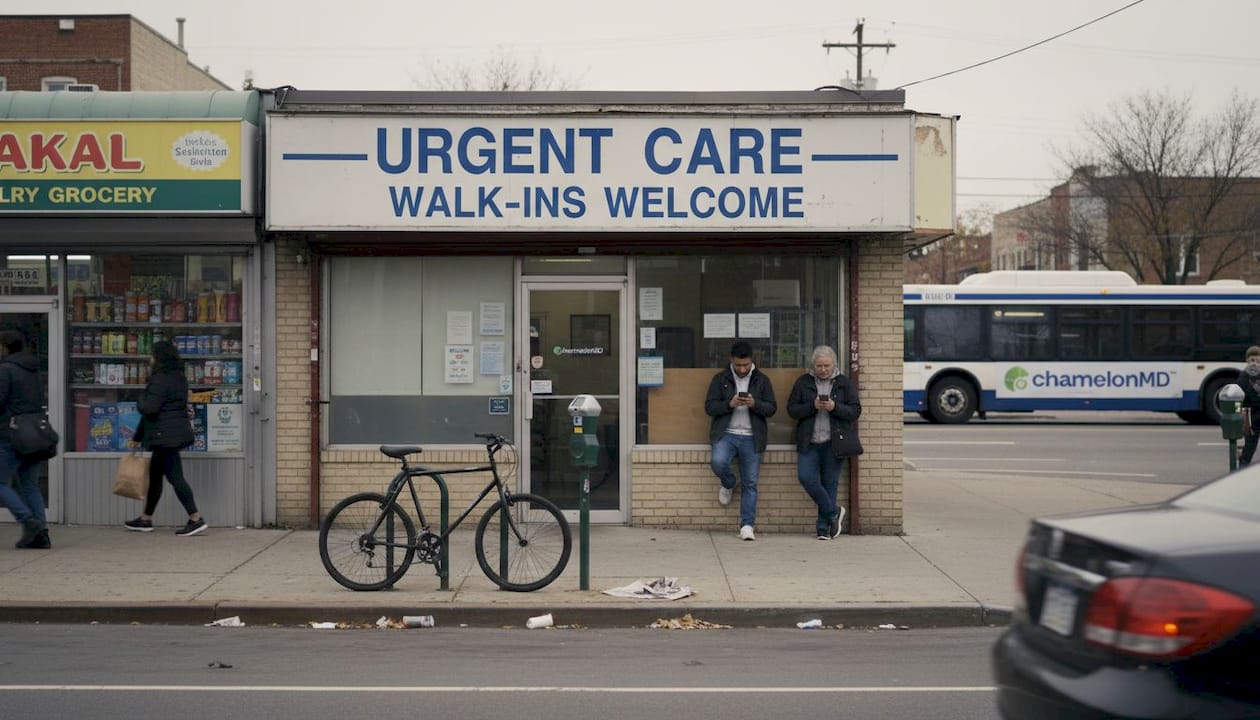
- Urgent care centers: Walk-in clinics that handle a wide range of non-emergency issues, from infections to minor injuries. Average visit cost typically falls between $100 and $200 for self-pay patients.
- Retail clinics: Found inside pharmacies like CVS or Walgreens, and big-box stores like Target or Walmart. These clinics treat minor illnesses and injuries at some of the lowest prices available, though their service range is limited.
- Community health centers and free clinics: Federally qualified health centers (FQHCs) offer sliding scale fees based on your income, meaning some patients pay very little or nothing at all. Wait times can be longer, but the savings are real.
- Telemedicine platforms: Connect with a licensed provider online from your phone or computer. These platforms work well for common conditions like sinus infections, rashes, and sore throats. Fees are often low, and you skip the waiting room entirely. The telemedicine benefits for uninsured patients are hard to ignore.
- Hospital emergency rooms: The most expensive option by far. Reserve the ER for serious or life-threatening situations. For uninsured patients, an ER visit can result in bills that are several times higher than any other setting.
Over 11,000 urgent care centers handle nearly 89 million visits every year, making them one of the most widely used entry points into the healthcare system. That volume reflects just how many people are seeking accessible, same-day care outside of the traditional doctor’s office model.
Pro Tip: Before committing to an urgent care center, check their website or call to confirm they accept self-pay patients and ask whether the quoted visit fee includes lab work or just the exam.
Before you visit, reviewing an urgent care checklist can help you prepare and avoid surprise costs. With your options in mind, let’s break down exactly how the costs and features compare.
Urgent care, retail, telemedicine, and ER: Cost and service comparison
Seeing your options side by side makes it easier to decide quickly. The table below summarizes the most important factors for uninsured patients choosing between care settings.
| Care setting | Typical self-pay cost | Average wait time | Hours | Best for |
|---|---|---|---|---|
| Urgent care center | $100 to $200+ | 20 to 60 minutes | Extended, often 7 days | Infections, minor injuries, X-rays |
| Retail clinic | $50 to $100 | 10 to 30 minutes | Store hours | Colds, flu, vaccinations |
| Telemedicine | $20 to $75 | Minutes | 24/7 in many cases | Common illnesses, prescriptions |
| Community health center | Sliding scale, often under $50 | Variable, can be longer | Business hours | Ongoing and primary care |
| Hospital ER | $500 to $3,000+ | 1 to 4+ hours | 24/7 | True emergencies only |
The pattern here is clear. For minor issues, retail clinics and telemedicine offer the lowest costs and fastest access. Urgent care centers provide more advanced onsite treatments, including imaging and IV fluids, but at a higher price point. Hospital ERs should genuinely be your last resort for non-emergencies, not because of care quality, but because the cost for uninsured patients can be staggering.
Direct-pay models are central to how millions of Americans access care without coverage, and the growth of transparent pricing in telehealth has made comparison shopping more realistic than ever before.
Key takeaways from this comparison:
- Telemedicine and retail clinics are your go-to options for budget-friendly, minor care.
- Urgent care centers fill the gap when you need hands-on treatment or diagnostics.
- Community health centers are underused and worth exploring if cost is your primary concern.
For a deeper look at telemedicine advantages and a full urgent care cost guide, both resources can help you plan ahead. Understanding the differences can make picking the right option much simpler, but how do you choose when every situation is unique?
How to choose the right option for your situation
Having options is great. Knowing which one fits your specific situation is even better. Here’s a simple step-by-step approach to matching your symptoms and budget to the right care setting.
- Assess the severity first. Is this a true emergency? If yes, go to the ER immediately. If no, continue to the next step.
- Identify your symptoms. Is it a common illness like a cold, UTI, or rash? Telemedicine or a retail clinic is likely your best and most affordable first move.
- Consider what treatment you might need. If you suspect you need an X-ray, stitches, or an IV, an urgent care center is more appropriate than a retail clinic or telehealth visit.
- Check your budget. If cost is your biggest concern, start with telemedicine or look up a local community health center before defaulting to urgent care.
- Look up posted prices. Many telehealth platforms and retail clinics list exact prices online. Use that information before you commit.
“If you experience chest pain, severe bleeding, or trouble breathing, always go to the ER.”
Those red flags are non-negotiable. No cost concern is worth delaying care for a potential heart attack, stroke, or severe allergic reaction. For everything else, the decision tree above gives you a solid framework.
Consumer demand for affordable urgent care has accelerated significantly, especially among uninsured individuals who are actively looking for smarter ways to manage their health. You’re not alone in navigating this, and the options are genuinely better than they were even five years ago.
For a broader look at uninsured medical tips that go beyond urgent care, there are strategies worth knowing before your next health concern shows up. But what if you want a broader perspective on cost-saving and access strategies?
A new approach: Why mixing options is the smartest move
Most people think about urgent care as a single choice: pick a place and go. But the smartest approach for uninsured patients is actually to layer your options. Start with telemedicine for a quick triage. If the provider determines you need hands-on care, then visit an urgent care center with that information already in hand. You’ve saved time, possibly avoided an unnecessary in-person visit, and walked in knowing exactly what you need.
Many people also skip community health centers entirely, assuming they’re only for the lowest-income patients or that the care is lower quality. Neither is true. These centers are federally funded and staffed by licensed providers. The savings can be substantial.
Free online symptom checkers and nurse hotlines are another layer most people ignore. They won’t replace a diagnosis, but they can help you decide whether your situation calls for urgent care or can wait for a scheduled visit.
Pro Tip: Before you go anywhere, spend five minutes comparing posted prices online. Then ask about payment plans when you arrive. Combining those two steps alone can reduce your out-of-pocket cost meaningfully.
Reviewing an urgent care planning resource before your next visit can help you go in prepared and confident, not rushed and reactive.
Explore affordable urgent care: Your next step
If you’re looking for a care option that combines affordability, speed, and real medical support, Chameleon Healthcare was built with you in mind. Whether you’re dealing with a sore throat, a rash, or something that’s been bothering you for a few days, connecting with a licensed provider online is often the fastest and most cost-effective first step.

Chameleon offers transparent self-pay pricing with no insurance required and no waiting rooms. You can get care for conditions like asthma or sprains and strains from your phone or computer, often the same day. Explore virtual care plans designed to give you ongoing access to care at a price that makes sense for your life.
Frequently asked questions
How much does a typical urgent care visit cost if you don’t have insurance?
Most urgent care visits cost between $100 and $200 for self-pay patients, though prices vary based on location, services needed, and whether lab work or imaging is included.
Are there lower-cost alternatives to urgent care for uninsured people?
Yes, retail clinics and telemedicine typically charge less than urgent care centers for minor issues, and community health centers offer sliding scale fees that can reduce your cost even further.
Can urgent care centers turn you away if you don’t have insurance?
Most urgent care centers will treat you without insurance as long as you can pay the self-pay fee upfront, while hospital ERs are federally required to treat all emergencies regardless of insurance status.
When should you skip urgent care and go straight to the emergency room?
Go to the ER immediately if you have chest pain, severe bleeding, trouble breathing, or signs of a stroke, as these situations require emergency-level care that urgent care centers are not equipped to provide.