
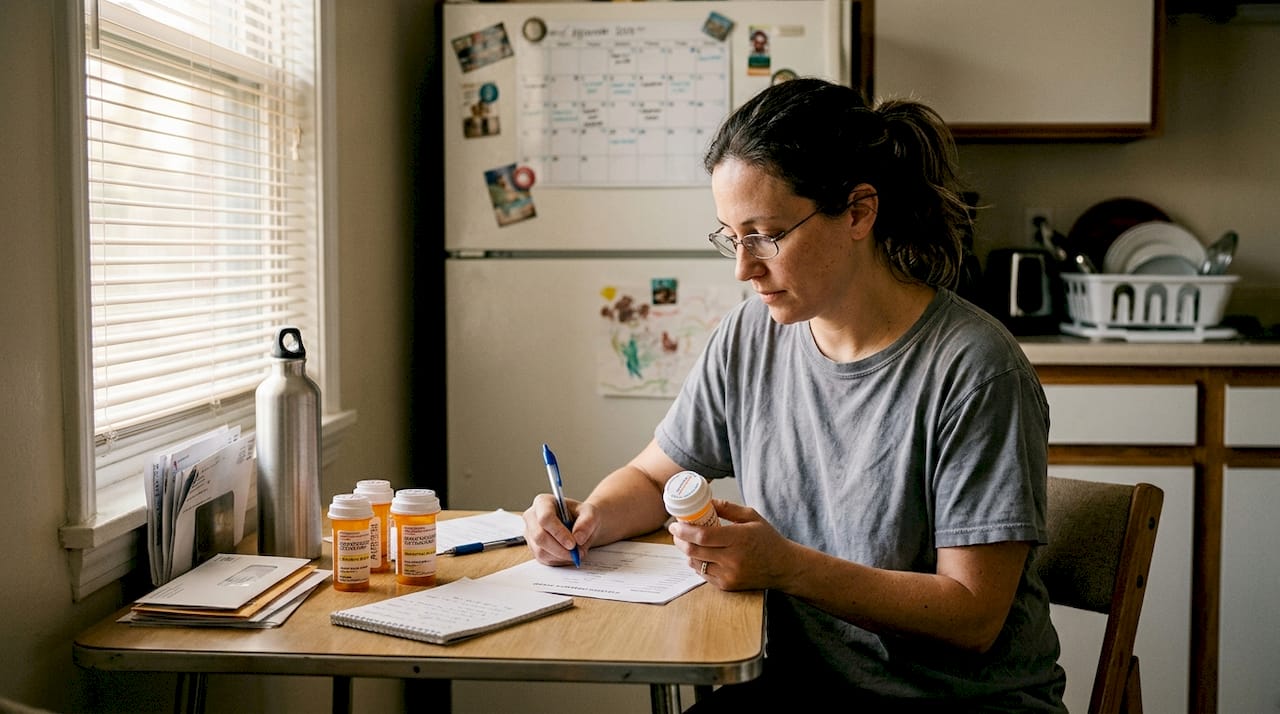
You wake up with a sore throat that won’t quit, a rash spreading across your arm, or a sinus infection that’s been dragging on for days. No insurance card in your wallet. The instinct is to wait it out and hope it passes, because the alternative feels expensive and confusing. But here’s the reality: affordable, legitimate healthcare is more accessible than most people realize, and you don’t need insurance to get it. This guide walks you through every practical option, what to prepare, how to book care, and how to make sure you’re getting real value for every dollar you spend.
Table of Contents
- Understanding your healthcare options without insurance
- What to prepare before seeking care
- Step-by-step: Getting affordable care online and in person
- How to verify, review, and maximize your care
- Explore fast and affordable care with Chameleon
- Frequently asked questions
Key Takeaways
| Point | Details |
|---|---|
| Multiple care options | You can find transparent, affordable healthcare through clinics, telehealth, DPC, or community resources even if you lack insurance. |
| Preparation saves money | Gathering information and confirming costs in advance helps you avoid surprise bills and wasted time. |
| Negotiate and clarify | Always ask for uninsured cash rates and verify what’s included to lower your out-of-pocket expenses. |
| Leverage preventive care | Consider DPC or subscriptions for ongoing access to primary care and better health outcomes. |
Understanding your healthcare options without insurance
The first thing to know is that the American healthcare system has more entry points than the ER. Most people without insurance default to waiting rooms or urgent care centers with surprise bills. There are smarter, faster, and cheaper ways to get the care you need.
Here’s a quick breakdown of the main models:
- Telehealth: Virtual visits with licensed providers, often same day, for conditions like infections, rashes, and sinus issues. Costs typically range from $40 to $75 per visit. Telehealth care without insurance is one of the fastest-growing options for uninsured patients.
- Federally Qualified Health Centers (FQHCs): Government-funded clinics that offer sliding-scale fees based on your income. You could pay as little as $20 for a visit.
- Direct Primary Care (DPC): A monthly membership model where you pay a flat fee (usually $50 to $100/month) for unlimited primary care access. DPC mechanics prioritize preventive care, which can reduce costly ER visits over time.
- Cash-pay clinics: Walk-in or scheduled visits where you pay a set price upfront. Many offer discounts for uninsured patients who ask.
- Charity care: Hospital and clinic programs that provide free or reduced-cost care based on financial need. You have to apply, but the savings can be significant.
| Option | Typical cost | Best for | Speed |
|---|---|---|---|
| Telehealth | $40 to $75/visit | Infections, rashes, minor illness | Same day |
| FQHC | $20 to $60/visit | Low-income, preventive, chronic | 1 to 3 days |
| DPC | $50 to $100/month | Ongoing primary care | Same or next day |
| Cash-pay clinic | $80 to $200/visit | Urgent, specialist, diagnostics | Same day |
| Charity care | Free to reduced | Financial hardship | Varies |
For urgent issues, telehealth and cash-pay clinics are your fastest routes. For ongoing or preventive care, DPC and FQHCs offer the best long-term value. You can also explore affordable care options through community resources in your area.
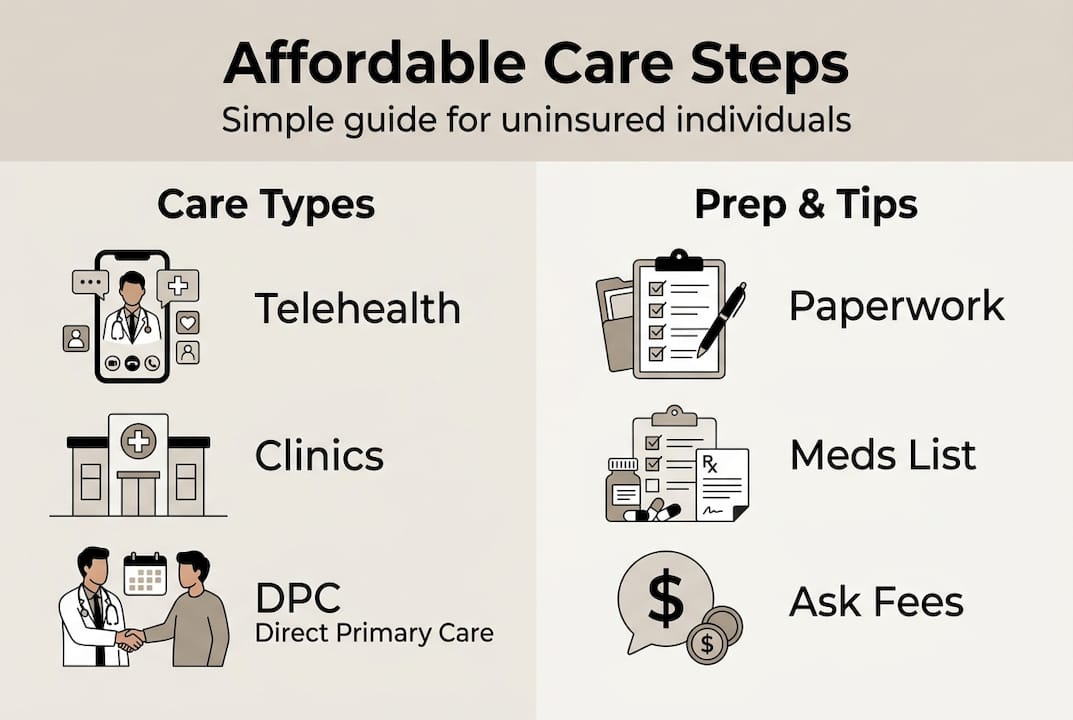
Pro Tip: Before you book anything, call ahead and specifically ask for the uninsured or self-pay rate. Many clinics have a separate, lower price list that they don’t advertise. You won’t get it if you don’t ask.
Questions to ask any clinic before booking:
- What is your self-pay or uninsured rate for this visit?
- Are labs and prescriptions included, or billed separately?
- Do you offer a payment plan if needed?
- Is there a sliding-scale fee program I can apply for?
What to prepare before seeking care
Once you know your options, a little preparation goes a long way. Walking in ready saves time, reduces stress, and can actually lower your bill.
Here’s what a typical visit costs when you’re paying cash:
| Service | Average cash price | Range |
|---|---|---|
| Primary care visit | $171 | $40 to $300 |
| Urgent care visit | $150 | $80 to $280 |
| Mental health session | $100 to $200 | $75 to $350 |
| Dental exam + cleaning | $200 | $100 to $400 |
| Basic lab work | $30 to $100 | Varies by test |
These numbers are negotiable, especially if you’re uninsured and paying upfront. Providers often prefer a guaranteed cash payment over dealing with insurance claims.
Here are the steps to take before your visit:
- List your symptoms clearly. Write down when they started, how severe they are, and what makes them better or worse.
- Gather your medication history. Include current prescriptions, dosages, and any known allergies.
- Know your budget. Decide what you can realistically spend and ask about payment plans if needed.
- Research local FQHCs. Use the HRSA health center finder to locate sliding-scale clinics near you.
- Check telehealth availability. Many platforms offer same-day appointments. Our no insurance telehealth guide walks you through how to book quickly.
- Confirm what ID or documents you need. Some clinics require proof of income for sliding-scale programs.
Pro Tip: Take a photo of your medication bottles, any previous lab results, and your ID before you leave home. Having these on your phone speeds up intake and prevents delays, especially at walk-in clinics.
Step-by-step: Getting affordable care online and in person
With your information ready, here’s exactly how to move from decision to appointment, whether you’re going virtual or in person.
- Find a provider. Search for telehealth platforms, local FQHCs, or cash-pay clinics in your area. Filter by the type of care you need (urgent, primary, mental health).
- Verify self-pay options. Call or check the website for uninsured pricing. Confirm whether labs, prescriptions, or follow-ups cost extra.
- Prepare your documentation. Have your symptom list, medication history, ID, and any relevant photos (for rashes or skin conditions) ready before you connect.
- Book online or call the clinic. Most telehealth platforms let you book in minutes. FQHCs and cash-pay clinics often have online scheduling too.
- Negotiate and confirm fees. Before the visit starts, confirm the total cost. Ask if there’s a discount for paying upfront or in full.
- Attend your visit and follow up. Show up prepared, ask all your questions, and request a written care plan before you leave or end the call.
Important: Online and telehealth visits are not appropriate for emergencies, chest pain, difficulty breathing, or any condition that requires a physical exam or hands-on treatment. Go to an ER or call 911 for those situations.
For routine issues like cold sores, infections, or skin conditions, telehealth is genuinely effective. You can learn more about managing cold sore symptoms through virtual care. DPC suits healthy patients and low-utilizers well, but it doesn’t cover specialist visits or hospital care, so it works best as a primary care layer.

Pro Tip: If you’re signing up for a DPC membership, ask specifically what’s included in the monthly fee. Some plans cover labs and basic procedures; others don’t. Also ask about typical response times for messages and same-day appointments.
Exploring telehealth memberships is worth your time if you anticipate needing care more than once or twice a year. The math often favors a flat monthly fee over paying per visit.
How to verify, review, and maximize your care
Getting the appointment is step one. Making sure you got what you paid for, and keeping future costs low, is just as important.
After your visit, ask for an after-visit summary (AVS). This document should include your diagnosis, treatment plan, any prescriptions, and follow-up instructions. If a provider can’t or won’t give you one, that’s a red flag.
Watch for these warning signs of surprise billing:
- A bill that’s significantly higher than the price you were quoted
- Charges for services you didn’t receive or weren’t told about
- Separate bills from labs or specialists you didn’t know were involved
- Vague line items with no explanation
If something looks wrong, call the billing department immediately and ask for an itemized bill. You have the right to dispute charges that weren’t disclosed upfront.
Here are practical ways to keep your healthcare costs low going forward:
- Use community pharmacy programs. GoodRx, Mark Cuban’s Cost Plus Drugs, and similar services can cut prescription costs by 80% or more.
- Take advantage of free screenings. Many community health fairs, pharmacies, and FQHCs offer free blood pressure, glucose, and cholesterol checks.
- Consider a preventive telehealth membership. Catching issues early is far cheaper than treating them late. Same-day doctor visits online make it easier to stay on top of your health without taking time off work.
- Ask about follow-up policies. Some providers include one free follow-up call or message after your visit. Use it.
- Save every receipt and summary. If you apply for charity care or a payment plan later, documentation of your visits and costs will be required.
FQHCs remain critical for high uninsured volume communities, and they’re often underused simply because people don’t know they exist. If you’re managing a chronic condition without insurance, an FQHC combined with a telehealth plan can cover most of your needs at a fraction of typical costs.
Pro Tip: Always request a written post-visit care plan, even for minor issues. It keeps you accountable, gives you something to reference if symptoms return, and documents your care history for future providers.
Explore fast and affordable care with Chameleon
You now have a clear map from problem to solution. The next step is finding a care partner that actually delivers on transparency and speed, without requiring insurance.
Chameleon Healthcare is built specifically for people in your situation. Whether you’re dealing with asthma, a dental infection, a sprain, or a recurring skin condition, you can connect with a licensed provider the same day, from your phone or computer. Pricing is clear before you book. No waiting rooms, no surprise bills, no insurance required. Explore Chameleon care plans to find the option that fits your budget, or visit the virtual care for individuals page to book your first visit today. Affordable, real care is one click away.
Frequently asked questions
What are the best healthcare options for people with no insurance?
Top options include FQHCs with income-based sliding fees, direct primary care memberships, telehealth platforms, cash-pay clinics, and local charity or free clinics. The best choice depends on whether your need is urgent, ongoing, or preventive.
How much does it cost to see a doctor without insurance?
A typical cash-pay primary care visit averages $171, with a range of $40 to $300. Prices are often negotiable, especially if you’re uninsured and paying upfront in full.
Is telehealth a good choice for uninsured people?
Yes, for minor and routine conditions. Telehealth is fast, affordable, and requires no commute, but it’s not for emergencies or conditions that require a physical exam.
How do I avoid surprise medical bills when paying cash?
Always confirm the full price before your visit, ask for a written estimate, and clarify whether labs or follow-ups are billed separately. Cash-pay discounts are common but rarely offered unless you ask.