
TL;DR:
- Virtual healthcare extends beyond quick cold calls, with increased use for behavioral health and low-income communities.
- Telehealth is most effective for minor illnesses, mental health support, and preventive care, but less for emergencies or complex conditions.
- Access disparities exist for rural, older, low-income, and non-English speaking populations, requiring targeted solutions.
Most people assume virtual healthcare is just a quick video call for a cold. But that picture misses the bigger story. Telehealth usage remains significantly above pre-pandemic levels, especially for behavioral health and low-income communities. If you’re uninsured, juggling a packed schedule, or simply tired of waiting rooms, virtual care may already be the most practical healthcare option available to you. This guide breaks down exactly how telemedicine works, who uses it, where it falls short, and how you can make it work for your life.
Table of Contents
- What is virtual healthcare? Telemedicine basics
- Who uses virtual care? Adoption and trends
- Access and equity: Who struggles and why
- What telehealth can and can’t do for you
- A new era: Practical wisdom from the virtual care frontline
- Affordable virtual care you can use today
- Frequently asked questions
Key Takeaways
| Point | Details |
|---|---|
| Three main telehealth types | Virtual healthcare is delivered via real-time, asynchronous, or remote monitoring, each suited to different medical needs. |
| Telehealth expands access | Busy families and uninsured individuals benefit most, but equity gaps persist for rural, older, and low-income groups. |
| Mental health leads usage | Behavioral health is now the top driver for telemedicine visits, outpacing other specialties post-pandemic. |
| Hybrid care is optimal | Telemedicine is best for minor and mental health issues, while complex or urgent cases require in-person evaluation. |
| Affordable solutions available | Subscription plans allow you to access virtual care easily—even without insurance or a regular doctor. |
What is virtual healthcare? Telemedicine basics
Virtual healthcare is medical care delivered through digital technology instead of a physical office. It goes by several names: telemedicine, telehealth, and virtual care. While people use these terms interchangeably, there are small differences. Telehealth is the broader category covering all remote health services. Telemedicine refers specifically to clinical care, like diagnosing and treating conditions. Virtual care often describes the patient experience side of things.
Understanding how care is actually delivered helps you choose the right option. Telehealth modalities fall into three main categories: synchronous, asynchronous, and remote patient monitoring (RPM).
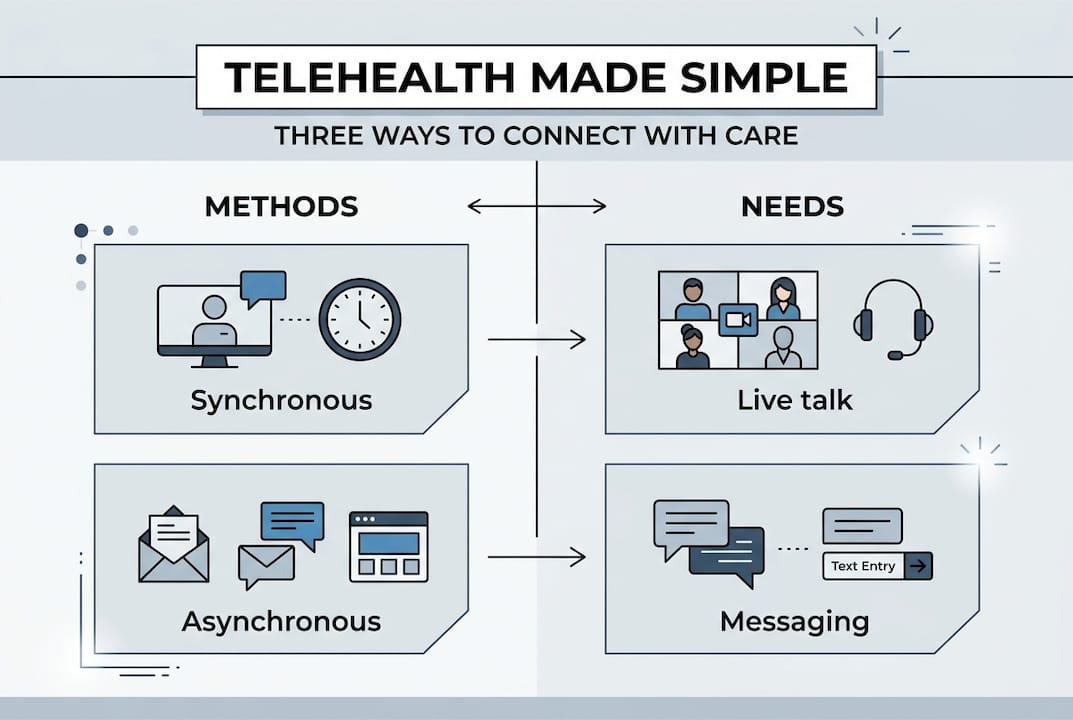
| Modality | How it works | Best use case | Technology needed |
|---|---|---|---|
| Synchronous | Real-time video or phone visit | Acute illness, mental health | Smartphone or computer |
| Asynchronous | Send messages, photos, or forms; provider responds later | Rashes, follow-ups, prescription refills | Secure messaging app |
| Remote patient monitoring | Devices track vitals and send data to your provider | Chronic conditions like diabetes or hypertension | Wearable devices, sensors |
Synchronous visits feel closest to an in-person appointment. You connect live with a licensed provider, describe your symptoms, and get a diagnosis or treatment plan on the spot. Asynchronous care is more flexible. You submit your information when it’s convenient, and a provider reviews it and responds, often within a few hours. RPM is typically used for ongoing conditions where your provider needs regular data, like blood pressure readings or blood sugar levels.
The virtual healthcare benefits of each modality depend on your specific situation. For a sinus infection or a UTI, a synchronous visit gets you a treatment plan fast. For a skin rash that’s not urgent, asynchronous care lets you skip the waiting room entirely. You can learn more about virtual care treatments that work well through each format, including UTI treatment online for women who need fast, private care.
Pro Tip: Always confirm that your telehealth platform uses HIPAA-compliant technology before sharing any health information. HIPAA (Health Insurance Portability and Accountability Act) is the federal law that protects your medical privacy. Reputable platforms use encrypted video and secure messaging to keep your data safe.
Who uses virtual care? Adoption and trends
Understanding the types of virtual healthcare is just the start. Let’s look at who actually uses these services and why.

Telehealth use peaked at 25% of outpatient visits in 2020 and has since stabilized at 4 to 6 percentage points above pre-pandemic levels. Mental health visits lead the way, with 29% of behavioral health appointments and 21% of substance use visits now happening virtually. These numbers reflect a real shift in how people seek care, not just a temporary pandemic habit.
| Group | Telehealth use rate | Top specialties used |
|---|---|---|
| Adults under 40 | Highest adoption | Mental health, urgent care |
| Adults 40 to 64 | Moderate adoption | Primary care, chronic disease |
| Adults 65 and older | Lowest adoption | Chronic disease management |
| Low-income households | Growing use | Behavioral health, urgent care |
| Rural residents | Below average | Primary care, mental health |
Several factors are driving these trends. Younger adults are more comfortable with digital tools and more likely to skip insurance altogether. Families with children use virtual care for quick sick visits that don’t require pulling a kid out of school. Low-income households, who often lack a regular primary care doctor, are turning to telehealth as a practical entry point into the healthcare system.
Payment parity laws, which require insurers to reimburse telehealth visits at the same rate as in-person visits, have also played a role. These policies are associated with a 2.5% increase in telehealth use, according to the same data. That might sound small, but at a population level, it represents millions of additional visits.
The telemedicine benefits for uninsured individuals are especially significant. Without insurance, an in-person urgent care visit can cost $150 to $300 or more. Virtual visits are often a fraction of that price. For anyone navigating care without coverage, telehealth without insurance is not just convenient. It’s often the only realistic option.
Mental health is the single biggest driver of telehealth adoption. Nearly 3 in 10 behavioral health visits now happen virtually, reflecting both the demand for mental healthcare and the unique comfort people feel accessing it from home.
Access and equity: Who struggles and why
While adoption trends show who uses telehealth, not everyone gets equal access. Here’s where gaps exist and what affects them.
Urban residents use telehealth 2.4 times more than rural residents. Older adults are half as likely to use virtual care compared to people under 40. These aren’t just statistics. They point to real barriers that prevent people from getting care they need.
The groups most affected by unequal access include:
- Rural residents with limited broadband internet or no reliable connection
- Adults 65 and older who may be less comfortable with video technology
- Low-income households who can’t afford devices or data plans
- Non-English speakers who face language barriers on platforms built for English-only users
- People with disabilities who may need accessible interfaces that many platforms don’t offer
Equity gaps in telehealth are driven by a combination of infrastructure, digital literacy, and systemic bias. A person in a rural county may have spotty internet that makes video calls unreliable. An older adult may not know how to download an app or navigate a patient portal. These aren’t personal failures. They’re structural problems.
The federal government launched the Affordable Connectivity Program (ACP) to help low-income households afford internet access. But enrollment has been low, and the program has faced funding uncertainty. Without reliable internet, even the best telehealth platform is out of reach.
“Payment parity policies that require equal reimbursement for telehealth and in-person visits are associated with measurable increases in virtual care use, particularly among underserved populations.”
Improving healthcare access means addressing these layers together. Platforms that offer phone-based visits (not just video) help bridge the gap for people without strong internet. Affordable telehealth memberships reduce cost barriers. And multilingual support makes care more inclusive for non-English-speaking patients.
What telehealth can and can’t do for you
Knowing who faces barriers, let’s get practical: what problems can virtual care solve, and where must you seek in-person help?
Virtual care works well for a wide range of everyday health needs. Telehealth suits acute minor illnesses, preventive counseling, and most mental health concerns. Here are the conditions it handles well:
- Sore throats, sinus infections, and ear infections
- Urinary tract infections (UTIs)
- Skin rashes and minor allergic reactions
- Anxiety, depression, and general mental health support
- Prescription refills for stable, ongoing conditions
- Preventive care conversations and health screenings
- Cold, flu, and COVID-19 symptom management
For everyday telehealth care, these visits are fast, affordable, and genuinely effective. A licensed provider can assess your symptoms, order labs if needed, and send a prescription to your pharmacy, all without you leaving home.
But telehealth has real limits. It cannot replace a physical exam. A provider can’t listen to your lungs, feel for swollen lymph nodes, or assess a wound through a screen. Conditions that require imaging, blood draws, or hands-on evaluation need in-person care. And emergencies, like chest pain, difficulty breathing, or severe injuries, always require calling 911 or going to an emergency room.
Experts caution that while telehealth is convenient and affordable for busy or uninsured patients, it can be a blunt tool in complex cases. A patient with vague symptoms that could signal multiple conditions may need the kind of thorough evaluation that only an in-person visit provides.
Pro Tip: Think of virtual and in-person care as partners, not competitors. Use telehealth for quick, clear-cut issues and same-day doctor visits when you need fast answers. Reserve in-person care for anything that feels serious, unusual, or hard to describe.
A new era: Practical wisdom from the virtual care frontline
Here’s something most articles won’t tell you: virtual care isn’t just a convenience feature. For millions of uninsured or underinsured families, it’s the difference between getting care and going without.
We’ve seen firsthand how a parent with no insurance and a sick child at 9 p.m. benefits enormously from a quick virtual visit. No urgent care copay. No waiting. Real answers from a real provider. That’s not a small thing.
But we also believe in honesty. Telehealth is not a full substitute for in-person care. It excels in low-acuity situations but carries real risk if used for conditions that need hands-on assessment. The physical exam gap is genuine, and overlooking it can lead to missed diagnoses.
The smartest approach is hybrid care: use virtual visits for what they do well, and build a relationship with an in-person provider for everything else. Virtual care fills the gaps in real telehealth scenarios where affordability and speed matter most. But it works best when it’s part of a broader care plan, not a replacement for one.
Affordable virtual care you can use today
If you’ve been putting off care because of cost, wait times, or the hassle of finding an appointment, virtual healthcare removes most of those barriers.
At Chameleon Healthcare, we’ve built a telehealth-first platform designed for real life. Whether you’re managing virtual care for asthma, dealing with virtual back pain treatment, or just need a quick check-in for a common illness, our licensed providers are available same day with clear, upfront pricing. No insurance required. No waiting rooms. Explore our telehealth plan options to find a membership that fits your budget and keeps you covered for the everyday health issues that tend to show up without warning.
Frequently asked questions
What types of conditions are best treated with virtual healthcare?
Virtual care works well for minor acute illnesses, preventive counseling, and most mental health issues, but it’s not appropriate for emergencies or conditions requiring a physical exam or diagnostic testing.
Does insurance cover telehealth visits?
Coverage varies by state and insurer, but payment parity laws requiring equal reimbursement for virtual and in-person visits have led to a measurable increase in telehealth access and coverage across the country.
Is telemedicine secure and private?
Yes. Most reputable telehealth services use HIPAA-compliant platforms with encrypted video and secure messaging to protect your personal health information.
Can I use telehealth without insurance or a primary care doctor?
Absolutely. Many virtual healthcare platforms, including Chameleon Healthcare, provide access without insurance, making care affordable and convenient for people who are uninsured or between providers.
What are the main obstacles for rural or older adults with telehealth?
The biggest challenges include limited broadband access, lower digital literacy, and lower usage rates among rural residents and adults over 65, even as government programs like the Affordable Connectivity Program aim to close the gap.