
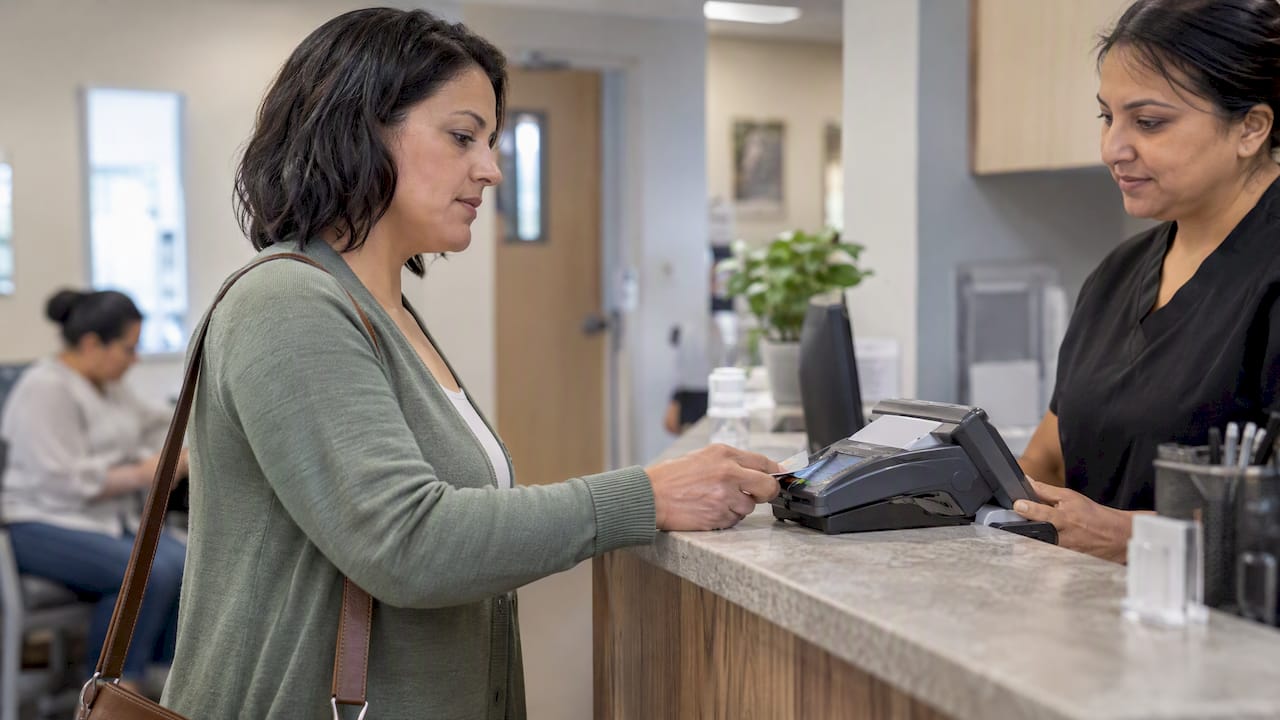
A typical doctor visit without insurance in the United States can vary widely, with primary care visits often costing in the mid-hundreds of dollars. Urgent care and emergency room visits cost more. The exact amount you pay depends heavily on the type of visit and whether you need labs, imaging, or other add-on services.
TL;DR:
- Primary care visits commonly cost $100 to $200, while urgent care runs $100 to $300; labs and imaging are billed separately and can raise totals.
- Telehealth often costs less because it avoids facility fees and suits minor infections, stable prescription renewals, and follow up questions, though ordered tests add charges.
- For scheduled nonemergency care, request a written Good Faith Estimate at least three business days ahead; bills $400 or more above it can be disputed.
- Ask community health centers about sliding fees tied to income and family size, and ask physician owned practices about payment plans or charity care.
Table of Contents
- What counts as a doctor visit: primary care, urgent care, specialist, ED, and telehealth
- Why prices swing so much by care setting and location
- What makes your final bill climb: labs, imaging, and extra fees
- Telehealth vs. in-person: when a video visit saves you money
- How to find lower-cost care and what to ask before you book
- Why transparent pricing matters more than ever for uninsured care
- Getting started with predictable, upfront pricing
- FAQ
- Sources
What counts as a doctor visit: primary care, urgent care, specialist, ED, and telehealth
Not every “doctor visit” means the same thing, and that matters when you’re trying to budget. A new patient primary care visit usually includes a health history review and a basic exam, and it tends to cost more than an established patient follow-up because the provider needs extra time to set up your file. Urgent care sits in between: you’re paying for faster access to a provider for something that can’t wait for a scheduled appointment, but isn’t a true emergency.
Specialist visits, emergency department visits, and telehealth appointments each come with their own billing structure:
- Primary care covers routine checkups, chronic condition management, and general health concerns.
- Urgent care handles non-life-threatening issues that need same-day attention, like a sprained ankle or a bad cough.
- Specialist visits address a specific condition and often carry higher fees tied to the provider’s training.
- Emergency department visits include a facility fee on top of the physician charge, which is a major reason they cost the most.
- Telehealth connects you with a licensed provider by phone or video, usually for a flat fee with no facility charge at all.
Labs and imaging are almost always billed separately from the visit itself, no matter which setting you choose.
Why prices swing so much by care setting and location
Price ranges vary widely depending on where you go and what kind of visit you need. A primary care visit without insurance commonly falls between $100 and $200, while urgent care visits often run $100 to $300 depending on what’s involved. Specialist visits can start around $150 and climb well past $300 once testing is added.

A national study found that musculoskeletal urgent care centers charged uninsured new patients a mean of $250 per visit, according to a secret-shopper survey published in JAMA Network Open, with a standard deviation of $110. That same research found pricing varied in step with whether a clinic accepted Medicaid and with the median income of its zip code, which tells you something useful: a general urgent care clinic is often cheaper than a specialty musculoskeletal urgent care center for a straightforward sprain or strain.
Several factors drive these swings beyond the clinic type itself. Whether your state expanded Medicaid affects how many uninsured patients a clinic typically serves, which in turn shapes its pricing structure. Facility-owned clinics, often attached to hospital systems, tend to charge more than independent, physician-owned practices because they add overhead costs you don’t see on a typical bill.
It also helps to understand why self-pay prices look so much higher than what you might have heard from an insured friend. Insurers negotiate discounted rates with providers in advance, and research on outpatient billing has found that uninsured patients are often billed amounts several times higher than what an insurance company would have paid for the same service. The sticker price you see as a self-pay patient usually reflects the absence of that negotiated discount, not an arbitrary markup.
What makes your final bill climb: labs, imaging, and extra fees
The visit fee is often just the starting point. Several common add-ons can push your total well past the base price you were quoted:
- Basic blood work typically adds $30 to $100 depending on the panel ordered.
- X-rays commonly run $100 to $300 per image, billed separately from the visit.
- CT scans can add several hundred dollars or more, especially outside a hospital’s negotiated self-pay rate.
- Minor procedures, like wound care or a splint, carry their own line-item charges.
- New patient visits often cost more than follow-ups since they take longer and involve paperwork.
If you’re weighing imaging costs specifically, it helps to know that diagnostic scans like DEXA tests follow this same pattern of separate, self-pay billing that can catch uninsured patients off guard.
Because uninsured patients rarely benefit from insurer-negotiated discounts, these charges often reflect the clinic’s full gross rate. Asking what’s included before you agree to any test helps you avoid a bill that looks nothing like what you expected walking in.
Telehealth vs. in-person: when a video visit saves you money
Telehealth visits generally cost less than most in-person primary care or urgent care appointments, often well under typical in-person rates. That gap exists mainly because a video visit skips the facility fee and overhead that come with a physical clinic space.
Telehealth tends to work well for:
- Minor infections, like sinus infections or pink eye.
- Follow-up appointments for an ongoing condition.
- Prescription renewals for stable, chronic medications.
- Quick guidance on whether a symptom needs in-person care at all.
In-person care still makes more sense for anything requiring a physical exam, imaging, or a procedure, like a suspected fracture or a deep cut needing stitches. It’s worth knowing that a telehealth visit can still lead to additional billed services if your provider orders labs or imaging as a follow-up step, but you’ve still avoided the facility fee that drives up in-person pricing.
How to find lower-cost care and what to ask before you book
A few straightforward steps can meaningfully lower what you pay out of pocket.
- Look into a community health center near you. These clinics offer primary care and referrals regardless of your ability to pay, using sliding fee scales based on income and family size that you can locate through HealthCare.gov.
- Request a Good Faith Estimate before any scheduled visit. Under federal rules, you have the right to request this estimate at least three business days ahead of non-emergency care, and if your final bill comes in $400 or more above that estimate, you can dispute it.
- Ask specific questions before booking, including: What’s the cash price for a new patient visit? What’s included? Will you put the Good Faith Estimate in writing? Do you offer sliding scale pricing or payment plans? Are labs and imaging done in-house, and how are they billed?
- Ask about charity care programs, especially at physician-owned practices, which are often more willing to work out payment plans at the front desk compared to larger hospital-owned systems.
Our medical debt prevention checklist walks through more of these steps if you want a fuller picture, and our guide to income-based care programs breaks down sliding-fee eligibility in more detail.
Pro Tip: Always ask for your Good Faith Estimate in writing, even for a routine visit. It’s the easiest way to protect yourself if a bill comes in higher than expected.
Why transparent pricing matters more than ever for uninsured care
We built our model around a simple belief: you shouldn’t have to guess what a doctor visit will cost before you walk in. Uninsured adults carry disproportionate levels of health care debt, and a lot of that stress comes from not knowing the price until the bill arrives.
Telehealth visits give you a clear, upfront price before you connect with a provider, which can make them a practical substitute for an in-person visit when you are dealing with a common minor illness, a prescription renewal, or questions about in-person care needs.
— Vector
Getting started with predictable, upfront pricing
If you’re comparing our pricing against the ranges we’ve covered here, the math tends to work in your favor. A Single Visit costs $55, a flat fee that sits well below many in-person primary care or urgent care charges once labs or add-ons get involved. If you expect to need care more than once or twice a year, a Single Adult Membership at $25 a month or a Family Membership at $45 a month gives you unlimited virtual visits for less than the cost of a single uninsured urgent care trip.
Common concerns like a sore throat, sprains and strains, or heartburn and reflux can often be handled through a same-day virtual visit, with no waiting room and no surprise facility fee. Visit our plans page to see current pricing and book your first appointment today.
This article is general information, not a substitute for advice from a qualified doctor. Consult a qualified healthcare professional about your own circumstances before acting on anything here.

FAQ
How much does it cost to see a doctor without insurance?
A typical uninsured doctor visit in the United States costs between $40 and $300, with most primary care visits averaging around $150 to $200 depending on location and clinic type (background estimate, no linked figure). Urgent care and emergency department visits usually cost more once facility fees and testing are added.
Is it cheaper to see a doctor without insurance than with it?
Insured patients generally pay less out of pocket because their insurer has negotiated discounted rates with the provider in advance. Research on outpatient billing has found that uninsured patients are often charged several times more than an insurer would pay for the same service, which is why asking about self-pay discounts or a Good Faith Estimate matters so much.
What happens if someone gets sick in the U.S. without insurance?
You can still seek care at a community health center, urgent care clinic, or telehealth provider, and you have the right to request a Good Faith Estimate before scheduled non-emergency treatment. Emergency departments are required to treat emergencies regardless of insurance status, though the cost is typically the highest of any care setting.
How much does a typical doctor’s visit cost in the U.S.?
Costs vary by setting, but primary care visits commonly range from $100 to $200, while specialist and musculoskeletal urgent care visits can run higher. One national study found musculoskeletal urgent care centers charged uninsured patients a mean of $250 per new patient visit.
Where can I find lower-cost care if I don’t have insurance?
Community health centers offer sliding fee scales based on income, and telehealth visits typically cost less than in-person care since they skip facility fees. Asking about cash discounts, payment plans, and charity care options before booking can also meaningfully lower your total cost.
Sources
- Healthcare
- No Surprises Act — Good Faith Estimate (CMS)
- Charges for Initial Visits for Uninsured Patients at Musculoskeletal Urgent Care Centers (JAMA Network Open)
- Key facts about the uninsured population (KFF)