
TL;DR:
- Affordable primary care options include community health centers, urgent care, retail clinics, and telehealth.
- Confirm self-pay rates and ask about discounts before visiting to avoid unexpected costs.
- Managing your own care requires preparation, record-keeping, and verifying provider credibility.
Getting medical care when you don’t have insurance can feel like standing at a locked door without a key. You know you need help, but the cost and confusion around where to go stop you before you even start. The good news is that affordable primary care is more reachable than most people realize. Whether you’re dealing with a nagging cough, a skin rash, or a sinus infection that won’t quit, there are clear pathways to get the care you need without a $500 ER bill waiting on the other side. This guide walks you through every step.
Table of Contents
- Understanding your primary care options without insurance
- Essential steps to accessing primary care without insurance
- Common mistakes to avoid and how to troubleshoot issues
- Measuring success: How to know you’re getting quality, affordable care
- What most guides miss: The hidden value (and risks) in managing your own care
- Affordable care solutions you can act on now
- Frequently asked questions
Key Takeaways
| Point | Details |
|---|---|
| Know your options | You can access primary care through self-pay, low-cost clinics, or telehealth even without insurance. |
| Follow a clear workflow | Preparing your information and confirming prices leads to smoother, more affordable care. |
| Avoid common pitfalls | Always ask for written cost estimates and compare providers to prevent surprise bills. |
| Measure your results | A good workflow means you get timely care, understand costs, and feel confident about your health decisions. |
Understanding your primary care options without insurance
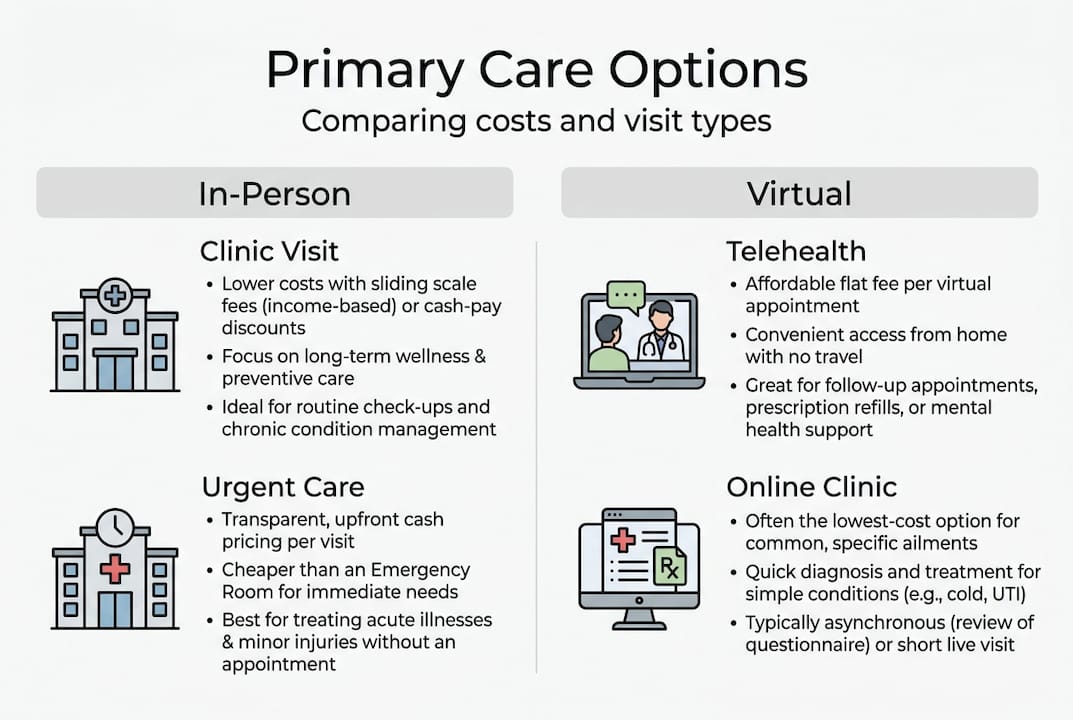
Now that we’ve set the stage for why easy access is crucial, let’s identify all the pathways available when you need affordable care. The first thing to know is that “primary care” covers a wide range. It includes your everyday medical needs: diagnosing illnesses, managing minor injuries, checking blood pressure, and treating infections. You don’t need insurance to access most of these services.
Here’s a quick look at the main types of care available to uninsured patients:
- Traditional primary care clinics: Private practices where you pay a flat self-pay rate per visit.
- Community health centers (FQHCs): Federally funded clinics that offer sliding-scale fees based on income. These are often the most affordable option.
- Urgent care centers: Walk-in clinics for non-emergency issues. Many primary care clinics and urgent care centers provide self-pay rates that are significantly lower than emergency room visits.
- Retail clinics: Located inside pharmacies like CVS or Walgreens. Good for simple, quick needs like strep throat or flu shots.
- Telehealth platforms: Virtual visits with licensed providers via your phone or computer. Often the fastest and most affordable option for common conditions.
Self-pay simply means you pay out of pocket, without billing an insurance company. Many providers offer discounted rates for self-pay patients, sometimes 30 to 50 percent lower than their standard billing rate. Research shows that barriers to primary care often have more to do with perceived cost than actual cost, which means many people avoid care they could actually afford.
| Care Type | Typical Self-Pay Cost | Wait Time | Best For |
|---|---|---|---|
| ER visit | $500 to $3,000+ | 2 to 6 hours | Emergencies only |
| Urgent care | $100 to $200 | 30 to 60 min | Minor injuries, illness |
| Community health | $20 to $80 | Varies | Low-income patients |
| Telehealth | $40 to $100 | Under 30 min | Common conditions |
| Retail clinic | $60 to $120 | 15 to 30 min | Simple, quick needs |
Conditions commonly treated without insurance include sore throats, sinus infections, UTIs, rashes, ear infections, and seasonal allergies. Most of these don’t require an in-person visit at all. Check out this urgent care for the uninsured resource to see which conditions qualify for low-cost walk-in or virtual care.
Pro Tip: Always call ahead and ask specifically about self-pay or cash-pay discounts. Many providers don’t advertise these rates, but they exist. Telehealth platforms often post pricing right on their website, making comparison simple.
Essential steps to accessing primary care without insurance
With options mapped out, let’s walk through the exact process you can follow to secure an appointment and understand costs before you ever see a provider.
Step 1: Gather your health information. Write down your symptoms, any medications you take, and your relevant medical history. This saves time and makes your visit more productive, whether it’s in person or virtual.
Step 2: Research local and virtual providers. Search for community health centers in your area using the HRSA locator tool. For virtual care, look for telehealth platforms with transparent pricing. Online platforms allow self-triage and easy booking for telehealth or urgent care without long phone queues.
Step 3: Compare pricing before you commit. Don’t assume all providers charge the same. Call and ask for the self-pay rate for your specific visit type. Get the number in writing if possible.
Step 4: Book your appointment. Telehealth appointments can often be booked same-day. In-person clinics may have next-day availability. The no-insurance telehealth workflow is usually faster, with fewer forms and no waiting room.

Step 5: Confirm costs and what’s included. Ask whether labs, prescriptions, or follow-up calls are included in the flat rate or billed separately. This prevents surprises later.
According to KFF data on uninsured populations, a large share of uninsured adults go without needed care each year, not because care is unavailable, but because they don’t know where to look. That knowledge gap is something a simple, clear workflow can fix.
| Step | In-Person Visit | Telehealth Visit |
|---|---|---|
| Research | Search local clinics | Browse virtual platforms |
| Booking | Call or walk in | Online or app-based |
| Wait time | 30 to 90 minutes | Under 15 minutes |
| Payment | At desk, cash or card | Online, upfront |
| Follow-up | Schedule new visit | Often included |
For more detail on what to expect during a doctor visits without coverage, it helps to read up before your first appointment so nothing catches you off guard.
Pro Tip: If you can’t afford standard rates even at urgent care, search for Federally Qualified Health Centers (FQHCs) in your ZIP code. These clinics are legally required to serve patients regardless of ability to pay.
Common mistakes to avoid and how to troubleshoot issues
Once you’ve chosen your care path and scheduled a visit, avoid missteps that could cost you more. Here’s how to sidestep the most common problems.
Mistake 1: Not confirming payment policies ahead of time. Patients sometimes fail to confirm rates before visiting, resulting in surprise costs that feel overwhelming and avoidable. Always ask before you arrive.
Mistake 2: Skipping the pricing comparison. Assuming one clinic is the same as another is a costly error. A telehealth visit for a UTI might cost $60 at one platform and $130 at another for the same service.
Mistake 3: Ignoring telehealth as an option. Many people still think telehealth is only for tech-savvy patients. In reality, if you can video call a friend, you can use telehealth. It’s especially valuable for common conditions that don’t require a physical exam.
Mistake 4: Not keeping records of your care. Without insurance tracking your visits, you’re on your own. Keep a simple folder or notes app with your diagnoses, treatments, and costs.
Here’s how to handle common issues if they come up:
- Unexpected bill after a visit: Request an itemized statement. Compare each charge against what you were told upfront.
- Denied care due to inability to pay: Ask about financial assistance programs. Most community health centers have them.
- Prescription too expensive: Ask the provider for a generic option, or search for discount programs at your local pharmacy.
“Always request a written, upfront cost estimate before any treatment. A few minutes spent confirming pricing can save you hundreds of dollars in unexpected charges.”
Research shows that barriers among uninsured patients often compound when billing issues go unaddressed. Don’t let confusion become a reason to delay follow-up care. Use this urgent care checklist to stay organized before and after each visit.
Measuring success: How to know you’re getting quality, affordable care
Even with a smart process, it’s important to assess results and ensure you’re not sacrificing quality or finances over time.
Good care without insurance looks like this:
- You received a clear diagnosis and understood what your condition is and how to treat it.
- The pricing was explained before treatment and matched what you were billed.
- You had access to follow-up if your symptoms didn’t improve within a reasonable timeframe.
- Your prescription, if needed, was affordable and available at a nearby pharmacy or through a discount program.
- You felt heard and respected during the visit, regardless of your payment status.
Telehealth models can reduce costs by up to 50 percent for common illnesses compared to in-person visits. For uninsured patients, that difference matters. Studies also show that uninsured patients spend two to three times more out of pocket per health episode than insured patients, which is why choosing the right channel from the start is so important.
| Visit Type | Average Self-Pay Cost | Average Insured Cost (Copay) |
|---|---|---|
| Telehealth | $50 to $100 | $10 to $30 |
| Urgent care | $100 to $200 | $20 to $50 |
| Primary care in-person | $100 to $200 | $20 to $60 |
| ER visit | $500 to $3,000+ | $100 to $300 |
Research on outcomes and cost issues confirms that delayed care often leads to more expensive treatment down the line. Catching a sinus infection early is far cheaper than treating complications from one that was ignored for three weeks.
Learn more about the telemedicine benefits that make virtual care a strong fit for uninsured patients, and explore what makes for good healthcare access so you can evaluate your own experience against a clear standard.
What most guides miss: The hidden value (and risks) in managing your own care
With the workflow mapped, let’s take a deeper look at the mindset and overlooked realities of steering your own healthcare journey.
Most guides focus on where to go and how much things cost. That’s useful, but it skips the harder truth: when you manage your own care, you also carry more of the responsibility for getting it right. That’s not a reason to feel overwhelmed. It’s a reason to go in prepared.
One thing we’ve noticed is that many people avoid care not because they can’t afford it, but because they’re afraid of what they’ll find out or embarrassed by their situation. That hesitation is understandable, but it’s also the most expensive habit you can develop. A small issue ignored becomes a bigger one quickly.
The other reality is that vetting providers matters more when you’re self-navigating. Without an insurer’s network doing some of the quality filtering for you, checking reviews, confirming credentials, and understanding what a provider can and can’t treat becomes your job. The good news is that platforms like telehealth services make this easier with upfront pricing and clear provider profiles.
Keeping your own health records, even a simple notes file on your phone, gives you a head start at every future visit. It also helps you spot patterns in your health over time. Explore how risks of self-managed care can be reduced through preparation and the right tools.
Pro Tip: Build a simple personal health record with your diagnoses, medications, and visit dates. It takes five minutes to set up and saves significant time and guesswork at future appointments.
Affordable care solutions you can act on now
If you’re ready to put this advice into action, these resources can help you securely and affordably access care today.
At Chameleon Healthcare, we built our platform specifically for people navigating care without insurance. You get same-day access to licensed providers, clear pricing with no hidden fees, and support for a wide range of common conditions like sore throats, rashes, sinus infections, and more. Browse our telehealth subscription plans to find a membership that fits your needs and budget. If you’re managing a specific condition, check out our asthma care solutions as one example of how we handle condition-specific care. For a full picture of what we offer, visit Chameleon Healthcare and explore your options today.
Frequently asked questions
How can I find a primary care doctor without insurance?
You can search for providers who accept cash pay, use telehealth platforms, or visit community health centers offering sliding-scale fees. Many clinics and telehealth services accept uninsured patients for direct-pay appointments.
What are typical self-pay costs for primary care visits?
Self-pay primary care visits range from $50 to $200, depending on location, visit type, and any additional services needed. Self-pay rates are often much lower than hospital ER visits.
Is telehealth a good option for the uninsured?
Yes, telehealth can provide affordable and fast care for many common conditions with transparent pricing. Telehealth platforms enable uninsured patients to access affordable care quickly, often the same day.
How do I avoid surprise bills without insurance?
Always confirm self-pay rates in writing before your visit and ask for itemized costs upfront. Unexpected costs can be minimized by securing written cost estimates before treatment begins.
Can uninsured patients get help with prescription costs?
Yes, many pharmacies and clinics offer discount programs or coupons for uninsured individuals. Many community health centers and pharmacies have assistance programs for prescriptions that significantly reduce out-of-pocket costs.