

TL;DR:
- Affordable healthcare options include Medicaid, CHIP, community health centers, urgent care, and telehealth.
- Layering multiple services and negotiating fees can maximize savings for uninsured individuals.
- The most cost-effective approach involves using different providers based on urgency, needs, and location.
Getting sick without insurance is one of the most stressful things you can face. You know you need care, but the fear of a surprise bill can feel just as paralyzing as the illness itself. The good news is that affordable care is more accessible than most people realize. From federally funded clinics to cash-pay urgent care and telehealth, there are real, proven options that won’t drain your savings. This guide walks you through each one, step by step, so you can get the care you need with confidence and clarity.
Table of Contents
- What you need to know before seeking care
- Step 1: How to find local community health centers
- Step 2: Cash-pay urgent care clinics for common conditions
- Step 3: Direct primary care and other affordable options
- A fresh perspective on affordable healthcare: What most guides miss
- Affordable care for common conditions—Your next step
- Frequently asked questions
Key Takeaways
| Point | Details |
|---|---|
| Start with eligibility screener | Check Medicaid or CHIP eligibility before exploring other affordable care options. |
| Use CHCs for primary care | Community Health Centers provide sliding scale fees and comprehensive services for uninsured patients. |
| Choose urgent care for fast needs | Urgent care clinics offer transparent pricing for common issues at a fraction of ER costs. |
| Combine multiple options | Mix CHCs, urgent care, and direct primary care to maximize savings and access. |
What you need to know before seeking care
Before you search for a clinic or schedule an appointment, a few important first steps can save you time, money, and frustration. Knowing what options are available to you, and whether you qualify for certain programs, puts you in a much stronger position from the start.
Start with Medicaid and CHIP
Your first move should always be to check whether you qualify for Medicaid or the Children’s Health Insurance Program (CHIP). These government-funded programs offer low or no-cost coverage for eligible individuals and families. You can screen your eligibility at healthcare.gov in just a few minutes. If you’re not eligible, don’t stop there. There are still strong options available to you.
The three main types of low-cost providers
Once you’ve ruled out Medicaid and CHIP, focus on these primary affordable care options:
- Community Health Centers (CHCs): Federally funded clinics that serve everyone regardless of ability to pay, using a sliding scale fee model based on your income.
- Direct Primary Care (DPC): A membership-based model where you pay a flat monthly fee for unlimited or frequent primary care visits.
- Cash-pay urgent care: Walk-in clinics with upfront, transparent pricing for common conditions like infections, sprains, and rashes.
You can explore a broader breakdown of affordable healthcare options to help you decide which path fits your situation best.
Special situations to be aware of
If you live in a rural area, access to CHCs may be limited. Some regions have telehealth-based alternatives or mobile health units. For undocumented individuals, certain city-funded programs like the NYC Care program provide care regardless of immigration status. If you have a chronic condition, you may need a combination of options rather than a single provider.
What to bring to any appointment
| Document | Why it matters |
|---|---|
| Photo ID | Required for registration at most clinics |
| Proof of address | Confirms residency for local programs |
| Income documentation | Needed to calculate sliding scale fees |
| List of medications | Helps providers avoid dangerous interactions |
Pro Tip: Call ahead and ask exactly what documents are required. Some CHCs accept self-reported income, which makes the process even simpler.
Step 1: How to find local community health centers
Once you understand your options, the first place to check for affordable, comprehensive care is a local Community Health Center. CHCs are one of the most underused resources in the country, yet they serve millions of patients every year.
What CHCs offer
CHCs provide a wide range of services, not just basic checkups. Think primary care with sliding scale fees, including prenatal care, vaccinations, mental health services, dental care, and referrals to specialists. And all of it is priced based on what you can afford.
The scale of these centers is remarkable. In 2024, 32.4 million patients were served at CHCs, with 18% being uninsured and 90% living below 200% of the federal poverty level. These centers exist specifically for people in your situation.
How sliding scale fees work
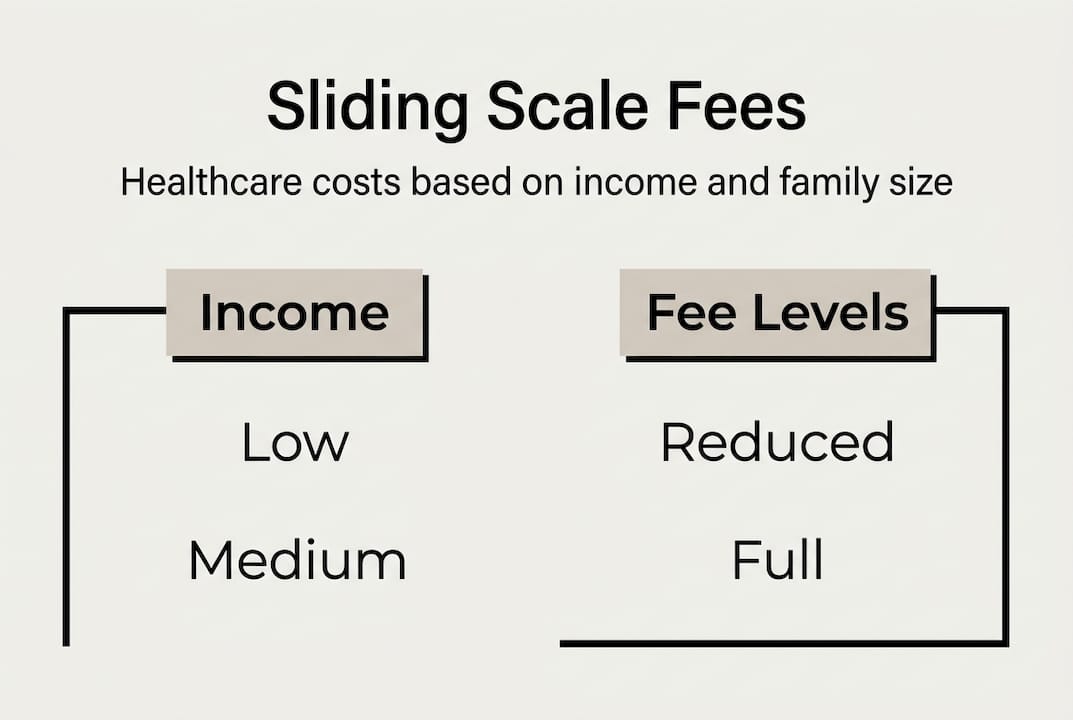
Sliding scale fees are calculated based on your household income and family size. The lower your income relative to the federal poverty level, the less you pay. Some patients pay as little as $20 per visit. You’ll need to provide documentation to verify your income, but the savings can be significant.
How to find a CHC near you
Follow these steps to locate a center in your area:
- Go to the HRSA CHC locator at healthcare.gov.
- Enter your zip code or city.
- Browse the list of nearby centers and check their services.
- Call the clinic directly to ask about appointment availability and required documents.
- Ask specifically about the sliding scale program and whether walk-ins are accepted.
Tips for your first visit
Arrive 15 to 20 minutes early to complete intake paperwork. Bring all your documents in one folder so nothing gets missed. If you’re comparing CHCs vs urgent care for your specific need, consider urgency. CHCs are best for non-emergency needs where you can schedule ahead.

Pro Tip: If the nearest CHC has a long wait for new patients, ask to be placed on a cancellation list. Openings often come up within days.
Step 2: Cash-pay urgent care clinics for common conditions
If you need treatment for a minor illness or injury and cannot wait for a CHC appointment, cash-pay urgent care is your next best step. These clinics are built for quick, affordable visits without the overhead of an emergency room.
How pricing compares
One of the biggest advantages of urgent care is cost transparency. The difference between an urgent care visit and an ER visit is dramatic:
| Service | Urgent care (cash-pay) | Emergency room |
|---|---|---|
| Basic visit | $100 to $200 | $1,200 to $2,800 |
| Flu or strep test | $20 to $50 | $150 to $400 |
| UTI treatment | $75 to $150 | $700 to $1,500 |
| X-ray | $50 to $150 | $400 to $1,000 |
For common conditions like flu, strep throat, and UTIs, urgent care can save you 70 to 90 percent compared to an ER visit.
Cost reality check: The average cash-pay urgent care visit runs about $185. The average ER visit without insurance can easily top $1,200. That’s a difference that can take months to recover from financially.
When urgent care is the right fit
Urgent care works best for:
- Minor infections (ear, sinus, throat, urinary tract)
- Cuts and wounds that need stitches but aren’t life-threatening
- Mild asthma symptoms (learn more about asthma care at urgent care)
- Sprains and strains
- Rashes and skin conditions
- Nausea, vomiting, or mild dehydration
For true emergencies like chest pain, difficulty breathing, or loss of consciousness, always call 911 or go to the ER.
How to find clinics with transparent pricing
Search specifically for urgent care centers that advertise self-pay or cash-pay rates online. Many clinics post their fees on their websites. Review our urgent care checklist before you go so you know exactly what to ask and what to bring. And don’t be afraid to call ahead and negotiate. Asking for a cash discount can reduce your bill by 10 to 40 percent in many cases. Clinics prefer cash over sending bills to collections.
For additional guidance on urgent care for the uninsured, there are resources that break down what to expect at each stage of your visit.
Step 3: Direct primary care and other affordable options
For ongoing health needs or when CHCs and urgent care aren’t the best fit, consider these alternative options. They may not be as well known, but for the right situation, they can offer significant savings and convenience.
What is direct primary care?
Direct Primary Care is a membership model where you pay a flat monthly fee, typically $50 to $150 per month, directly to your doctor. In return, you get unlimited or frequent office visits, same-day appointments, and access to your provider via phone or text. There are no insurance claims, no copays per visit, and no surprise bills.
DPC is especially valuable if you have a chronic condition like diabetes, hypertension, or asthma that requires frequent visits and regular monitoring. The predictable cost makes budgeting much easier.
How DPC saves money
DPC practices often negotiate wholesale pricing on lab tests and generic medications, which can cut those costs dramatically. When your primary care needs are covered through DPC, you’re also less likely to end up in urgent care or the ER for conditions that could have been managed earlier. Compared to traditional copays stacked on top of high deductibles, DPC often comes out ahead for frequent users.
Telemedicine as a practical tool
For minor issues like a sore throat, rash, cold symptoms, or a follow-up question, telemedicine is one of the most convenient and affordable options. Many platforms offer visits for $50 to $75 with no insurance required. You can connect with a licensed provider from your phone or computer in minutes. Explore telemedicine options that fit your schedule and budget.
Quick-reference table: Matching your situation to the right option
| Situation | Best option |
|---|---|
| Low income, need primary care | Community Health Center |
| Minor illness, need it today | Cash-pay urgent care or telehealth |
| Chronic condition, frequent care | Direct Primary Care |
| Rural area, limited local access | Telehealth |
| Undocumented or no ID | Local programs like NYC Care |
A fresh perspective on affordable healthcare: What most guides miss
Most guides point you toward one solution and call it done. Go to a CHC. Use urgent care. Try DPC. But the people who spend the least on healthcare without insurance aren’t picking just one option. They’re layering them.
Imagine using a CHC for your annual checkup and lab work, a telehealth service for a quick sinus infection, and a cash-pay urgent care clinic for a sprained ankle. Each choice is made based on what’s fastest, most affordable, and most appropriate for the situation. That’s a smarter approach than loyalty to any single system.
The other thing most guides skip entirely is negotiation. You can ask for cash discounts on labs, imaging, and even prescriptions at almost any provider. Not every clinic will say yes, but many will reduce costs by 10 to 40 percent just because you asked. For a deeper look at maximizing savings across your care options, it’s worth spending a few extra minutes doing the research before your next appointment. The payoff is real.
Affordable care for common conditions—Your next step
Now that you know your options, the next step is finding care that’s fast, clear on pricing, and built around your needs.
Chameleon Healthcare offers transparent, affordable telehealth for a wide range of common conditions, with no insurance required. Whether you’re dealing with asthma treatment options, need to get care for sprains and strains, or just want to understand what’s available to you, Chameleon makes it simple. You get same-day access to licensed providers from your phone or computer, with upfront pricing and no waiting rooms. See all transparent care services and find the care that fits your life.
Frequently asked questions
How do I know if I qualify for Medicaid or CHIP?
Use the eligibility screener at healthcare.gov to check based on your income, family size, and state. It takes just a few minutes and is the fastest way to know your options.
What documents should I bring to a community health center visit?
Bring a photo ID, proof of address, and income documentation so the clinic can calculate your sliding scale fees. Calling ahead to confirm their specific requirements is always a smart move.
How much does a typical urgent care visit cost without insurance?
A cash-pay urgent care visit typically runs $100 to $300, compared to the $1,200 or more you might face at an emergency room without insurance.
Can undocumented immigrants access affordable healthcare?
Yes. Programs like NYC Care and many state-supported clinics provide care regardless of immigration status. Community Health Centers also generally serve patients without requiring proof of citizenship.
How can I save more on prescriptions and lab tests?
Always ask for a cash-pay discount at the clinic, pharmacy, or lab. Requesting one can reduce your costs by 10 to 40 percent, and many providers will agree without hesitation.