

TL;DR:
- Telehealth offers convenient, same-day medical care through secure video, phone, or messaging platforms.
- It effectively treats many conditions, from minor infections to mental health, without in-person visits.
- Telehealth benefits underserved groups, including rural residents, busy parents, and those with mobility challenges.
Most people assume that getting quality medical care means driving to a clinic, sitting in a waiting room, and hoping the appointment doesn’t run too long. That assumption is outdated. Telehealth connects you with licensed providers through video, phone, or secure messaging, often within the same day, and usually at a fraction of the cost of a traditional visit. Whether you’re managing a sinus infection, dealing with a rash, or just need a quick check-in, virtual care is built to meet you where you are. This guide breaks down exactly how telehealth works, what to expect during a visit, and how to get the most out of it.
Table of Contents
- What is telehealth and how does it operate?
- The telehealth visit: What to expect step by step
- Comparing telehealth and in-person care
- Who benefits most from telehealth?
- What most guides miss about telehealth
- Get affordable care with telehealth solutions
- Frequently asked questions
Key Takeaways
| Point | Details |
|---|---|
| Secure care | Telehealth ensures your medical information is protected using HIPAA-compliant technology. |
| Transparent process | The telehealth visit workflow is simple to follow, with clear steps from start to finish. |
| Cost savings | Virtual care often costs less and saves time compared to traditional in-person visits. |
| Access for all | Key accessibility features make telehealth possible for people in diverse situations and locations. |
What is telehealth and how does it operate?
Telehealth is medical care delivered remotely using digital tools. Instead of traveling to a clinic, you connect with a licensed provider through a secure video call, a phone consultation, or an encrypted messaging platform. The result is the same: a real diagnosis, a treatment plan, and follow-up care when needed.
For telehealth to work safely, the technology behind it has to meet strict standards. HIPAA-compliant platforms require encryption, EHR (electronic health record) integration, secure messaging, and features like virtual waiting rooms to keep your data protected and your experience smooth. These aren’t optional extras. They’re the foundation of every legitimate telehealth service.
Here’s what a well-built telehealth platform typically includes:
- Video and audio tools that meet clinical quality standards
- Encrypted messaging so you can share symptoms or ask follow-up questions safely
- Virtual waiting rooms that manage appointment flow without crowding
- EHR integration so your provider has access to your medical history
- Accessible interfaces designed for patients of all tech comfort levels
One of the most common misconceptions is that telehealth is only for minor or non-urgent issues. In reality, providers can diagnose and treat a wide range of conditions virtually, from strep throat and urinary tract infections to skin conditions and mental health concerns. For a broader look at how this works, virtual healthcare explained covers the full scope of what’s possible.
Another myth is that virtual visits feel impersonal or rushed. When the technology is set up correctly and the provider is experienced, a telehealth appointment can feel just as thorough as an in-person one. The key difference is that you’re comfortable at home instead of in a sterile exam room.
Pro Tip: Before your first telehealth visit, test your internet connection, charge your device, and find a quiet, well-lit space. These small steps make a real difference in how smoothly the appointment goes.
The telehealth visit: What to expect step by step
Knowing what to expect takes the guesswork out of your first virtual appointment. The process is straightforward, and most patients are surprised by how simple it feels.
- Registration: Create an account on the telehealth platform. You’ll enter basic personal and health information, including any current medications or allergies.
- Booking: Choose a time that works for you. Many platforms, including same-day services, offer flexible scheduling so you’re not waiting days for care.
- Pre-visit check-in: You may be asked to fill out a short symptom questionnaire. This helps your provider prepare before the call even starts.
- Virtual waiting room: Once you’re checked in, you’ll enter a secure virtual waiting room until your provider is ready. It functions just like a physical waiting area, but you’re on your couch.
- The consultation: Your provider will review your symptoms, ask questions, and may ask you to show them a rash or describe pain levels. Most visits last 10 to 20 minutes.
- Diagnosis and treatment plan: At the end of the visit, your provider explains their findings and next steps, whether that’s a prescription, a referral, or home care advice.
- Follow-up: Visit notes are saved to your health record. If you need a follow-up, it’s easy to schedule without starting from scratch.
| Step | Telehealth | In-person |
|---|---|---|
| Booking | Same day, online | Often days or weeks out |
| Wait time | Minutes | 20 to 60+ minutes |
| Travel required | No | Yes |
| Documentation | Digital, instant | Varies by practice |
| Prescription delivery | Sent to pharmacy | Paper or e-script |
If you’re navigating care without insurance, telehealth without insurance is a practical starting point. And if you want a broader picture of why virtual care is gaining traction, top benefits of telemedicine lays it out clearly.
Comparing telehealth and in-person care
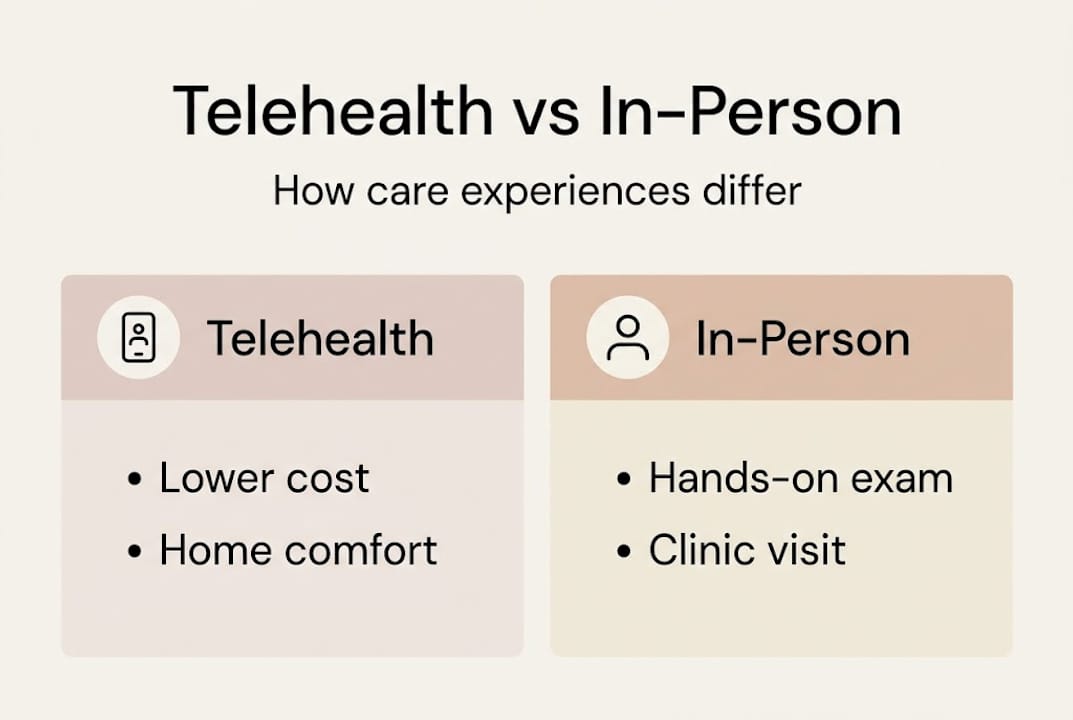
After walking through the telehealth visit, it’s helpful to directly compare virtual and traditional care experiences. Both have their place, but understanding the differences helps you make smarter decisions about your health.
| Feature | Telehealth | In-person |
|---|---|---|
| Cost | Lower, often transparent | Higher, often unpredictable |
| Convenience | High, from any location | Requires travel and scheduling |
| Wait times | Short | Often long |
| Conditions treated | Wide range of common issues | Full range including physical exams |
| Privacy | HIPAA-compliant, encrypted | Standard clinical privacy |
Telehealth shines for conditions that don’t require a physical exam: respiratory infections, skin concerns, mental health check-ins, prescription renewals, and chronic condition management. In-person care is still the right call for broken bones, chest pain, or anything that needs hands-on evaluation.
The smart approach is blending both. Use telehealth for fast, affordable access to care for everyday issues, and reserve in-person visits for situations that genuinely need them. This saves you time and money without sacrificing quality.
Patients who use telehealth report significant savings in both time and out-of-pocket costs compared to traditional visits, particularly for routine and non-emergency care.
For a balanced look at both sides, virtual healthcare pros and cons walks through the trade-offs honestly.
Key situations where telehealth is the better choice:
- You need care quickly but can’t get a same-day in-person appointment
- You’re managing a condition that requires regular check-ins
- You’re uninsured or underinsured and need transparent pricing
- You live far from a clinic or have limited transportation
Pro Tip: Keep a short list of your current medications and recent symptoms on your phone. Sharing this at the start of a telehealth visit helps your provider give faster, more accurate care.
All HIPAA-compliant telehealth systems use encryption and secure messaging, so your privacy is protected just as it would be in a physical office.
Who benefits most from telehealth?
Recognizing the differences, it’s important to understand who benefits most from telehealth solutions. The honest answer is: a lot of people. But some groups gain especially significant advantages.
Rural residents often face long drives to the nearest clinic. Telehealth removes that barrier entirely. A provider is available from a smartphone, regardless of zip code.

Working parents juggle packed schedules. Getting a child evaluated for an ear infection or a rash no longer means taking half a day off work. A quick virtual visit fits into a lunch break.
People with mobility challenges or chronic conditions that make travel difficult find telehealth to be a genuine lifeline. Regular check-ins become manageable instead of exhausting.
Uninsured and underinsured patients benefit from the transparent pricing that many telehealth platforms offer. There are no surprise bills, no facility fees, and no hidden charges. You know the cost upfront.
Common conditions that telehealth handles well include:
- Sore throats, sinus infections, and ear pain
- Urinary tract infections
- Skin rashes and mild allergic reactions
- Anxiety and depression management
- Prescription renewals for stable, ongoing conditions
- General wellness check-ins
Accessibility features like secure messaging and virtual waiting rooms ensure that patients with varying needs can still access care comfortably. For a deeper look at what makes care truly accessible, practical guide to easier care covers the topic well. You can also explore telehealth accessibility features that make virtual visits work for more people.
The bottom line is that telehealth isn’t just a convenience. For many patients, it’s the difference between getting care and going without it.
What most guides miss about telehealth
Most telehealth articles focus on the technology: the platforms, the compliance requirements, the list of treatable conditions. That’s useful, but it misses something important.
The real barrier to telehealth isn’t access. It’s confidence. Patients who don’t fully understand what to expect from a virtual visit often feel uncertain about whether the care they’re receiving is real or thorough. That uncertainty leads to disengagement, and disengagement leads to worse health outcomes.
Transparency matters more than technology. When a platform clearly explains what happens during a visit, what the provider can and can’t do, and what follow-up looks like, patients feel supported. They ask better questions. They follow through on treatment plans. They come back when they need care instead of waiting too long.
Digital literacy gaps and device access are real challenges too, but they’re solvable with the right support built into the platform. The providers and services that get this right are the ones that treat patients as partners, not just users.
For families especially, virtual visits for families shows how this kind of transparency translates into better everyday care.
Get affordable care with telehealth solutions
Now that you understand how telehealth works, taking the next step for your own care is simple and straightforward. Chameleon Healthcare offers same-day virtual visits with clear, upfront pricing and no insurance required.

Whether you’re dealing with asthma, recovering from sprains and strains, or just need a fast answer about a symptom that’s been bothering you, we’re here to help. No waiting rooms, no surprise bills, and no runaround. Just real care from licensed providers, available when you need it. Visit Chameleon Healthcare to get started with affordable virtual care today.
Frequently asked questions
Is telehealth as secure as in-person care?
Yes. HIPAA-compliant telehealth platforms use encryption and secure messaging to protect your personal and medical information, meeting the same privacy standards as any physical clinic.
Can I use telehealth without insurance?
Absolutely. Many telehealth providers offer transparent, flat-rate pricing so you know the cost before your visit. Accessible telehealth features like secure messaging and virtual waiting rooms make care available regardless of your insurance status.
When is telehealth not recommended?
Telehealth is not the right choice for medical emergencies, severe injuries, or conditions that require a hands-on physical exam or an in-person procedure. In those situations, go to an emergency room or urgent care clinic.
What if I need a prescription from a telehealth visit?
If your provider determines a prescription is appropriate, they can send it electronically to your preferred pharmacy at the end of your virtual consultation, no extra steps needed.