
TL;DR:
- Telehealth includes synchronous, asynchronous, and remote patient monitoring, each suited for different needs.
- Synchronous care offers real-time consultations ideal for urgent symptoms and primary care.
- Asynchronous and RPM are useful for chronic management, specialist evaluations, and flexible scheduling.
Knowing which telehealth option fits your situation can feel overwhelming, especially when you need care fast and don’t have insurance. The good news is that telehealth has grown into a flexible system with multiple service types, each designed for different health needs and circumstances. Whether you’re dealing with an urgent symptom, managing a chronic condition, or just need a quick check-in with a provider, there’s a telehealth format built for that moment. This article breaks down the main types of telehealth services, compares their strengths, and helps you figure out which one makes the most sense for your needs.
Table of Contents
- Understanding telehealth modalities
- Synchronous telehealth: Real-time care access
- Asynchronous telehealth: Store-and-forward solutions
- Remote patient monitoring: Chronic care and beyond
- Comparing telehealth types: Which fits your needs?
- A fresh perspective on choosing telehealth services
- Get affordable telehealth care for your needs
- Frequently asked questions
Key Takeaways
| Point | Details |
|---|---|
| Three telehealth types | Telehealth includes synchronous, asynchronous, and remote patient monitoring, each with unique benefits. |
| Urgent care options | Synchronous telehealth offers fast video or audio visits, ideal for immediate needs and uninsured users. |
| Specialty and chronic care | Asynchronous and RPM approaches support specialist reviews and ongoing management for chronic conditions. |
| Safety net access | Programs for low-income and uninsured make telehealth practical even without insurance or advanced tech. |
| Choosing the right modality | Consider care urgency, tech access, and whether a hybrid approach fits your health needs. |
Understanding telehealth modalities
Telehealth isn’t one-size-fits-all. It’s a broad category that includes several distinct service types, each with its own approach to delivering care. Understanding the differences helps you make smarter choices about where to turn when health concerns come up.
The primary types of telehealth services are synchronous (real-time live video or audio), asynchronous (store-and-forward), and remote patient monitoring (RPM). Each one serves a unique purpose and works best in specific situations.
Here’s a quick overview of what each type involves:
- Synchronous telehealth: Live, two-way communication between you and a provider via video or phone call. Think of it as a virtual office visit happening in real time.
- Asynchronous telehealth: You submit health information, photos, or records, and a provider reviews them later and responds. No live interaction required.
- Remote patient monitoring (RPM): Devices track your health data (like blood pressure or blood sugar) and send it to your care team on an ongoing basis.
These aren’t always used in isolation. Many modern platforms combine two or more types to give patients more complete care. The telemedicine benefits of each format depend heavily on your condition, your access to technology, and whether you have insurance.
For uninsured patients, it’s worth knowing that telehealth without insurance is increasingly accessible. In fact, federally qualified health centers (FQHCs) have seen strong telehealth adoption, particularly for primary care visits among low-income and uninsured populations. Knowing which modality fits your situation is the first step toward getting care without unnecessary barriers.
Synchronous telehealth: Real-time care access
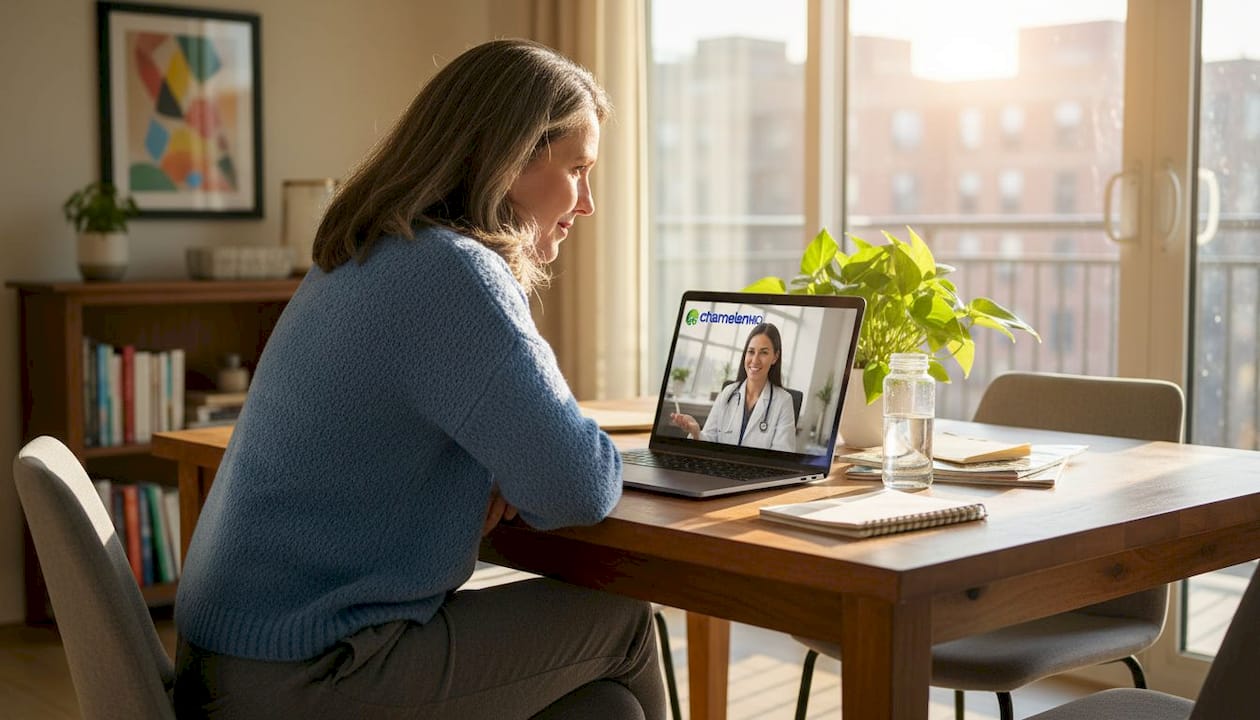
Synchronous telehealth is probably what most people picture when they think about seeing a doctor online. It involves a live, real-time connection between you and a licensed provider, usually over video or audio.
Synchronous telehealth involves real-time two-way communication via video or audio and is used for primary care, behavioral health, and urgent care. It’s the most direct form of telehealth and often the fastest path to a diagnosis or treatment plan.
Common uses for synchronous telehealth include:
- Urgent care visits for symptoms like sore throat, rash, or sinus pressure
- Primary care check-ins for routine concerns or prescription refills
- Behavioral health sessions including therapy and psychiatric evaluations
- Follow-up appointments after an in-person visit or procedure
For anyone seeking telehealth for urgent symptoms, synchronous visits are usually the right call. You get a real answer in real time, which matters when you’re not feeling well and need guidance quickly.
That said, there are some nuances worth knowing. Audio-only telehealth policies vary by state and program. Some platforms, like Medi-Cal, restrict audio-only visits for new patients and require video for initial consultations. If you’re an existing patient, a phone call may work just fine.
Video visits tend to give providers more clinical information, which can lead to more accurate assessments. If it’s your first visit for a new issue, video is usually the better choice.
Pro Tip: If you’re using telehealth for the first time or addressing a new health concern, opt for a video visit when possible. It gives your provider more to work with and helps them give you a more accurate assessment.
Understanding virtual care pros and cons can also help you set realistic expectations before your visit. Synchronous care is powerful, but it works best when you come prepared with a clear description of your symptoms and any relevant history.
For a broader look at how this all fits together, the virtual healthcare basics guide is a helpful starting point.
Asynchronous telehealth: Store-and-forward solutions
Not every health concern needs a live conversation. Asynchronous telehealth, often called store-and-forward, lets you share information with a provider at your convenience, and they review it on their schedule.

Asynchronous telehealth transmits clinical data like images or videos for later review and is common in dermatology, radiology, and ophthalmology. You might upload a photo of a skin rash, share an eye scan, or send lab results, and a specialist reviews everything without needing a live call.
Here’s where asynchronous telehealth really shines:
- Dermatology: Submit photos of a rash, mole, or skin irritation for expert review
- Radiology: Share imaging files for a remote read by a specialist
- Ophthalmology: Forward retinal scans or vision test results for evaluation
- Chronic condition follow-ups: Send updated readings or symptom logs between appointments
One important limitation to understand is that asynchronous telehealth typically can’t be used to prescribe controlled substances. Most platforms require a live interaction before issuing prescriptions, especially for new patients. For affordable healthcare basics, knowing this upfront saves time and frustration.
For a deeper look at how telehealth modality nuances affect your care options, it helps to understand that many services blend asynchronous intake (like filling out a symptom form) with a follow-up synchronous visit if needed.
Pro Tip: If you’re managing a skin condition or waiting on specialist input, asynchronous telehealth can speed up the process significantly. You don’t have to wait for an opening in a provider’s calendar to get answers.
This format is especially useful for people with busy schedules or those in rural areas with limited specialist access. It removes the need to coordinate schedules while still getting expert eyes on your health data.
Remote patient monitoring: Chronic care and beyond
Remote patient monitoring takes telehealth a step further by using connected devices to track your health on an ongoing basis. It’s less about single visits and more about continuous oversight.
RPM uses devices to collect physiological data such as blood pressure and glucose for chronic disease management and is billed under CPT codes 99453 through 99458. These codes cover everything from device setup to ongoing data review by your care team.
Here’s what RPM typically monitors:
- Blood pressure and heart rate
- Blood glucose levels for diabetes management
- Oxygen saturation for respiratory conditions
- Weight fluctuations for heart failure or kidney disease
| RPM CPT Code | What it covers |
|---|---|
| 99453 | Initial device setup and patient education |
| 99454 | Device supply and daily data transmission |
| 99457 | First 20 minutes of monthly monitoring |
| 99458 | Each additional 20 minutes of monitoring |
RPM isn’t just for tech-savvy patients. Many devices are simple to use and come with support resources. The goal is to make ongoing care feel manageable, not complicated.
For uninsured patients, RPM access has expanded through safety net programs. Telehealth in FQHCs accounts for roughly 25% of primary care visits among low-income and uninsured populations, and many of these clinics now incorporate RPM tools for chronic care management.
If you’re managing a condition like hypertension or diabetes, exploring telehealth membership benefits can help you understand how ongoing monitoring fits into an affordable care plan.
Comparing telehealth types: Which fits your needs?
Now that you know how each type works, the real question is: which one is right for you? The answer depends on your condition, your urgency, and your access to technology.
| Telehealth type | Best for | Response time | Prescribing ability | Insurance needed? |
|---|---|---|---|---|
| Synchronous | Urgent care, primary care, behavioral health | Immediate | Yes | No |
| Asynchronous | Dermatology, imaging, follow-ups | Hours to days | Limited | No |
| RPM | Chronic disease management | Ongoing | Depends on plan | Often covered |
As telehealth modalities often overlap, many platforms use hybrid approaches. You might complete an asynchronous intake form and then join a short synchronous call, or use RPM devices alongside monthly video check-ins.
For uninsured patients, safety net programs like FQHCs have shown strong uptake for primary and chronic care, reducing access barriers significantly. This is encouraging news if cost has been a reason you’ve delayed care.
Here’s a simple decision framework to guide your choice:
- Need care today for an urgent symptom? Choose synchronous telehealth via video or audio.
- Have a skin issue or need a specialist opinion? Try asynchronous store-and-forward.
- Managing a chronic condition like diabetes or hypertension? RPM with regular check-ins is worth exploring.
- Not sure where to start? Look for platforms offering virtual treatment options that combine multiple modalities.
- Concerned about rural access? Rural access disparities in telehealth are real, but synchronous audio-only visits can bridge gaps when video isn’t available.
The key is to match the telehealth type to your actual situation, not just pick whatever’s most convenient in the moment.
A fresh perspective on choosing telehealth services
Here’s something most telehealth guides won’t tell you: the official rules around modality selection are often written for insurers and regulators, not for patients. When you’re uninsured and need care today, the clinical ideal of a video-first approach may not reflect your reality.
Safety net clinics have quietly figured this out. They’ve learned that flexible, hybrid approaches, combining asynchronous intake with quick synchronous follow-ups, often lead to better outcomes than rigid protocols. The patients who benefit most aren’t the ones following the textbook path. They’re the ones who use whatever access point works for them.
What uninsured patients should watch for is the assumption that asynchronous care is always cheaper or easier. Sometimes it delays care when a five-minute synchronous call would have resolved everything. Choosing the right tool matters more than choosing the most affordable one in isolation.
For affordable urgent care without insurance, the smartest move is finding a platform that gives you options, not one that locks you into a single modality.
Get affordable telehealth care for your needs
Understanding telehealth types is the first step. Taking action is the next one. At Chameleon Healthcare, we make it simple to connect with a licensed provider from your phone or computer, no insurance required.
Whether you need help with asthma care online, support for sprains and strains, or ongoing access through one of our telehealth subscription plans, we have options built around your life and your budget. Same-day access, clear pricing, and no waiting rooms. We’re here when you need us, with the right type of care for whatever you’re facing.
Frequently asked questions
What are the main types of telehealth services?
The primary types are synchronous (real-time video or audio), asynchronous (store-and-forward), and remote patient monitoring. Each serves a different care need and works best in specific situations.
Which telehealth type is best for urgent care?
Synchronous telehealth via video or audio is the best fit for urgent symptoms because it connects you with a provider in real time for immediate assessment and treatment.
Can I use telehealth services without insurance?
Yes. Many platforms and clinics, including FQHCs where telehealth makes up about 25% of primary care visits, offer accessible options for uninsured patients at affordable or sliding-scale costs.
Is audio-only telehealth available for everyone?
Audio-only policies vary by state and program. It’s commonly available for follow-up visits or patients with limited technology access, but some programs restrict it for new patient consultations.
What is remote patient monitoring in telehealth?
RPM uses connected devices to track health data like blood pressure and glucose for ongoing chronic disease management, with care teams reviewing the data remotely and billing under specific CPT codes.