

TL;DR:
- Telehealth provides affordable, convenient online primary care through real-time or store-and-forward methods.
- It offers significant cost savings and high patient satisfaction for common health concerns.
- In-person care remains essential for emergencies, complex diagnoses, and physical examinations.
Getting quality primary care shouldn’t mean taking half a day off work, sitting in a waiting room, or paying a bill that leaves you stressed for weeks. Yet many people still assume that’s the only way it works. The truth is, online primary care through telehealth has changed what’s possible. Whether you’re managing a nagging cough, a recurring skin issue, or just need a quick check-in with a licensed provider, affordable and effective care is closer than you think. This guide breaks down how telehealth works, who benefits most, and how you can make it work for your life and your budget.
Table of Contents
- What is online primary care and how does telehealth work?
- Benefits of online primary care: Cost, convenience, and outcomes
- Who benefits most—and who can be left behind?
- Limitations and when in-person care is still required
- How to get started: Choosing an online primary care provider
- A balanced take: Telehealth’s promise and pitfalls for affordable primary care
- Affordable online care for common health concerns: Next steps
- Frequently asked questions
Key Takeaways
| Point | Details |
|---|---|
| Telehealth saves money | Online primary care reduces costs by 10–52% for common conditions, making it attractive for cost-conscious individuals. |
| Convenience and satisfaction | Telehealth offers high satisfaction rates and saves time by reducing the need for travel and in-person appointments. |
| Access isn’t equal for all | Not everyone can access online care equally; those with digital barriers may need extra support or hybrid options. |
| Know telehealth’s limits | Serious conditions or those needing physical exams still require in-person visits—telehealth works best for straightforward concerns. |
| Start with trusted providers | Choose online care services with clear licensure, transparent costs, and privacy policies to ensure safe, effective treatment. |
What is online primary care and how does telehealth work?
Online primary care is exactly what it sounds like: routine medical care delivered through your phone, tablet, or computer instead of a clinic. You connect with a licensed provider who can evaluate your symptoms, recommend a treatment plan, and even prescribe medication when appropriate.
There are two main ways this happens. Synchronous and asynchronous telehealth represent the two core approaches, and understanding the difference helps you choose the right one.
- Synchronous care means a real-time video or audio visit, much like a face-to-face appointment but from wherever you are. It’s great for situations where you need to talk through symptoms or get an immediate answer.
- Asynchronous care is store-and-forward communication. You send photos, describe your symptoms in a message, and a provider reviews and responds. It works well for visible conditions like rashes or pink eye.
Both methods are designed to handle a wide range of everyday health concerns, including:
| Condition type | Examples |
|---|---|
| Respiratory | Sore throat, sinus infections, cough |
| Skin | Rashes, acne, eczema flares |
| Digestive | Stomach upset, nausea, gastroenteritis |
| Other | UTIs, allergies, minor injuries |
The cost savings are real and measurable. Telehealth reduces costs by 10–52% for minor acute conditions like respiratory infections, gastroenteritis, and skin issues compared to traditional in-person care. That’s a meaningful difference when you’re paying out of pocket or watching your deductible.
You can learn more about the telemedicine benefits that make these visits practical, or explore virtual healthcare basics if you’re newer to the concept.
Pro Tip: Use synchronous (video) visits for concerns that feel urgent or unclear, and asynchronous visits for straightforward visual issues like a rash you can photograph. Matching the method to your situation saves both time and money.
Benefits of online primary care: Cost, convenience, and outcomes
Once you understand how telehealth works, the reasons patients are switching start to make a lot of sense. It’s not just about saving money, although the savings are substantial. It’s also about getting care that fits into your actual life.
Let’s start with cost. A standard telehealth visit often runs significantly less than an urgent care or primary care office visit. Here’s a general comparison:
| Visit type | Typical cost (without insurance) |
|---|---|
| In-person urgent care | $150–$250+ |
| In-person primary care | $100–$300+ |
| Telehealth visit | $50–$100 |
The cost-saving stats show that patient satisfaction runs 75–98%, comparable to in-person visits. Emergency department visits drop by up to 28%, and chronic condition management improves meaningfully for telehealth users.
Convenience also matters more than people give it credit for. Consider what you skip when you go online:
- No commute or travel costs
- No waiting room time (average in-person waits run 18–20 minutes before even seeing a provider)
- Flexible scheduling, including evenings and weekends
- Same-day access for many concerns
“Telehealth is not just a workaround. For millions of people, it’s simply a better experience from start to finish.”
For families, this is especially valuable. A sick child at 7 p.m. doesn’t have to mean a long ER trip. You can explore virtual visits for families and see how online care supports everyone in the household.
When it comes to managing ongoing conditions like high blood pressure or diabetes, telehealth keeps people connected to care between in-person appointments. That continuity matters. The virtual healthcare pros and cons article walks through this balance in detail.

Who benefits most—and who can be left behind?
Telehealth is a powerful tool, but it doesn’t reach everyone equally. Understanding who benefits most and who faces the most barriers is important for making informed choices.
Research shows that telehealth usage patterns skew toward younger, female, White, urban, and higher-comorbidity patients. People who are elderly, rural, or low-income use it far less, often due to structural barriers rather than personal preference.
| Group | Telehealth access likelihood |
|---|---|
| Urban, 18–44, tech-savvy | High |
| Suburban, moderate income | Moderate |
| Rural, elderly, low-income | Low |
The barriers are worth naming directly:
- No reliable internet access in rural or underserved areas
- Low digital literacy, making it hard to navigate apps or video platforms
- Language access gaps when platforms lack multilingual support
- Limited device access, especially among elderly patients
“Cost savings and quality care don’t help someone who can’t get online in the first place.”
The good news is that digital literacy support is increasingly recognized as essential for closing this gap. Hybrid care models, which blend online and in-person services, are emerging as one of the most practical solutions.
Here’s what individuals and communities can do to improve access:
- Ask your local library or community center about digital skills programs.
- Look for telehealth providers who offer phone-based visits, not just video.
- Advocate for subsidized broadband in underserved areas.
- Choose platforms that support multiple languages.
- Share telehealth resources with older relatives who might benefit.
For a practical look at making care more accessible, the healthcare access guide is a useful starting point. And if insurance is the sticking point, the telehealth without insurance article covers affordable options in plain terms.
Limitations and when in-person care is still required
Being honest about what telehealth can and can’t do is part of using it well. Online care is genuinely excellent for a wide range of common concerns, but there are real situations where you need to be in a room with a provider.
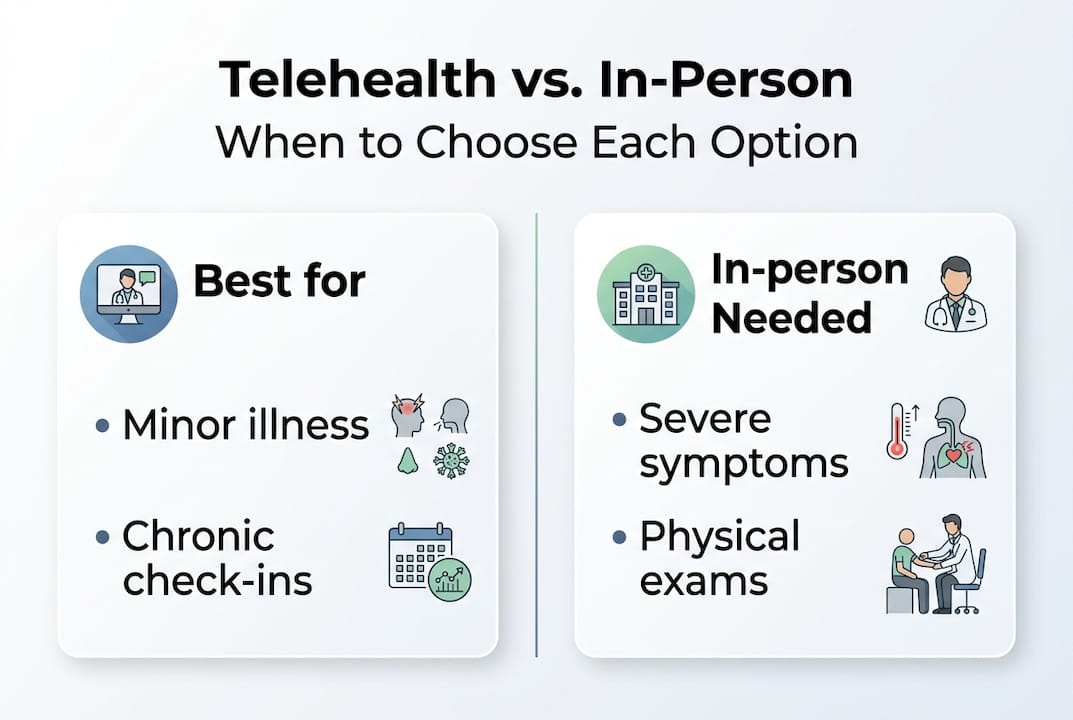
Barriers to telehealth implementation include not just patient-side challenges, but provider-side ones too: poor system integration, increased workload from managing digital communications, and usability issues on some platforms.
Here are situations where in-person care is the right call:
- Medical emergencies: chest pain, difficulty breathing, severe injuries, signs of stroke
- Physical exams required: abdominal pain that needs palpation, heart murmurs, joint injuries
- Complex or multi-system conditions that require lab work, imaging, or specialist referral
- Mental health crises that need immediate, face-to-face intervention
- Pediatric concerns that involve physical developmental checks
It’s also worth noting that telehealth in Medicare studies linked primary care telehealth to reduced inpatient admissions and lower readmissions, but also to higher absolute costs in some cases due to sicker patient populations using the service. This is a reminder that telehealth isn’t always the lowest-cost option depending on who’s using it and why.
For a fuller picture of where telehealth limitations apply, it’s worth reading through specific use cases.
Pro Tip: A quick rule of thumb: if your concern involves something you can describe, show in a photo, or discuss clearly, it’s likely a good fit for telehealth. If it involves significant pain, a physical change you can’t explain, or feels urgent and scary, call or go in person.
How to get started: Choosing an online primary care provider
Finding the right telehealth provider doesn’t have to be complicated. A few clear steps can help you get the care you need quickly and with confidence.
Step-by-step guide to starting your first online visit:
- Check licensure: Confirm the provider is licensed in your state and that the platform employs board-certified physicians or nurse practitioners.
- Review pricing clearly: Look for transparent, flat-rate pricing. Avoid platforms with hidden fees or surprise charges.
- Understand visit types: Know whether you’re booking a synchronous (video) or asynchronous (message/photo) visit based on your concern.
- Gather your information: Have your symptoms, any medications you take, and relevant health history ready before your visit.
- Confirm privacy practices: Check that the platform uses HIPAA-compliant systems for storing and sharing your health data.
- Read patient reviews: Look for consistent feedback on wait times, provider quality, and ease of use.
Synchronous visits work best for acute issues or follow-ups that need real-time conversation. Asynchronous visits are ideal for straightforward visual concerns, but they require solid system integration on the provider’s end to avoid delays.
Before your first appointment, ask these questions:
- Can this provider prescribe medication in my state if needed?
- What’s the average response time for asynchronous visits?
- Is there a membership option that lowers my per-visit cost?
- How do I follow up if my symptoms change or don’t improve?
For on-demand healthcare that skips the insurance maze, explore what’s available now. You can also look into affordable telehealth memberships for ongoing, lower-cost access to care.
A balanced take: Telehealth’s promise and pitfalls for affordable primary care
Here’s what most guides don’t tell you: telehealth’s biggest risk isn’t that it doesn’t work. It’s that people assume it works the same for everyone, and design their care around that assumption.
The data shows genuine optimism is warranted. Cost savings are real. Satisfaction is high. ER visits drop. But contrasting views in the research point to concerns about overutilization in some populations and widening disparities for those without digital access.
The mistake many people make is treating telehealth as a full replacement for primary care rather than a powerful complement to it. Hybrid models that blend online and in-person care consistently show better outcomes for both cost and inclusivity. Digital literacy matters just as much as affordability. A low-cost platform is useless if you can’t navigate it.
Choose platforms that are straightforward to use, offer real human support when you’re stuck, and are transparent about what they can and cannot handle. Avoid services that seem to push visits without asking enough questions about your situation. Understanding the real telehealth challenges helps you pick a provider who’s honest about its limits.
Affordable online care for common health concerns: Next steps
If you’ve been putting off care because of cost, wait times, or just not knowing where to start, online primary care through Chameleon Healthcare makes it simpler.
Chameleon connects you with licensed providers who can evaluate and treat a wide range of symptoms and conditions, from sore throats and sinus infections to skin rashes and stomach concerns, all from your phone or computer. No insurance needed, no waiting room, and clear pricing from the start. If you’re ready to take control of your care, explore affordable telehealth plans that fit your budget, or visit Chameleon Healthcare to get started today.
Frequently asked questions
What conditions can be treated with online primary care?
Common concerns like respiratory infections, stomach upset, skin issues, and minor injuries are often managed safely online. Minor acute conditions including respiratory infections, gastroenteritis, and skin issues are well-suited to telehealth for convenience and lower cost.
How much money can I save using telehealth for primary care?
Patients often save 10–52% compared to in-person care for similar visits, especially for minor conditions. The savings add up quickly for anyone paying out of pocket.
Is telehealth as effective as in-person care for chronic conditions?
For many ongoing conditions, yes. Patient satisfaction rates run 75–98%, comparable to in-person care, and emergency department visits drop by up to 28% among regular telehealth users.
Who is most likely to use online primary care?
Younger, urban, and tech-comfortable patients use telehealth most. Telehealth usage is significantly lower among elderly, rural, and low-income groups due to digital access and literacy barriers.
Are there health concerns that require in-person care instead of telehealth?
Yes. Emergencies, conditions requiring a physical exam, and complex multi-system issues are better handled in person. Physical exams and complex issues fall outside what telehealth can reliably address on its own.