
TL;DR:
- Telehealth offers quick, cost-effective medical consultations without insurance or in-person visits.
- It is suitable for minor illnesses, chronic management, and mental health but not for emergencies.
- Access may be limited by technology, internet, or state-specific prescribing laws.
Many people assume that getting quality medical care means having insurance, a long wait, or an expensive trip to the clinic. That assumption is costing people time, money, and peace of mind. Online healthcare, also called telehealth, lets you connect with a licensed provider from your phone or computer, often within hours, and without insurance. Telehealth enables individuals to consult licensed providers via video, phone, or secure messaging without in-person visits. This guide breaks down how it works, what it costs, which conditions it handles best, and where its real limits are.
Table of Contents
- What is online healthcare?
- How affordable is online care compared to traditional visits?
- What conditions can (and can’t) be treated online?
- Limitations, risks, and what to expect
- The real story: What most telehealth guides leave out
- Get fast, affordable care with Chameleon
- Frequently asked questions
Key Takeaways
| Point | Details |
|---|---|
| No insurance required | You can access affordable care online without health insurance. |
| Major cost savings | Telehealth appointments typically cost 5x less than in-person visits. |
| Many conditions treated | Online care is ideal for common illnesses, chronic issues, and mental health support. |
| Know the limits | Emergencies and complex cases still require in-person medical attention. |
| Tech readiness matters | You’ll need a device and internet access for a smooth virtual healthcare experience. |
What is online healthcare?
Now that you know telehealth isn’t just for insured patients, let’s look at how it actually works step-by-step.
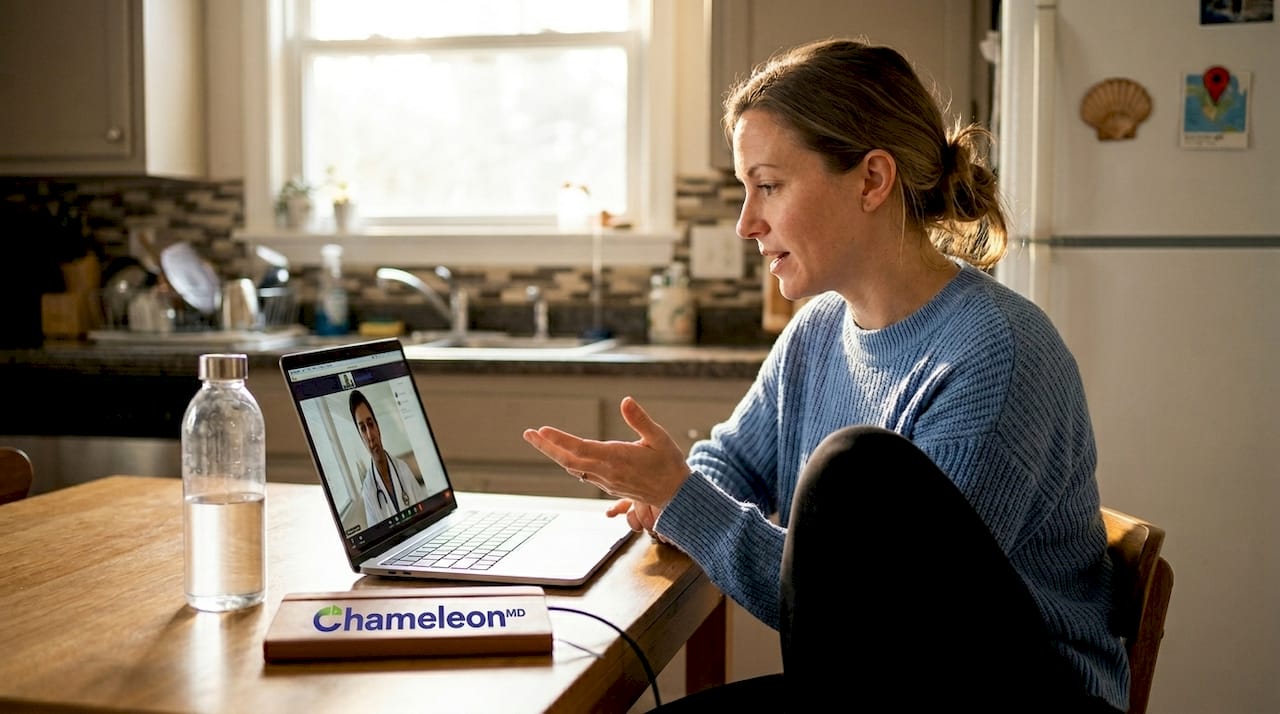
Online healthcare means seeing a licensed medical provider digitally instead of in person. You can connect through video, a phone call, or secure messaging on an app. The visit feels a lot like a regular appointment, except you’re sitting at home, at your desk, or even in your car during a lunch break.
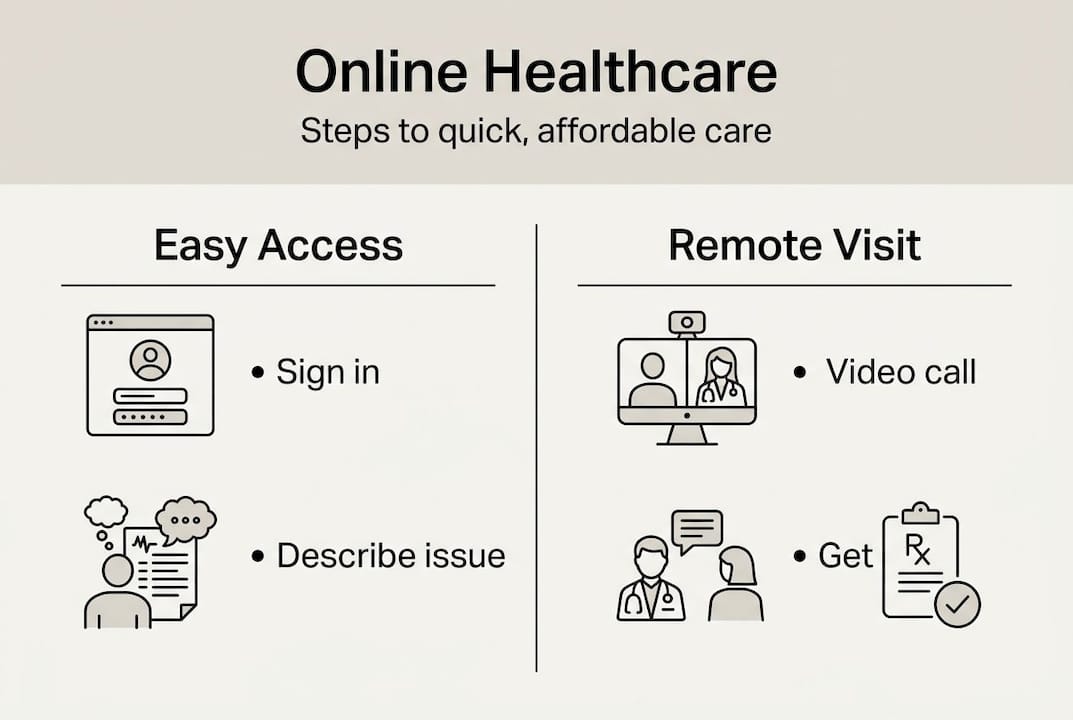
A typical digital visit follows a simple path. You choose a time that works for you, share your symptoms or concerns through a secure platform, and then speak with or message a licensed provider. From there, you may receive a diagnosis, a treatment plan, or even a prescription sent directly to your local pharmacy. Many platforms offer virtual healthcare basics that walk you through the process before your first visit.
The appeal is real. Busy professionals skip the waiting room entirely. Appointments are often available the same day, sometimes within the hour. Parents, remote workers, and people without nearby clinics all benefit from this kind of flexibility. You don’t need to take time off work or arrange a ride.
Forms of communication available in telehealth:
- Video calls with a licensed provider
- Phone consultations
- Secure in-app messaging
- Chat-based intake forms
- Asynchronous text review (submit symptoms, get a response)
You can consult via computer, tablet, or smartphone, and the benefits include no travel time and faster appointment availability. That convenience is especially valuable when a health concern shows up on a busy Tuesday morning and you can’t afford to lose half your day.
“Online healthcare puts a licensed provider within reach no matter where you are, as long as you have a device and a connection.”
Pro Tip: Before your first telehealth visit, test your camera and microphone, and make sure your app or browser is up to date. A smooth connection means your provider can see and hear you clearly, which helps them give you better care.
How affordable is online care compared to traditional visits?
With a clear idea of how online visits work, you may wonder if the savings are as dramatic as advertised.
The short answer is yes. The cost difference between telehealth and in-person care is significant, and the data backs it up. Telehealth episodes cost 5x less than in-person visits, averaging $96 compared to $509, with fewer follow-up visits and savings of up to $800 for respiratory episodes alone.

| Visit type | Average cost | Follow-up visits |
|---|---|---|
| Telehealth visit | ~$96 | ~3 |
| Urgent care (in-person) | ~$200-$300 | ~4+ |
| Emergency room visit | ~$509+ | ~4+ |
Those numbers matter even more when you don’t have insurance. Out-of-pocket telehealth costs are often lower than a co-pay at a traditional clinic. The telemedicine cost benefits come from reduced overhead, more efficient visits, and fewer unnecessary tests ordered during a digital appointment.
Why does telehealth cost less? Providers don’t need to maintain a physical office with staff, equipment, and facility fees. That savings gets passed on to you. Visits are also shorter and more focused, which means less time billed and fewer redundant tests.
However, empirical cost savings are real but not universal. Costs can rise in certain situations, and it’s worth knowing when.
When costs might increase with telehealth:
- You need repeated visits for an unresolved or worsening condition
- Diagnostic tests like blood work or imaging are required
- Your condition requires in-person follow-up after an initial online consult
- You live in a state with specific telehealth billing rules
For the vast majority of common health concerns, though, on-demand affordable care through telehealth is genuinely less expensive than driving to a clinic and waiting.
What conditions can (and can’t) be treated online?
Affordability is great, but not everything can or should be handled online.
Telehealth works well for a wide range of everyday health issues. If you have a urinary tract infection (UTI), a skin rash, a sinus infection, a cold, or need a medication renewal, an online provider can usually help you quickly and effectively. Mental health support, including therapy and psychiatric medication management, also works well in a virtual setting.
Suitable conditions for telehealth include minor illnesses, chronic condition management, and counseling, while unsuitable cases include fractures, severe abdominal pain, and anything requiring a hands-on physical exam.
| Suited for online care | Not suited for online care |
|---|---|
| UTIs, sinus infections, colds | Chest pain or shortness of breath |
| Skin rashes, mild allergies | Heavy bleeding or open wounds |
| Anxiety, depression, therapy | Suspected fractures or dislocations |
| Medication renewals | Severe abdominal pain |
| Chronic disease check-ins | Signs of stroke or heart attack |
For everyday issues handled remotely, telehealth is often faster and more convenient than an in-person visit. Chronic conditions like high blood pressure or diabetes can also be monitored and managed through regular virtual check-ins, which reduces the need for frequent clinic trips.
Signs that should NOT be managed remotely:
- Sudden, severe chest pain
- Difficulty breathing
- Loss of consciousness or confusion
- Uncontrolled bleeding
- Suspected poisoning or overdose
If any of these apply, call 911 or go to the nearest emergency room. Telehealth is a powerful tool, but it has real boundaries. Knowing those boundaries helps you use it safely. You can also review the pros and cons of virtual care to get a fuller picture before your first visit.
Pro Tip: Use telehealth for quick advice on mild or familiar symptoms. If something feels severe, sudden, or is getting worse fast, don’t wait for a virtual appointment. Go in person.
Limitations, risks, and what to expect
It’s also important to understand what could limit your telehealth experience.
Telehealth is genuinely convenient, but it isn’t perfect for everyone. To use it, you need an internet-enabled device and a reliable connection. That sounds simple, but for some people, including those in rural areas or without smartphones, this is a real barrier.
State laws vary on prescribing in telehealth, and total visit numbers may increase slightly even as in-person visits decrease. The digital divide also means that people with limited tech access may not benefit equally.
“Telehealth reduces low-value testing in many cases, but it can also occasionally miss high-value diagnostics that require a physical exam. Knowing its limits is part of using it wisely.”
State laws also affect what providers can prescribe during a virtual visit. Some medications, particularly controlled substances, have stricter rules depending on where you live. Medical record transfers between platforms and traditional providers can also take time, which matters if you’re managing a complex health history.
Most common access barriers in telehealth:
- No smartphone, tablet, or computer
- Unreliable or no internet connection
- Limited comfort with technology
- State-specific prescribing restrictions
- Difficulty transferring medical records
To get the most out of your visit, prepare ahead of time. Write down your symptoms, list any medications you’re currently taking, and have your pharmacy information ready. The more context you give your provider, the better care you’ll receive. If you’re curious about tech barriers in telehealth or want to know more about urgent care without insurance, those resources can help you plan ahead.
The real story: What most telehealth guides leave out
So, what does all this mean in practice, and what does the average telehealth explainer overlook?
Most articles focus on the wins: lower costs, faster access, no waiting rooms. Those benefits are real. But what gets skipped is the honest conversation about fit. Telehealth works brilliantly for the right person in the right situation. It doesn’t work for everyone, every time.
People often underestimate how much their tech comfort level affects the experience. A shaky video call or a confusing app can turn a quick visit into a frustrating one. That’s not a reason to avoid telehealth, but it is a reason to choose a platform that’s genuinely easy to use.
One area where virtual care often surprises people is mental health. Mental health care works well remotely, and some patients actually find it easier to open up from the comfort of home than in a clinical setting. That’s a real, underreported advantage.
Our honest take: telehealth is excellent for minor illnesses, ongoing condition management, and mental health support. It’s not a replacement for hands-on exams or emergency care. Knowing where it fits in your life, rather than treating it as an all-or-nothing solution, is what makes it truly useful. Explore virtual care treatments to see what’s realistically within reach.
Get fast, affordable care with Chameleon
If you’re ready to put online healthcare to work for you, here’s how to take the next step without missing a beat.
At Chameleon Healthcare, we built our platform around exactly the kind of care this guide describes: fast, affordable, and accessible without insurance. Whether you’re dealing with a sinus infection, a rash, or just need a medication renewal, our licensed providers are available same-day through your phone or computer.
No waiting rooms. No surprise bills. Just clear pricing and real support when you need it. Browse our Chameleon healthcare plans to find the right fit, or check out the full list of treatable conditions at Chameleon to see if your concern qualifies. When you’re ready, get started with Chameleon and connect with a provider today.
Frequently asked questions
Do I need health insurance to use online healthcare?
No. Most telehealth platforms offer affordable out-of-pocket rates, and telehealth costs 5x less than in-person visits without requiring insurance.
Can online doctors send prescriptions?
Yes, licensed providers can prescribe most medications for common conditions, though state laws vary on prescribing certain drugs in a telehealth setting.
What equipment do I need for a telehealth visit?
You need a smartphone, tablet, or computer with a camera and internet connection. Most platforms are accessible via smartphone or computer with no special equipment required.
Are online healthcare appointments safe and private?
Yes. Reputable platforms use encrypted, secure telehealth platforms to protect your health information and keep your visit confidential.
When should I avoid using online healthcare?
Avoid telehealth for emergencies. Chest pain, heavy bleeding, or signs of stroke require immediate in-person or emergency care.