

TL;DR:
- Online medical consultations provide quick, affordable care from home for routine health issues.
- Access disparities exist, with uninsured and rural populations benefiting less from virtual care.
- Combining virtual and in-person visits offers the safest, most effective approach for optimal health outcomes.
You don’t need a full afternoon, a crowded waiting room, or a hefty bill to get real medical care. Many people feel stuck choosing between an expensive ER visit and waiting weeks for a traditional appointment, and that gap leaves a lot of health concerns unaddressed. Online medical consultations have changed that equation. They connect you with licensed doctors and nurse practitioners quickly, affordably, and from wherever you are. Whether you’re uninsured, short on time, or just looking for a smarter way to handle routine health issues, this guide walks you through everything you need to know.
Table of Contents
- What are online medical consultations?
- Who can access online medical consultations and why does it matter?
- Top benefits: Why choose online medical consultations?
- Risks, limitations, and how to avoid pitfalls
- What you need to know about safety, regulations, and making the most of your visit
- Why hybrids win: The expert’s view on online medical consultations
- Get started with care today: affordable, accessible, on your terms
- Frequently asked questions
Key Takeaways
| Point | Details |
|---|---|
| Quick, affordable access | Online medical consultations deliver fast care for minor issues, especially for busy and uninsured patients. |
| Know your limits | Virtual care is best for non-emergencies—recognize when in-person medical attention is necessary. |
| Bridging the gap | Hybrid approaches combine the convenience of online with the safety of traditional visits for optimal health. |
| Preparation boosts safety | Carefully listing your symptoms and medications makes online visits safer and more effective. |
What are online medical consultations?
Online medical consultations are appointments with licensed healthcare providers that happen over video, phone, or secure messaging instead of in a clinic. You connect with a doctor or nurse practitioner, describe your symptoms, and receive a diagnosis, treatment plan, or prescription without leaving your home. It’s real care, just delivered differently.
These visits work well for a wide range of everyday health needs. Conditions managed virtually include:
- Colds, flu, and sore throats
- Urinary tract infections (UTIs)
- Skin rashes and mild allergic reactions
- Mental health check-ins and anxiety support
- Chronic disease management like diabetes or high blood pressure
- Medication refills for stable, ongoing conditions
As non-emergency care such as colds, UTIs, skin issues, and mental health visits are well-suited to virtual platforms, the list of treatable conditions continues to grow.
“Think of online consultations as your first line of support for everyday health issues, not a replacement for all medical care.”
That said, online consultations are not for everything. They cannot replace a physical exam, run lab work, or handle emergencies. If you’re experiencing chest pain, difficulty breathing, severe abdominal pain, or a possible stroke, call 911 or go to the nearest emergency room immediately.
Understanding when virtual care is appropriate helps you use it wisely. The people who benefit most are those who are uninsured, live in rural areas, have busy schedules, or simply prefer the convenience of care from home.
Pro Tip: Before your first online visit, check whether the platform offers secure messaging so you can follow up with your provider after the appointment without scheduling another call.
Who can access online medical consultations and why does it matter?
With the basics defined, let’s look at who really uses online medical consultations and who sometimes still gets left behind.
Access to virtual care is not equal across the board. Data shows a clear gap: privately insured patients use telehealth at a rate of 5.3%, while uninsured patients use it at just 0.6%. Urban residents use online consultations 2.4 times more than rural residents. That’s a significant difference, and it matters because access to care directly affects health outcomes.
| Group | Telehealth usage rate |
|---|---|
| Privately insured | 5.3% |
| Uninsured | 0.6% |
| Urban residents | 2.4x higher than rural |
Several factors create this gap:
- Digital literacy: Older adults or those unfamiliar with technology may struggle to navigate apps or video platforms
- Language barriers: Not all platforms offer multilingual support
- Device and internet access: No smartphone or reliable connection means no virtual visit
- Age and education: Both influence comfort and familiarity with telehealth tools
Some safety-net clinics and community health centers now offer virtual care options for low-income patients, which is a meaningful step forward. Still, the digital divide persists, and it keeps affordable telemedicine for underserved communities from reaching its full potential.
For those who can access it, virtual care offers a practical path to consistent, affordable support. If you’re uninsured or underinsured, access for the uninsured is more available than you might think, especially through transparent-pricing platforms.
Pro Tip: If you’re helping an older family member access virtual care, do a practice run with the video platform before the actual appointment to reduce stress on the day.
Top benefits: Why choose online medical consultations?
Understanding the challenges lets you appreciate why so many are turning to virtual visits, especially for routine care.
The advantages are real and practical. Here’s what makes online consultations worth considering:
- Convenience: You can connect from your couch, your car, or your office. No travel, no waiting room, no scheduling weeks out
- Speed: Many platforms offer same-day or next-day appointments
- Affordability: Visits can start as low as $30, compared to $150 or more at urgent care
- No insurance required: Many services use transparent, flat-rate pricing
- Broader care options: Virtual care for common illnesses covers everything from pink eye to prescription refills
Studies back this up. High patient satisfaction, reduced time and costs, and fewer unnecessary hospitalizations are consistently reported outcomes for patients using telehealth for chronic and routine care.

For families juggling work and kids, virtual visits for families eliminate the logistical headache of getting everyone to a clinic. You can address a child’s ear infection or a parent’s blood pressure follow-up without rearranging your whole day.
The virtual care pros and cons are worth weighing, but for minor illnesses, medication management, behavioral health, and chronic condition follow-ups, the benefits are hard to argue with.
Pro Tip: Write down your top three symptoms and any questions before your appointment. Providers can give better guidance when you arrive prepared, and your visit will feel more productive.
Risks, limitations, and how to avoid pitfalls
While the upsides are clear, it’s just as important to know where virtual care falls short and how to protect your health.
Online consultations have real limitations, and being aware of them helps you use the tool safely. One of the biggest concerns is misdiagnosis. Virtual misdiagnosis rates run between 13% and 16%, particularly for new or unclear symptoms where a physical exam would normally guide the diagnosis.
Other risks include:
- No physical exam: Providers can’t listen to your lungs, check your lymph nodes, or feel for tenderness
- Privacy gaps: Not all platforms are fully HIPAA-compliant; always check before sharing sensitive information
- Tech barriers: Poor internet or an unfamiliar interface can disrupt a visit and affect care quality
- Over-reliance: Using virtual care for symptoms that need in-person attention can delay important treatment
| Situation | Best care option |
|---|---|
| UTI, cold, mild rash | Online consultation |
| Chest pain, difficulty breathing | Emergency room immediately |
| New, unexplained symptoms | In-person visit first |
| Chronic condition follow-up | Virtual visit works well |
| Mental health check-in | Virtual visit works well |
To use virtual healthcare safely, choose recognized providers with clear credentials, bring a detailed symptom list, and know your escalation point. If your symptoms worsen or don’t improve within 48 hours, that’s your signal to seek in-person care.
Knowing when online care isn’t enough is just as valuable as knowing when it is. The goal is smart, safe healthcare, not just convenient healthcare.
What you need to know about safety, regulations, and making the most of your visit
Once you know the risks, it pays to understand how safety and laws shape what you can expect and how to get the best results.
Telehealth is regulated, and that’s a good thing. HIPAA-compliant telehealth providers must be state-licensed, follow privacy laws, and in some states, complete an initial in-person visit before prescribing certain medications. Payment parity laws, which require insurers to cover telehealth at the same rate as in-person visits, have expanded access significantly in recent years.
Here’s how to prepare for a safe, productive online visit:
- List your current medications and allergies before logging on
- Test your device and internet connection at least 10 minutes before the appointment
- Choose a private, quiet location so you can speak freely
- Have your symptom timeline ready: when it started, how it’s changed, what makes it better or worse
- Know your follow-up plan: ask the provider what to watch for and when to seek further care
Understanding telehealth regulations in your state helps you know what to expect. Some states have more restrictions than others, particularly around prescribing controlled substances or requiring established patient relationships.
For time-sensitive needs, same-day online visits are available through platforms that prioritize fast access without sacrificing quality.
Pro Tip: If your symptoms persist or worsen after a virtual visit, follow up with your regular doctor or an urgent care clinic. Online care is a starting point, not always the final word.
Why hybrids win: The expert’s view on online medical consultations
Experience with virtual care reveals something that gets overlooked in most conversations: the best outcomes don’t come from choosing online or in-person care exclusively. They come from using both strategically.
A hybrid care model that blends virtual and in-person visits is the safest, most effective approach for most people. Online consultations genuinely shine for follow-ups, chronic condition management, and minor issues where the diagnosis is fairly clear. But for new, severe, or unexplained symptoms, a physical exam isn’t optional. It’s essential.
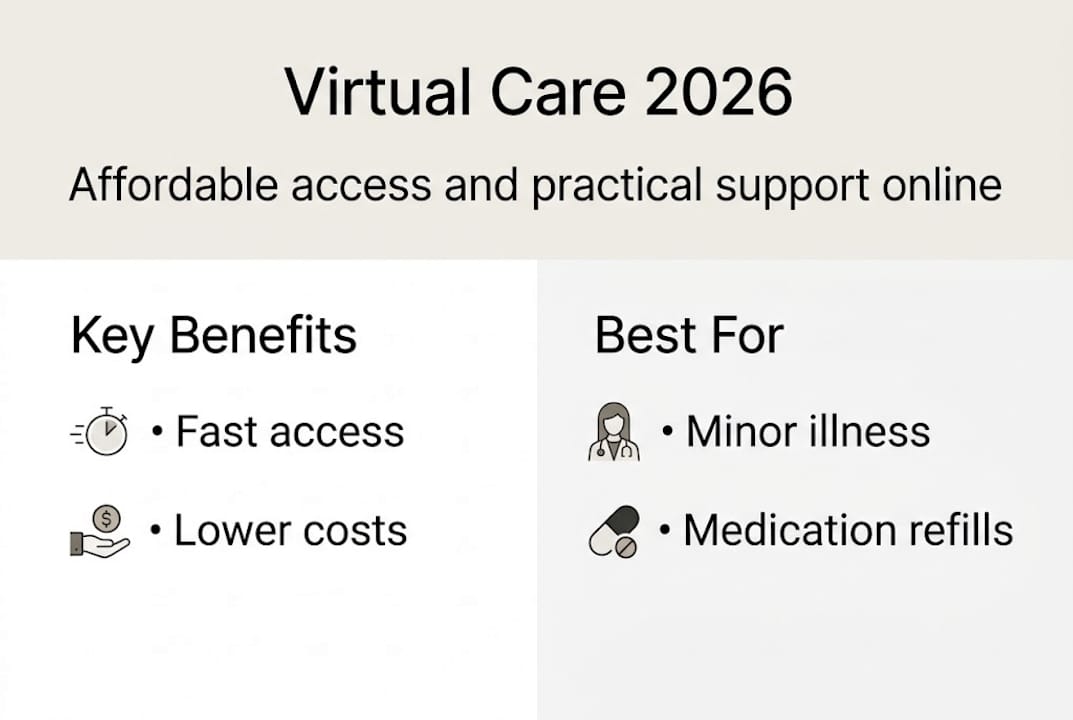
The extremes are where people run into trouble. Going all-virtual means you might miss something a provider would catch with their hands or a stethoscope. Going all-in-person for everything means unnecessary trips, higher costs, and delayed care for things that could be handled in minutes online.
Post-pandemic demand for telehealth has leveled off, but usage remains steady in mental health and chronic disease management, the two areas where consistent, low-friction access matters most. As hybrid virtual and in-person care becomes the norm, the most informed patients are the ones who know which tool to reach for and when.
Get started with care today: affordable, accessible, on your terms
Ready to put this knowledge to work for your health? Getting the care you need doesn’t have to mean long waits or surprise bills.
At Chameleon Healthcare, you can connect with a licensed provider today, no insurance required. Whether you’re dealing with heartburn relief online, need help with virtual care for pink eye, or just want a quick check-in for something that’s been bothering you, the process is simple and transparent. Pricing is clear upfront, scheduling is flexible, and care is available when you need it, not when it’s convenient for a waiting room. Visit Chameleon Healthcare to book your visit and take the first step toward care that works for your real life.
Frequently asked questions
What can I get treated in an online medical consultation?
You can address minor illnesses like colds, flu, UTIs, skin issues, medication refills, and mental health check-ins, but not emergencies or complex undiagnosed symptoms.
Are online medical consultations safe?
They’re safe for routine issues, but misdiagnosis rates of 13-16% are possible; always choose reputable providers, prepare thoroughly, and seek in-person care for urgent or unclear problems.
How much does an online doctor visit cost?
Many visits start at $30, which is typically far less than urgent care or the ER, and may include a prescription if medically appropriate.
Do I need insurance for online consultations?
No. Many services accept cash payment without requiring insurance, making virtual care accessible for uninsured individuals.
Is my information private and secure online?
Reputable services use HIPAA-compliant technology and follow state licensing laws to protect your health data during and after your visit.