
TL;DR:
- Virtual care often reduces costs and improves attendance compared to in-person visits, especially for common, mild conditions. However, in-person care remains essential for diagnoses requiring physical exams, procedures, or emergency evaluation. Matching the care approach to the clinical need optimizes health outcomes and resource use.
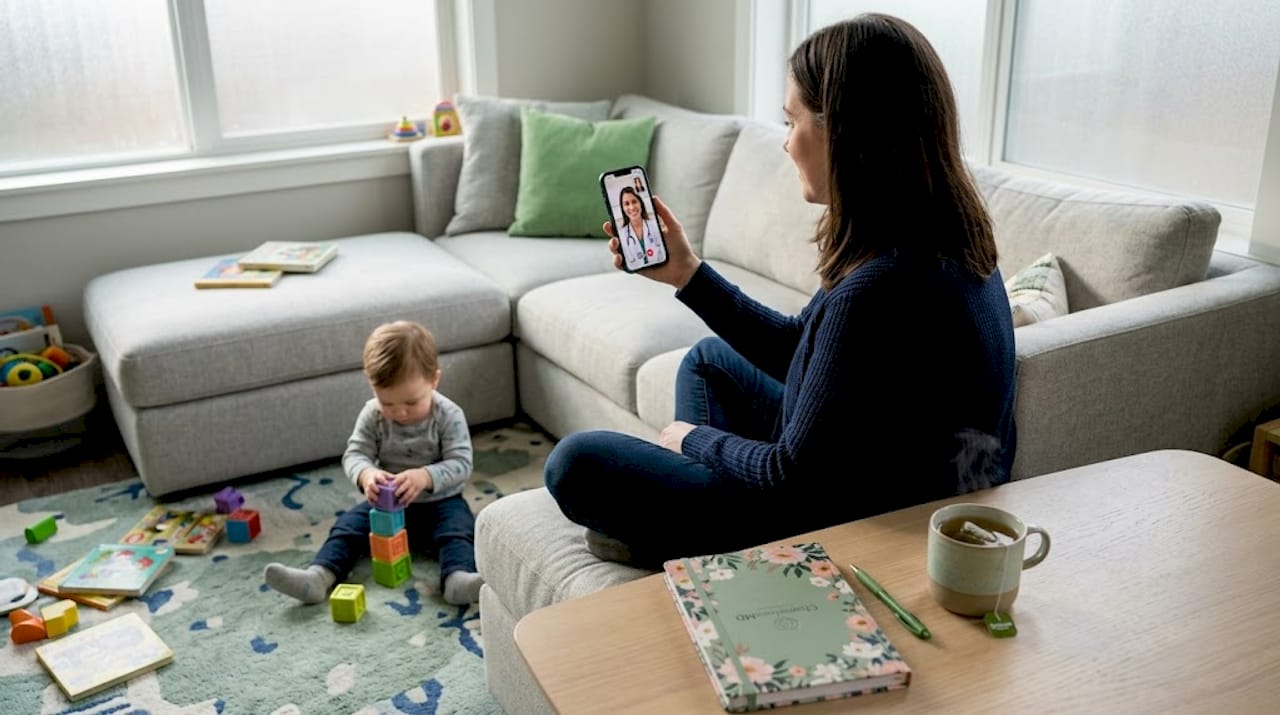
Most people assume that seeing a doctor face-to-face is always the gold standard. It feels more thorough, more reliable, more real. But episode costs are lower for many common conditions when care starts virtually rather than in person. That single finding challenges a belief most of us have held for years. This article walks you through the real differences between virtual and in-person care, covering costs, access, outcomes for children, and the scenarios where one approach is genuinely better than the other.
Table of Contents
- How virtual and in-person care differ for cost and convenience
- Appointment attendance, engagement, and equity: who benefits most?
- When is in-person care necessary? Limitations of telehealth
- Nuances: virtual vs. in-person care for children and acute needs
- Our perspective: the real question isn’t “which is better”
- How Chameleon makes virtual care work for you
- Frequently asked questions
Key Takeaways
| Point | Details |
|---|---|
| Virtual saves costs | Many acute care needs can be managed at lower cost with virtual visits. |
| Convenience and access | Telehealth provides easier scheduling and improved attendance for most people. |
| Know when to seek in-person care | Physical exams and urgent conditions still require seeing a provider directly. |
| Not one-size-fits-all | The best option depends on your condition, resources, and personal preferences. |
| Pediatrics need nuance | Virtual care works well for minor pediatric issues, but in-person follow-up may be needed for some acute cases. |
How virtual and in-person care differ for cost and convenience
With costs and convenience top of mind, let’s explore exactly where virtual care shines.
When you think about what drives up the cost of a typical doctor visit, it adds up quickly. There’s the copay, the travel, the time off work, maybe a parking fee, and the waiting room time before anyone even looks at you. Virtual care removes most of those layers.
Research confirms that switching to virtual-first care is associated with lower costs for many common acute conditions. That’s not just a minor difference. For people managing tight budgets or skipping insurance altogether, it represents a meaningful shift in what care actually costs out of pocket.
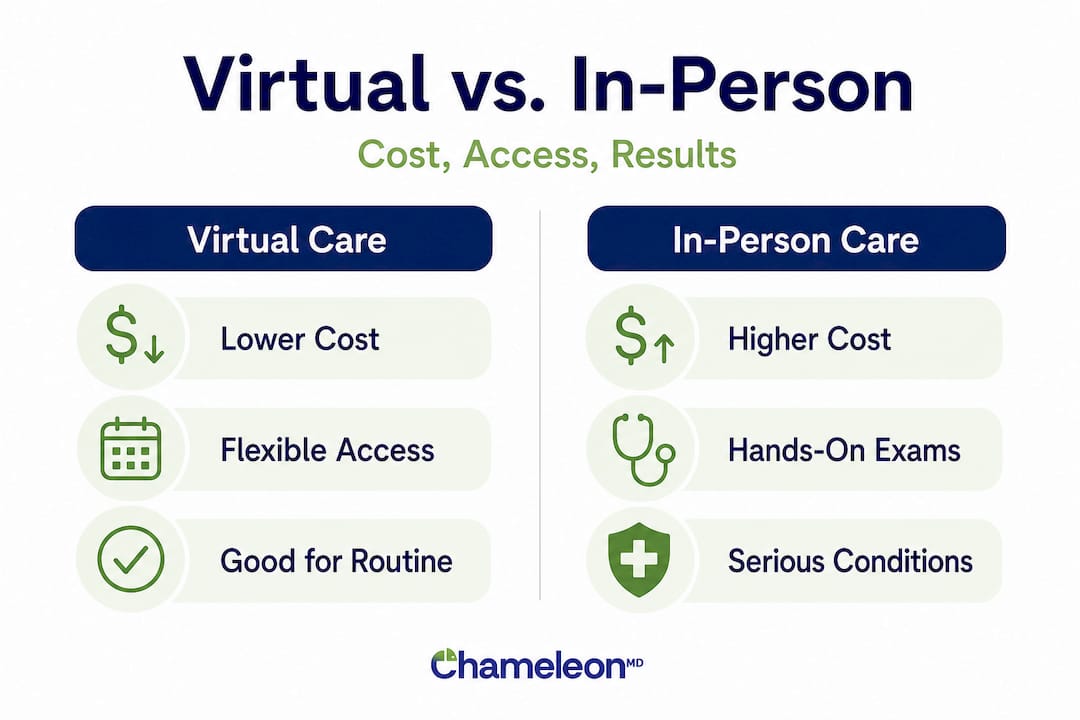
To put it in perspective, here’s how virtual and in-person visits typically compare across several common conditions:
| Condition | Virtual visit cost range | In-person visit cost range |
|---|---|---|
| Sinus infection | $40–$75 | $150–$300 |
| Sore throat | $40–$75 | $120–$250 |
| UTI | $40–$80 | $130–$275 |
| Skin rash | $50–$90 | $150–$350 |
| Pink eye | $35–$70 | $110–$220 |
These are general estimates, and your actual costs will vary. But the pattern is consistent: virtual visits tend to cost significantly less for straightforward, diagnosable conditions.
Beyond dollars, the convenience factor is real. You’re not rearranging your morning to sit in a waiting room. You connect from your couch, your car, or your office. Scheduling is faster, and same-day appointments are often available. If you’re already feeling sick, that matters a lot.
Understanding the virtual healthcare pros and cons helps you make smarter decisions about when to log on and when to head in. Virtual care works especially well for:
- Conditions you’ve had before and can describe clearly
- Prescription refills and medication management
- Follow-up consultations after in-person visits
- Minor illnesses where a physical exam is not essential
- Mental health check-ins and routine counseling
Pro Tip: If you manage a recurring condition like seasonal allergies or a skin issue that flares up regularly, virtual visits can save you both time and money compared to repeat in-person appointments.
Appointment attendance, engagement, and equity: who benefits most?
Beyond cost, let’s look at how well people can actually use and benefit from each approach.
One of the quieter successes of telehealth is something that doesn’t make headlines but has a big impact on health outcomes: people actually show up. Research shows that telehealth reduces non-attendance compared to in-person models. Missed appointments are a persistent problem in traditional healthcare. Life gets in the way. Transportation falls through. Work shifts change. A virtual visit eliminates most of those barriers.
“Telehealth was associated with meaningfully lower rates of non-attendance compared to in-person care. For populations where access is already strained, this difference can have outsized effects on continuity of care.”
That continuity matters more than many people realize. When you miss appointments repeatedly, small health concerns can grow into bigger ones. Telehealth keeps you connected to your care in a way that fits real life.
Equitable access is another important dimension. Historically underserved groups were more likely to use telemedicine when accessing primary care, suggesting virtual visits are filling genuine gaps in access. Rural communities, people without reliable transportation, and patients in areas with few providers are among those who benefit most.
That said, equity in telehealth is not automatic. Digital access gaps, language barriers, and comfort with technology can limit who benefits. The potential is there, but it requires intentional design to reach everyone.
Here’s a quick look at where telehealth tends to improve engagement and where it still has room to grow:
- Improved attendance: Fewer no-shows when people don’t need to travel
- Faster follow-up: Easier to schedule a quick check-in without a full appointment
- Reduced stigma: More comfortable for sensitive topics like mental health or sexual health
- Limitation: Patients with limited internet access or older adults may face more friction
- Limitation: Some populations prefer in-person interaction and feel less satisfied with virtual care
- Limitation: Technology literacy varies, which can affect how smoothly visits go
For families specifically, telehealth opens up practical flexibility. Getting virtual visits for families means you can address a child’s illness without pulling everyone out of their routine. Similarly, the affordable telemedicine benefits extend to employers too, with many companies now exploring telemedicine as an employee benefit to reduce absenteeism and support workforce health.
When is in-person care necessary? Limitations of telehealth
Convenience and access are big advantages, but there are situations when only in-person care will do.
Telehealth is a powerful tool. It is not a universal one. There are medical situations where a physical presence is simply required, and trying to work around that can lead to delayed diagnoses or missed findings.
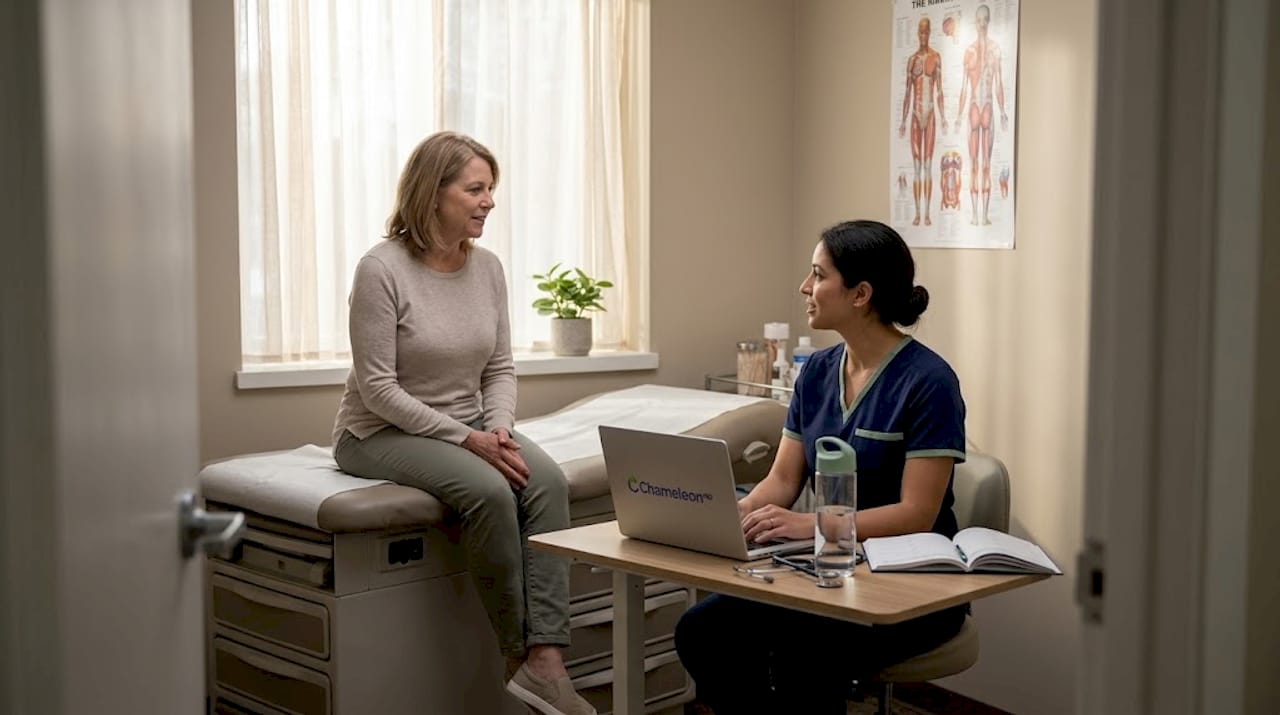
Harvard Health notes that a core limitation of telehealth is the inability to perform hands-on examinations. A provider can see you on screen and listen to your symptoms, but they cannot press on your abdomen, listen to your lungs with a stethoscope, or examine a wound up close. Those gaps matter for certain conditions.
“Telehealth is not universally as good as in-person care. Key limitations include missing or delaying hands-on examinations, which can be critical for accurate diagnosis in certain situations.” — Harvard Health
Mayo Clinic guidance reinforces this point: matching the care method to the clinical need is what produces good outcomes. Not all situations are suited to a screen-based assessment.
Here are the scenarios that almost always require an in-person visit:
- Chest pain or difficulty breathing: These can signal serious conditions that need immediate hands-on evaluation
- Severe or sudden abdominal pain: Physical examination is essential for ruling out emergencies
- Suspected fractures or injuries: Imaging and physical assessment are required
- New neurological symptoms: Numbness, weakness, or vision changes need in-person testing
- Conditions needing lab work or imaging: Blood tests, X-rays, and other diagnostics require physical presence
- Procedures or wound care: Sutures, injections, and similar interventions cannot be performed remotely
Understanding how telemedicine works and its appropriate scope helps you feel confident about when to use it and when to head to a clinic or urgent care center instead.
Pro Tip: If you’re unsure whether your concern is a good fit for a virtual visit, many telehealth platforms allow you to describe your symptoms first. A licensed provider can advise you on whether an in-person evaluation is the safer next step.
Nuances: virtual vs. in-person care for children and acute needs
Certain groups and conditions deserve a closer look, especially children and acute illness scenarios.
Pediatric care through telehealth is one of the most actively studied areas, and the findings are nuanced. Virtual visits for children’s illnesses can work well in many cases, but parents need to know where the evidence points, especially for respiratory illnesses and acute sick visits.
One notable finding: telemedicine visits show lower antibiotic rates than in-person visits for pediatric acute respiratory illnesses, without evidence of increased short-term follow-up needs. That’s significant because antibiotic overuse is a genuine public health concern, and virtual providers appear to be prescribing more conservatively, not less carefully.
However, there’s also a meaningful caution for parents to be aware of. Virtual sick visits can be associated with higher subsequent emergency department use in some pediatric age groups. That does not mean telehealth is unsafe for children. It does mean you should watch symptoms closely after a virtual visit and know when to escalate.
Here’s a comparison of how virtual and in-person care tend to differ for pediatric acute respiratory illness:
| Factor | Virtual visit | In-person visit |
|---|---|---|
| Antibiotic prescription rate | Lower | Higher |
| Short-term follow-up need | Similar | Similar |
| Subsequent ED use (some age groups) | Slightly higher | Lower |
| Convenience for mild symptoms | High | Moderate |
| Ability to assess breathing sounds | Limited | Full |
| Appropriate for ear exam | No | Yes |
The takeaway is not that virtual care is riskier for kids overall. It’s that the type of illness matters. Mild cold symptoms, rashes, or questions about fever management are well-suited to a virtual visit. But certain symptoms need eyes, ears, and hands.
Explore the full range of common virtual care treatments to see what kinds of conditions are handled effectively online.
Here is when to escalate from a virtual visit to in-person care for a child:
- Breathing becomes labored, rapid, or noisy after the virtual visit
- Fever climbs significantly or does not respond to appropriate treatment within 24 to 48 hours
- The child appears unusually lethargic, confused, or inconsolable
- A rash spreads rapidly or is accompanied by facial swelling
- Symptoms were improving and then suddenly worsen
- The virtual provider recommends an in-person follow-up based on their assessment
Having this plan in place before you log on means you won’t be scrambling to decide if something goes sideways.
Our perspective: the real question isn’t “which is better”
The virtual vs. in-person debate has a twist most people miss entirely.
We talk to a lot of people who frame this as a binary choice. They think they’re either the type of person who does telehealth or the type who sees a doctor in person. But that framing misses the actual skill, which is knowing when to use each one.
Think of it like choosing between calling a plumber and watching a quick tutorial online. For a leaking pipe under the sink, the tutorial works fine. For a burst pipe in the wall, you call the plumber immediately. The issue isn’t which approach is better in general. It’s which one fits the problem in front of you right now.
The research supports a triage-first mindset. Start virtual for routine, familiar, or mild issues. Escalate in-person when symptoms are new, severe, rapidly changing, or require physical examination. Best outcomes come from matching the method to the need, not defaulting to one approach for everything.
This is especially important for telehealth without insurance, where the cost difference between virtual and in-person can be significant. Using virtual care for what it does well, and in-person care for what only it can do, keeps your health on track without unnecessary spending.
Pro Tip: Before any virtual visit, especially for a child or a symptom that could worsen, think through your escalation plan. Know which urgent care center or ER you’d go to, and what warning signs would send you there. That preparation turns a virtual visit into a confident, connected experience instead of a stressful guessing game.
The bottom line from our perspective: the best healthcare strategy isn’t picking a side. It’s building a flexible approach that puts the right care in front of you at the right time.
How Chameleon makes virtual care work for you
Ready to apply what you’ve learned and make access easier?
If you’ve been weighing your options and looking for a way to get affordable, reliable care without the usual friction, Chameleon Healthcare was built for exactly that. We connect you with licensed providers for a wide range of common conditions treated online, from sinus infections and sore throats to rashes, UTIs, and more. No waiting room. No insurance required. Same-day access so you can get care when you actually need it.
Whether you need a one-time visit or a more consistent care relationship, you can explore membership plans that make regular access simple and affordable. Our pricing is transparent, our providers are licensed, and the whole experience is designed around your schedule. Getting care shouldn’t feel like a project. With Chameleon, it doesn’t have to.
Frequently asked questions
Is virtual healthcare always cheaper than in-person visits?
For many common acute conditions, virtual visits are often less expensive, but actual savings depend on the specific condition and what type of coverage you carry. Research shows lower episode costs for many conditions when care starts virtually.
Are there health problems that telehealth can’t diagnose or treat well?
Yes, conditions that require physical exams, lab work, imaging, or hands-on procedures generally need an in-person visit. Key telehealth limitations include the inability to perform hands-on examinations, which are critical for accurate diagnosis in certain situations.
Does using telehealth mean I’ll skip fewer medical appointments?
Research shows that telehealth reduces non-attendance compared to in-person visits, largely because it removes the transportation and scheduling barriers that cause most missed appointments.
Is telehealth equally accessible for everyone?
Access patterns vary across populations. Underserved groups have been more likely to use telemedicine when accessing primary care, but gaps related to digital access and technology comfort remain a real challenge for some communities.