

TL;DR:
- Telehealth is transforming family medicine by providing convenient, cost-effective, and accessible healthcare through technology. It effectively supports prevention, treatment, chronic monitoring, and administrative needs, especially for busy or remote families. However, limitations like the lack of physical exams mean that a hybrid approach combining in-person and virtual care remains the most effective strategy.
Waiting rooms, rushed appointments, and the logistical challenge of getting your whole family to a clinic on a Tuesday morning — it doesn’t have to be this way. Modern family care is evolving quickly, and telehealth is leading that change. Telehealth in family medicine is now utilized across four primary areas: prevention, treatment, monitoring and control, and consultation and administration. For families who are juggling work, school, and tight budgets, that kind of flexibility isn’t just convenient. It’s genuinely life-changing.
Table of Contents
- What is telehealth in family medicine?
- Major benefits for families: Access, savings, and satisfaction
- Limitations and challenges of telehealth in family care
- How families actually use telehealth: Real scenarios
- A practical perspective: Why the future is a smart telehealth and in-person care mix
- Get affordable telehealth care for your family
- Frequently asked questions
Key Takeaways
| Point | Details |
|---|---|
| Multiple roles for families | Telehealth now covers prevention, treatment, monitoring, and family consultations for common issues. |
| Saves time and money | Families can save up to $186 per visit and avoid travel by using telehealth for suitable medical problems. |
| Limitations exist | Not all health issues can be solved online, especially new or complex symptoms needing a hands-on exam. |
| Best for routine care | Prescription refills, chronic condition check-ins, and mild illnesses are ideal for telehealth care. |
| Blended care is optimal | The smartest approach is mixing telehealth and in-person visits for your family’s safest and most effective care. |
What is telehealth in family medicine?
Telehealth is healthcare delivered through technology. Instead of driving to a clinic, you connect with a licensed medical provider through your phone, tablet, or computer. It’s as simple as a video call, but the outcome is real medical care, including diagnoses, prescriptions, follow-up guidance, and more.
For families, understanding virtual healthcare explained in practical terms matters most. Think of it this way: if your child wakes up with pink eye, instead of missing a morning of work to sit in a waiting room, you open an app, describe the symptoms, and have a prescription sent to your pharmacy within the hour.
Telehealth in family medicine covers four key roles:
- Prevention: Wellness check-ins, vaccination reminders, mental health screenings, and lifestyle counseling
- Treatment: Diagnosing and managing common illnesses such as sore throats, urinary tract infections, rashes, and respiratory infections
- Monitoring and control: Ongoing management of chronic conditions like high blood pressure, diabetes, and asthma
- Consultation and administration: Specialist referrals, prescription refills, lab result reviews, and care coordination
This range of easier care access means that telehealth can support your family across many different health situations, not just the occasional sick day.
Fewer trips, more care at your fingertips.
That simple idea captures what telehealth delivers for modern families. It removes the physical barriers between you and the medical support you need, while keeping quality and safety at the center.
Major benefits for families: Access, savings, and satisfaction
Does telehealth really deliver on its promises for your family? The short answer is yes, and the data backs it up. Key advantages include improved patient access, convenience, patient safety, flexibility, and meaningful cost savings for both patients and providers, particularly by reducing travel time and costs.
Let’s look at how telehealth stacks up against a traditional in-person visit.
| Feature | Telehealth | Traditional visit |
|---|---|---|
| Average cost per visit | $50 to $100 | $150 to $300+ |
| Wait time | Minutes | 1 to 3 hours |
| Travel required | No | Yes |
| Availability | 7 days a week, evenings | Limited hours |
| Rural access | Full | Often limited |
| Patient satisfaction | Comparable to in-person | High, but variable |
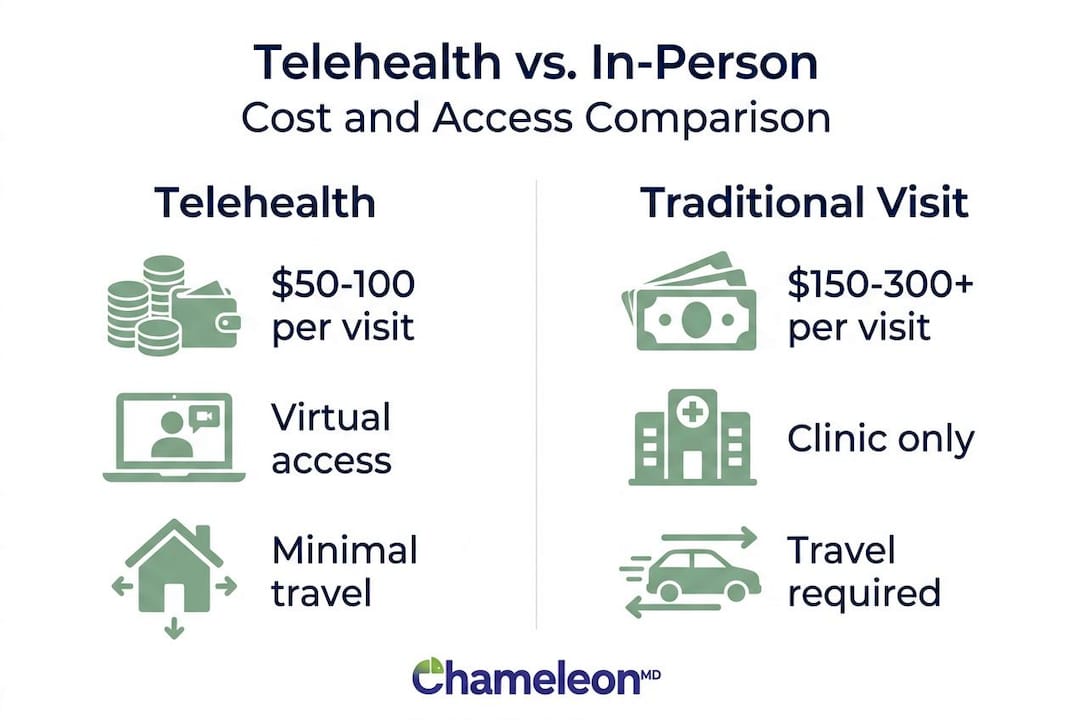
The cost difference alone is significant. One study estimates savings of $147 to $186 per telehealth visit compared to in-person care. For a family with three kids who gets sick a few times a year, that’s hundreds of dollars back in your pocket every year without sacrificing the quality of care you receive.

Research also shows that high-telehealth practices had fewer in-person visits but a slight net increase in total evaluation and management visits, with no change in hospitalizations or overall spending. This suggests that telehealth isn’t just a cheaper substitute. It actually expands the amount of care families receive without driving up costs or leading to more hospital visits.
Even more striking, telehealth is linked to reduced inpatient admissions by 4.3%, readmissions by 2.4%, and medical spending reductions of 10.8% for Medicare patients and 27% for out-of-pocket costs. That’s not just convenient. That’s a meaningful improvement in health outcomes.
Here are three concrete ways telehealth expands access and satisfaction for families:
- Rural and remote families: If you live more than 30 minutes from the nearest clinic, telehealth eliminates a half-day commitment for a routine visit. You get the same care in 20 minutes from your living room.
- Uninsured and underinsured families: Without insurance coverage, a single in-person visit can cost hundreds of dollars. Telehealth platforms with transparent, flat-rate pricing make it possible to get diagnosed and treated affordably, without any surprise bills.
- Busy working parents: Scheduling a daytime appointment often means missed work and disrupted routines. Evening and weekend telehealth access lets you address health issues on your schedule, not the clinic’s.
You can find more details on these affordable care benefits and understand how they translate into real savings for families like yours. The virtual visits advantages are especially meaningful when life is busy and budgets are tight.
Pro Tip: Before booking any telehealth visit, check the platform’s pricing page to confirm what’s included. Look for flat-rate or membership-based models that show the full cost upfront. This helps you avoid unexpected fees and lets you compare options confidently.
Limitations and challenges of telehealth in family care
These savings and conveniences are significant, but what should families watch out for? Telehealth isn’t the right answer for every health situation, and being honest about that is important.
Challenges include the absence of a physical exam, which can lead to diagnostic errors, along with digital literacy gaps, privacy concerns, and communication barriers that some families face. Understanding these limitations helps you make smarter choices about when to use telehealth and when to head to a clinic.
Here are the most common limitations to keep in mind:
- No physical exam: A provider can’t listen to your lungs, feel for a swollen lymph node, or check a wound in person. This limits what they can assess with certainty.
- Digital access barriers: Not every family has reliable internet, a functioning device, or the comfort level with technology that telehealth requires.
- Privacy considerations: Using shared devices or connecting from public places can create privacy risks. Always use a private connection when possible.
- Technical issues: Poor video quality or dropped calls can interrupt a visit and create communication gaps.
- Prescription limitations: Controlled substances and certain medications cannot be prescribed through telehealth in most states.
Understanding pros and cons of telehealth helps you use it wisely. There are also important scenarios where telehealth simply is not enough.
| Situation | Telehealth appropriate? | Reason |
|---|---|---|
| Pink eye or mild rash | Yes | Visual assessment is sufficient |
| Prescription refill | Yes | No exam needed |
| Chest pain or shortness of breath | No | Requires immediate physical evaluation |
| Abdominal pain with fever | No | May need imaging or physical exam |
| Broken bone or laceration | No | Requires in-person assessment or procedure |
| Chronic condition check-in | Usually yes | Monitoring via conversation and history |
| New complex or undiagnosed symptoms | Often no | Too much uncertainty without an exam |
Studies show a misdiagnosis risk of 13 to 16% in telehealth settings for conditions that require a physical exam. That’s not a reason to avoid telehealth altogether, but it is a reason to be thoughtful. For symptoms that are new, severe, or difficult to describe, in-person care is the safer choice.
For more details on these telehealth challenges for family medicine, it’s worth reviewing guidance from medical professionals who specialize in blended care models. Knowing when to seek telehealth for urgent symptoms and when to go straight to an emergency room is an important skill for every family.
Pro Tip: A quick rule of thumb is to ask yourself: “Would a doctor need to physically touch or examine me to help with this?” If the answer is yes, go in person. If your symptoms can be described clearly and visually assessed, telehealth is likely a safe and effective option.
How families actually use telehealth: Real scenarios
After considering the risks, let’s see how families are safely and successfully using telehealth in real life. Millions of people now use virtual care as a regular part of how they manage their family’s health, and the results are encouraging.
Here are some of the most common and effective family telehealth scenarios:
- Prescription refills: A parent managing a child’s ADHD medication or a spouse who needs a blood pressure refill can connect with a provider in minutes. No appointment required, no travel needed.
- Pink eye and conjunctivitis: One of the most telehealth-friendly conditions. A provider can visually assess the eye and prescribe antibiotic drops quickly and confidently.
- Skin rashes and mild infections: Photos combined with a live video visit give providers enough information to identify and treat most common rashes, including contact dermatitis, eczema flare-ups, and mild skin infections.
- Chronic condition check-ins: Families managing diabetes, asthma, thyroid conditions, or high blood pressure benefit from regular virtual check-ins to adjust medications and review lab results.
- Mental health and behavioral support: Anxiety, stress, and mild depression are well-suited for telehealth therapy and counseling, which is especially helpful for teens who prefer the comfort of their own space.
- Sore throat, sinus infections, and cold symptoms: Most upper respiratory infections can be evaluated virtually, with providers prescribing antibiotics when appropriate or offering guidance on home care.
Same-day online visits are especially valuable for these situations, when symptoms show up on a Friday evening or a holiday weekend and waiting until Monday simply isn’t realistic.
Research on telehealth access for common issues confirms that virtual care enhances affordability and accessibility for families who prioritize convenience without sacrificing quality. It’s ideal for refills, minor illnesses, and chronic monitoring, exactly the situations most families encounter regularly.
And when it comes to how patients feel about the experience:
“Patient satisfaction with telehealth is comparable to in-person visits, with no significant difference in most studies, and satisfaction is even higher when care is provided by a familiar provider.”
That finding matters. It tells you that telehealth isn’t just a compromise. When it’s used in the right situations, it’s genuinely satisfying care. Explore virtual care treatments to see a broader picture of what families can address from home.
A practical perspective: Why the future is a smart telehealth and in-person care mix
Here’s something worth saying plainly: telehealth should not replace your family doctor. And that’s not a criticism of virtual care. It’s actually what makes telehealth so valuable when used correctly.
The smartest families aren’t choosing between telehealth and in-person visits. They’re using both, strategically. While telehealth is cost-effective and broadly satisfying, limitations in diagnostics remain real, and a hybrid model is recommended over full replacement of traditional care. That recommendation reflects a clear-eyed view of what technology can and can’t do for your health right now.
Think about how a hybrid model works in practice. Your child gets pink eye on a Sunday. You use telehealth to get a prescription quickly and painlessly. Two weeks later, they need a physical for school sports. You go in person. Your spouse is managing high blood pressure and connects with a provider monthly via video to review their numbers and adjust their medication. Twice a year, they get labs done at a local clinic and follow up virtually. That’s a thoughtful, efficient approach that uses each model at its strongest point.
The current limitations of telehealth technology are real. Providers still cannot auscultate (listen to internal sounds like heartbeats or breathing) through a screen, palpate the abdomen, or physically assess swelling or tenderness. These are not small gaps. They matter, especially for new or unclear symptoms. Families deserve solutions tailored to their specific health situation, not a one-size-for-all approach that assumes every issue is equally suited to virtual care.
Our perspective is that affordable telehealth memberships paired with smart in-person care create the most effective and financially sustainable healthcare model for families today. The future isn’t fully virtual or fully traditional. It’s a flexible, personalized blend that puts your family’s needs first.
Get affordable telehealth care for your family
Getting quality healthcare for your family shouldn’t mean choosing between your budget and your health. At Chameleon Healthcare, we’ve built a platform that combines the convenience of telehealth with transparent, flat-rate pricing, so you always know what you’re paying before you connect with a provider.
Whether you need a same-day visit for a sick kid, a quick prescription refill, or ongoing care for a chronic condition, we make it simple and affordable. No waiting rooms, no insurance required, and no surprise bills. You can explore telehealth plans designed for families, or visit Chameleon Healthcare to learn more about how our services work. Your family’s health shouldn’t wait, and with us, it doesn’t have to.
Frequently asked questions
Is telehealth safe and effective for children?
Telehealth is proven safe and effective for most common pediatric conditions, but in-person visits are still essential for new or complex symptoms that require a physical exam or immediate intervention.
How much can you save with telehealth?
Studies estimate that families can save $147 to $186 per visit by choosing telehealth instead of an in-person appointment, making it a genuinely affordable option.
What types of issues are best for telehealth?
Telehealth works best for common issues like refills, mild illnesses, skin conditions, and chronic condition monitoring, where a physical exam is not required to reach an accurate diagnosis.
Does telehealth really increase access for rural families?
Yes. Telehealth increases access and reduces travel time and costs significantly, making it one of the most impactful tools available for rural, remote, and underserved families.
Are there any risks to using telehealth?
There is a small but real misdiagnosis risk of 13 to 16% for conditions that require physical exams, which is why knowing when to choose in-person care is just as important as knowing when telehealth is appropriate.