
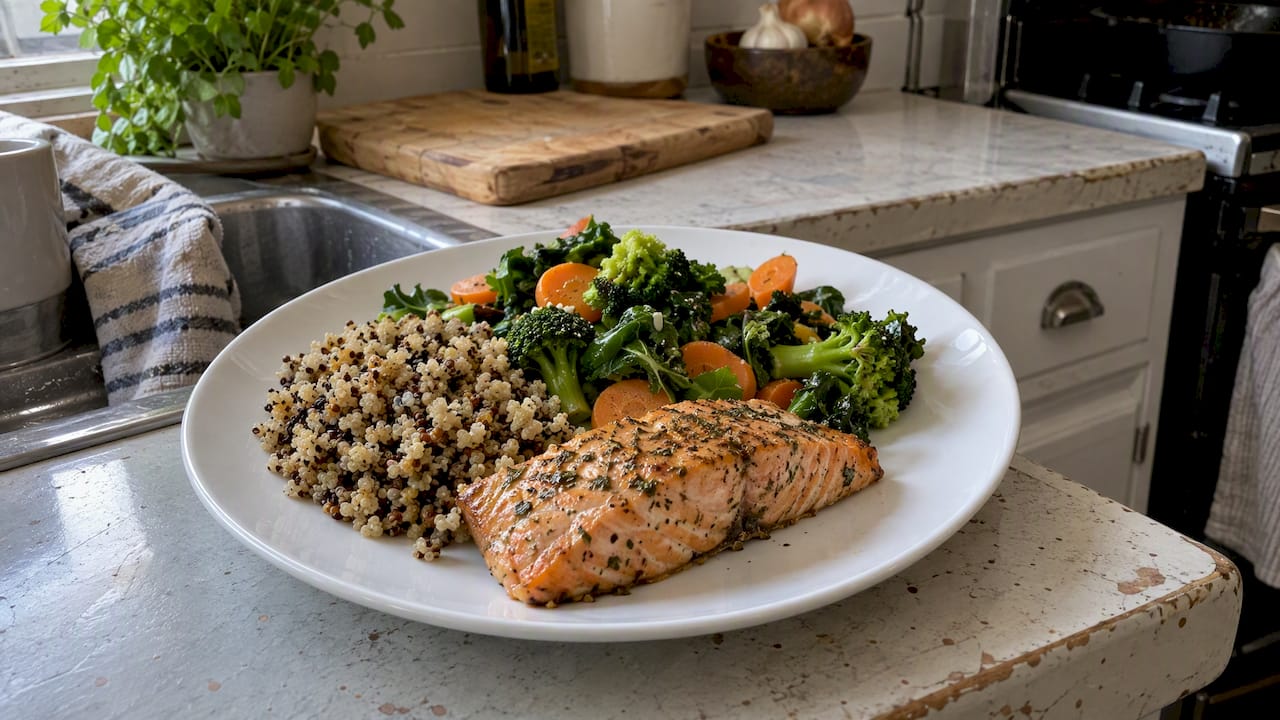
There is no official “Ozempic diet.” What works is a steady, balanced way of eating that fits a smaller appetite: protein at every meal, plenty of vegetables and fiber, small and frequent portions, and fewer greasy or sugary foods. Below, we walk through what that looks like on a real plate, how to handle nausea, which nutrients deserve attention, and when to check in with a provider.
If you have just started a GLP-1 medication, or you are thinking about it, food can suddenly feel confusing. Your hunger changes, some favorites stop appealing, and you may wonder whether you are eating enough. That is normal, and it is fixable.
TL;DR
- No single Ozempic diet exists. The NIDDK describes weight-loss medication as one part of a plan that also includes eating changes and physical activity.
- Build meals on the plate method: half non-starchy vegetables, a quarter lean protein, a quarter quality carbohydrate.
- Eat small, frequent meals and go easy on greasy, sugary and strong-smelling foods to keep nausea down.
- A lower appetite can mean lower nutrition. Track what you eat, protect your muscle with protein and strength work, and ask a registered dietitian about vitamins.
- Tell your provider about every other medication you take and any upcoming surgery or procedure.
Table of Contents
- Why there is no one “Ozempic diet”
- The plate method: a simple way to build meals
- Protein: the nutrient to protect
- Eating around nausea and other side effects
- A sample day of eating
- Foods and drinks to limit
- Calories, activity and realistic expectations
- Vitamins, supplements and nutrient gaps
- Medications, timing and procedures
- Our perspective
- Care that fits around your plan
- FAQ
- Sources
Why there is no one “Ozempic diet”
Ozempic (semaglutide) is a GLP-1 receptor agonist. The FDA prescribing information lists it as an adjunct to diet and exercise for adults with type 2 diabetes. The key word is adjunct: it supports eating and movement habits, it does not replace them.
The American Diabetes Association (ADA) is clear that there is no one-size-fits-all meal plan. Your plan should reflect your preferences, your cultural background and your health conditions, such as kidney or heart disease. Fad diets can show quick results, but they tend to be hard to sustain, and what you can keep doing for years matters most.
So think of this article as a set of starting points to bring to your own provider, not a rigid menu.
The plate method: a simple way to build meals
When appetite is low, you want every bite to count. The ADA’s nutrition guidance suggests a 9-inch plate divided like this:
| Part of the plate | Share | Examples |
|---|---|---|
| Non-starchy vegetables | Half | Leafy greens, mushrooms, zucchini, broccoli, peppers |
| Lean protein | One quarter | Chicken, fish, eggs, tofu, beans, low-fat Greek yogurt |
| Quality carbohydrate | One quarter | Whole grains, beans, fruit |
The same ADA document points to nutrient-rich, minimally processed carbohydrates with about 2.5 grams of fiber or more per serving. Fiber helps you feel full and supports digestion, and constipation is one of the common side effects we cover below.
For drinks, the ADA recommends water over high-calorie beverages and over drinks made with calorie-free sweeteners. If plain water bores you, try it cold, with lemon, or as unsweetened herbal tea.

Protein: the nutrient to protect
When you eat less overall, you can lose muscle along with fat. Some practitioners suggest aiming for around 30 grams of protein per meal, and doing resistance exercise for 15 to 20 minutes at least twice a week, as outlined in an ADA resource on starting weight-management medications. Your own target depends on your kidneys, age, activity and goals, so confirm it with your provider or dietitian rather than treating 30 grams as a rule for everyone.
What 30 grams can look like depends on the food, so read labels, but these are easy building blocks:
- Eggs or egg whites with vegetables at breakfast
- Plain Greek yogurt or cottage cheese with fruit
- A palm-sized portion of chicken, fish or tofu at lunch or dinner
- Beans or lentils added to soups and salads
- A protein shake, if solid food is hard on a rough day
When you can only manage a few bites, eat the protein first and leave the rest.
Eating around nausea and other side effects
Stomach upset is the most common complaint. In the FDA label, the most frequently reported gastrointestinal reactions (in at least 5% of patients) were nausea, vomiting, diarrhea, abdominal pain and constipation. In placebo-controlled trials, these were reported more often with Ozempic than with placebo (32.7% to 36.4% across doses versus 15.3%), and they often peak while the dose is being increased. About 3.1% to 3.8% of people on higher doses stopped treatment because of them.
That means most people do not stop, and many find things settle. Meanwhile, these habits help:
- Eat small, frequent meals instead of three big ones. This is the advice from both the ADA’s medication-starting guide and the ADA’s side-effect guidance for staying hydrated.
- Limit greasy, fried, very sugary and strong-smelling foods. Fatty cuts of meat and heavy sauces tend to sit heavily when your stomach empties more slowly.
- Sip fluids through the day. Dehydration makes nausea and constipation worse.
- Stop at comfortable. Fullness arrives sooner than it used to. Eating past it is a common trigger for discomfort.
- Add fiber gradually and pair it with water if constipation is your issue.
Severe or persistent vomiting, intense abdominal pain that does not go away, or signs of dehydration such as dizziness and very dark urine are reasons to contact a clinician promptly. If you cannot keep fluids down, do not wait it out. You can read more in our guide to GLP-1 side effects, and if you want a quick check on vomiting, see our page on vomiting.
Heartburn can also show up when you eat too fast or too much. Smaller portions and slower eating help, and our page on heartburn and reflux explains when a provider visit makes sense.
A sample day of eating
This is an illustration, not a prescription. Adjust portions to your appetite and your provider’s advice.
- Breakfast: Scrambled eggs with spinach and a slice of whole-grain toast.
- Mid-morning: Plain Greek yogurt with berries.
- Lunch: Grilled chicken over a big salad with chickpeas and olive oil dressing.
- Afternoon: A small handful of nuts and an apple.
- Dinner: Baked fish, roasted vegetables and a small scoop of brown rice or quinoa.
- If you are hungry later: Cottage cheese or a small protein shake.
Six small eating moments sound like a lot, but each one is a few bites. On days when your appetite vanishes, the goal shifts from perfect to enough: fluids, some protein, some produce.
Foods and drinks to limit
Nothing is banned, but some foods make the medication harder to live with or work against your goals:
- Fried foods, fatty cuts of meat and high-fat dairy, which are common nausea triggers.
- Sugary drinks, sweet desserts and heavily processed snacks that add calories without filling you.
- Very large portions, even of healthy foods.
- Alcohol, which adds calories and can irritate an already sensitive stomach. Ask your provider what is right for you, especially if you have diabetes.
Calories, activity and realistic expectations
Medication helps with appetite, but the underlying math of weight loss still applies. The NIDDK explains that losing weight means consuming fewer calories than your body needs to maintain your weight. A common first goal is losing 5% of body weight over six months, which is 10 pounds for a 200-pound person. Successful programs typically include at least 150 minutes of moderate aerobic activity per week, tracking food intake daily and weighing weekly.

The NIDDK also notes that the key is picking an eating plan you can maintain over time. That matters because many people eventually reduce or change their dose, and the habits you build now are what carry you through. Our guides on the GLP-1 weight loss timeline and a maintenance plan go deeper on what to expect.
Vitamins, supplements and nutrient gaps
When you eat much less, getting enough vitamins and minerals gets harder. The ADA’s guidance flags malnutrition as a real concern for people on weight-loss medication and urges them to monitor their nutritional intake, ideally with a registered dietitian nutritionist (RDN).
Here is a practical way to approach it:
- Food first. Variety is your best multivitamin: colorful vegetables, fruit, beans, whole grains, fish, dairy or fortified alternatives.
- Ask before you buy. Whether you need a multivitamin, vitamin B12, vitamin D, calcium, iron or anything else depends on your diet, your labs and your other conditions. Have your provider review your bloodwork instead of guessing.
- Watch for warning signs. Unusual fatigue, hair shedding, brittle nails, dizziness or tingling in the hands and feet are worth mentioning to a clinician.
- Think about your bones. Weight loss can affect bone health, and adequate protein, calcium and vitamin D matter, along with strength training. If you want to read about one food-based angle, there is a clinician-reviewed write-up on prunes and hip bone density after menopause, which also shows why a dietitian’s input is valuable when your appetite is shrinking.
I would not recommend stacking supplements on your own. More is not better, and some products interact with medications.
Medications, timing and procedures
Two practical points rarely make it into diet articles. First, because semaglutide slows gastric emptying, it can affect how other oral medications are absorbed. The FDA label is where this is covered, and the practical step is to ask your provider whether the timing of your daily pills relative to your weekly injection needs to change. Do not adjust anything on your own.
Second, tell your surgeon or anesthesia team that you use a GLP-1 medication well before any planned procedure. The label discusses a risk of pulmonary aspiration during deep sedation or anesthesia, and your team may give you specific fasting or timing instructions.
Our perspective
We see the same pattern again and again: people focus on the shot and forget the plate. The medication quiets hunger, which is a gift, but it also quietly removes the cues that used to remind you to eat well. That is why we treat nutrition as part of care, not an afterthought.
Our view is simple. Eat protein first, keep meals small and regular, drink water, lift something heavy twice a week, and check in with a provider when anything feels off. Cost should not be the reason you skip that check-in, which is why we publish our prices openly and built our model around unlimited virtual visits. Questions about nausea, a missed meal pattern or a new supplement should take a quick video visit, not an expensive appointment and a three-week wait.
— Vector
Care that fits around your plan
If you want a provider in your corner while you adjust your eating, our weight loss program offers GLP-1 management at 30 USD per month per adult for existing ChameleonMD members and 55 USD per month per adult for new members. For everyday questions between check-ins, our plans include a Single Visit at 55 USD per visit, a Single Adult Membership at 25 USD per month and a Family Membership at 45 USD per month. No insurance is required. If you are curious about eligibility first, start with our overview of GLP-1 eligibility requirements, and for background on the medication itself, see what GLP-1 is.
FAQ
What foods should I eat while using Ozempic?
Focus on non-starchy vegetables, lean protein, high-fiber whole grains, beans and fruit, with healthy fats in modest amounts. Use the plate method: half vegetables, a quarter protein, a quarter quality carbohydrate. Drink water rather than sugary drinks.
Can I eat whatever I want and still lose weight?
Some people lose weight even with an imperfect diet because appetite drops, but that is not a plan to count on. The NIDDK still ties weight loss to eating fewer calories than you burn, and a poor diet can leave you short on protein and nutrients. Medication works best as a support for steady habits.
Do I need vitamins or supplements on a GLP-1?
Not necessarily, but eating less can create gaps. Ask your provider or a registered dietitian whether your bloodwork or diet points to a need for something like B12, vitamin D, calcium or a multivitamin. Avoid starting several supplements on your own.
What should I do if food makes me nauseous?
Eat smaller meals more often, skip greasy and strong-smelling foods, sip fluids and stop when you feel comfortably full. If you are vomiting repeatedly, cannot keep liquids down or have severe stomach pain, contact a clinician promptly.