

The safest, most evidence-aligned path after GLP-1 weight loss is to stay on your lowest effective maintenance dose whenever that’s feasible for you. If cost, side effects, or life circumstances mean you need to step back, do it through a structured dose reduction or interval-dosing schedule, never by stopping cold. Quitting abruptly is the single most common reason people regain the weight they worked hard to lose.
TL;DR:
- Maintaining your GLP-1 dose through structured dose reduction or interval spacing is safer and more effective than stopping abruptly, which often leads to weight regain.
- Evidence from observational and case series studies suggests that both dose de-escalation and extended intervals can preserve weight loss, but large randomized trials are lacking.
- Regular monitoring, including weekly weighing and monthly waist measurements, helps detect early signs of weight regain or metabolic changes during maintenance or tapering.
- Long-term GLP-1 therapy should be individualized based on drug type, stability, and patient-specific factors, with ongoing provider support and written management plans.
- Lifestyle habits such as prioritizing protein intake, resistance training, and behavioral support are vital for sustaining weight loss after medication dose adjustments.
Table of Contents
- What Is a GLP-1 Maintenance Plan, Exactly?
- Approved Maintenance Doses by Drug and How Providers Use Them
- When Is It Reasonable to Taper or Stop GLP-1 Treatment?
- How Do You Monitor Progress During Maintenance or Tapering?
- What Lifestyle Habits Actually Protect Your Results?
- What Does the Research Actually Show?
- A Provider’s View on Long-Term GLP-1 Care
- Get Ongoing GLP-1 Support Without the Waiting Room
- Sources
What Is a GLP-1 Maintenance Plan, Exactly?
A GLP-1 maintenance plan is the structured approach you and your provider follow once you’ve reached your target weight on medications like semaglutide or tirzepatide. It answers three questions: what dose do you stay on, how often do you check in, and what triggers a change. This is different from the loss phase, where doses climb every few weeks. Maintenance is about holding steady, and holding steady requires its own set of GLP-1 therapy guidelines rather than a simple “you’re done, stop taking it” mindset.
Most people assume that once the scale hits their goal number, treatment is finished. It isn’t. Obesity behaves like a chronic condition, similar to high blood pressure or type 2 diabetes, and the WHO’s guideline on GLP-1 therapies for obesity frames long-term treatment as appropriate for many patients, with individualized monitoring built into the plan rather than a fixed end date.
Stepping down vs. spacing out: your two main options
If staying on your current dose indefinitely isn’t realistic, you generally have two evidence-informed routes.
Dose de-escalation (stepping down). You drop to the next lower labeled dose on the same weekly schedule. For someone on 2.4 mg of semaglutide, that means moving to 1.7 mg and holding there for a defined observation period before considering another reduction. This keeps the injection frequency the same but lowers the total drug exposure.
Interval dosing (spacing out). You keep the same dose but stretch the time between injections, often moving from weekly to every other week. An observational dataset following patients on this schedule found that biweekly dosing maintained weight loss for an average of 32 weeks, with about 84% of patients remaining stable on that regimen. A separate case series of patients who switched from weekly injections to a reduced-frequency schedule reported maintained weight, body composition, and metabolic markers over an average of 36 weeks.
Here’s how the two compare in practice:
- Tolerability: Interval dosing tends to feel gentler because you’re not layering a new, lower dose habit on top of your existing routine. It’s the same dose, just less often.
- Cost: Stepping down usually costs less per month since you’re using less medication overall. Interval dosing on a full dose costs roughly half as much simply by using half the injections.
- Evidence strength: Both approaches rest mainly on observational and case series data rather than large randomized trials, so neither is proven superior. Editorial syntheses describe dose de-escalation, interval dosing, and add-on oral medications as the three pragmatic options clinicians currently reach for.
- Convenience: Interval dosing means fewer injections to remember. Stepping down keeps your calendar the same but changes the dose itself.
A simple checklist can guide the conversation with your provider:
- Has your weight been stable (within about 2%) for at least 8 to 12 weeks?
- Are you tolerating your current dose well, with no unresolved GI symptoms?
- Do you have a clear reason to reduce (cost, mild side effects, personal preference) rather than just “feeling ready to stop”?
- Can you commit to a monitoring schedule during and after the change?
- Does your provider agree the timing is clinically appropriate?
Pro Tip: Bring a written log of your last three months of weight checks to your maintenance visit. Providers make faster, more confident dosing decisions when they can see the trend instead of just today’s number.
Approved Maintenance Doses by Drug and How Providers Use Them
Maintenance dosing isn’t one-size-fits-all. It depends on which GLP-1 or dual-agonist medication you’re on, and the labeled ranges differ by drug.
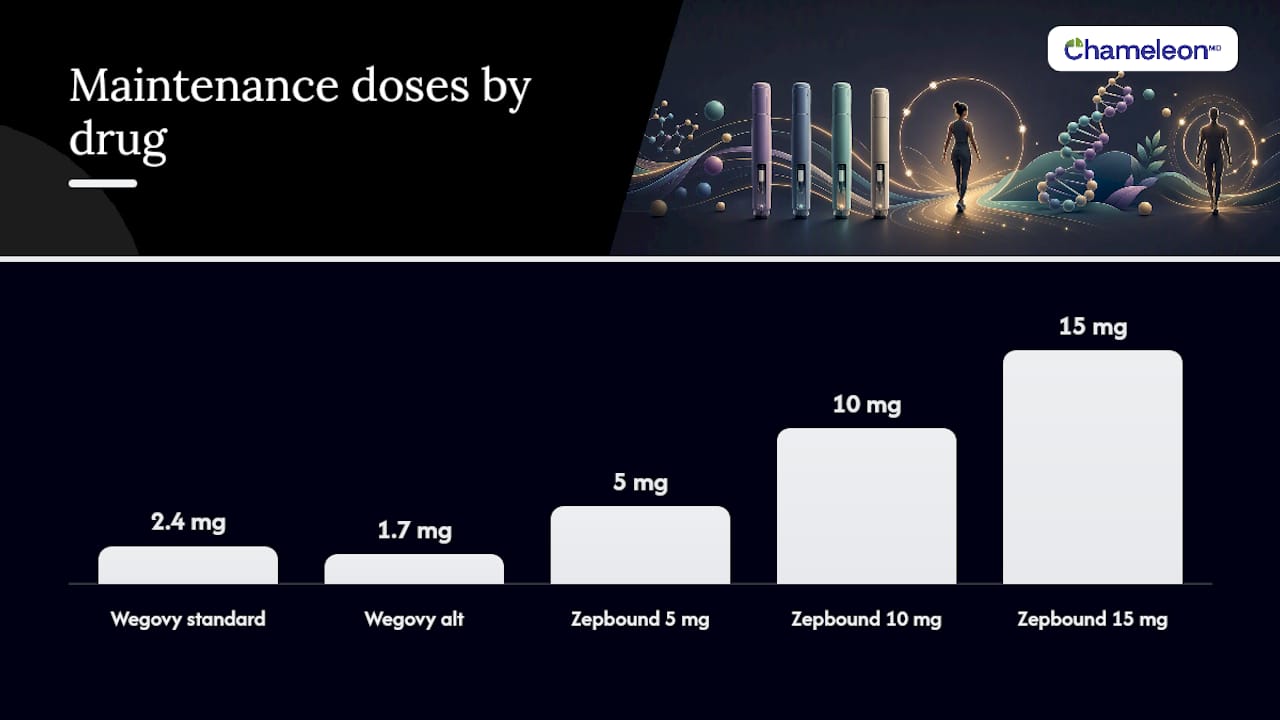
- Semaglutide (Wegovy): Standard maintenance is 2.4 mg injected weekly, with 1.7 mg available as a tolerated alternative for patients who can’t manage the higher dose.
- Tirzepatide (Zepbound): Maintenance doses run 5 mg, 10 mg, or 15 mg weekly, depending on how much dose escalation was needed to reach your response and how you tolerate the higher end.
- Semaglutide (Ozempic) and tirzepatide (Mounjaro): These are labeled for type 2 diabetes management, and dosing follows glycemic targets rather than weight targets, though many patients see meaningful weight loss as a secondary benefit.
Most people reach their maintenance dose several months after starting treatment, once dose escalation is complete and weight has plateaued. Clinical readiness for maintenance generally means your weight has held steady, not just slowed, for several consecutive weeks. That stability matters more than the calendar date.
A single number to remember: if your weight increases by a small percentage over several weeks while on a stable maintenance dose, that’s the threshold most protocols use to prompt a check-in, not a wait-and-see approach.
When a dose reduction is being considered, the GLP-1 injection schedule rule of thumb clinicians use is straightforward: change one variable at a time. Drop one dose step, or extend the interval by one notch, then observe for 8 to 12 weeks before making another adjustment. Stacking two changes at once (lowering the dose and spacing it out) makes it much harder to tell which change caused a problem if your weight starts climbing back up.
If you’re unsure whether you’ve technically reached maintenance or you’re still in an active titration phase, that’s worth confirming directly with your provider. Understanding GLP-1 eligibility requirements and baseline assessments can also clarify how your specific starting point shapes your maintenance targets.
When Is It Reasonable to Taper or Stop GLP-1 Treatment?
Tapering off a GLP-1 medication is sometimes the right call, but it should be a planned decision, not a reaction to a bad week or a skipped refill. A handful of scenarios genuinely justify it.
- Pregnancy planning. GLP-1 medications carry warnings against use during pregnancy, and most providers recommend discontinuing well before conception is attempted.
- Resolved type 2 diabetes with sustained weight loss. If glycemic control and weight have both stabilized for an extended period, some patients and providers explore reducing pharmacologic support.
- Intolerable side effects that don’t improve with dose adjustment. Persistent nausea, vomiting, or GI distress that doesn’t respond to slower titration or dietary changes is a legitimate reason to stop.
- Cost or access barriers. Insurance changes, price increases, or supply issues sometimes force the decision regardless of clinical preference.
Before tapering for any of these reasons, most protocols call for a consolidation period, meaning your weight has been stable at your current dose for a meaningful stretch before you start reducing. Jumping straight from active loss into a taper skips the stability check that tells you whether your weight is actually settled.
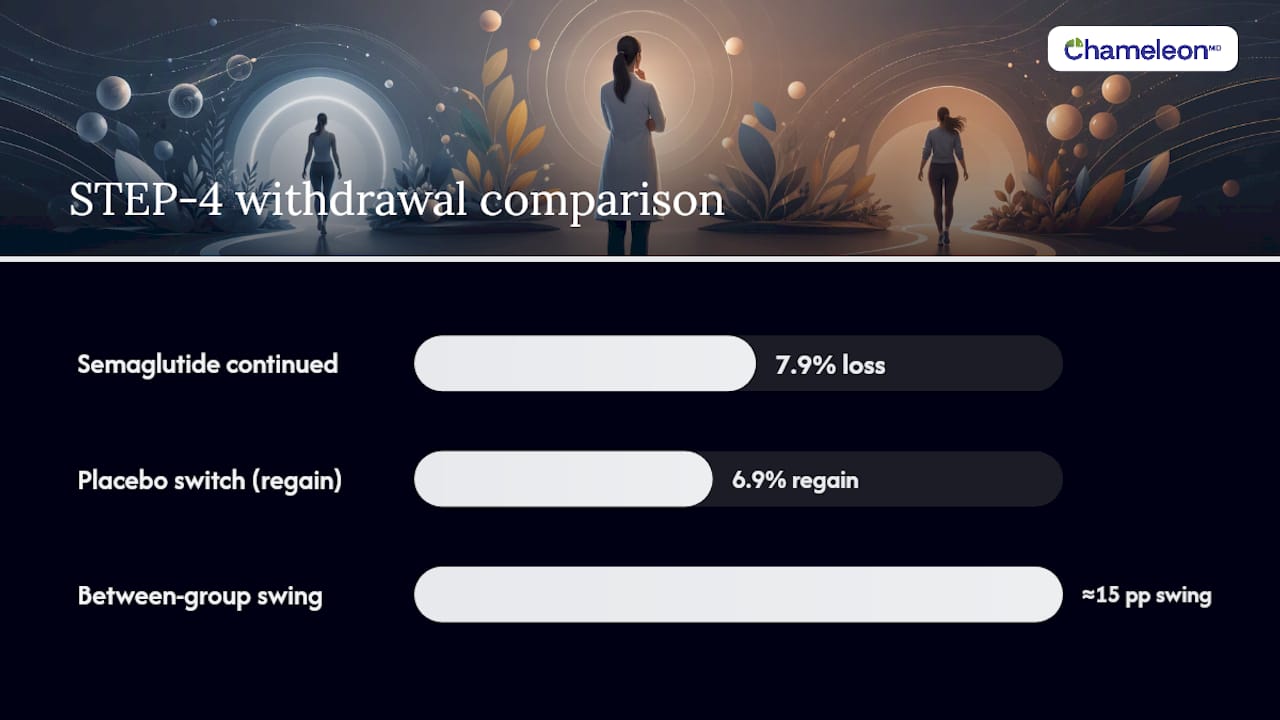
Expect regain if you stop. Randomized withdrawal trials make this point clearly: in the STEP-4 trial, patients who continued semaglutide lost an additional 7.9%, while those switched to placebo regained 6.9%, a swing of nearly 15 percentage points between the two groups. SURMOUNT-4 showed a similar pattern with tirzepatide. That’s not a reason to avoid stopping when stopping is genuinely appropriate. It’s a reason to plan for it, with lifestyle supports and monitoring already in place before the last dose.
How Do You Monitor Progress During Maintenance or Tapering?
A maintenance plan without a monitoring schedule is just a hope. Here’s a practical cadence that mirrors what most clinicians use after a dose change or during ongoing maintenance.
- Weeks 1 through 4 after any change: Weigh yourself weekly, ideally the same day and time. Track waist circumference monthly, since it reflects fat distribution changes that the scale alone can miss.
- Weeks 4 through 12: Continue weekly weigh-ins and schedule a check-in with your provider, virtual or in-person, to review the trend.
- After 12 weeks of stability: Shift to quarterly clinic visits, with weight checks that can be self-reported between appointments.
- At each clinic visit: Blood pressure gets checked routinely, and A1c testing is repeated for anyone with a history of prediabetes or type 2 diabetes.
Certain findings should move up your timeline instead of waiting for the next scheduled visit. A rising A1c in someone with diabetes history is another. Either one usually prompts a straightforward response: reinstate a higher dose, add a second-line medication, or refer you to a nutrition or behavioral specialist for closer support.
Pro Tip: Keep your self-monitoring simple. A weekly weigh-in logged in a notes app, paired with a monthly waist measurement, gives your provider more useful data than daily obsessive tracking, and it’s far easier to sustain for years.
Home monitoring tools can make this cadence realistic to stick with long-term. Resources on at-home health monitoring cover practical setups for weight and blood pressure tracking between clinic visits. If side effects flare up during any monitoring window, reviewing how to manage GLP-1 side effects can help you sort out what’s expected versus what needs a call to your provider.
What Lifestyle Habits Actually Protect Your Results?
Medication does the heavy lifting during weight loss, but lifestyle habits are what protect it afterward. A consensus statement built around 52 specific recommendations for people on GLP-1 therapies puts protein intake and GI symptom management at the center of that advice, precisely because appetite suppression makes it easy to under-eat protein without noticing.
- Protein first. Prioritize protein at each meal to protect lean muscle mass, especially since reduced appetite often means smaller overall meals.
- Manage GI symptoms through food choices, not by skipping doses. Smaller, lower-fat meals and slower eating pace reduce nausea for many patients.
- Move your body with intention. General movement guidance points toward 150 to 300 minutes of moderate activity weekly, or 75 to 150 minutes of vigorous activity, paired with two to three resistance training sessions.
- Track your habits, not just your weight. A simple food or exercise log, combined with regular weigh-ins, catches small drifts before they become five-pound regains.
Resistance training deserves special emphasis here, since GLP-1-driven weight loss includes some loss of lean mass along with fat. Two to three sessions weekly helps preserve the muscle that keeps your metabolism working in your favor.
Behavioral strategies matter just as much as the physical ones. Cognitive behavioral techniques, structured weigh-in schedules, and check-ins with a nutrition or behavioral specialist all show up in consensus guidance as core supports, not optional extras. If regain starts creeping in despite good habits, that’s often the point where a provider considers adjunct oral medications alongside your GLP-1 regimen rather than lifestyle changes alone.
What Does the Research Actually Show?
The strongest evidence in this entire field comes from randomized withdrawal trials, and it points in one direction: stopping treatment usually means regaining weight. Both STEP-4 (semaglutide) and SURMOUNT-4 (tirzepatide) randomized patients who’d already lost weight to either continue their medication or switch to placebo, and the placebo groups regained substantially while the continuation groups kept losing or held steady.
- Randomized withdrawal data show a consistent, sizable gap between continued therapy and placebo.
- Real-world case series on reduced-frequency dosing report promising results, but they’re observational, not randomized, so they’re best read as encouraging rather than definitive.
- Guideline bodies frame long-term treatment as the default recommendation, while acknowledging that taper strategies remain conditional due to limited direct evidence.
The honest summary from the research: continuing therapy is the best-proven way to preserve weight loss. Tapering strategies like dose reduction and interval dosing are reasonable, pragmatic options for people who need them, but they’re supported by smaller, real-world datasets rather than the large randomized trials backing continued treatment.
None of this replaces a conversation with your own provider. It does mean that any taper decision should involve genuine shared decision-making, with your specific health history, goals, and constraints on the table.
A Provider’s View on Long-Term GLP-1 Care
Treat your GLP-1 maintenance plan the way you’d treat any chronic condition. That means planning for years, not months. Costs shift, side effects evolve, and life circumstances change, so your monitoring and lifestyle supports need to flex with you. Telehealth makes that kind of ongoing dose management genuinely convenient, letting you check in without rearranging your week around a waiting room. The best plans are written down: your target dose, your monitoring schedule, and the specific numbers that would trigger a change. Ask your provider to put yours in writing.
— Vector
Get Ongoing GLP-1 Support Without the Waiting Room
Continuous access to a provider for dose management is available without booking weeks out for a follow-up. GLP-1 weight loss programs may include virtual visits for monitoring maintenance dose, adjusting schedules if regain thresholds are hit, and managing side effects as they come up, potentially through subscription-based virtual care with transparent pricing.

If you’re weighing a step-down or interval dosing schedule, a virtual visit lets you review your weight trend with a licensed provider and make the call together. Bring your recent weight logs, your current dose and injection schedule, and any side effects you’ve noticed since your last dose change. That’s enough for a provider to build a maintenance plan tailored to where you actually are. Explore telehealth plans and get your next follow-up scheduled without the wait, and if a stomach bug or other symptom pops up between visits, conditions like vomiting are covered under the same membership.
This article is general information, not a substitute for advice from a qualified doctor. Consult a qualified healthcare professional about your own circumstances before acting on anything here.
Sources
- Long-Term Use of Obesity Management Medications: Challenges and Discontinuation Strategies | AFP
- Weight maintenance on cost‐effective antiobesity medications after 1 year of GLP‐1 receptor agonist therapy: a real‐world study
- Reduced-frequency GLP-1 therapy maintains weight, body composition, and metabolic syndrome improvements: a case series
- GLP-1 maintenance dose protocols by drug 2026 | GLP Chart