
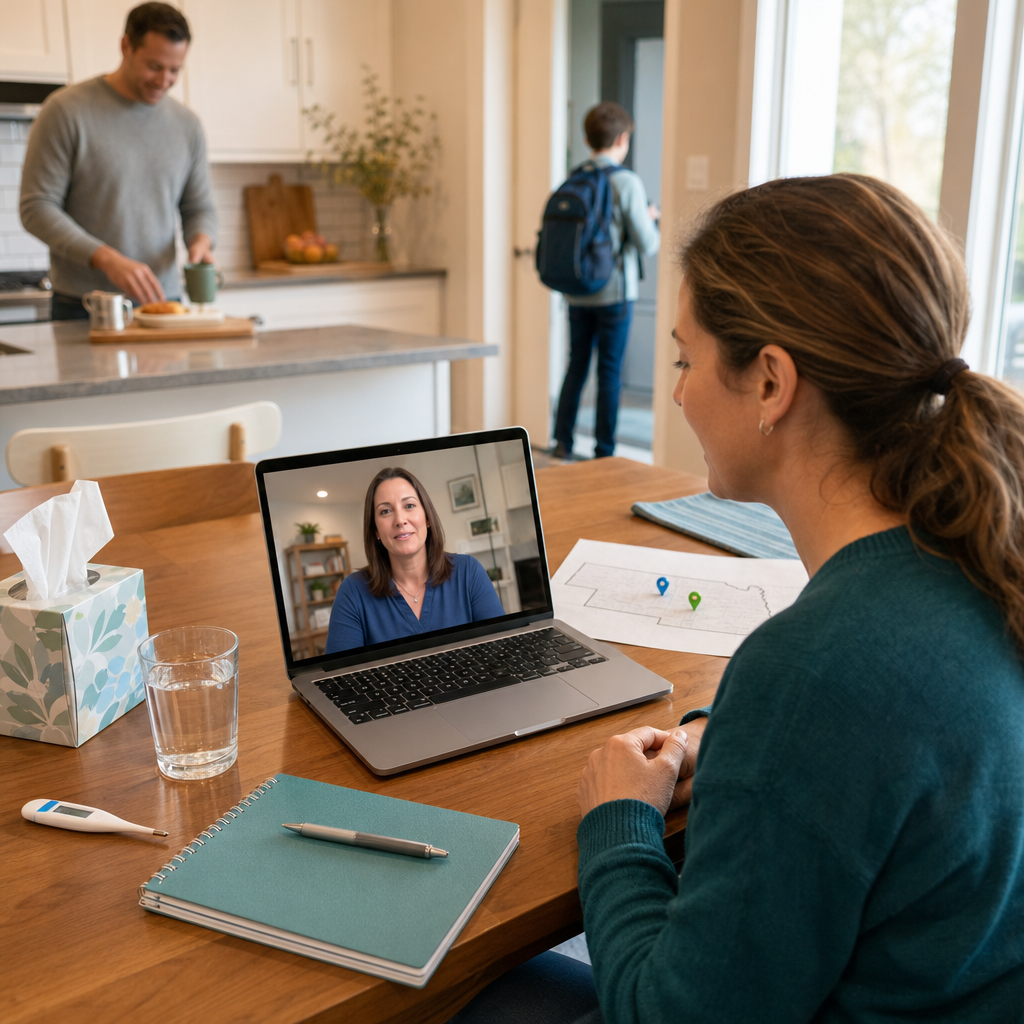
Online Doctor Omaha vs. Lincoln: Comparing Same-Day Virtual Care Access
An online doctor Omaha residents can access may provide same-day evaluation for eligible, non-emergency health concerns without a trip to a clinic. Lincoln residents can use many of the same Nebraska telehealth services, although appointment speed, clinician availability, visit format, costs, and follow-up support vary by platform.
This comparison explains what Nebraska residents should evaluate before choosing same-day virtual care. It also shows how a Nebraska-rooted, text-first option such as ChameleonMD can make remote healthcare simpler for busy families, employees, and people without consistent access to a primary care provider. Patients can compare virtual urgent care, secure medical messaging, video appointments, and access to Nebraska-licensed providers before selecting a service.
Key Takeaways
| Point | Details |
|---|---|
| Same-day availability | Both Omaha and Lincoln residents can find same-day virtual care, although response times depend on provider schedules, demand, and the service selected. |
| Location requirements | Patients generally must be physically located in Nebraska during the visit and connect with a clinician authorized to practice in the state. |
| Visit format | Options may include secure messaging, video, phone, or a combination. Text-first care can reduce scheduling friction for straightforward concerns. |
| Cost comparison | Compare the full price, insurance rules, membership benefits, prescription policies, and potential follow-up charges—not only the advertised visit fee. |
| Appropriate conditions | Virtual urgent care is best suited to non-emergency concerns that do not require hands-on examination, imaging, or immediate testing. |
| Local provider access | A Nebraska-based platform can offer relevant local knowledge while serving eligible patients in both Omaha and Lincoln. |
Table of Contents
How Online Doctor Omaha and Lincoln Access Compares
Omaha’s larger population can support a broad mix of hospital-affiliated portals, national telehealth companies, retail clinic services, and independent Nebraska providers. Lincoln residents often have access to the same statewide platforms, so the practical difference may be less about city boundaries and more about service hours, clinician capacity, and whether the platform accepts new patients.
Because telemedicine is based on the patient’s physical location during care, an Omaha clinician does not necessarily need to live in Omaha to help an eligible patient. The important question is whether the clinician is properly licensed or otherwise authorized to provide care in Nebraska. Patients can verify a professional through the Nebraska Department of Health and Human Services license lookup.
What both cities generally offer
Residents in both cities can commonly use virtual care for straightforward, non-emergency concerns. Availability varies by provider, but typical options include:
- Secure symptom review and clinical messaging
- Video or phone consultations when needed
- Evaluation of common minor illnesses and skin concerns
- Prescription decisions when medically appropriate
- Instructions for follow-up, testing, or in-person care
Patients exploring Omaha telemedicine can read how telehealth in Nebraska works and when to use it. They can also review the platform’s symptoms and conditions page to determine whether a concern is likely to fit a virtual visit before starting.
Appointment Speed, Messaging, and Convenience
“Same-day” does not always mean “immediate.” One service may offer the next available video appointment, while another lets patients submit symptoms through secure messaging without coordinating a live call. During evenings, weekends, or seasonal illness spikes, actual response times may change in either Omaha or Lincoln.
A text-first virtual doctor in Omaha can be especially useful for parents at home with children, hourly employees, caregivers, and anyone who cannot pause for a scheduled video call. Patients can explain the concern, answer follow-up questions, and receive clinical guidance through a secure workflow, subject to service hours and medical appropriateness.
Practical care principle: The best same-day option is not simply the platform with the shortest advertised wait. It is the service that can safely evaluate your concern, communicate clearly, and direct you to in-person care when a virtual visit is not enough.
Convenience factors worth comparing
| Feature | Why It Matters in Omaha | Why It Matters in Lincoln |
|---|---|---|
| Secure messaging | Helps patients avoid traffic, parking, and cross-city travel. | Provides flexible access around work, school, and family schedules. |
| Same-day intake | May provide an alternative when nearby clinics are booked. | Can expand options beyond a patient’s usual clinic network. |
| Nebraska-authorized clinicians | Supports state-compliant care and locally relevant guidance. | Allows access through eligible statewide services. |
| Clear escalation instructions | Helps patients know when to use a local urgent care or emergency department. | Reduces uncertainty when testing or hands-on evaluation is required. |
Pro Tip: Before starting intake, gather your medication list, allergies, recent temperature, symptom timeline, and photos of any visible concern. Complete information can help a clinician assess the situation more efficiently.
People who are new to remote healthcare can review how to see an online doctor in Nebraska without leaving home. When ready to compare service options, visit the ChameleonMD plans page.
Costs and Services to Compare
The cost of online urgent care Omaha residents see may be presented as a one-time visit fee, a membership, an insurance copay, or a combination of charges. Ask whether the stated price includes clinician review, secure follow-up messaging, documentation, and prescription evaluation when appropriate.
Insurance is not automatically the least expensive route. Deductibles, network restrictions, and separate charges can affect the final amount, while a transparent direct-pay or membership model may be easier to plan for. The HealthCare.gov telehealth overview recommends checking plan-specific coverage because benefits differ among insurers.

Questions to ask before paying
- Is the price per visit, per month, or per household member?
- Are follow-up questions included, and for how long?
- Will I receive a refund or alternative guidance if virtual care is not appropriate?
- Are prescriptions sent electronically when the clinician determines they are suitable?
- Does the platform provide work or school documentation when medically appropriate?
- Are labs, imaging, medication, or outside facility charges separate?
Virtual urgent care may evaluate concerns such as cold or allergy symptoms, uncomplicated urinary symptoms, minor rashes, pink eye symptoms, and other lower-acuity issues. For example, patients can review information about allergies, bladder infection and UTI symptoms, or pink eye and conjunctivitis. It is not a replacement for emergency care, and not every condition can be diagnosed or treated online; patients can review general guidance from Telehealth.HHS.gov.
Provider Access, Safety, and Local Licensing
Telehealth services Omaha residents use may connect patients with local clinicians, regional networks, or national pools of providers. National reach can add availability, but Nebraska-rooted care offers another advantage: familiarity with local pharmacies, nearby escalation options, state requirements, and the practical needs of Nebraska families.
Regardless of platform, patients should know who is providing care, how personal health information is handled, and what happens if symptoms cannot be safely assessed online. The U.S. Department of Health and Human Services explains federal health information privacy rights, while the Federal Trade Commission provides guidance relevant to health apps and privacy obligations.
When virtual care is not the right choice
Do not wait for an online response if someone has severe trouble breathing, chest pain, signs of stroke, heavy bleeding, a major injury, loss of consciousness, or another potentially life-threatening symptom. Call 911 or seek emergency care immediately.
- Choose in-person care when a physical examination is essential.
- Expect referral for imaging, laboratory testing, or procedures that cannot happen remotely.
- Use pediatric or emergency services when the patient’s age or symptoms require specialized evaluation.
- Follow escalation instructions if symptoms worsen after an online visit.
Appropriate care depends on the symptoms, their severity, and whether diagnostic testing or a hands-on examination is necessary. This distinction matters across virtual healthcare Nebraska services, whether the patient is at home in Omaha, at work in Lincoln, or elsewhere in the state.
How to Choose the Right Nebraska Virtual Care Option
Start with the clinical need. For a routine, non-emergency concern, compare intake speed, communication format, hours, total cost, clinician credentials, prescription policies, and follow-up support. If the service relies on video, confirm that you have the time, privacy, and internet connection needed for a live appointment.
Next, look for transparent boundaries. A trustworthy online medical consultation service will explain what it can treat, avoid promising a particular prescription, and recommend in-person evaluation when necessary. Patients should also review the service’s privacy practices, care limitations, clinician qualifications, and procedures for escalating urgent symptoms.

A quick selection checklist
- Confirm that the service is available where you are physically located.
- Verify access to Nebraska-licensed or authorized healthcare professionals.
- Check whether intake is messaging-based, video-based, or scheduled by phone.
- Review the complete cost and any membership terms.
- Confirm that your condition is listed as appropriate for virtual care.
- Read the privacy, follow-up, and escalation policies.
- Seek emergency help instead if symptoms are severe or rapidly worsening.
For many patients, the Omaha-versus-Lincoln distinction is less important than choosing a responsive service built to operate across Nebraska. A local, text-first platform can reduce unnecessary scheduling while preserving real clinical review and clear next steps.
Need a simple place to begin? Compare options on the same-day Nebraska care plans page.
Frequently Asked Questions
Can I see an online doctor in Omaha on the same day?
Yes, same-day virtual care is often available in Omaha for eligible non-emergency concerns. Actual response times depend on provider hours, demand, and whether the service uses scheduled video visits or asynchronous secure messaging.
Is telemedicine more available in Omaha than Lincoln?
Omaha may have more city-based healthcare organizations because of its larger population, but many telehealth platforms serve eligible patients statewide. Lincoln residents can therefore have access to many of the same Nebraska-authorized virtual providers.
How quickly can a virtual doctor in Omaha respond?
Some services begin intake within minutes and respond the same day, while others require a scheduled appointment. Response speed varies with service hours, patient volume, and the complexity of the concern.
How much does online urgent care in Omaha cost?
Costs vary by platform, insurance coverage, visit type, and membership model. Compare the total price, including follow-up, prescriptions, labs, imaging, and outside facility charges that may not be included.
Can an Omaha telemedicine provider prescribe medication?
A Nebraska-authorized clinician may prescribe medication when it is medically appropriate and legally permitted after evaluating the patient. A virtual visit does not guarantee a prescription, and some medications or conditions require in-person care.
Do I need to live in Omaha to use an Omaha virtual care service?
Not necessarily; many platforms serve patients throughout Nebraska. What usually matters is where you are physically located during the encounter and whether the clinician is authorized to provide care there.
Is text-based virtual care secure?
It can be secure when communication occurs through a platform with appropriate privacy and security safeguards. Patients should avoid sending sensitive health information through ordinary text messages, email, or social media unless the provider specifically uses an approved system.
When should I skip telehealth and go to urgent care or the emergency room?
Choose in-person care when you need hands-on examination, imaging, laboratory testing, stitches, or treatment that cannot be delivered remotely. Call 911 for severe breathing difficulty, chest pain, stroke symptoms, major trauma, heavy bleeding, loss of consciousness, or other life-threatening concerns.
Recommended Reading
- How to See an Online Doctor in Nebraska Without Leaving Home
- Telehealth in Nebraska: What It Is, How It Works, and When to Use It
- 7 Reasons Nebraska Families Choose Telehealth for Everyday Health Needs
Get same-day Nebraska care from ChameleonMD