
Online Doctor Nebraska: How to Get Medical Care Without Leaving Home
An online doctor Nebraska residents can access provides medical guidance through secure messaging or video without requiring a trip to a clinic. If you are physically located in Nebraska, an authorized clinician can evaluate eligible non-emergency symptoms, recommend treatment, and send a prescription to a local pharmacy when medically appropriate.
This guide explains how Nebraska telemedicine, virtual urgent care, and remote medical consultations work, including potential costs, insurance coverage, prescriptions, and common conditions treated. You will also learn how to choose a licensed healthcare provider, prepare for a smooth visit, protect your health information, and recognize when an in-person examination or emergency care is safer.
Key Takeaways
| Point | Details |
|---|---|
| How care works | Choose a provider, complete a health intake, connect by secure messaging or video, and receive next-step guidance. |
| Common uses | Telehealth may help with minor illnesses, rashes, allergies, uncomplicated urinary symptoms, and other non-emergency concerns. |
| Nebraska licensure | The treating clinician should be licensed or otherwise legally authorized to provide care to patients located in Nebraska. |
| Cost and insurance | Prices and coverage vary. Confirm the visit fee, insurance status, prescription costs, and follow-up policies before starting. |
| Prescriptions | A clinician may prescribe medication when it is medically appropriate and permitted by applicable law; prescriptions are never guaranteed. |
| Urgent symptoms | Call 911 for emergencies. Some symptoms require an in-person exam, laboratory testing, imaging, or immediate hospital care. |
Table of Contents
- How an Online Doctor Nebraska Visit Works
- Conditions Nebraska Telemedicine Can Treat
- How to Choose a Reputable Virtual Doctor in Nebraska
- Costs, Insurance, and Prescriptions
- How to Prepare and Protect Your Privacy
- When You Need In-Person or Emergency Care
- Frequently Asked Questions
- Recommended Reading
How an Online Doctor Nebraska Visit Works
An online medical consultation in Nebraska usually starts with a health intake covering your symptoms, medical history, allergies, medications, and preferred pharmacy. Depending on the telehealth platform and medical concern, you may then communicate with a licensed healthcare provider through secure text-based messaging, video, or a combination of both.
The clinician reviews your information, asks follow-up questions, and determines the appropriate next step. That may include self-care instructions, a treatment recommendation, a prescription when clinically appropriate, diagnostic testing, or referral to an in-person clinic. Virtual care does not guarantee a diagnosis or medication because every decision depends on your symptoms, history, and the provider’s clinical judgment.

Why text-first care can simplify a busy day
Secure messaging can let you describe symptoms and respond to questions without spending an entire appointment on camera. This form of digital healthcare can be especially useful for parents, employees, rural residents, people with limited transportation, and anyone who wants to avoid unnecessary travel while still receiving medical oversight.
Telehealth is best understood as a convenient doorway to appropriate care—not a replacement for every physical exam, diagnostic test, procedure, or emergency service.
ChameleonMD offers Nebraska-rooted, text-first virtual urgent care designed around straightforward access and licensed-provider review. Patients can review available Plans before deciding whether the service fits their healthcare needs.
Get same-day Nebraska care from ChameleonMD
Conditions Nebraska Telemedicine Can Treat
Nebraska online urgent care is often suitable for common, non-life-threatening concerns that can be assessed from your medical history, symptoms, and clear photos or video. The provider decides whether virtual treatment is safe after reviewing your individual situation, including your age, current medications, underlying health conditions, and any warning signs.
Common concerns may include:
- Cold, cough, flu-like, or mild respiratory symptoms
- Seasonal allergies and sinus symptoms
- Pink eye or minor eye irritation
- Minor rashes, insect bites, and certain skin concerns
- Uncomplicated urinary symptoms
- Mild nausea, diarrhea, or other short-term digestive concerns
- Minor headaches when no emergency warning signs are present
- Medication-related questions or limited refill requests when appropriate
A provider may ask you to check your temperature, count your pulse, submit a photo, or obtain an at-home measurement. Review the service’s Symptoms Conditions page for examples of concerns that may be evaluated remotely, while remembering that eligibility always depends on your symptoms and the clinician’s judgment.
| Concern | Virtual care may help when | In-person care may be needed when |
|---|---|---|
| Cold or sinus symptoms | Symptoms are mild to moderate and breathing is comfortable | Breathing is difficult, symptoms are severe, or an exam or testing is necessary |
| Skin concern | The area can be shown clearly and there are no severe symptoms | The rash spreads rapidly, involves the eyes or mouth, or accompanies breathing trouble |
| Urinary symptoms | Symptoms appear uncomplicated and the provider can assess relevant history | There is severe pain, vomiting, pregnancy-related concern, or possible kidney involvement |
| Minor digestive illness | Fluids can be kept down and symptoms are not severe | There is significant dehydration, blood, severe pain, or persistent vomiting |
For example, a clinician may be able to assess an uncomplicated bladder infection or UTI remotely after asking about urinary symptoms, pregnancy status, fever, back pain, prior infections, allergies, and current medicines. Symptoms suggesting kidney involvement or another complication generally require prompt in-person care.
Pro Tip: Write down when your symptoms began and whether they are improving, worsening, or staying the same. That timeline can help your virtual doctor in Nebraska assess the concern more efficiently.
How to Choose a Reputable Virtual Doctor in Nebraska
Start by confirming that the service uses clinicians who can legally treat patients located in Nebraska. You can check professional credentials through the Nebraska License Information System, which provides public license information for healthcare professionals.
A reputable provider should clearly explain how care is delivered, what the visit costs, how personal information is handled, and what happens if virtual care is not appropriate. Avoid services that promise a specific prescription, skip a meaningful medical intake, or make treatment outcomes sound guaranteed.

Online doctor selection checklist
- Verify Nebraska licensure or legal authorization.
- Look for secure communication and a published privacy notice.
- Confirm whether visits use messaging, video, or both.
- Review pricing, insurance policies, and potential extra fees.
- Check the service’s expected response time and follow-up policies.
- Make sure the provider explains when in-person care is necessary.
- Confirm that prescriptions are based on clinical judgment, not guaranteed.
- Look for clear contact information and patient support options.
The U.S. Department of Health and Human Services offers authoritative telehealth information for patients, including guidance on preparing for virtual appointments and finding telehealth options. For a local option, review ChameleonMD’s About Us page and available plans before requesting care.
Costs, Insurance, and Prescriptions
Telehealth costs vary by provider, visit type, membership arrangement, and insurance coverage. Some services charge per consultation, while others include eligible care through a plan or membership. A quoted visit fee may not include medication, laboratory work, imaging, medical devices, or charges from an outside clinic or facility.
Before beginning, ask whether the provider accepts insurance, submits claims, or offers self-pay care. If you plan to use insurance, verify coverage directly with your health plan because network status, deductibles, copayments, and telehealth benefits can change. You should also confirm whether follow-up communication is included or billed separately.
Can an online doctor prescribe medication?
Yes. A licensed clinician may send a prescription to your chosen Nebraska pharmacy when medication is medically appropriate and legally permitted. The provider may instead recommend over-the-counter care, testing, an in-person evaluation, or no medication at all. Prescription decisions depend on the diagnosis, your health history, potential drug interactions, and applicable federal and state requirements.
Some medications have additional prescribing requirements, especially controlled substances. The U.S. Drug Enforcement Administration’s telemedicine resources provide federal information related to prescribing controlled medications. Your clinician can explain what rules and limitations apply to your specific visit.
Antibiotics are prescribed only when a clinician determines that they are appropriate. They do not treat viral infections such as colds or influenza, and unnecessary antibiotic use can cause side effects and contribute to antimicrobial resistance. The Centers for Disease Control and Prevention explains when antibiotics help and why responsible use matters.
How to Prepare and Protect Your Privacy
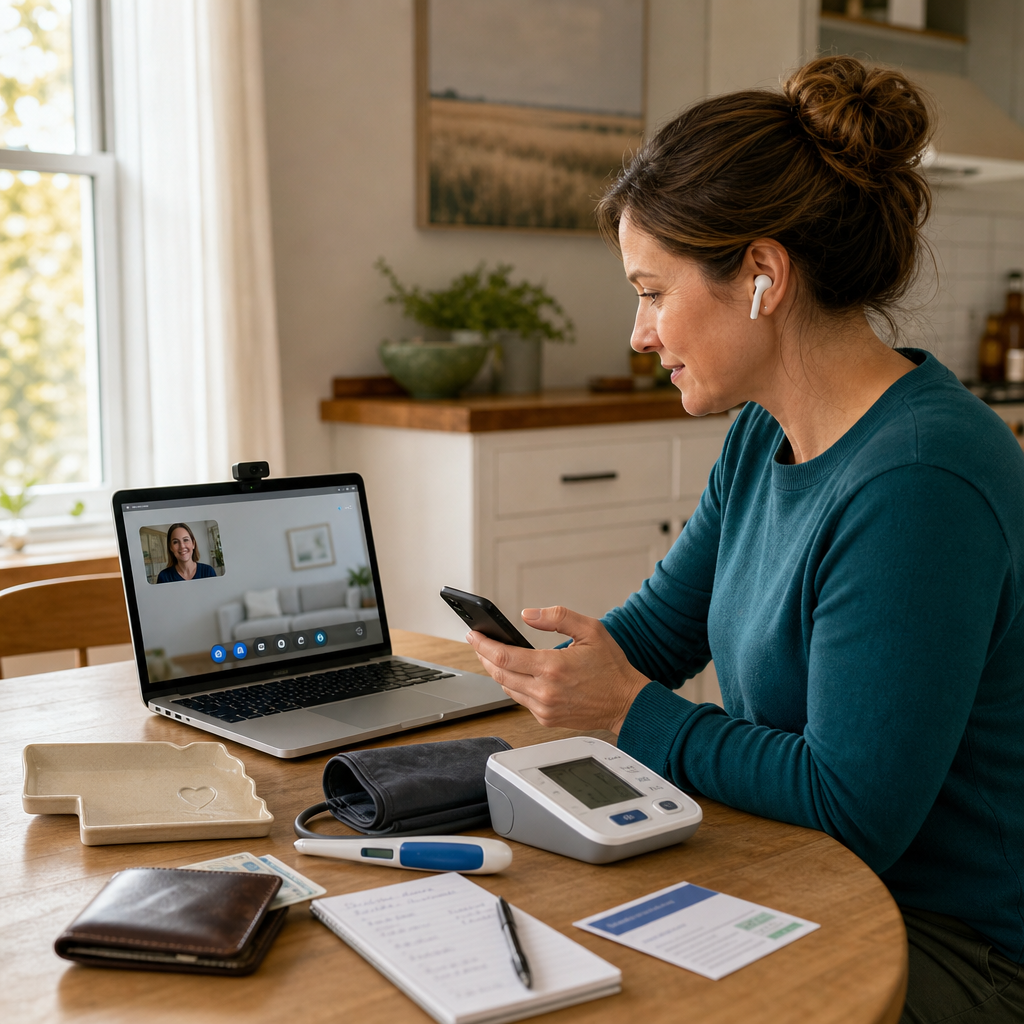
Choose a quiet, well-lit place and use a device with reliable internet access. Have your identification, medication list, allergies, relevant medical history, pharmacy details, and any temperature or blood pressure readings ready before the consultation. If possible, test your camera, microphone, and internet connection before a video appointment.
For visible concerns, take clear photos in natural light from more than one angle if the platform permits secure uploads. Do not send medical information through ordinary email, social media, or unsecured text unless the healthcare service specifically directs you to an approved communication channel.
Questions to ask during your visit
- What is the most likely cause of my symptoms?
- What treatment or self-care steps do you recommend?
- What side effects or medication interactions should I watch for?
- When should I expect improvement?
- Which warning signs mean I need in-person or emergency care?
- How can I follow up if symptoms continue?
The HHS HIPAA information for individuals explains federal health-information privacy rights. The Federal Trade Commission also provides guidance on protecting privacy when using apps. Before submitting personal information, read the provider’s privacy notice; ChameleonMD patients can review its Privacy Policy.
When You Need In-Person or Emergency Care
A virtual visit cannot provide every hands-on examination, laboratory test, imaging study, or procedure. Your online doctor may direct you to a primary care clinic, urgent care center, emergency department, or another local service if a remote evaluation is not sufficient. Following that recommendation promptly can help prevent delays in diagnosis or treatment.
Call 911 or seek immediate emergency help for severe trouble breathing, signs of stroke, major trauma, uncontrolled bleeding, loss of consciousness, a severe allergic reaction, or intense or persistent chest pain. The CDC describes common stroke signs and symptoms, including sudden weakness, confusion, speech difficulty, vision changes, loss of balance, or a severe headache. Suspected stroke requires immediate emergency action.
Other symptoms that may require timely in-person assessment include severe abdominal pain, persistent vomiting, dehydration, a rapidly spreading rash, high fever with a stiff neck, worsening asthma symptoms, pregnancy-related pain or bleeding, or symptoms that continue despite treatment. If you are unsure whether symptoms are life-threatening, call 911 rather than waiting for an online response.
For non-emergency symptoms, same-day telehealth can still be a useful first step because a licensed provider can help determine the right level of care. When your concern is appropriate for remote treatment, secure messaging can help you move forward without leaving home.
Get same-day Nebraska care from ChameleonMD
Frequently Asked Questions
Can I see an online doctor in Nebraska from my home?
Yes. If you are physically located in Nebraska during the consultation, you can use a qualified telehealth service whose clinician is authorized to treat Nebraska patients. The visit may take place through secure messaging, video, or both.
Can an online doctor in Nebraska prescribe antibiotics?
An online doctor may prescribe an antibiotic when the clinical evaluation supports a bacterial infection and remote treatment is appropriate. Antibiotics are not effective against viral illnesses, and a prescription is never guaranteed.
How quickly can I speak with a virtual doctor in Nebraska?
Response times depend on the service, time of day, patient volume, and medical concern. Some Nebraska telemedicine platforms offer same-day access, but patients should verify current availability before starting.
Does insurance cover an online medical consultation in Nebraska?
Many insurance plans cover certain telehealth visits, but benefits, copays, deductibles, and network rules vary. Contact your insurer and review the provider’s payment policy before the visit to avoid surprises.
What information do I need for a Nebraska telehealth visit?
Prepare your identification, symptoms and timeline, medical conditions, current medications, allergies, and preferred pharmacy. Relevant photos and home readings such as temperature, heart rate, or blood pressure may also help.
Are text-based online doctor visits secure?
They can be secure when conducted through a healthcare platform with appropriate privacy and security safeguards. Review the service’s privacy practices and avoid sending sensitive medical information through personal email or social media.
Can children use Nebraska online urgent care?
Some services treat children, but age limits and eligible conditions vary by platform. A parent or legal guardian generally must participate, and certain pediatric symptoms require an in-person examination.
When should I skip telehealth and go to an emergency room?
Call 911 for severe breathing difficulty, stroke symptoms, major injury, uncontrolled bleeding, loss of consciousness, severe allergic reactions, or intense chest pain. Do not wait for an online response when symptoms may be life-threatening.
Recommended Reading
To learn more about symptoms commonly discussed during virtual visits, review guidance on sinus infection and sinusitis, seasonal allergies, and rashes and skin conditions. These resources are educational and do not replace an individual medical evaluation.
Get same-day Nebraska care from ChameleonMD