

The GLP-1 shortage that defined 2023 through 2025 is officially over. The FDA no longer lists semaglutide or tirzepatide as being in shortage, and manufacturer supply has stabilized nationwide. What hasn’t resolved is access. Compounding options have narrowed sharply, and whether you can actually get and afford a GLP-1 in 2026 now depends far more on your insurance plan than on pharmacy shelves.
TL;DR:
- The FDA has confirmed that major GLP-1 medications like semaglutide and tirzepatide are no longer in shortage as of 2026, with stable national supply data backing this decision.
- Legally, large-scale compounding of these drugs from bulk sources is no longer protected, restricting non-patient-specific manufacturing to FDA-approved, individualized prescriptions from licensed providers.
- Insurance coverage remains the primary obstacle in 2026, with Medicaid reducing obesity coverage in several states and Medicare still restricting drugs used solely for weight loss.
- The ongoing legal and regulatory shifts mean compounded, low-cost GLP-1 alternatives are disappearing, emphasizing the importance of documented prior treatment and proper authorization.
- Virtual healthcare platforms can facilitate same-day, legitimate prescriptions by preparing the necessary clinical documentation for prior authorization, bypassing lengthy in-office waits.
Table of Contents
- Is There Still a GLP-1 Shortage in 2026?
- What 503A and 503B Mean for Your GLP-1 Prescription
- Who Actually Covers GLP-1s Now: Medicaid, Medicare, and Employer Plans
- How to Spot a Fraudulent or Unsafe GLP-1 Product
- Getting a Legitimate GLP-1 Prescription: A Step-by-Step Approach
- Where GLP-1 Policy Goes From Here Through 2027
- How Chameleon Healthcare Supports Safe, Documented GLP-1 Care
- The Shift Nobody Warned Patients About
- Get a Legitimate GLP-1 Prescription Without the Wait
- Where to Verify GLP-1 Shortage and Coverage Status Yourself
- Sources
- FAQ
Is There Still a GLP-1 Shortage in 2026?
No, not in the way patients experienced it in 2023 and 2024. The FDA has determined that shortages for the major GLP-1 medications, including semaglutide and tirzepatide, are resolved, and both drugs are off the FDA Drug Shortages database. Liraglutide, sold as Victoza and Saxenda, may still show up as an exception in some shortage records, so if you’re on that particular medication, don’t assume the same clean bill of health applies.
The FDA didn’t make this call casually. The agency based its determination on manufacturer supply data and inventory reporting, tracking whether Novo Nordisk and Eli Lilly could meet national demand across all approved dosage forms. Once that data confirmed steady, sufficient production, the shortage designation came off. That single administrative decision triggered a chain reaction across the entire compounding industry, because federal law only permits large-scale compounding of a drug during an active shortage.
Courts have since backed the FDA’s authority to make that call, and to make it stick. The Fifth Circuit upheld FDA shortage determinations in a ruling that narrowed the so-called shortage exception compounders had relied on. That exception used to let outsourcing facilities produce GLP-1s in bulk when brand-name supply couldn’t keep up. With the shortage over and the court ruling in place, that legal cover is gone for anyone doing non-patient-specific compounding.
Here’s what that combination of facts means in practice:
- Brand-name semaglutide (Ozempic, Wegovy) and tirzepatide (Mounjaro, Zepbound) are broadly available at pharmacies again.
- Liraglutide products may still face intermittent gaps depending on formulation and region.
- Mass compounding of semaglutide or tirzepatide from bulk substances is no longer legally protected the way it was during the shortage years.
- Enforcement risk has risen sharply for any compounding pharmacy still producing these drugs at scale for a general patient population.
- Patients who relied on compounded versions for cost reasons are now facing a market that looks very different than it did even a year ago.
If you want to track the status yourself rather than take anyone’s word for it, the FDA’s drug shortage FAQ page explains exactly how the agency defines and lifts a shortage designation, and how to report a supply problem if you’re still running into one at your local pharmacy.
What 503A and 503B Mean for Your GLP-1 Prescription
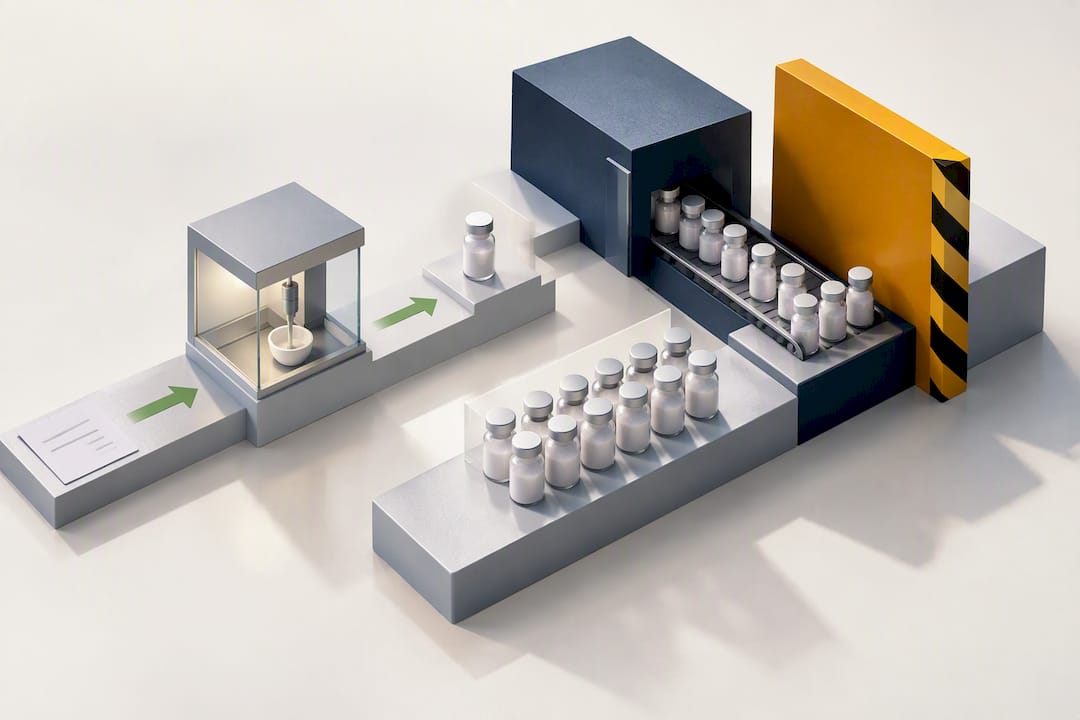
Compounding didn’t disappear in 2026. It just shrank back down to what it was always legally designed for: individualized, patient-specific medicine, not a substitute manufacturing pipeline for a drug already on the market in brand form.
Two federal categories govern this, and the difference matters more now than it ever has:
- 503A pharmacies compound medications for a specific, named patient based on a valid prescription that states a clinical reason the FDA-approved product won’t work. Think allergies to an inactive ingredient, or a dosage strength that doesn’t exist commercially. This pathway remains legal and largely unaffected by the shortage resolution.
- 503B outsourcing facilities compound in bulk, without a specific patient prescription in hand, and distribute to clinics and hospitals. This is the category that depended on the shortage exception, and it’s the category the FDA is now moving to shut down for GLP-1s specifically.
The agency has proposed excluding semaglutide, tirzepatide, and liraglutide from the 503B bulks list entirely. That would prohibit outsourcing facilities from compounding these three drugs from bulk active ingredient, period, regardless of shortage status. The public comment period on that rule closed in June 2026, and industry reporting suggests the agency is leaning toward finalizing it largely as proposed.
Practically, this means the compounded GLP-1 market you may have used in 2024 is closing down. What remains is narrow: a licensed 503A pharmacy compounding a specific formulation for you, personally, for a documented clinical reason, under a prescription written by your provider. That’s a legitimate and still-legal pathway. What’s disappearing is anyone offering compounded semaglutide as a general, lower-cost alternative to the brand product with no individualized medical justification behind it.
Pro Tip: If a compounding pharmacy offers you a GLP-1 with no questions asked about your medical history or why the brand-name product won’t work for you, that’s a sign the compounding isn’t patient-specific, and it likely isn’t legal under the tightened 503A framework.
Who Actually Covers GLP-1s Now: Medicaid, Medicare, and Employer Plans
Supply stopped being the bottleneck. Coverage is the bottleneck now, and it varies wildly depending on who’s paying.
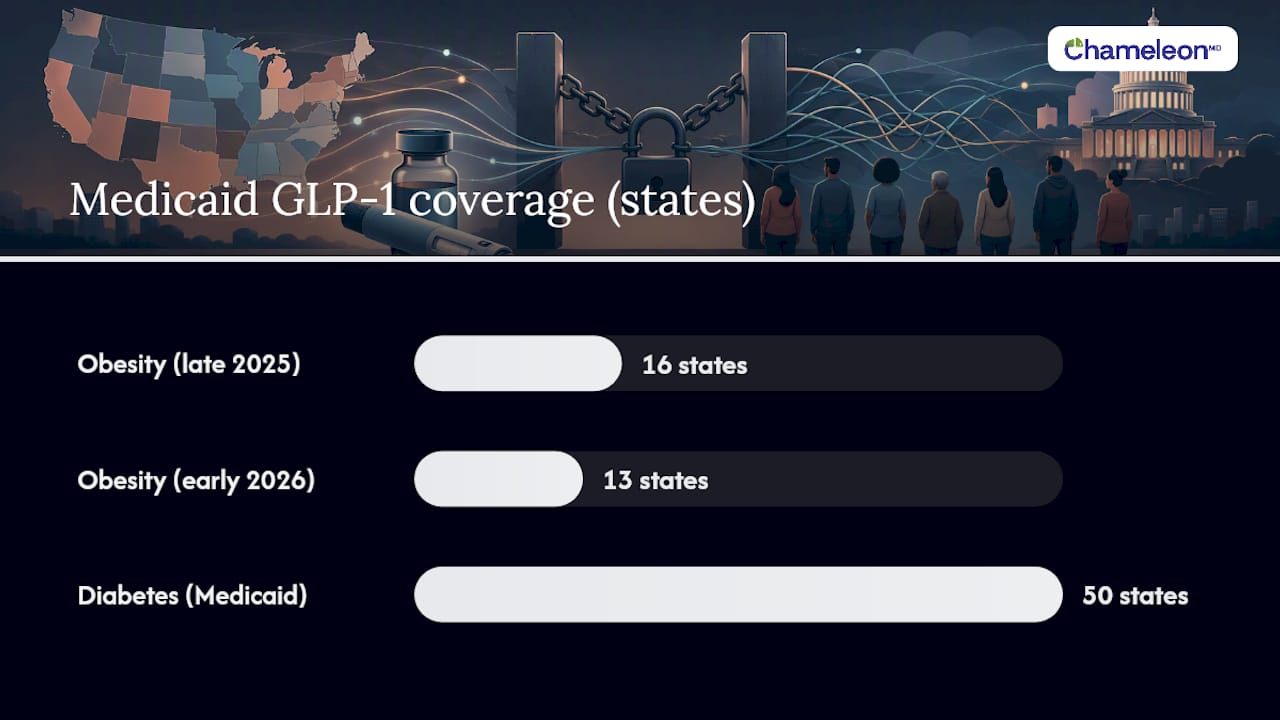
Medicaid coverage for GLP-1s has been moving in the wrong direction. Roughly 13 state Medicaid programs covered GLP-1s for obesity as of early 2026, down from 16 just months earlier in late 2025, according to a 2026 GLP-1 insurance coverage analysis. Federal rules still require Medicaid to cover GLP-1s prescribed for type 2 diabetes in every state, so that part of the landscape holds steady. Obesity coverage is a different story: it’s optional for states, and state budgets have been quietly tightening it. If you’re on Medicaid and using a GLP-1 for weight management rather than diabetes, your coverage can shift with very little warning, and it’s worth checking your state’s current formulary every few months rather than assuming last year’s approval still holds.
Medicaid GLP-1 coverage for obesity dropped from 16 states to about 13 states between late 2025 and early 2026, even as diabetes coverage stayed federally mandated nationwide.
Medicare presents its own tangle. Part D has a statutory exclusion barring coverage of drugs used solely for weight loss, which has kept GLP-1s largely out of reach for Medicare beneficiaries using them purely for obesity. CMS has tried to soften that edge with time-limited demonstration programs, sometimes referred to as the Medicare GLP-1 Bridge, alongside a broader model under discussion called BALANCE, aimed at testing expanded access in defined windows rather than as permanent policy. These are pilot programs, not a rewrite of the underlying law, so eligibility and timing depend heavily on where you live and which demonstration your region falls under.
Employer and commercial plans show the same fracture. Some employers have added GLP-1s to their formularies with enthusiasm, betting on long-term health savings. Others have pulled back hard. One striking example: reporting out of Massachusetts documented a sharp drop in GLP-1 utilization after regional insurers dropped coverage in 2026, with real, measurable declines in both prescriptions filled and total spending almost immediately after the policy change. Where employer coverage survives, it usually comes wrapped in step therapy requirements or prior authorization hurdles, forcing patients to document failed attempts with diet, exercise, or older medications before a GLP-1 gets approved.
A few concrete moves protect you here:
- Call your plan directly and ask specifically whether GLP-1s are covered for your diagnosis, not just “for weight loss” in general terms.
- Ask your provider to document every prior treatment attempt in your chart before you submit a prior authorization request.
- If you get coverage through work, contact HR or your benefits administrator. Some employers offer Patient Assurance programs or manufacturer savings cards that aren’t advertised on the standard benefits page.
- Reapply or appeal promptly if denied. Denials tied to missing documentation are often reversible with the right paperwork attached the second time.
How to Spot a Fraudulent or Unsafe GLP-1 Product
The tightening of legitimate compounding has created an opening for something worse: outright fraud. The FDA has flagged unapproved GLP-1 products sold online that are falsely marketed as compounded medication, and the agency has received reports of adverse events tied directly to these products. Some contain the wrong dose. Some contain no active ingredient at all. Some contain something else entirely.
Before you trust any pharmacy, brand, or online seller with a GLP-1 prescription, run through this checklist:
- Confirm the pharmacy holds an active state license, checkable through your state board of pharmacy’s website.
- Ask for a certificate of analysis (COA) if you’re getting a compounded product, and don’t accept a vague “quality guaranteed” claim in place of it.
- Require a valid, individualized prescription from a licensed provider. If a site will sell you a GLP-1 with just a questionnaire and no real clinical review, that’s a red flag on its own.
- Check that the product has traceable lot numbers and, where applicable, an NDC code you can verify against the manufacturer.
- Be suspicious of prices that sit dramatically below every other legitimate source. Fraud usually hides behind a discount that looks too good to pass up.
If you suspect you’ve received a counterfeit or mislabeled product, stop using it, save the packaging, and report it to FDA MedWatch. That reporting system is one of the main ways the agency identifies bad actors before more patients get hurt.
Pro Tip: A legitimate compounding pharmacy will always be able to explain, in plain terms, exactly why your prescriber determined the FDA-approved brand product wasn’t appropriate for you. If nobody can answer that question clearly, walk away.
Getting a Legitimate GLP-1 Prescription: A Step-by-Step Approach
Access in 2026 rewards preparation. Walking into a visit, virtual or otherwise, with the right documentation already assembled cuts weeks off the process.
Start by gathering what your provider and your insurer will both want to see:
- A clear record of your current diagnoses, including type 2 diabetes or a documented BMI that meets clinical thresholds for obesity treatment.
- Notes on prior weight-management attempts, including diet programs, exercise plans, or other medications you’ve tried and their outcomes.
- Recent lab results, particularly A1C, lipid panels, and kidney function markers if your provider has ordered them before.
- A list of current medications and any known drug allergies or intolerances.
- Your insurance information, including your plan’s formulary if you can access it ahead of time.
Telehealth platforms have become a genuinely practical entry point here, and not just for convenience. A licensed provider seeing you virtually can legally prescribe GLP-1s the same way an in-person provider can, and a same-day visit means you’re not waiting weeks for an appointment slot just to start the documentation process. What matters more than the format of the visit is whether the provider takes the time to build a chart that will actually hold up against a prior authorization review, meaning real clinical notes, not a rubber-stamped approval.
Once your provider submits a prior authorization, expect the review to take anywhere from a few days to a couple of weeks, depending on your plan and whether CMS’s electronic prior authorization (ePA) requirements apply to your coverage. Those rules are pushing plans toward faster, more standardized digital review processes, which should shorten wait times over the next year or two, though rollout speed still varies by insurer.
If you’re denied, don’t treat that as final:
- Request the specific denial reason in writing. Vague denials are often overturned once real documentation is attached.
- Have your provider submit a formal appeal with updated clinical notes addressing the exact reason cited.
- Ask about manufacturer patient-assistance programs, which sometimes apply even when insurance denies coverage outright.
- If your employer sponsors your plan, loop in HR. Benefits managers sometimes have discretion your insurer’s front-line reviewers don’t.
Where GLP-1 Policy Goes From Here Through 2027
The FDA’s 503B exclusion rule is the biggest single date to watch. With the comment period closed as of June 2026, a final rule could land within the next several months to a year, and once it does, outsourcing facilities will have a defined transition window before enforcement tightens further.
CMS timelines matter just as much for patients on Medicare or Medicaid. Watch for updates on the Bridge demonstration’s active periods and whether the broader BALANCE model expands its state opt-in window. These programs run on limited timeframes by design, so eligibility can open and close faster than typical insurance policy changes.
State Medicaid coverage will likely keep moving, and not necessarily in one direction. With state budgets under pressure, some states may drop obesity coverage further while others could add it back if federal guidance shifts. Employer plan renewal cycles, mostly clustered around the calendar year, are another point worth tracking. If your employer dropped GLP-1 coverage in 2026, next year’s renewal is your best shot at seeing that decision revisited.
- FDA final rule on 503B exclusion: watch for finalization within the next 12 months.
- CMS Bridge and BALANCE program updates: check for new opt-in windows and state participation announcements.
- State Medicaid formulary reviews: often updated quarterly or at each legislative budget cycle.
- Employer plan renewals: typically announced in the fall for the following plan year.
How Chameleon Healthcare Supports Safe, Documented GLP-1 Care
A telehealth-first model fits this moment well, precisely because the friction in 2026 is administrative, not medical. Telehealth platforms can connect patients with licensed providers for same-day virtual visits, which matters when a prior authorization clock is already ticking and long waits for in-person appointments are impractical.
What a visit like this typically covers:
- A clinical review of your history, including prior weight-management attempts and relevant labs, the same documentation payers ask for during prior authorization.
- A prescription written for the FDA-approved medication that fits your clinical picture, not a compounded substitute sold without individualized review.
- Support putting together the chart notes your insurer’s reviewer will actually need to approve or reconsider a claim.
- Continuity through membership-based access, so follow-up visits and dose adjustments don’t require starting the documentation process over from scratch each time.
That combination, same-day access plus a paper trail that holds up under payer scrutiny, is exactly what most patients are missing when a GLP-1 prescription stalls out in 2026.
The Shift Nobody Warned Patients About
Everyone braced for a supply crisis to keep dragging into 2026. It didn’t. What arrived instead was quieter and, in some ways, harder to fight: a coverage crisis dressed up as good news. Manufacturers can finally make enough semaglutide and tirzepatide to meet demand, and headlines framed that as the end of the story. It’s the middle of a different story.
The real fight now happens in prior authorization queues and state Medicaid budget meetings, not pharmacy backrooms. That’s a strange kind of progress. A resolved shortage should feel like relief, and for patients whose insurance already covers GLP-1s cleanly, it is. For everyone else, watching Medicaid obesity coverage shrink from 16 states to 13 in a matter of months, the fight just changed venues.
My honest read: the compounded market’s shrinkage is mostly a good thing for patient safety, even though it will sting for people who relied on it for cost reasons. Fraudulent unapproved products were a real and growing danger, and tighter 503A/503B enforcement closes off a lot of that exposure. The better answer to affordability isn’t a loophole in bulk compounding rules. It’s persistent, well-documented appeals, active use of employer resources, and providers who build a prior authorization case correctly the first time.
— Vector
Get a Legitimate GLP-1 Prescription Without the Wait
Chameleonhc gives you what a shortage-era, coverage-driven market actually requires: a same-day path to a real, FDA-approved GLP-1 prescription with the clinical documentation your insurer needs to approve it, not a compounded workaround that regulators are actively phasing out.

If you’re new to GLP-1 care, the GLP-1 Weight Loss plan for new members runs $55 a month and includes a virtual visit with a licensed provider who can evaluate your history and start building the documentation a prior authorization review will ask for. If you’re already a ChameleonMD member, ongoing GLP-1 management costs $30 a month per adult, the same virtual access at a lower rate for continuing care. Beyond weight loss, membership plans start at $25 a month for an individual or $45 a month for a family, covering everyday concerns like sore throats and sinus infections without an insurance card in sight. If you’re managing benefits for a team, Chameleonhc’s employer plan is worth a conversation with your HR contact. Start with the weight-loss page, book a visit, and get your documentation working for you instead of against you.
Where to Verify GLP-1 Shortage and Coverage Status Yourself
Don’t take any single article’s word for where things stand. These primary sources update as the situation shifts:
- The FDA Drug Shortages database for real-time shortage listings and how the agency defines resolution.
- FDA press announcements on 503B bulks list rulemaking for compounding rule updates.
- CMS announcements on Bridge and BALANCE demonstration program dates and eligibility.
- The KFF Medicaid GLP-1 coverage tracker and independent payer surveys for state-by-state obesity coverage changes.
Sources
- FDA clarifies policies for compounders as national GLP-1 supply begins to stabilize
- FDA proposes to exclude semaglutide, tirzepatide, and liraglutide from the 503B bulks list
- 2026 GLP-1 insurance coverage report: Who pays | VidaBeacon
FAQ
What Is the Current Status of the GLP-1 Shortage?
The GLP-1 shortage is resolved for semaglutide and tirzepatide, both of which the FDA has removed from its shortage database as of 2026. Liraglutide may still appear as an exception in some records, so check your specific medication rather than assuming blanket resolution.
Will GLP-1s Be Covered by Insurance in 2026?
Coverage depends heavily on your plan type and diagnosis. Medicaid must cover GLP-1s for type 2 diabetes everywhere, but only about 13 state Medicaid programs cover them for obesity as of early 2026, and Medicare’s Part D exclusion for weight-loss-only drugs still limits access outside of CMS demonstration programs.
Is Compounded Tirzepatide Being Banned in 2026?
Not banned outright, but sharply restricted. The FDA has proposed excluding tirzepatide from the 503B bulks list, which would stop outsourcing facilities from mass-producing it, while individualized 503A compounding for a documented clinical reason remains legal.
Is Mounjaro Expected to Be in Shortage in 2026?
No. Tirzepatide, sold as Mounjaro and Zepbound, is off the FDA’s shortage list as of 2026, with manufacturer supply data confirming adequate national inventory. The remaining access challenges patients face involve insurance coverage and prior authorization, not pharmacy stock.
How Can I Get a GLP-1 Prescription Without Long Wait Times?
A same-day virtual visit through a telehealth provider like Chameleonhc lets a licensed provider review your history and start a legitimate prescription the same day, avoiding the weeks-long wait typical of in-person specialty appointments. Come prepared with your BMI, prior treatment history, and recent labs to speed up the visit.