
TL;DR:
- Uninsured individuals are increasingly using telehealth through community health centers, reducing barriers to care. Telehealth offers low-cost, timely access especially via federally funded clinics with income-based fees. Audio-only options and community resources help overcome digital divide challenges for rural and disadvantaged populations.
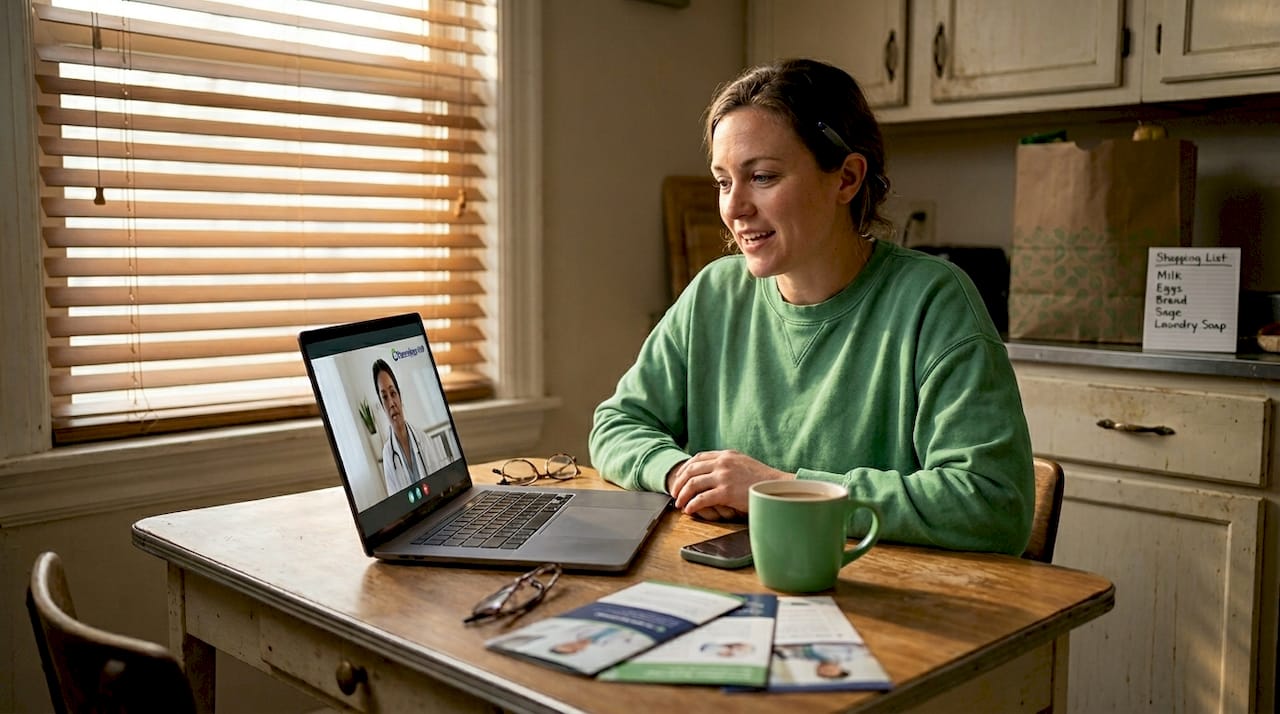
Being uninsured does not mean you have to skip the care you need. That is a common assumption, but it is one worth questioning. Nearly 5.9 million uninsured patients visited community health centers in 2024, and telehealth made up 13% of those 17.7 million total visits. That number tells a story: people without insurance are already using telehealth, and more of them could be. This article walks you through how telehealth works for uninsured individuals, what it costs, and what to watch for so you can make the most informed decision for your health.
Table of Contents
- Why do uninsured people struggle to get care?
- How telehealth bridges the gap for uninsured patients
- Direct-to-consumer vs. community clinic telehealth: Choosing what’s best
- Overcoming equity challenges: Digital barriers and solutions
- Why most telehealth guides underplay the real trade-offs for the uninsured
- Ready to try affordable telehealth?
- Frequently asked questions
Key Takeaways
| Point | Details |
|---|---|
| Telehealth is accessible | Most uninsured patients can find affordable telehealth options using clinics or DTC platforms. |
| Sliding scale fees | Community clinics offer telehealth with income-based pricing, sometimes starting at just a few dollars. |
| Barriers still exist | Digital access, policy limits, and type of care needed can affect what each uninsured person can get. |
| Choose the right model | Community telehealth is best for ongoing needs, while DTC works well for simple, one-time issues. |
Why do uninsured people struggle to get care?
The challenges are real and layered. When you do not have insurance, every medical visit comes with an unpredictable price tag. A routine visit for a sinus infection or a rash can easily run $150 to $300 or more at a traditional clinic. Emergency rooms, which many uninsured people rely on for even basic care, can cost thousands. That kind of financial uncertainty makes people delay care, sometimes until a small issue becomes a serious one.
But cost is only part of the problem. There are also practical barriers that stack up quickly:
- Time off work: Many uninsured individuals work hourly jobs with no paid sick leave. Taking half a day off to sit in a waiting room is not just inconvenient; it can mean lost wages.
- Transportation: Rural communities in particular face real distance challenges. The nearest clinic might be 30 or more miles away, which is a significant obstacle without a reliable vehicle.
- Long wait times: Community clinics that do serve uninsured patients are often stretched thin. Wait times for appointments can be weeks, even for relatively straightforward issues.
- Fear of billing: The uncertainty around what a visit will cost prevents many people from seeking care at all, even when they know they should.
The populations most affected are low-income adults, people in rural areas, gig workers, and young adults who have aged off their parents’ insurance. Many of them fall into a coverage gap, earning too much to qualify for Medicaid but not enough to afford marketplace plans.
When care does happen for uninsured individuals, it often follows a pattern: people wait as long as possible, try urgent care centers if they can afford the upfront cost, or use emergency rooms as a fallback. Exploring affordable healthcare options before a health issue becomes urgent is a smarter approach, and telehealth is one of the most practical tools available. That said, it is important to acknowledge that digital literacy and broadband access remain real equity challenges, and telehealth does not automatically fix all of them.
How telehealth bridges the gap for uninsured patients
Telehealth changes the math in a meaningful way. Instead of paying full walk-in rates at a clinic or urgent care center, uninsured patients can connect with a licensed provider via video or phone for a fraction of the cost. That is not just convenient; for many people, it is the difference between getting care and going without.
Federally Qualified Health Centers, commonly called FQHCs, are one of the most reliable options for uninsured patients seeking telehealth. These are federally funded clinics designed specifically to serve low-income and uninsured populations. Telehealth in FQHCs covers primary care, behavioral health, and chronic disease management through both audio and video visits. That range of services matters because it means you are not limited to just urgent issues. You can manage a condition like diabetes or high blood pressure over time without needing insurance.
The cost structure at FQHCs works on a sliding fee scale. This means what you pay is based on your income and family size, not a fixed rate. Sliding fee discounts apply to telehealth visits just as they do for in-person care. If your income falls below 100% of the federal poverty level, you may pay only a nominal fee, which in practice can be as little as a few dollars per visit. That kind of affordability is genuinely accessible.
Here is a quick comparison of what telehealth can offer versus traditional care for uninsured patients:
| Type of care | Traditional in-person (uninsured) | FQHC telehealth (uninsured) |
|---|---|---|
| Average visit cost | $150 to $300+ | $20 or less (sliding scale) |
| Wait time for appointment | Days to weeks | Often same or next day |
| Location flexibility | Must travel to clinic | Phone or computer from home |
| Behavioral health access | Limited, often referral-only | Included in many FQHCs |
| Chronic disease management | Possible, but costly | Available via ongoing visits |
Beyond FQHCs, direct-to-consumer telehealth platforms offer another layer of accessibility. These platforms let you connect with a licensed provider quickly, often the same day, for conditions like sore throats, urinary tract infections, rashes, allergies, and other common issues. Pricing is typically flat and transparent, which removes the anxiety of not knowing what you will owe. Learning more about the telemedicine benefits available to uninsured patients can help you understand which option fits your situation best.
Pro Tip: To find an FQHC near you that offers telehealth, visit the Health Resources and Services Administration (HRSA) finder at findahealthcenter.hrsa.gov. You can filter by location and check which centers offer virtual visits before you even pick up the phone.
Direct-to-consumer vs. community clinic telehealth: Choosing what’s best
Once you know that telehealth is available to you, the next question is which type of telehealth service actually fits your needs. There are two main models, and they serve different purposes.
Direct-to-consumer (DTC) telehealth platforms are apps or websites where you pay upfront for a visit with a licensed provider. No insurance needed, no application process, and no waiting weeks for an appointment. You log on, describe your symptoms, and a provider responds, often within hours or the same day. These platforms work well for non-complex, one-time issues like a cold, skin condition, or minor infection.
Community clinic telehealth through FQHCs or similar organizations is a better fit for ongoing care. If you need to manage a chronic condition, access behavioral health support, or establish a relationship with a primary care provider over time, community clinics offer more continuity. They may require income verification to set your fee, but that process is usually straightforward.
Here is a side-by-side comparison to help you decide:
| Feature | DTC telehealth platform | FQHC / community clinic telehealth |
|---|---|---|
| Eligibility requirements | None, open to anyone | Income-based for reduced fees |
| Upfront cost | Flat fee, often $20 to $75 | Sliding scale, possibly $0 to $20 |
| Speed of access | Same day, often within hours | May require scheduling |
| Scope of care | Acute and minor conditions | Primary, behavioral, and chronic care |
| Provider continuity | Varies by platform | Often the same care team |
| Prescription capability | Yes, for many conditions | Yes, broader formulary access |
DTC telehealth platforms have grown significantly and now cover a wide range of common conditions. If you are dealing with something that needs attention today, they are a practical, low-barrier option. However, for more complex or ongoing health needs, community clinic telehealth provides a stronger safety net.
Follow these steps to decide which model is right for you:
- Identify your need. Is this a one-time issue or something you will need ongoing support for?
- Check your income level. If you are at or below the poverty line, an FQHC sliding scale may cost you less than any DTC option.
- Consider your timeline. If you need care today, a DTC platform is likely faster.
- Think about follow-up. If you will need prescriptions refilled or ongoing monitoring, a community clinic relationship is worth establishing.
- Review what conditions are covered. Some DTC platforms do not handle complex diagnoses or specialist referrals. Know what you are getting into before you start.
Pro Tip: If you are accessing telehealth without insurance for the first time, start with a DTC platform for an immediate concern, then schedule with a community clinic to set up a longer-term care relationship. Having both options available gives you real flexibility.
The range of common telehealth treatments includes sinus infections, UTIs, rashes, anxiety, asthma management, and more. Knowing what is treatable online helps you plan ahead rather than scrambling during a health scare.
Overcoming equity challenges: Digital barriers and solutions
Telehealth opens doors, but it does not open them equally for everyone. For some uninsured individuals, new barriers replace the old ones. You might not have a reliable smartphone, a strong internet connection, or the confidence to navigate a video call with a provider. These are real challenges, and they deserve honest acknowledgment.
Digital divide issues like limited broadband access and low digital literacy create specific gaps, particularly for rural and elderly uninsured populations. Video-preferred platforms work well in urban settings with strong internet access, but they can be a frustrating experience for someone on a spotty rural connection.
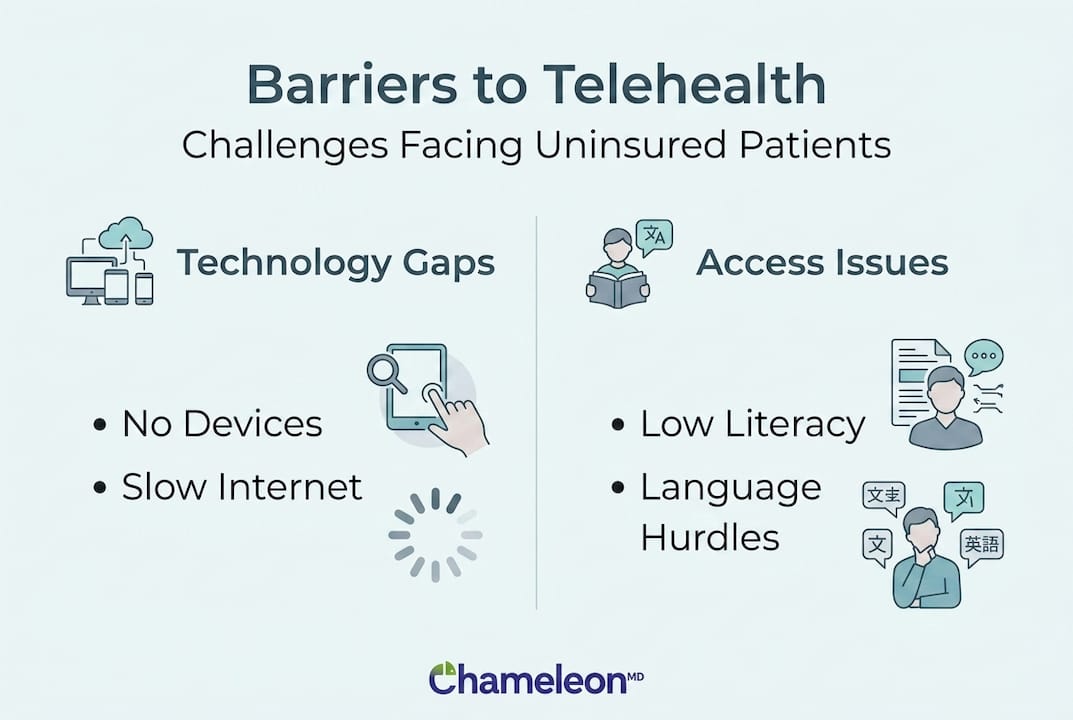
Here is the good news: audio-only telehealth is a genuine equalizer. Many FQHCs and telehealth platforms offer phone-based visits that do not require a camera or stable video connection. A regular phone call with a provider can address most common health concerns just as effectively as a video visit. It is also a more comfortable option for people who feel anxious about being on camera.
If you are navigating technology barriers, consider these practical options:
- Public libraries: Many offer free computer and internet access. You can schedule and complete a telehealth visit there if needed.
- Community programs: Some local nonprofits and health departments have digital literacy programs specifically designed to help people use health technology.
- Phone-based visits: Ask any telehealth provider upfront whether audio-only visits are available. Most will say yes.
- Device lending programs: Some hospitals and health systems loan tablets or hotspots to patients who need them for telehealth visits.
“Telehealth expands access, but equity depends on bridging the digital divide through policy, infrastructure, and community-level support. Access to care should not depend on access to broadband.”
Understanding digital healthcare barriers helps you plan around them rather than being stopped by them. Looking into affordable telehealth memberships is another route worth considering, since these plans sometimes bundle in support resources. And if you are thinking broadly about improving your healthcare access, telehealth is one piece of a larger puzzle that includes community resources, preventive care, and knowing your rights as a patient.
Why most telehealth guides underplay the real trade-offs for the uninsured
Here is something most telehealth articles do not say directly: telehealth is not a permanent fix. It is a valuable tool, but it sits on top of a policy foundation that can shift without warning. And for uninsured patients, that instability carries real risk.
During the COVID-19 public health emergency, telehealth rules were loosened significantly. Providers could bill for more visit types, cross state lines more easily, and offer audio-only visits without penalty. That flexibility expanded access dramatically. But post-pandemic reimbursement data shows that FQHC visit volume increased, while reimbursement disparities actually widened in some states. That means clinics are seeing more patients but not always getting paid fairly for those visits.
This creates a quiet but serious workforce problem. When state reimbursement rates for off-site telehealth visits are lower than in-person rates, community clinics struggle to retain providers. Burned-out staff and high turnover are not abstract policy issues. They translate directly into longer wait times and reduced availability for the patients who depend most on those clinics.
There is also a risk in over-relying on DTC telehealth for complex or chronic care. These platforms are genuinely useful for acute, straightforward issues. But they are not designed to manage long-term conditions with the continuity and coordination that actually improves health outcomes. Using a DTC app for a UTI is smart. Relying on it to manage uncontrolled diabetes, without a consistent provider relationship, is a gap that can quietly grow into a crisis.
The real trade-off is this: telehealth gives you access today, but sustainable access depends on policy support, stable funding for community clinics, and ongoing investment in digital infrastructure. We believe that understanding virtual healthcare pros and cons honestly is what sets informed patients apart. And for anyone exploring telehealth for recovery or behavioral health needs specifically, programs like telehealth for recovery show how virtual care can support long-term wellbeing when structured thoughtfully.
The takeaway is not that telehealth is unreliable. It is that the most empowered patients are the ones who use it strategically, combine it with community-based care when possible, and advocate for the policy changes that would make access genuinely sustainable.
Ready to try affordable telehealth?
If this guide has made one thing clear, it is that you have more options than you might have thought. Skipping care because you do not have insurance is rarely your only choice, and it does not have to be yours.
At Chameleon Healthcare, we built our platform specifically for people who want real care without the red tape. You can connect with a licensed provider today for conditions like asthma care online, dental infections, sinus issues, rashes, and dozens of other common health concerns. Pricing is clear and upfront. No waiting rooms, no surprise bills, and no insurance required. Explore our affordable telehealth plans and find the option that fits your life. Your health does not have to wait.
Frequently asked questions
Can you use telehealth if you have no insurance?
Yes, many telehealth services and community health centers offer low-cost or sliding fee options for the uninsured. Sliding fee discounts at FQHCs apply to telehealth visits, making care accessible regardless of coverage status.
What types of care can uninsured people get through telehealth?
You can receive help for minor illnesses, behavioral health concerns, chronic condition management, and follow-up care. FQHC telehealth services cover primary care, behavioral health, and ongoing disease management via audio and video visits.
How much does telehealth cost without insurance?
Many clinics use income-based sliding fee scales, so costs vary by your financial situation. Nominal fees apply for patients below 100% of the federal poverty level, meaning some visits cost only a few dollars.
What if I don’t have a smartphone or computer?
Many clinics offer audio-only telehealth visits that work over a regular phone. Audio-only telehealth is especially important for rural and tech-limited patients, and public devices at libraries or community centers can also fill the gap.