

A basic telehealth visit typically costs $40 to $90 out of pocket if you’re paying cash, with specialist and mental health visits running $100 to $300 or more. If you have insurance, you’ll usually owe a copay or coinsurance amount, and Medicare and Medicaid coverage depends heavily on your specific plan and state. The sections below break down exactly what drives that price up or down.
TL;DR:
- Out-of-pocket telehealth visits typically cost between $40 and $90 for primary care, with specialist and mental health visits often exceeding $100.
- Insurance copays generally range from $15 to $40, but costs vary based on plan coverage, network status, and whether the visit exceeds deductible limits.
- Longer or more complex visits, facility fees, and additional services like labs or prescriptions increase the total cost of the virtual appointment.
- Telehealth tends to be less expensive than in-person care for common illnesses, but ongoing mental health treatment may reduce cost savings.
- Using a membership plan or HSA/FSA funds can lower expenses, especially for frequent or recurring care needs.
Table of Contents
- Telehealth Visit Cost Without Insurance: Cash Prices and Subscriptions
- How Insurance, Medicare, and Medicaid Change Your Telehealth Bill
- What Makes a Telehealth Visit More or Less Expensive
- How to Pay Less for Your Next Telehealth Visit
- What the Research Says About Telehealth vs. In-Person Costs
- How Chameleon Healthcare Keeps Telehealth Pricing Simple
- Ready to Check Your Options?
- Where to Verify Coverage and Read the Research
- Sources
Telehealth Visit Cost Without Insurance: Cash Prices and Subscriptions
If you’re paying out of pocket, primary care telehealth visits generally land in a $40 to $90 range, depending on the platform and how long the appointment runs. That’s for straightforward issues: a sinus infection, a rash, a medication refill. Nothing exotic.
Specialist consultations and mental health sessions generally cost more than primary care visits. A few things push that number up: a longer scheduled visit, a more detailed evaluation, or a provider who bills at a higher rate because of specialty training. Therapy sessions in particular tend to run on the higher end since they’re structured around 45 to 60 minute blocks rather than quick check-ins.
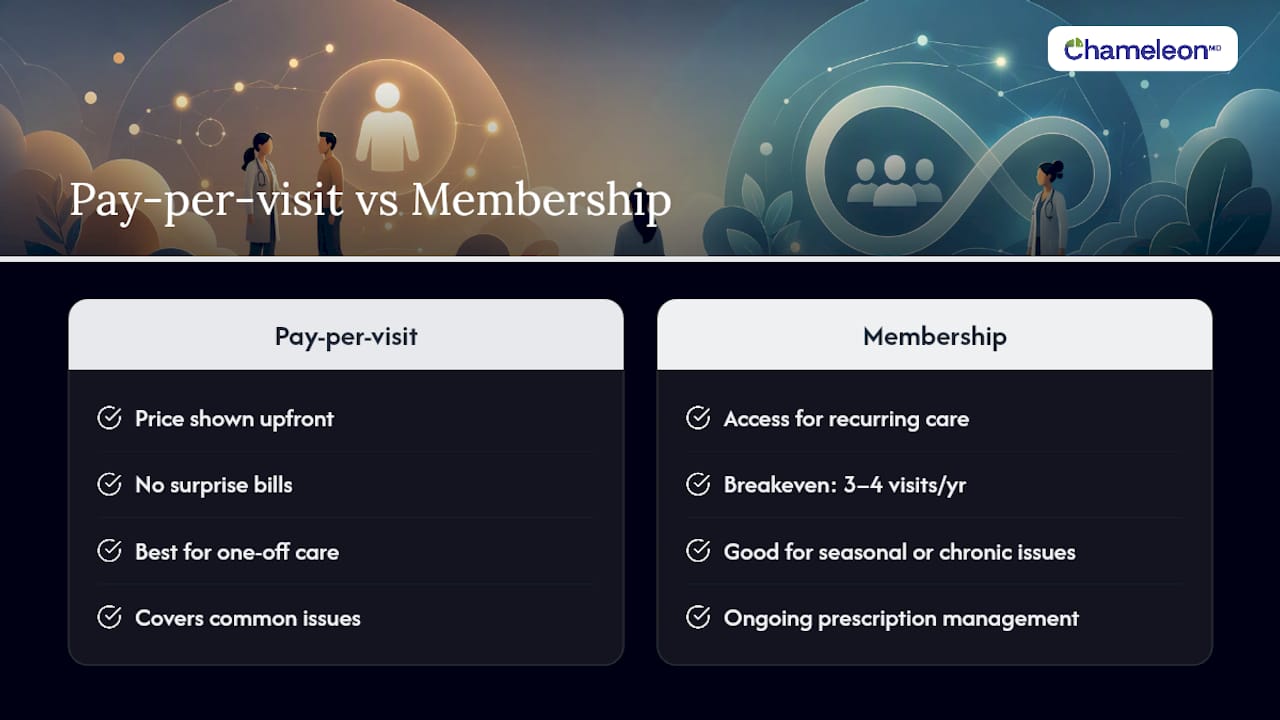
Subscription and membership models offer another path. Monthly fees for subscription and membership models vary, and if you or your family expect multiple visits monthly, a membership plan can be more cost-effective than paying per visit. If you might need care once or twice a year, pay-per-visit is often the cheaper route.
Keep in mind what’s usually not included in these base prices:
- Lab work and bloodwork panels
- Imaging (X-rays, ultrasounds)
- Prescription medications themselves
- Specialist referrals requiring a separate appointment
Ask upfront what’s bundled into the visit fee and what gets billed separately.
How Insurance, Medicare, and Medicaid Change Your Telehealth Bill
Your plan’s structure determines what you actually owe, and three terms matter most. A copay is a flat fee, often $15 to $40 for a virtual visit. Coinsurance is a percentage of the allowed amount, meaning your cost shifts depending on what the visit is billed at. A deductible means you pay the full allowed amount until you hit your annual threshold, then coinsurance or a copay kicks in.
Network status matters too. An in-network provider has a negotiated rate with your insurer; an out-of-network visit can leave you covering the difference between what the provider charges and what your plan allows.
Medicare covers a range of telehealth services, but audio-only visits and originating-site rules have specific caveats worth checking directly on Medicare before booking. Medicaid coverage varies by state, so confirming with your state Medicaid office or HRSA resources beforehand saves confusion later.
Before your appointment:
- Call your insurer and ask whether telehealth is covered under your specific plan.
- Confirm the provider is in-network.
- Ask for the expected allowed amount, not just your copay.
Pro Tip: Ask your insurer specifically about “telehealth parity” rules in your state. Some states require insurers to pay the same rate for virtual visits as in-person ones, which affects what shows up on your bill.
What Makes a Telehealth Visit More or Less Expensive
Not every virtual visit costs the same, and a few factors explain most of the variation you’ll see between platforms and providers.
- Provider type: A primary care visit costs less than a specialist consult, largely because of differing billing codes and time spent per appointment.
- Visit length: Longer, more complex visits get billed at higher codes than a quick five-minute check-in.
- Facility fees: If your provider is affiliated with a hospital system, a facility fee can get tacked onto the bill even for a virtual visit, since the hospital’s overhead gets folded into the charge.
- Follow-up and bundled care: Labs, imaging, and prescriptions ordered during your visit add to the total separately.
- State and payer rules: Coding changes and state-level policy shifts in 2026 have made some virtual visits pricier than they were during pandemic-era flexibilities.
How to Pay Less for Your Next Telehealth Visit
Before choosing cash-pay or insurance, gather four numbers: the provider’s cash price, your insurer’s allowed amount, your copay, and how much of your deductible remains. Comparing those side by side tells you which route actually costs less for that specific visit.
Cash-pay tends to win when you haven’t met your deductible yet, or when the visit is a simple, low-cost issue that a flat fee covers cleanly. Insurance usually wins once you’ve met your deductible or if the visit involves expensive medications that your plan discounts.
A few practical moves lower your total spend:
- Use HSA or FSA funds for cash-pay visits. That money is already set aside pretax, so it stretches further.
- Ask directly whether a cash discount applies. Some providers cut their rate for upfront payment.
- Run the subscription break-even math if you expect more than one visit this year. Membership plans built for multiple visits often beat paying per visit.
- If you’re uninsured, look up an HRSA-supported health center near you. These clinics offer sliding-scale fees based on income.
A quick reality check: the type of visit changes the math more than most people expect. A one-off sore throat consult almost always favors cash-pay. Ongoing medication management almost always favors insurance or a membership plan.
What the Research Says About Telehealth vs. In-Person Costs
A large comparative analysis published in JAMA Network Open found that telemedicine encounters typically involve significantly lower 30-day episode charges compared to in-person encounters for similar conditions. That’s not a small gap.
Telemedicine visits cost far less than office visits in aggregate, though the savings shrink or disappear for certain mental and behavioral health categories, where follow-up visits and ongoing care patterns behave differently than for physical health complaints.
Penn Medicine’s summary of the same research echoes that finding while flagging the behavioral health exception clearly. If you’re weighing telehealth against an in-person visit for something straightforward like a sinus infection or a skin rash, the numbers favor virtual care. For ongoing therapy or complex mental health needs, expect the cost comparison to look different, and plan accordingly.
How Chameleon Healthcare Keeps Telehealth Pricing Simple
We built Chameleon Healthcare around a simple idea: you shouldn’t need an insurance card or a finance degree to know what a doctor’s visit costs. Our pay-per-visit option covers common issues like sore throats, sinus infections, and rashes at an upfront rate you see before you book. No surprise bill two weeks later.
Our membership plans make more sense if you’re the kind of patient who ends up needing care three or four times a year, whether that’s seasonal allergies, recurring UTIs, or ongoing prescription management. Run the math: a handful of one-off visits at standard cash-pay rates often adds up to more than a year of membership access.
We are a telehealth-first practice focused on providing fast, transparent care without insurance friction, and that focus shapes every pricing decision.
Ready to Check Your Options?
Comparing telehealth visit fees against your insurance plan takes about ten minutes, and it’s worth doing before you’re sick and rushed. This service gives you a clear alternative to guessing: transparent, upfront pricing you can see before you book, whether you’re paying per visit or considering a membership.

Start by checking two things: what your insurer would charge you for a virtual visit, and what the visit costs by comparison. For common issues like asthma flare-ups, sprains and strains, or reflux symptoms, a same-day virtual visit often resolves things faster than waiting for an in-person slot to open up.
If you expect to need care more than once or twice this year, look at our membership and plan options, including employer plans if you’re comparing coverage for a small team. Businesses evaluating group healthcare options can also review how functional telehealth pricing works across different care models. Either way, book your first visit and see the price before you commit to anything.
Where to Verify Coverage and Read the Research
- Telehealth: payment guidance and steps for uninsured patients
- Medicare: which telehealth services Medicare covers
- JAMA Network Open: the full cost-comparison study
- Penn Medicine: plain-language summary of the study
- HRSA Health Center Finder: locate low-cost or sliding-scale clinics near you
This article is general information, not a substitute for advice from a qualified doctor. Consult a qualified healthcare professional about your own circumstances before acting on anything here.