

The national shortage of semaglutide (Ozempic, Wegovy, Rybelsus) and tirzepatide (Mounjaro, Zepbound) is resolved, according to FDA Drug Shortages Database records. Liraglutide (Victoza, Saxenda) still shows active shortage entries for some formulations, and dulaglutide (Trulicity) is not currently listed as short. The biggest policy shift to watch is the Medicare GLP-1 Bridge, launching July 1, 2026, which adds coverage with a $50 monthly copay for qualifying beneficiaries. Check the FDA database and your plan’s formulary before assuming anything about your own access.
TL;DR:
- Most semaglutide and tirzepatide shortages are officially resolved, but some liraglutide formulations still face active shortages as of June 2026.
- Local pharmacy stock and regional distribution delays can lag behind the FDA’s national shortage status, so double-check availability at your pharmacy.
- The FDA’s supply improvements in 2026 stem from increased manufacturer capacity, production shifts, and rising demand for oral formulations through cash-pay channels.
- New Medicare coverage starts July 1, 2026, offering a $50 copay via the GLP-1 Bridge program, but Medicaid coverage remains inconsistent by state.
- Compounded GLP-1 products lose legal protection once shortages are resolved, requiring patients to switch to FDA-approved versions if available.
Table of Contents
- Current FDA Shortage Status for Each GLP-1 Medication
- What Actually Fixed the Supply in 2026
- FDA Compounding Rules for GLP-1s: What Changed
- How Medicare and Medicaid Are Handling GLP-1 Coverage in 2026
- Steps to Keep Your GLP-1 Treatment on Track
- What to Watch for GLP-1 Availability Through Late 2026
- How Chameleon Healthcare Helps You Stay on Track
- What Stabilization Really Means Right Now
- Sources
- FAQ
Current FDA Shortage Status for Each GLP-1 Medication
If you’ve been refreshing pharmacy apps for two years hoping for good news, here it is: most of it has arrived. But “resolved” doesn’t mean identical for every drug, and the differences matter for how you plan refills.
Semaglutide (Ozempic, Wegovy, Rybelsus) is no longer listed as an active shortage. The FDA determined the shortage resolved after confirming manufacturer production capacity now meets national demand, though the agency notes intermittent local disruptions can still pop up depending on your pharmacy and region.
Tirzepatide (Mounjaro, Zepbound) shows the same pattern. FDA database checks throughout 2026 returned zero active shortage records, a signal that mirrors the semaglutide resolution and reflects the manufacturer’s expanded production lines.
Liraglutide (Victoza, Saxenda) is the outlier. As of June 2026, live queries against the FDA shortages database still show active entries for certain liraglutide presentations, with limited availability or discontinuation notices attached to specific formulations. If you’re on liraglutide, don’t assume the broader “GLP-1 shortage is over” headlines apply to you.
Dulaglutide (Trulicity) currently sits outside the active shortage list, with no major disruption reported for 2026.
Here’s the part most coverage skips: removal from the FDA Drug Shortages Database is a national signal, not a personal guarantee. The agency has been clear that resolving a shortage at the manufacturer level doesn’t instantly refill every pharmacy shelf. Distribution timing, regional demand spikes, and individual pharmacy ordering patterns can still create a gap between “resolved” and “in stock at your Walgreens.”
Quick fact check: The FDA’s Drug Shortages Database updates continuously, and anyone can search it by active ingredient without an account.
To check status yourself:
- Go to the FDA Drug Shortages Database and search the generic name (semaglutide, tirzepatide, liraglutide, or dulaglutide), not the brand name.
- Note the “status” field: active, resolved, or discontinued.
- Check the “date” the entry was last updated. Older entries may not reflect the newest fixes.
- Read the “reason for shortage” and “estimated resolution” notes for formulation-specific detail.
- Cross-reference with your pharmacy directly, since local stock can lag behind national data.
What Actually Fixed the Supply in 2026
Supply doesn’t heal itself. Three forces converged in 2026 to move semaglutide and tirzepatide out of active shortage status, and understanding them helps explain why liraglutide is lagging behind.
Manufacturers expanded fill-finish capacity and added production lines dedicated to injectable pens, which had been the primary bottleneck for two years. That capacity increase is what let the FDA confirm demand is now being met at the national level, rather than manufacturers simply promising future output.
Product transitions also reshuffled the landscape. Rybelsus is being phased out in favor of new Ozempic tablet formulations, a shift that required manufacturers to redirect production lines and update prescriber guidance. If your pharmacist mentioned a substitution recently, this transition is likely why.
Then there’s the demand side, and it’s the part most patients don’t see coming. According to IQVIA’s obesity treatment outlook, oral GLP-1 formulations are pulling entirely new patients into treatment, largely through cash-pay channels rather than patients simply switching from injectables. That expands the total market even as injectable supply stabilizes.
What this means in practice:
- Oral GLP-1 uptake is adding new patients to the system, not just redistributing existing ones.
- Cash-pay demand doesn’t show up in insurance utilization data, so it can mask how much total pressure is building on manufacturers.
- More total patients on GLP-1 therapy means supply stabilization is a moving target, not a fixed finish line.
FDA Compounding Rules for GLP-1s: What Changed
Compounded semaglutide and tirzepatide were a lifeline for a lot of patients during the worst of the shortage. That lifeline is closing, and the timeline matters if you or a patient you’re treating currently relies on a compounded product.
Under federal law, 503A compounding pharmacies and 503B outsourcing facilities can legally produce compounded versions of a drug during an active shortage, under FDA enforcement discretion. Once the FDA declares the shortage resolved, that discretion window starts closing, typically with a phased enforcement timeline rather than an overnight cutoff.
The FDA’s April 2026 statement laid out exactly this: as national semaglutide supply stabilizes, compounders lose the legal basis to keep producing copies, and enforcement discretion tightens on a defined schedule.
Here’s what prescribers and patients should confirm before continuing on a compounded product:
- Ask whether the compounding pharmacy is 503A (state-licensed) or 503B (FDA-registered outsourcing facility), since the rules differ slightly for each.
- Confirm the compounded product isn’t being marketed as a copy of a commercially available drug once that drug is off the shortage list, since that’s the line FDA enforcement targets.
- Check that the compounding pharmacy is transparent about its active pharmaceutical ingredient source.
- Ask your prescriber whether switching to the FDA-approved commercial product is now feasible given your insurance or cash-pay situation.
Compounded GLP-1 products are not FDA-approved, regardless of how professional the packaging looks. That’s not a knock on every compounding pharmacy. It’s a safety fact prescribers should document clearly, especially now that commercial alternatives are back in stock for most patients.
Pro Tip: If you’ve been on a compounded version for months, don’t switch cold. Talk to your prescriber about dose equivalency first, since compounded and commercial formulations aren’t always a one-to-one match.
How Medicare and Medicaid Are Handling GLP-1 Coverage in 2026
Supply is one problem. Getting your plan to actually pay for the medication is a different one entirely, and 2026 brought real movement here too.
The headline change is the Medicare GLP-1 Bridge, a demonstration program starting July 1, 2026. It’s not a permanent Part D benefit change. It’s a defined, time-limited program that covers specific GLP-1 products for qualifying beneficiaries with a $50 monthly copay. The Bridge runs on its own eligibility and prior authorization rules, and it doesn’t affect your standard Part D deductible or out-of-pocket maximum tracking. It’s a separate lane, not a rewrite of the whole highway.
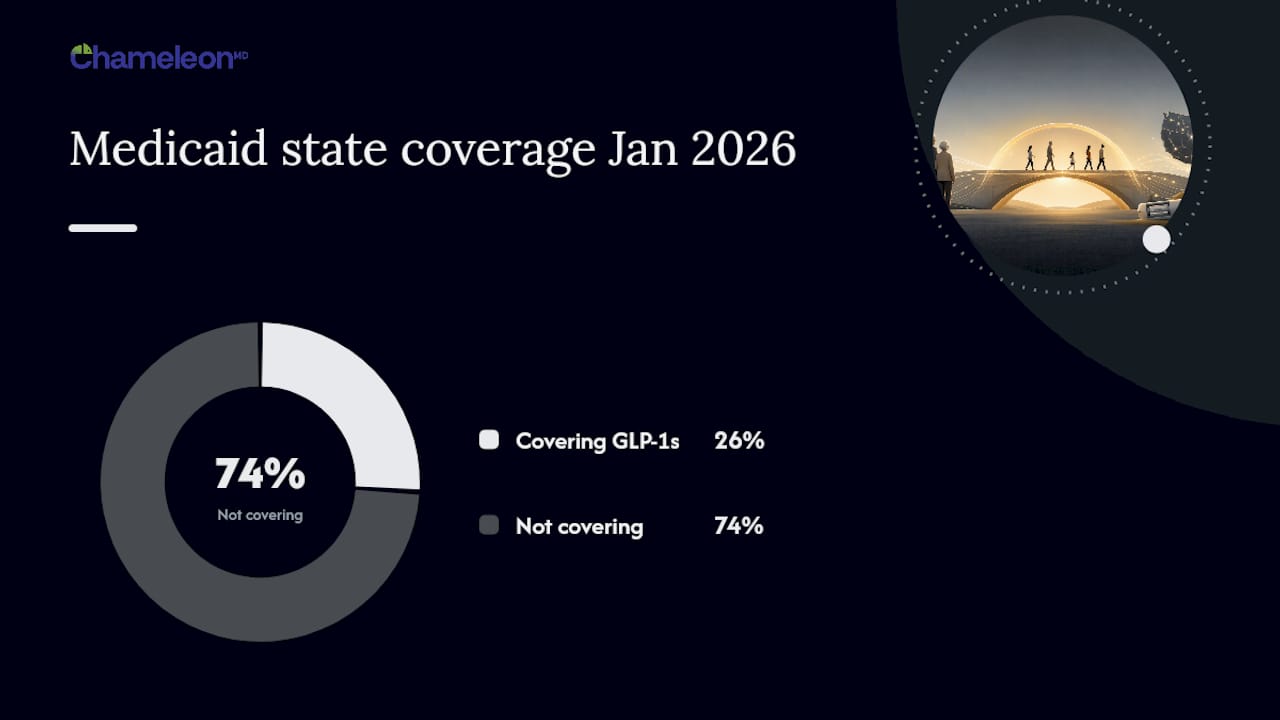
Medicaid tells a messier story. KFF’s analysis found roughly 13 states covering obesity-indicated GLP-1s as of January 2026, and several states walked back coverage in late 2025 as GLP-1 spending strained state budgets. If you’re on Medicaid, your coverage genuinely depends on your zip code in a way that Medicare beneficiaries don’t experience.
Commercial and employer plans have leaned harder into prior authorization and step therapy requirements throughout 2026, and manufacturer savings cards remain off-limits for anyone on Medicare or Medicaid, a restriction that’s tripped up plenty of patients who assumed the coupon they saw online would apply to them.
If you’re trying to sort out your own coverage right now, work through this order:
- Pull up your plan’s current formulary and search the specific drug name, not just “GLP-1,” since coverage often varies by formulation.
- Gather documentation your prescriber will need for prior authorization: BMI, comorbidities, and prior treatment history.
- If you’re on Medicare, call your plan or 1-800-MEDICARE to confirm Bridge eligibility before assuming the $50 copay applies to you.
- If you’re on Medicaid, check your specific state’s current GLP-1 policy directly, since national summaries won’t reflect state-level reversals accurately.
Steps to Keep Your GLP-1 Treatment on Track
Continuity is the whole game here. A resolved national shortage doesn’t help you if your specific pharmacy is out of stock this week, so build a habit around checking, not assuming.
Start local, not national. Call your pharmacy directly and ask about their current stock and expected restock date, since national shortage data can lag behind what’s actually happening on the shelf in front of you. If your usual pharmacy is out, ask whether a nearby location or a mail-order option has supply.
If you hit a real gap, report it to the FDA at drugshortages@fda.hhs.gov or through the agency’s public reporting portal. Patient and provider reports genuinely help the FDA track localized problems that haven’t shown up in manufacturer data yet.
For treatment continuity, talk to your prescriber early about backup options if your specific formulation is unavailable, rather than waiting until you’re down to your last dose. Depending on your indication, that might mean a different GLP-1 molecule, a temporary dose adjustment, or simply a different dosing device from the same manufacturer.
- Ask your pharmacy for their restock timeline, not just whether they have it today.
- Report persistent local shortages directly to the FDA rather than assuming someone else already has.
- Request early refills when your plan allows it, especially heading into a holiday week or a known supply hiccup.
- Coordinate prior authorization renewals before your current approval expires, not after.
Pro Tip: Set a calendar reminder 30 days before your prior authorization expires. Reauthorization delays are one of the most common, and most preventable, causes of a treatment gap.
What to Watch for GLP-1 Availability Through Late 2026
Semaglutide and tirzepatide look stable heading into the rest of the year, barring an unexpected demand spike. Liraglutide is the molecule to keep an eye on, since its formulation-specific shortages haven’t fully cleared and manufacturer statements haven’t given a firm resolution date.
The bigger wildcard is demand growth itself. IQVIA’s projection suggests oral GLP-1 uptake and cash-pay access will keep pulling new patients into treatment through 2030, which means “stabilized” supply today doesn’t guarantee stabilized supply next year if demand keeps climbing faster than production.
Policy is the other lever worth tracking:
- Watch for additional Medicare demonstration expansions beyond the initial Bridge program.
- Watch state Medicaid budget cycles, since coverage reversals tend to cluster around fiscal year planning.
- Watch manufacturer capacity announcements for liraglutide specifically, since that’s the one molecule still lacking a clear resolution timeline.
How Chameleon Healthcare Helps You Stay on Track
Supply chains and prior authorizations move fast, and you shouldn’t have to navigate them alone. Telehealth services offering GLP-1 prescription management can provide ways to connect with licensed providers for refill continuity, dose questions, or documentation needed for prior authorization requests. If your current prescriber’s schedule doesn’t line up with your refill window, a same-day virtual visit may help close that gap without a waiting room. For a deeper look at staying consistent on therapy, Chameleonhc’s GLP-1 maintenance plan guide walks through it in more detail.
What Stabilization Really Means Right Now
Calling the GLP-1 shortage “over” oversimplifies a messier reality. Supply is genuinely better for semaglutide and tirzepatide, but liraglutide formulations, state Medicaid inconsistency, and prior authorization friction mean plenty of patients still hit walls. If you’re on any GLP-1 therapy, verify your own drug and your own plan rather than trusting the headline.
— Vector
This article is general information, not a substitute for advice from a qualified doctor. Consult a qualified healthcare professional about your own circumstances before acting on anything here.
Sources
- Weight loss drugs | Medicare
- The outlook for obesity from 2026 to 2030 — IQVIA
- Medicaid coverage of and spending on GLP-1s | KFF
- GLP-1 shortage tracker 2026: FDA status for Ozempic and Wegovy
FAQ
Will GLP-1 Medications Be Covered in 2026?
Coverage depends heavily on your insurance type. Medicare beneficiaries gain new access through the GLP-1 Bridge demonstration starting July 1, 2026 with a $50 monthly copay, while Medicaid coverage varies by state and commercial plans increasingly require prior authorization.
What Is the Current Status of GLP-1 Shortages?
Semaglutide and tirzepatide shortages are resolved according to FDA records, while liraglutide still has active shortage entries for some formulations as of June 2026. Dulaglutide is not currently listed as an active shortage.
What New GLP-1 Medications Will Be Available in 2026?
Oral GLP-1 formulations are expanding rapidly in 2026, and IQVIA reports they’re drawing new patients into treatment primarily through cash-pay access rather than switching from injectables. Rybelsus is also being phased out in favor of newer Ozempic tablet formulations.
Is Mounjaro Expected to Be in Shortage in 2026?
No. FDA database checks throughout 2026 show tirzepatide, the active ingredient in Mounjaro and Zepbound, is not listed as an active shortage, reflecting expanded manufacturer production capacity.
How Can I Check if My GLP-1 Medication Is in Shortage?
Search the generic drug name directly in the FDA Drug Shortages Database, then confirm current stock with your specific pharmacy, since local availability can lag behind national resolution status.