
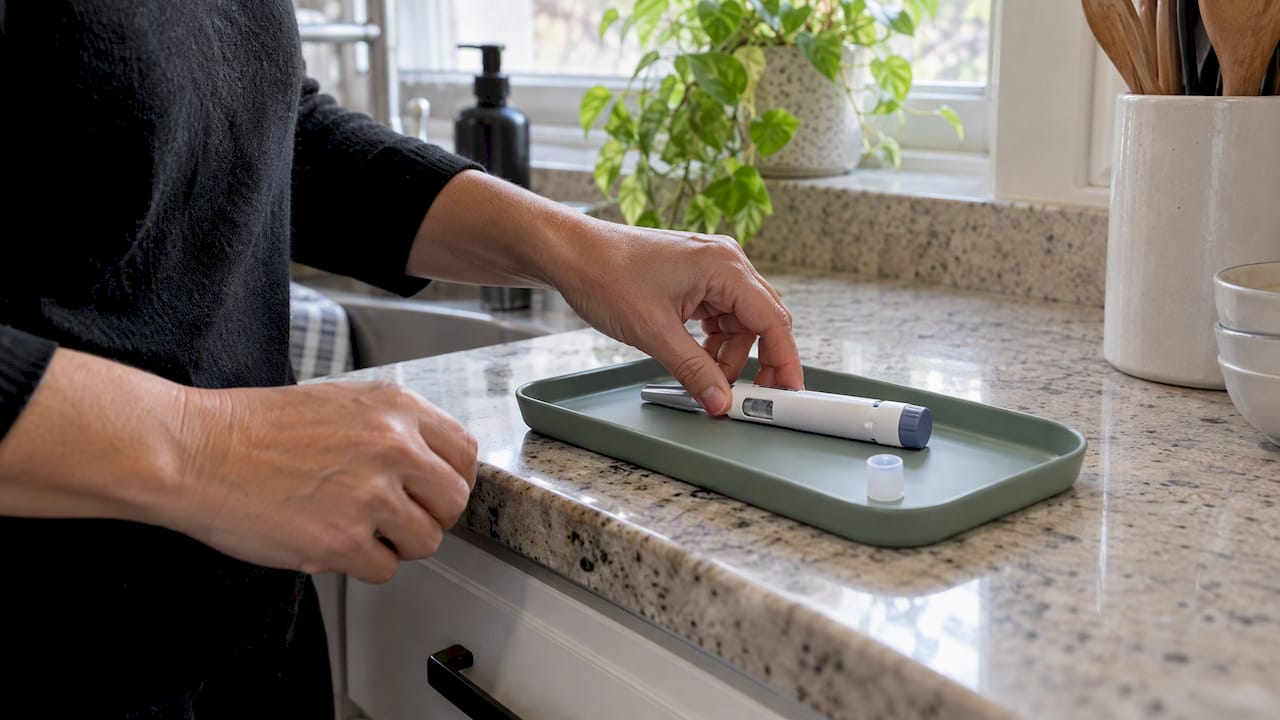
Most weekly GLP-1 medications (semaglutide, tirzepatide, dulaglutide, exenatide extended-release) start low and increase roughly every 4 weeks, while daily agents like liraglutide escalate weekly. A typical starting dose looks like semaglutide at 0.25 mg once weekly or liraglutide at 0.6 mg once daily. If GI symptoms get severe or you notice signs of dehydration, call your clinician before your next dose.
TL;DR:
- Most weekly GLP-1 medications start at low doses and escalate every 4 weeks, with patient tolerance guiding the speed of titration.
- Missed doses should be taken within a specific window—five days for Ozempic and four for Mounjaro—beyond which skipping is advised.
- Slower dose increases often improve tolerance, and delaying escalation is encouraged if gastrointestinal side effects become severe.
- Switching between GLP-1 agents or handling missed doses requires careful timing and expert guidance to avoid side effects.
- Proper injection technique, storage, and timing relative to meals and other medications are essential for safe, effective treatment.
Table of Contents
- 1. Medication-by-medication dosing and titration schedules
- 2. Why slower titration often works better than pushing through
- 3. Handling a missed dose or switching between GLP-1 medications
- 4. Getting injection technique and storage right at home
- 5. How Chameleon Healthcare supports GLP-1 dosing and titration
- 6. Dosing in special populations: kidney, liver, and older adults
- 7. When to take your dose relative to meals and other medications
- 8. How weight loss itself can change your dosing plan
- 9. What the dosing charts don’t tell you
- 10. Start your GLP-1 journey with support that adjusts with you
- FAQ
- Sources
1. Medication-by-medication dosing and titration schedules
Each GLP-1 medication has its own label-specific schedule, and the starting dose almost never matches the dose that actually controls blood sugar or supports weight loss. The early doses exist to let your body adjust, not to produce the full effect, so patience during the first several weeks matters more than most people expect.
Semaglutide injection (Ozempic and Wegovy) carries two different schedules depending on the brand and its approved use. For type 2 diabetes, Ozempic’s FDA label calls for starting at 0.25 mg once weekly for 4 weeks (a dose meant for treatment initiation, not glycemic control), then increasing to 0.5 mg once weekly. If more glucose control is needed after at least 4 weeks on 0.5 mg, the dose can rise to 1 mg, and then to 2 mg weekly as a maximum maintenance dose. For weight management, Wegovy’s schedule escalates every 4 weeks through five steps: 0.25, 0.5, 1, 1.7, and finally 2.4 mg once weekly, reaching full maintenance dose over several weeks as tolerated. If side effects become hard to tolerate at any step, the label supports delaying the next increase by 4 weeks rather than pushing forward.
Tirzepatide (Mounjaro) follows a similar stepwise approach. According to the Mounjaro prescribing information, treatment starts at 2.5 mg once weekly for 4 weeks. This starting dose is explicitly for treatment initiation and is not intended to improve blood sugar control. After 4 weeks, the dose increases to 5 mg weekly, and from there it can climb in 2.5 mg increments at intervals of at least 4 weeks, up to a maximum of 15 mg weekly, based on individual response and tolerability.
Dulaglutide (Trulicity) is also a once-weekly injection, typically available in strengths that allow a clinician to start lower and step up over time depending on glycemic targets and tolerability, while the weekly interval stays consistent throughout treatment. A 2024 clinical review summarizing GLP-1 and dual GIP/GLP-1 agents includes dulaglutide among the medications whose initiation and maintenance doses are built around this same weekly cadence, distinguishing it from daily options like liraglutide.
Liraglutide (Victoza and Saxenda) is a daily injection with weekly, not monthly, escalation steps. Per DailyMed’s liraglutide label, treatment begins at 0.6 mg once daily for 1 week. This initial dose is used to reduce GI symptoms during the adjustment period rather than to treat diabetes or support weight loss. After the first week, the dose increases by 0.6 mg weekly: Victoza reaches a maintenance dose of up to 1.8 mg daily for glycemic control, while Saxenda continues stepping up to 3 mg daily for weight management. Because the escalation happens weekly instead of monthly, missing the early steps can throw off the whole schedule faster than with a weekly injection.
Exenatide comes in two distinct forms with very different routines. Short-acting exenatide is injected twice daily, generally within 60 minutes before the two main meals of the day, which makes meal timing part of the dosing decision itself. Exenatide extended-release, by contrast, is injected once weekly regardless of meals, aligning more closely with the weekly agents above.

Oral semaglutide tablets follow a daily initiation schedule that is separate from the injectable forms, and they come with a specific administration quirk: they’re typically taken first thing in the morning on an empty stomach with a small amount of plain water, then followed by a wait before eating, drinking, or taking other oral medications. This fasting requirement is unique among GLP-1 options and is worth asking your prescriber about directly, since taking the tablet with food can significantly change how much of the medication your body absorbs.
Missed-dose rules vary by medication and matter just as much as the escalation schedule itself:
- Ozempic: administer within 5 days of a missed dose; if more than 5 days have passed, skip it and resume your regular weekly schedule.
- Mounjaro: give the missed dose within 4 days (96 hours); beyond that window, skip it and continue on your normal day.
- Liraglutide: if more than 3 days pass without a dose, restart at the 0.6 mg initiation dose rather than resuming at your maintenance dose, which helps limit GI side effects on reinitiation.
- Weekly dosing day changes: most weekly agents allow you to shift your injection day when needed, as long as the time between your two most recent doses stays within the interval your label specifies, commonly at least 48 to 72 hours depending on the product.
| Medication | Dosing frequency | Starting dose | First escalation step | Missed-dose window |
|---|---|---|---|---|
| Semaglutide (Ozempic) | Weekly | 0.25 mg | 0.5 mg after 4 weeks | Within 5 days |
| Semaglutide (Wegovy) | Weekly | 0.25 mg | 0.5 mg after 4 weeks | Within 5 days |
| Tirzepatide (Mounjaro) | Weekly | 2.5 mg | 5 mg after 4 weeks | Within 4 days |
| Liraglutide (Victoza/Saxenda) | Daily | 0.6 mg | +0.6 mg after 1 week | Reinitiate if >3 days |
| Exenatide (short-acting) | Twice daily | Premeal dosing | Per prescriber guidance | Per label |
These numbers come straight from each medication’s prescribing information, but your own prescriber may adjust the pace based on how you’re tolerating treatment, which is exactly what the next section covers.
2. Why slower titration often works better than pushing through
The stepwise approach built into every GLP-1 schedule exists for one reason: it gives your digestive system time to adjust before the dose that actually does the therapeutic work kicks in. Nausea, bloating, and changes in bowel habits are the most common reasons people struggle in the first few months, and they tend to show up right after a dose increase.
When GI symptoms get in the way, clinicians commonly delay the next scheduled increase by one additional interval, often 4 weeks, rather than abandoning treatment altogether. That pause gives your body more time at a dose you’re already managing, and many people find the same dose becomes easier to tolerate after a few extra weeks.
A few practical adjustments can make a real difference while your body adjusts:
- Eat smaller meals spaced throughout the day instead of three large ones.
- Choose lower-fat foods, since fat tends to slow digestion further and can worsen nausea.
- Stay ahead of hydration, especially if you’re also dealing with reduced appetite or occasional vomiting.
- Talk to your prescriber before splitting or adjusting any other oral medications you take alongside your GLP-1.
Keep a simple log of your dose, the date, and how you felt that week. It makes it easier for your care team to monitor your symptoms over time.
Some symptoms cross the line from “expected adjustment” into “call your clinician now.” That includes severe or persistent vomiting, signs of dehydration like dizziness or a dry mouth, severe abdominal pain that doesn’t ease up, or any sudden, dramatic drop in blood sugar if you’re also on insulin or a sulfonylurea. If you’re managing diabetes with other glucose-lowering medications, your prescriber may ask you to check your blood sugar more often during dose changes, since GLP-1 therapy can shift your glucose control quickly enough to matter. A fast drop in HbA1c has also been linked to a short-term risk of worsening diabetic retinopathy in some patients, which is part of why eye exams and steady monitoring stay part of the plan even after you feel like treatment is going well. For more on managing these symptoms day to day, our breakdown of common GLP-1 side effects walks through what tends to improve on its own and what doesn’t.
3. Handling a missed dose or switching between GLP-1 medications
Life gets in the way of even the most consistent routines, and GLP-1 schedules are no exception. Here’s how to handle the most common situations:
- Missed a weekly dose of Ozempic? Take it as soon as you remember if it’s within 5 days of the missed dose; beyond that, skip it and take your next dose on your regular scheduled day.
- Missed a weekly dose of Mounjaro? Take it within 4 days (96 hours); past that window, skip it and resume your normal schedule the following week.
- Missed more than 3 days of liraglutide? Restart at the 0.6 mg initiation dose instead of jumping back to your maintenance dose, which helps limit GI symptoms on reinitiation.
- Switching from a daily to a weekly agent? Many prescribers have patients begin the new weekly medication the day after the last daily dose, though your own plan should come from your prescriber.
- Switching between two weekly agents? Plan on respecting a full 7-day interval between your last dose of one and your first dose of the other, with adjustments based on how you tolerated each medication.
Never overlap two GLP-1 medications without your prescriber’s explicit guidance, since combining them raises the risk of compounding side effects rather than canceling them out.
4. Getting injection technique and storage right at home
Most GLP-1 injections go into the subcutaneous fat of the abdomen, thigh, or upper arm, and rotating sites each time helps prevent irritation or lumps under the skin. For weekly pens, picking a new spot within the same general region each week (for example, moving a few inches across your abdomen) keeps the tissue healthier over time.
- Store unopened pens in the refrigerator; once in use, some products can be kept at room temperature, so check your specific pen’s instructions.
- Look at the liquid before every injection. It should be clear and colorless; if it looks cloudy or discolored, don’t use it.
- If a caregiver is giving the injection, make sure they’ve been shown the technique by a pharmacist or clinician first; for more helpful tips, see our caregiver’s guide to medication management.
- Drop used needles and pens into an FDA-cleared sharps container, never a regular trash bin.
5. How Chameleon Healthcare supports GLP-1 dosing and titration
Starting or adjusting a GLP-1 medication works best with a clinician who can see how you’re responding in real time, not just hand you a printed schedule. Through our telehealth visits, we connect you with licensed providers who can evaluate whether GLP-1 therapy fits your health history, set an initial titration plan, and adjust it as side effects or weight changes come up, all without a waiting room. Every prescription still follows a full clinical evaluation. No GLP-1 medication is prescribed without one.
6. Dosing in special populations: kidney, liver, and older adults
GLP-1 medications are generally used with caution rather than with a fixed dose change in people with reduced kidney or liver function, since the approach depends heavily on the specific medication and the person’s overall health picture. Some agents require no dose adjustment for mild to moderate kidney impairment, while severe impairment or dialysis may call for closer monitoring or a different medication altogether, since GI side effects that cause fluid loss can be riskier for someone with limited kidney reserve.
Liver impairment follows a similar pattern: most GLP-1 medications aren’t heavily processed by the liver, but your prescriber will still want to know about any liver condition before starting treatment, since nausea and reduced appetite can affect nutrition and medication absorption more broadly.
Older adults can usually follow the same titration schedule as younger adults, but slower escalation is common in practice, particularly for people managing multiple health conditions or taking several medications at once. Age itself isn’t a reason to avoid GLP-1 therapy, but it is a reason for closer check-ins during the first few months. If you fall into any of these categories, this is exactly the kind of detail worth raising at your first telehealth visit rather than discovering partway through titration.

7. When to take your dose relative to meals and other medications
Timing requirements vary more than most people expect across GLP-1 medications. Weekly injections like semaglutide, tirzepatide, and dulaglutide can be taken at any time of day, with or without food, which is part of why they fit easily into a Monday-morning or Sunday-night routine. Short-acting exenatide is the exception that requires real planning, since it’s injected within 60 minutes before meals, meaning your dosing schedule is tied directly to when and how often you eat.
Oral semaglutide tablets add another layer: they need to be taken on an empty stomach, first thing in the morning, with a small sip of plain water, and then a waiting period before eating, drinking anything else, or taking other oral medications. Taking it any other way can reduce how much medication actually gets absorbed.
If you take other oral medications, particularly ones with a narrow margin between an effective dose and a risky one, ask your prescriber whether GLP-1 therapy changes how well your body absorbs them. Slower stomach emptying, a known effect of GLP-1 medications, can shift how quickly other oral drugs reach your bloodstream, which matters more for some medications than others.
8. How weight loss itself can change your dosing plan
As GLP-1 therapy starts working, the resulting weight loss can shift how your body responds to the same dose over time, and clinicians often reassess the plan rather than leaving it on autopilot. Someone who has lost a meaningful amount of weight may find that a dose that once caused noticeable GI symptoms becomes easier to tolerate, opening the door to the next scheduled increase. Others find that their appetite and blood sugar stabilize at a lower maintenance dose than the label’s maximum, and staying there, rather than escalating further, works better for them.
For type 2 diabetes management specifically, meaningful weight loss can also affect blood sugar control enough that other diabetes medications need to be adjusted alongside the GLP-1 dose, which is why routine follow-up visits matter even once you’ve settled into a maintenance dose. This is also where working with a consistent care team pays off: a prescriber who has seen your trajectory over several months is in a much better position to judge whether a plateau means “hold steady” or “reassess the whole plan” than a one-time visit ever could. Our guide to planning for the maintenance phase goes further into what that ongoing adjustment can look like.
9. What the dosing charts don’t tell you
Dosing schedules read like a straight line on paper: start here, increase there, reach maintenance by week sixteen. Real titration rarely moves that cleanly, and the biggest mistake we see isn’t people ignoring the schedule, it’s people treating the printed schedule as a contract they have to honor on time no matter how they feel.
The conventional advice to “push through the first few weeks” undersells how often a short pause at the same dose solves a problem that pushing forward would only make worse. Slowing down isn’t a failure of the treatment or the patient. It’s frequently the exact adjustment that makes the medication tolerable long enough to work.
If there’s one thing worth prioritizing above the exact milligram numbers, it’s this: track how you feel after each dose change and bring that record to every follow-up, because the schedule on the label is a starting point your prescriber is supposed to adjust, not a fixed countdown you have to survive.
— Vector
10. Start your GLP-1 journey with support that adjusts with you
Figuring out a titration schedule on your own, especially when side effects show up or your weight starts shifting, is a lot easier with a clinician checking in along the way. Our GLP-1 weight-loss program pairs you with a licensed provider who builds your initiation and escalation plan around how you’re actually responding, not just a generic chart.

- New to Chameleon Healthcare? GLP-1 weight-loss care for new members runs $55 per month per adult.
- Already a ChameleonMD member? Your GLP-1 weight-loss plan is $30 per month per adult.
- Want to compare membership options first? Our plans page lays out single-visit and membership pricing side by side.
Every prescription still requires a clinical evaluation first. Reach out through our weight-loss page to get started on a plan built around you.
This article is general information, not a substitute for advice from a qualified doctor. Consult a qualified healthcare professional about your own circumstances before acting on anything here.
FAQ
How much GLP-1 can I take per week?
The weekly amount depends entirely on which medication you’re on and where you are in titration: Ozempic ranges from 0.25 mg up to a 2 mg maintenance dose, while Mounjaro ranges from 2.5 mg up to 15 mg. Your prescriber sets the specific weekly dose based on your current step in the schedule and how you’re tolerating it.
Is 30 units of semaglutide a lot?
Semaglutide pens are dosed in milligrams, not units, so “30 units” usually refers to how a syringe is drawn up rather than a standardized dose, and the actual milligram amount depends on the pen’s concentration. Rather than estimating from unit markings, confirm your exact milligram dose with your prescriber or pharmacist to avoid under or overdosing.
Is 2.5 mg of GLP-1 a lot?
It depends on the medication: 2.5 mg is the standard starting dose for tirzepatide (Mounjaro), meant for treatment initiation rather than full glycemic control, so it’s considered a low, expected starting point rather than a high dose.
How much GLP-2 should I take?
GLP-2 is a different hormone from GLP-1 and isn’t part of the semaglutide, tirzepatide, liraglutide, or dulaglutide dosing schedules covered here. If you were prescribed a GLP-2-based therapy for a separate condition, that dosing comes from its own distinct prescribing information, so check with the prescriber who manages that specific medication.