

TL;DR:
- Telemedicine is now a strategic, cost-effective benefit that reduces healthcare expenses by shifting from in-person to virtual care. Active management and employee engagement significantly increase utilization, maximizing savings and ROI for employers. Offering various telehealth services enhances access, satisfaction, and competitiveness in talent acquisition and retention.
Telemedicine is defined as the delivery of medical care through secure digital channels, and it has become one of the most cost-effective benefits employers can offer their workforce. As healthcare costs continue to rise, HR professionals are under real pressure to find solutions that protect both employee health and the company’s bottom line. The telemedicine market is projected to reach $247.67 billion by 2034, and 44% of employers plan to expand virtual primary care in 2026. Understanding why employers need telemedicine starts with recognizing that virtual care is no longer a perk. It is a strategic necessity.
How does telemedicine reduce healthcare costs for employers?
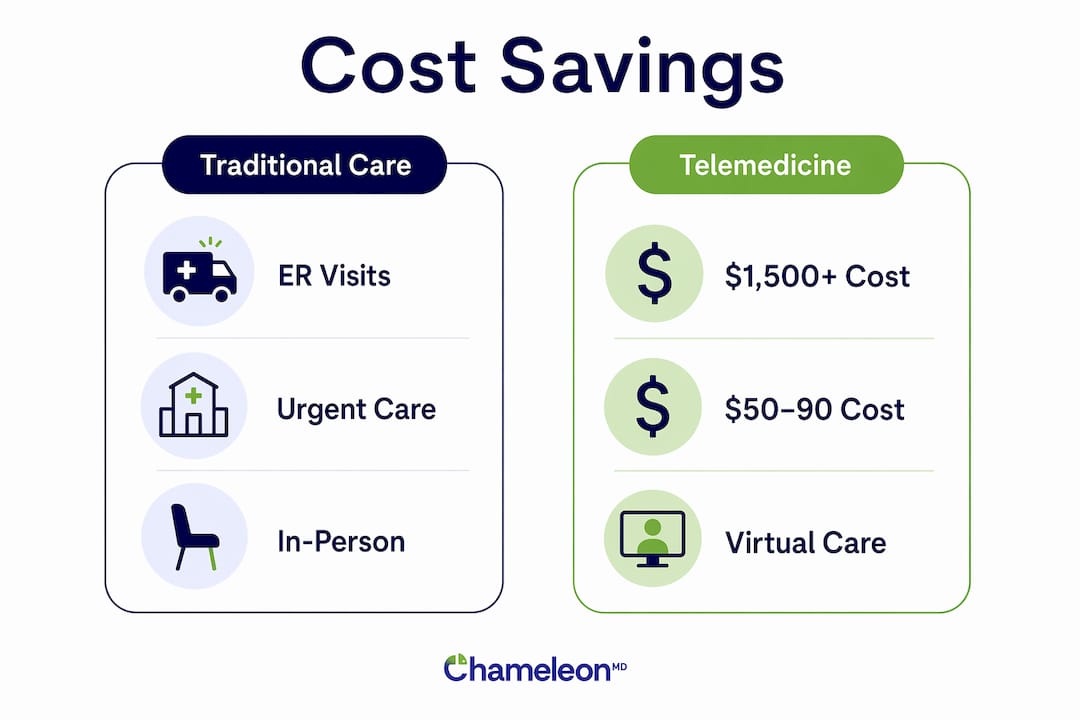
Telemedicine reduces employer healthcare costs by replacing expensive in-person visits with lower-cost virtual alternatives at scale. A virtual urgent care visit costs between $50 and $90, compared to significantly higher rates for emergency room or traditional urgent care visits. Telehealth programs themselves typically cost only $8 to $20 per employee per month, making the math straightforward for most HR teams. That gap in cost per visit is where the savings accumulate quickly across a workforce.

Mid-size employers who pair telemedicine with active utilization programs see per-employee cost reductions between $400 and $900 annually. That translates to real budget relief for companies with 50 to 250 employees. The ROI can reach up to 140% when virtual care successfully diverts costly ER visits to virtual channels. This is not a marginal improvement. It is a structural shift in how healthcare dollars get spent.
Behavioral health is another area where telemedicine delivers measurable savings. Telehealth therapy sessions cost between $75 and $120 per session, compared to $150 to $250 for in-person therapy. Untreated mental health conditions drive emergency visits and chronic disease complications, both of which are far more expensive to manage. Giving employees fast access to licensed therapists, often within days rather than the typical three to eight week wait, prevents those downstream costs before they appear on your claims report.
| Care type | Approximate cost | Employer impact |
|---|---|---|
| Emergency room visit | $1,500+ | High claims cost, lost workday |
| In-person urgent care | $150–$250 | Moderate cost, scheduling friction |
| Virtual urgent care | $50–$90 | Low cost, no time off required |
| In-person therapy | $150–$250/session | High cost, long wait times |
| Telehealth therapy | $75–$120/session | Lower cost, faster access |
Pro Tip: Track ER diversion rates quarterly. If your telemedicine vendor cannot show you how many visits were redirected from the ER to virtual care, you are missing the clearest signal of whether your program is working.
What types of telemedicine offerings are available for employee health plans?
Employer telehealth solutions now cover a wide range of care types, giving HR teams real flexibility when designing a benefits package. The virtual-first care ecosystem has matured to the point where it can coordinate whole episodes of care, not just one-off consultations. Understanding the available modalities helps you match the right solution to your workforce’s actual needs.
Common types of telemedicine employer plans include:
- Virtual primary care. Employees connect with a licensed physician for routine checkups, chronic condition management, prescription refills, and preventive care. This reduces reliance on expensive specialist referrals for conditions that can be managed at the primary care level.
- Virtual urgent care. Same-day access for non-emergency conditions like sinus infections, sore throats, rashes, and minor injuries. This is the highest-volume use case for most employer plans and the fastest path to ER diversion savings.
- Behavioral and mental health services. Platforms like Teladoc Health and MDLive connect employees with licensed therapists and psychiatrists for talk therapy, medication management, and crisis support. Access within days, not weeks, makes a meaningful difference in outcomes.
- Chronic disease management. Ongoing virtual monitoring and coaching for conditions like diabetes, hypertension, and asthma keeps employees healthier and reduces long-term claims costs.
- Hybrid models. Hybrid care models that pair virtual visits with on-site clinics or in-network in-person providers improve employee satisfaction and prevent the frustration that can come from relying solely on virtual care for every situation.
The right mix depends on your workforce demographics, geographic spread, and existing health plan structure. A distributed team with remote workers in rural areas benefits most from virtual primary care and urgent care. A workforce concentrated in one city may get more value from a hybrid model that includes on-site clinic access.
How can employers maximize telemedicine utilization among employees?
The critical ROI driver is not simply adding telemedicine to your benefits package. It is managing active utilization so that employees actually use it. Employees often underuse telehealth because they are unaware the benefit exists or because they assume virtual care is impersonal or limited. Closing that awareness gap is the most direct lever HR has for improving returns.
Here is a practical sequence for driving higher utilization:
- Communicate at enrollment and beyond. Most employees only hear about benefits during open enrollment. Send targeted reminders in October and November, when cold and flu season begins, to prompt employees to register before they need care.
- Use demos and walkthroughs. A five-minute live demo showing how to log in, select a provider, and start a visit removes the friction that stops first-time users. Ask your vendor to provide recorded demos you can share in Slack, email, or your HR portal.
- Secure leadership endorsement. When managers and executives visibly use and recommend telemedicine, employees follow. A short message from a department head during a team meeting carries more weight than a benefits flyer.
- Address the “impersonal care” perception directly. Effective communication that emphasizes provider choice and one-on-one visits counters the misconception that virtual care is a chatbot or a generic hotline. Employees want to know they will speak with a real, licensed provider.
- Tailor outreach for diverse teams. Culturally sensitive communication, translated materials, and flexible scheduling options improve adoption among employees who may face language or access barriers.
Pro Tip: Set a utilization target of at least 35% of eligible employees. Research shows that 35% usage drives 140% ROI compared to programs sitting at 8% usage. If you are below that threshold, your communication strategy needs adjustment before your renewal conversation.
What are the broader benefits of telemedicine for employers and employees?
The benefits of telemedicine for employers extend well beyond the claims cost line. Telemedicine reduces absenteeism by making care accessible during work hours without requiring employees to take half a day off for a 15-minute appointment. Employees who can address a health concern quickly are also less likely to show up sick and underperform, which reduces presenteeism. Both outcomes protect productivity in ways that are difficult to quantify but easy to observe.
Geographic equity is another underappreciated advantage. Employees in rural areas or underserved communities often face 24/7 provider access without waiting rooms or travel requirements. For a company with remote employees spread across multiple states, telemedicine creates a consistent standard of care regardless of zip code. That consistency matters for both health outcomes and employee experience.
| Benefit area | Employee impact | Employer impact |
|---|---|---|
| Reduced absenteeism | Faster care, less time off | Higher productivity, lower coverage costs |
| Mental health access | Therapist within days | Fewer ER visits, lower long-term claims |
| Geographic equity | Care from any location | Consistent benefits for remote teams |
| Recruitment and retention | Modern, flexible benefits | Competitive advantage in hiring |
| Chronic condition support | Ongoing virtual monitoring | Reduced hospitalizations and claims |
Telemedicine also strengthens your benefits package as a recruitment tool. Candidates, especially younger workers, expect digital health access as a baseline benefit. Offering virtual care options signals that your organization takes employee wellbeing seriously and keeps pace with how people actually want to receive care. In a competitive hiring market, that signal carries real weight.
Key takeaways
Employers who actively manage telemedicine utilization, not just offer it, achieve the strongest cost savings and the most measurable return on their healthcare investment.
| Point | Details |
|---|---|
| Cost savings are significant | Virtual urgent care at $50–$90 per visit replaces ER costs and drives up to 140% ROI. |
| Utilization is the key variable | Programs with 35% employee usage outperform low-utilization programs by a wide margin. |
| Mental health access matters | Telehealth therapy at $75–$120 per session prevents costly downstream claims from untreated conditions. |
| Hybrid models improve satisfaction | Combining virtual and in-person care meets diverse employee needs and boosts adoption rates. |
| Communication drives results | Ongoing education beyond open enrollment is required to change employee behavior and maximize benefit value. |
Why I think most employers are leaving telemedicine ROI on the table
I have watched telemedicine go from a novelty line item to a genuine pillar of employer health strategy over the past several years. The technology has matured. The provider networks are real. The cost data is clear. And yet, most employers I see are still treating telemedicine like a checkbox benefit rather than an active program.
The difference between a plan that delivers $400 in per-employee savings and one that delivers $900 comes down almost entirely to how hard HR pushes utilization. Vendors will not do this for you. They will provide the platform, but the communication cadence, the manager endorsement, the seasonal reminders, those are your responsibility. The employers who treat telemedicine like a product launch, with ongoing promotion and feedback loops, are the ones seeing real returns.
One thing I would flag that rarely gets discussed: ERISA compliance. Employers need to tie telemedicine benefits carefully to their existing medical plans to avoid regulatory complications under ERISA. Standalone telemedicine arrangements can create unintended plan status issues. Work with your benefits counsel before structuring any new offering, especially if you are considering a membership-based or direct-pay model alongside your group health plan.
The future is clearly hybrid. Pure virtual-only models will frustrate a portion of your workforce. The employers who get this right in 2026 will be the ones who build a connected experience where virtual care is the first step, not the only step.
— Vector
See how Chameleonhc supports employer healthcare access
Chameleonhc offers fast, affordable virtual care that connects employees with licensed providers for common conditions like sore throats, sinus infections, rashes, and more. No insurance required, no waiting rooms, and same-day access from any phone or computer. For HR teams looking to give employees a reliable first step before a costly ER or urgent care visit, Chameleonhc’s transparent pricing and on-demand model fits naturally alongside existing health plans. Employees managing ongoing conditions like asthma can get consistent virtual support without the scheduling friction of traditional care. Explore employer virtual care plans and see how Chameleonhc can work for your team.
FAQ
Why do employers need telemedicine in their benefits plan?
Telemedicine gives employers a direct way to reduce healthcare costs by replacing expensive ER and urgent care visits with virtual alternatives costing $50 to $90 per visit. It also improves employee access to care, reduces absenteeism, and strengthens benefits packages for recruitment and retention.
How much can employers save with telemedicine?
Mid-size employers with active utilization programs see per-employee savings between $400 and $900 annually, with ROI reaching up to 140% when ER visits are successfully diverted to virtual care.
What types of telemedicine plans are available for employers?
Employer telehealth solutions include virtual primary care, urgent care, behavioral health services, chronic disease management, and hybrid models that combine virtual visits with in-person clinic access. The right mix depends on workforce size, geography, and existing health plan structure.
How do you get employees to actually use telemedicine?
Active education beyond open enrollment, including seasonal reminders, live demos, and manager endorsement, drives the highest utilization rates. Programs that reach 35% employee usage deliver significantly stronger ROI than those sitting at 8% usage.
Is telemedicine compliant with ERISA and HSA rules?
New HDHP rules allow telehealth coverage without affecting HSA eligibility, but employers should work with benefits counsel to tie telemedicine offerings to existing medical plans and avoid unintended standalone plan status under ERISA.