

TL;DR:
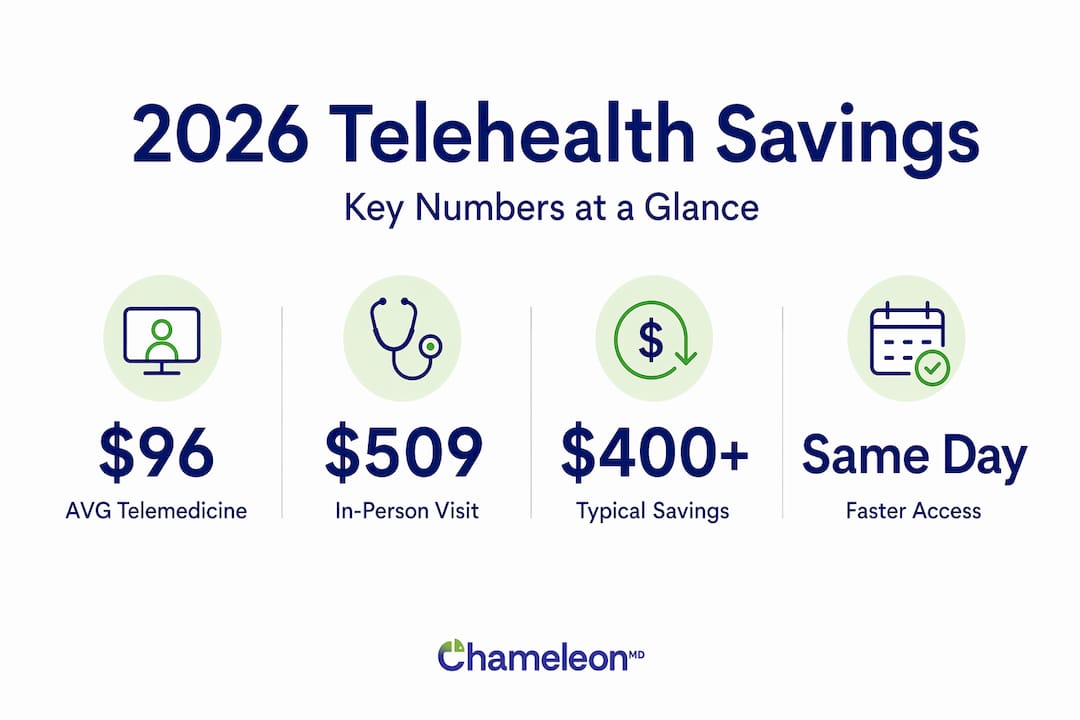
- Low-cost telemedicine offers affordable remote healthcare options, often costing around $96 for a visit, compared to $509 in-person. It is accessible to uninsured, underinsured, and low-income individuals through income-based programs like FQHCs and HRSA-supported clinics. While effective for common conditions, telemedicine has limits for emergencies and requires careful consideration of costs and device access.
If you’ve been avoiding the doctor because of cost, you’re far from alone. Low-cost telemedicine has changed the equation for millions of people who need real medical care without the financial stress of a traditional office visit. This guide breaks down exactly what affordable telemedicine options look like in 2026, how the pricing works, who qualifies, and what you can realistically expect from a virtual visit. Whether you’re uninsured, underinsured, or simply watching your budget, you’ll find clear answers here.
Table of Contents
- Key takeaways
- What low-cost telemedicine is and how it works
- Telehealth pricing: what to expect in 2026
- Who can access low-cost telemedicine
- Benefits and real limitations of low-cost telemedicine
- Practical tips for getting the most value
- My take on what telemedicine really means for affordable care
- See how Chameleonhc makes affordable care simple
- FAQ
Key takeaways
| Point | Details |
|---|---|
| Real cost difference | Telemedicine visits average $96 vs. $509 for in-person care, making virtual care far more affordable. |
| Income-based programs exist | FQHCs and HRSA-supported providers offer sliding fee scales so low-income patients pay little or nothing. |
| No insurance required | Many low-cost platforms offer transparent, flat-rate pricing with no insurance needed to get care. |
| Best suited for common conditions | Virtual visits work well for infections, rashes, allergies, and prescription refills, not emergencies. |
| Medicare rules changed in 2026 | Geographic restrictions on Medicare telehealth billing returned in January 2026, affecting some beneficiaries. |
What low-cost telemedicine is and how it works
Low-cost telemedicine is medical care delivered remotely, by phone, video call, or secure messaging, at a price that’s meaningfully lower than a traditional in-person visit. It’s not a watered-down version of care. It’s the same licensed physicians and nurse practitioners, using technology to remove the overhead costs that drive up bills at physical clinics.
Here’s how the delivery side works in practice:
- Video visits: You connect face-to-face with a provider through a secure app or website. This works well for visible symptoms like rashes, pink eye, or throat inflammation.
- Phone consultations: A quick verbal check-in with a provider for straightforward concerns like sinus pressure, cold symptoms, or prescription refills.
- Secure messaging or chat: Some platforms allow you to describe symptoms in writing and receive a diagnosis and treatment plan without a live call.
- Store-and-forward: You upload photos or test results, and a provider reviews them asynchronously. Dermatology and minor skin conditions are common use cases.
The “low-cost” part of the model comes from a few different sources. Some platforms are private companies that pass along savings from lower operating costs. Others are Federally Qualified Health Centers (FQHCs) or providers supported by the Health Resources and Services Administration (HRSA), which are federally funded specifically to serve underserved communities. These centers use sliding fee scales based on your income, which means what you pay is tied to what you earn, not to a flat market rate.
Pro Tip: When you search for a telehealth provider, look for the phrase “FQHC” or “HRSA-funded” to identify clinics that are legally required to offer income-based pricing.
The difference between low-cost telemedicine and traditional care is not just about price. You skip the waiting room, the parking, and the time away from work. Most virtual visits happen same day, often within hours of booking.
Telehealth pricing: what to expect in 2026
Cost is where most people have the most questions, so let’s be specific. Typical telehealth visits without insurance run between $40 and $90 for a general consultation. Prescription refill visits tend to land between $20 and $50. Compare that to a traditional in-person initial visit, which averages $509 at a standard clinic. That’s not a small difference. That’s a financial barrier that keeps real people from getting care they need.
Here’s a side-by-side look at what you might pay:
| Service type | Telemedicine cost | In-person cost |
|---|---|---|
| General consultation | $40 to $90 | $150 to $350 |
| Initial visit (no insurance) | ~$96 average | ~$509 average |
| Prescription refill | $20 to $50 | $100 to $200 |
| Follow-up visit | $30 to $60 | $100 to $250 |
| FQHC visit (income-based) | $0 to $30 | $0 to $30 |
Beyond per-visit pricing, there are two main models you’ll encounter. Fee-for-visit means you pay each time you connect with a provider. Subscription or membership models charge a flat monthly or annual fee and typically cover unlimited or discounted visits. Memberships make the most sense if you anticipate needing care more than once or twice a year.
A few things that can add to your cost even on a low-cost platform:
- Lab work: Blood tests or urine cultures must happen at a physical lab. Costs vary, but discount options like $20 to $60 panels exist through direct-pay labs.
- Prescriptions: The visit may be cheap, but the medication can add up. Programs like GoodRx regularly bring generic drug prices down to under $10 at many pharmacies.
- Specialist referrals: If your virtual provider determines you need a specialist, that next step will have its own cost.
Pro Tip: Before your visit, ask the platform directly: “Are there any additional charges beyond the visit fee?” A reputable provider will give you a clear answer before you pay.
The savings per episode average around $400 compared to in-person care. That’s not just good for your wallet. Health systems that capture those savings can reinvest in better patient care over time.

Who can access low-cost telemedicine
The short answer is: more people than you might think. Low-cost virtual healthcare is not limited to people with specific insurance plans. It’s available to uninsured patients, underinsured patients, low-income individuals, and anyone who simply wants transparent pricing without surprise bills.
If you’re uninsured, telehealth without insurance is a practical option because most direct-pay telehealth platforms post their prices publicly and collect payment upfront with no claim process involved.
For people with lower incomes, FQHC telehealth services are specifically designed to remove financial barriers. These federally qualified centers are required by law to see patients regardless of ability to pay, and they use a sliding scale where individuals at or below 100% of the Federal Poverty Guidelines may pay little to nothing per visit.
Here’s how to find and qualify for low-cost options:
- Visit the HRSA health center finder at findahealthcenter.hrsa.gov to locate a federally funded clinic near you.
- Ask any telehealth platform upfront whether they offer a sliding fee scale or reduced rates for uninsured patients.
- Check if your state Medicaid program covers telehealth visits, as most do in 2026 with varying rules by state.
- Look for direct primary care practices, which charge a flat monthly membership fee and often include virtual visits at no additional charge.
One area to watch closely in 2026: Medicare telehealth access has shifted. Geographic restrictions on Medicare telehealth billing returned on January 31, 2026, meaning most Medicare patients must now visit a qualifying healthcare site to receive telehealth services, rather than accessing them from home. The exception is behavioral health services, which retain broader access. If you’re on Medicare, verify your coverage before booking a virtual visit.
Device and internet access remain real barriers for some patients, particularly older adults and rural households. That said, many platforms support phone-only visits, which significantly lowers the technology threshold.
Benefits and real limitations of low-cost telemedicine
The benefits of low-cost telemedicine go beyond saving money. They’re about getting care you might otherwise skip.
- Convenience: You see a provider from wherever you are, with same-day appointments widely available.
- Expanded access: Rural patients and people without reliable transportation can connect with licensed providers they otherwise couldn’t reach.
- Continuity: Telemedicine patients often require fewer follow-up visits, suggesting virtual care handles many conditions completely rather than partially.
- Mental health access: Virtual therapy and psychiatric consultations have become one of the most used and valued telehealth categories.
Low-cost telemedicine is not just a commercial product. It functions as a public health strategy, expanding access for populations that have historically faced the greatest barriers to care.
That said, it has real limits. Telemedicine works well for common conditions like infections, allergies, skin concerns, and prescription management. It does not work for emergencies, broken bones, or situations requiring hands-on physical assessment. If you’re having chest pain, difficulty breathing, or a suspected fracture, you need in-person emergency care, not a video call.
Technology barriers and privacy questions are worth thinking through as well. Make sure any platform you use complies with HIPAA standards, which govern how your health data is stored and protected. Reputable platforms will state this clearly.
Practical tips for getting the most value
Getting real value from cost-effective telehealth services means going in prepared. Here’s what actually helps:
- Write down your symptoms before the visit. Include when they started, how severe they are, and any medications you’re currently taking. This shortens the visit and helps the provider give better guidance.
- Have your pharmacy information ready. If a prescription is needed, knowing your preferred pharmacy saves a step and speeds up your care.
- Ask about the full cost picture before you confirm. That includes labs, referrals, and whether a follow-up visit carries a separate charge.
- Use a discount prescription program. GoodRx, Mark Cuban’s Cost Plus Drugs, and similar services regularly cut medication costs by 50% to 80% at participating pharmacies.
- Check provider credentials. Look for board-certified physicians or licensed nurse practitioners. A reputable platform lists this information openly.
- Avoid platforms that are vague about pricing. If a website doesn’t show its fees publicly, that’s a signal worth paying attention to.
Pro Tip: If you need care more than three or four times a year, a monthly membership model almost always costs less than paying per visit. Do the math before you sign up for anything.
My take on what telemedicine really means for affordable care
I’ve watched the conversation around affordable healthcare stay stuck in the same place for years. People assume that lower cost means lower quality, or that telemedicine is a stopgap until things “get back to normal.” That framing is wrong, and the data backs me up.
In my experience, the patients who benefit most from low-cost virtual healthcare are not people gaming the system. They’re people who skipped care for months because the price felt impossible. A $60 telehealth visit that gets someone treated for a sinus infection they’ve had for three weeks is not a compromise. It’s the system working the way it should.
What most people overlook is the role of public programs in making this sustainable. FQHCs and HRSA-supported providers are not charity. They’re a deliberate infrastructure investment designed to keep low-income patients in the healthcare system instead of cycling through emergency rooms. When those programs are funded and used, outcomes improve.
My advice is simple. If you’ve been putting off care because of cost, start with a direct-pay telehealth platform or look up your nearest FQHC. You have more affordable options right now than most people realize, and using them early almost always costs less than waiting.
— Vector
See how Chameleonhc makes affordable care simple
If this article has you thinking about your own care options, Chameleonhc was built for exactly this situation.
Chameleonhc connects you with licensed providers online, same day, with transparent pricing and no insurance required. Whether you’re dealing with a sore throat, a skin concern, a sinus infection, or something that’s just been lingering, you can get a real diagnosis and treatment plan from your phone or computer. There are no waiting rooms, no hidden fees, and no referral needed to get started. Chameleonhc combines urgent care, primary care, and membership options into one clear model, so you always know what you’re paying before you pay it. Explore your affordable care options and take the first step toward care that fits your life.
FAQ
What is low-cost telemedicine exactly?
Low-cost telemedicine is remote medical care delivered by licensed providers via video, phone, or messaging at a significantly lower price than traditional in-person visits. Many platforms offer consultations for $40 to $90 without insurance.
Is telemedicine actually cheaper than going to a doctor in person?
Yes. Telemedicine visits average around $96 compared to roughly $509 for an in-person initial visit, representing savings of about $400 per episode.
Can I use telemedicine if I have no insurance?
Absolutely. Many telehealth platforms are designed for uninsured patients and post flat-rate prices publicly. FQHC providers also offer income-based pricing that can bring costs to zero for qualifying individuals.
What conditions can telemedicine treat?
Telemedicine is well suited for colds, flu symptoms, sinus infections, rashes, allergies, urinary tract infections, and prescription refills. It is not appropriate for emergencies, complex diagnostics, or situations requiring a hands-on physical exam.
Did Medicare telehealth coverage change in 2026?
Yes. Most Medicare telehealth billing flexibilities expired on January 31, 2026, and geographic restrictions returned for the majority of services. Behavioral health telehealth retains broader access rules, but other beneficiaries should verify their coverage before booking virtual visits.