
TL;DR:
- Telemedicine is suitable for assessing visual and reported symptoms, managing chronic conditions, and addressing minor health concerns. It is not appropriate for severe symptoms requiring physical exams, labs, or emergency care. Proper preparation and understanding its limitations ensure safe and effective virtual healthcare.
Figuring out whether to call your doctor, drive to an urgent care clinic, or open a telehealth app is genuinely confusing. The signs you need telemedicine are not always obvious, and that uncertainty can leave you waiting too long or heading somewhere you do not need to go. Since telehealth use stabilized at roughly 12% of the U.S. population reporting visits, it has become a real primary care option, not just a pandemic workaround. This article gives you a clear framework for recognizing when telemedicine fits your situation and when it does not.
Table of Contents
- Key takeaways
- What to consider before checking the signs you need telemedicine
- 1. You have cold or flu-like symptoms
- 2. You have a skin concern you can show on camera
- 3. You need a prescription refill or medication question answered
- 4. You are managing a chronic condition
- 5. You are experiencing mild mental health symptoms
- 6. You have non-urgent digestive symptoms
- 7. You have urinary tract infection symptoms
- 8. You cannot easily get to a clinic
- When telemedicine is not the right call
- Telemedicine vs. in-person care: a quick reference
- How to prepare once you decide telemedicine is right
- My honest take on telemedicine suitability
- See how Chameleonhc makes telemedicine easy
- FAQ
Key takeaways
| Point | Details |
|---|---|
| Telemedicine suits visual and reported symptoms | Conditions a provider can assess through what you describe or show on camera are good candidates for virtual care. |
| Serious symptoms require in-person care | Chest pain, difficulty breathing, and severe abdominal pain need emergency evaluation, not a video call. |
| Preparation improves your visit | Document symptom timing, severity, and triggers before your appointment so your provider can triage accurately. |
| Modality matters | Video, phone, and asynchronous messaging each have different assessment strengths depending on your condition. |
| Telemedicine cannot replace labs or imaging | If your diagnosis requires blood work, X-rays, or a physical exam, you will need to be seen in person. |
What to consider before checking the signs you need telemedicine
Before you look at specific symptoms, there is a more fundamental question to answer: can a provider actually help you without being in the same room? That depends on a few practical factors.
Telemedicine works best when your condition can be assessed through visual cues or what you report. A rash you can show on camera, a sore throat you can describe in detail, or a prescription refill for a stable chronic condition are all good fits. What telemedicine cannot do is perform a hands-on exam, draw blood, or take an X-ray.
Here are the core criteria to run through before booking a virtual visit:
- Symptom type: Can a provider assess your concern through what you say or show? If yes, telemedicine is worth considering.
- Severity and urgency: Mild to moderate symptoms that have been present for hours or a day or two are generally appropriate. Sudden, severe, or rapidly worsening symptoms are not.
- Diagnostic needs: If you already know you need labs or imaging, schedule an in-person visit instead.
- Technology readiness: You need a device with a working camera and microphone, a stable internet connection, and a private space where you can speak freely.
- Modality fit: Telemedicine modalities such as synchronous video, phone calls, and asynchronous messaging each offer different assessment capabilities. Video is best for visual issues; phone works well for medication reviews and follow-ups; messaging suits ongoing chronic disease check-ins.
Pro Tip: If you are unsure whether your situation qualifies, start with the telehealth platform’s symptom checker or chat feature. Many services will redirect you to in-person care if your case requires it.
1. You have cold or flu-like symptoms
A runny nose, sore throat, mild fever, congestion, or body aches are among the most common reasons people connect with a provider virtually. These symptoms are easy to describe, and a licensed clinician can assess whether you need rest and fluids, an antiviral, or an antibiotic for a bacterial infection. You do not need to sit in a waiting room to get that answer.
The key qualifier here is severity. If your fever climbs above 103°F, you are having trouble breathing, or you feel significantly worse after several days, that changes the picture. For run-of-the-mill respiratory infections, virtual medical care is a practical and fast option.
2. You have a skin concern you can show on camera
Rashes, mild allergic reactions, insect bites, acne flares, and suspected pink eye are all conditions a provider can evaluate visually. This is where synchronous video really shines. You hold your camera up, describe when it started and whether it is spreading, and your provider can often diagnose and treat without you leaving home.
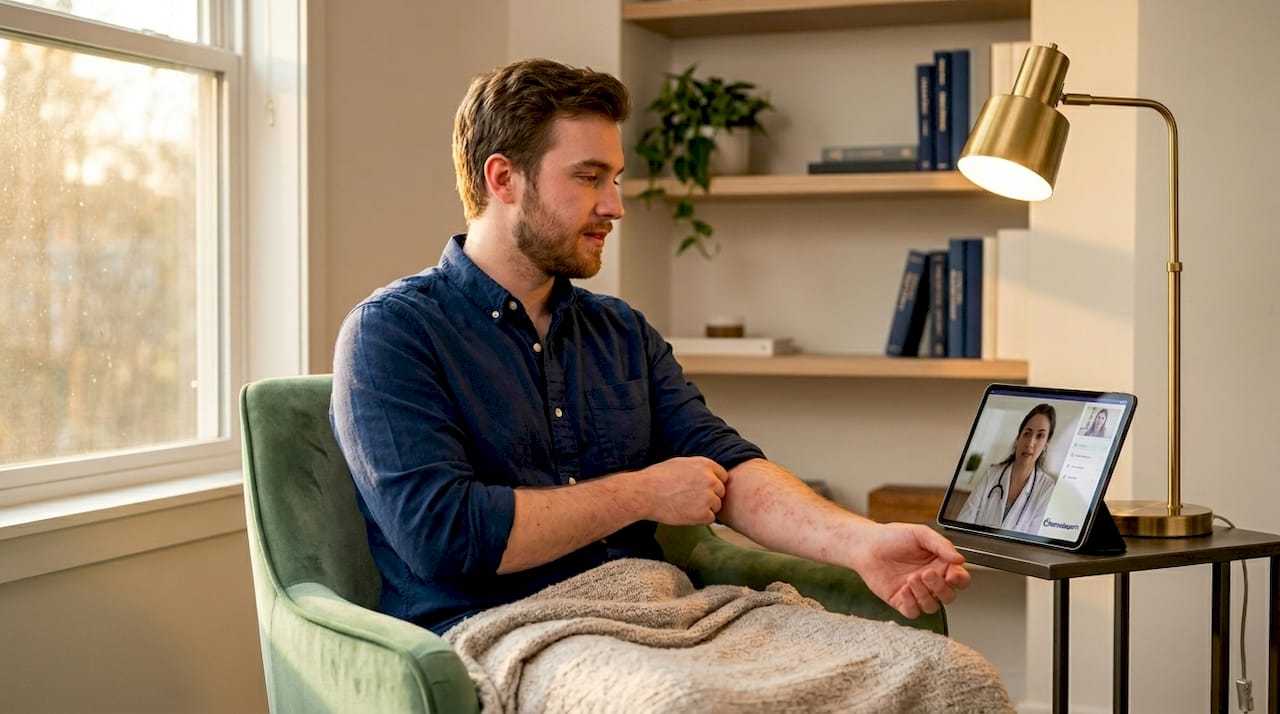
Pink eye, in particular, is a classic telemedicine-appropriate condition. It is contagious, uncomfortable, and very recognizable on camera. Getting a prescription for antibiotic eye drops without exposing others in a waiting room is exactly the kind of situation telemedicine was built for.
3. You need a prescription refill or medication question answered
If you are managing a stable condition and your prescription is running out, a quick virtual check-in is often all you need. Providers can review your current medications, assess whether anything has changed, and send a new prescription to your pharmacy. This is one of the most practical and time-saving uses of telemedicine.
This also applies if you have a question about side effects, drug interactions, or dosing. A phone or video call with a licensed provider gives you a direct, personalized answer, which is far more reliable than searching online.
4. You are managing a chronic condition
Asynchronous telemedicine is particularly helpful for chronic disease management. If you have diabetes, hypertension, asthma, or a thyroid condition that is generally under control, regular virtual check-ins help your provider monitor your progress without requiring you to take time off work for a clinic visit.
You might discuss recent blood pressure readings you have taken at home, review your blood sugar logs, or talk through how well your current treatment plan is working. These visits keep your care consistent and catch small changes before they become bigger problems.
5. You are experiencing mild mental health symptoms
Telemedicine has opened up mental health care in a meaningful way. If you are feeling anxious, struggling with low mood, having trouble sleeping, or want to talk through a stressful life situation, a virtual visit with a provider or counselor is a legitimate and accessible option.
The privacy of connecting from home can actually make it easier for some people to open up. For ongoing therapy or medication management for depression and anxiety, telehealth removes the logistical friction that often causes people to delay or skip care entirely.
6. You have non-urgent digestive symptoms
Heartburn, mild nausea, bloating, or an occasional upset stomach are symptoms you can describe clearly without a physical exam. A provider can assess your situation, rule out more serious causes through your symptom history, and recommend treatment, whether that is a dietary change, an over-the-counter medication, or a prescription.
The word “non-urgent” matters here. Severe abdominal pain, blood in your stool, or symptoms that are rapidly worsening are not telemedicine situations. But for the kind of stomach trouble that disrupts your day without alarming you, a virtual visit is reasonable.
7. You have urinary tract infection symptoms
A UTI is uncomfortable, recognizable, and one of the most common reasons people use telemedicine. If you are experiencing a burning sensation when urinating, increased frequency, and mild pelvic discomfort, a provider can often diagnose based on your symptom description and treat with an antibiotic prescription. Some telehealth platforms also coordinate urine test strips or same-day lab orders when needed.
8. You cannot easily get to a clinic
Distance, transportation, work schedule, mobility limitations, or caring for children or elderly family members can all make an in-person visit genuinely difficult. If your condition is appropriate for virtual care, telemedicine removes that barrier completely. Virtual primary care has proven it can expand access for people who might otherwise delay or skip care.
This is also where telemedicine without insurance becomes especially valuable. If cost or coverage is a concern, platforms like Chameleonhc offer transparent, flat-rate pricing so you know what you will pay before you connect.
When telemedicine is not the right call
Knowing the indicators for telemedicine also means knowing its limits. Some symptoms are red flags that require immediate in-person care, and trying to manage them virtually wastes critical time.
Go to an emergency room or call 911 if you experience:
- Chest pain or pressure, especially if it lasts more than a few minutes, radiates to your arm or jaw, or comes with shortness of breath. Chest pain with these features is a medical emergency.
- Difficulty breathing that is sudden or severe.
- Signs of stroke: sudden facial drooping, arm weakness, or slurred speech.
- Severe abdominal pain or tenderness that is new and intense.
- High fever with stiff neck or sensitivity to light, which can signal meningitis.
- Deep wounds, broken bones, or injuries that may need suturing or imaging.
- Symptoms that require a physical exam, such as joint swelling, lumps, or abdominal tenderness that a provider needs to feel to assess.
Telemedicine cannot replace physical exams, lab work, imaging, or procedures. If your situation requires any of those, in-person care is the right choice.
If a telemedicine provider tells you during a virtual visit that you need to be seen in person, take that advice seriously. Redirection to in-person care is not a failure of the system. It is the system working correctly.
Telemedicine vs. in-person care: a quick reference
| Symptom or concern | Best care setting | Reason |
|---|---|---|
| Sore throat, mild cold, flu symptoms | Telemedicine | Assessable by description; provider can prescribe if needed |
| Rash or skin irritation | Telemedicine (video) | Visual assessment is sufficient in most cases |
| Chest pain or difficulty breathing | Emergency room | Requires immediate physical evaluation and diagnostics |
| UTI symptoms | Telemedicine | Recognizable symptom pattern; antibiotic prescription possible |
| Severe abdominal pain | In-person or ER | May require imaging or physical exam |
| Chronic condition check-in | Telemedicine | Monitoring data and symptom review work well virtually |
| Broken bone or deep wound | In-person or ER | Requires imaging and possible procedure |
| Anxiety or mild depression | Telemedicine | Video or phone visits provide effective access to mental health care |
| New or unexplained severe symptoms | In-person | Needs full workup including labs and physical exam |
| Prescription refill for stable condition | Telemedicine | Medication review requires no physical exam |
Pro Tip: When you are unsure which column your situation falls into, lean toward the safer option. Telemedicine providers are trained to redirect you if your case is beyond what they can assess remotely.
How to prepare once you decide telemedicine is right
Once you have confirmed that your symptoms align with what telemedicine can handle, a few minutes of preparation will make your visit more useful.
- Write down your symptoms. Note when they started, how severe they are on a scale of one to ten, what makes them better or worse, and whether they are improving or worsening. Quantifying your symptoms helps your provider distinguish between something self-limited and something that needs faster attention.
- List your current medications. Include dosages and how long you have been taking them. Do not forget supplements and over-the-counter products.
- Test your technology. Check that your camera, microphone, and internet connection are working before your appointment starts.
- Find a private space. You should be able to speak freely without being overheard.
- Have your pharmacy information ready. If a prescription is likely, knowing your preferred pharmacy saves time at the end of the visit.
- Know your insurance or payment details. If you are using a platform like Chameleonhc, the pricing is transparent and upfront, so you know your cost before you connect. Learn more about telehealth without insurance if coverage is a concern.
My honest take on telemedicine suitability
I have seen a lot of patients talk themselves out of telemedicine because they assume it is only for the most minor concerns, or talk themselves into it when their symptoms genuinely needed more attention. Both mistakes are easy to make.
In my experience, the biggest misconception is that telemedicine is a lesser version of real care. For the right conditions, it is not a compromise. It is faster, more convenient, and just as clinically sound. A provider reviewing your medication, assessing your rash on video, or helping you manage a UTI is doing the same job they would do in person.
What I have also learned is that preparation is the single biggest factor in whether a telemedicine visit is useful. Patients who come in with clear symptom notes get better care than those who cannot remember when symptoms started or what they have already tried. That part is entirely in your control.
The boundary to respect is severity. Telemedicine works until it does not, and knowing that line, specifically around chest pain, breathing trouble, and sudden severe symptoms, is what keeps the system safe. Use it confidently for the conditions it handles well, and go in person without hesitation when your body is telling you something urgent.
— Vector
See how Chameleonhc makes telemedicine easy
If you have recognized the signs you need telemedicine, Chameleonhc makes the next step simple. You can connect with a licensed provider from your phone or computer today, with no insurance required and no waiting room. Chameleonhc covers a broad range of common conditions, from asthma check-ins and pink eye to sinus infections, rashes, UTIs, and more. With same-day availability and clear, flat-rate pricing, you always know what to expect. If you want ongoing access to affordable virtual care, explore the membership and subscription plans designed to make consistent care manageable for real life. Getting started takes minutes, and support is there when you need it.
FAQ
What are the main signs you need telemedicine?
The clearest signs include having mild to moderate symptoms that are easy to describe or show on camera, needing a prescription refill for a stable condition, or managing a chronic illness with no new urgent changes. If your concern does not require a physical exam, labs, or imaging, telemedicine is likely a good fit.
When should I not use telemedicine?
Skip telemedicine for chest pain, difficulty breathing, suspected stroke, severe abdominal pain, or any injury that may need imaging or suturing. These situations require in-person or emergency evaluation for your safety.
Can telemedicine diagnose conditions accurately?
Yes, for conditions assessable through visual cues or reported symptoms. Telemedicine has real limits when a physical exam or diagnostic test is needed, but for appropriate conditions it provides clinically sound care.
How do I prepare for a telemedicine visit?
Document your symptoms with exact start time, severity, and what makes them better or worse. Have your medication list and pharmacy information ready, and test your camera and internet connection before the visit starts.
Is telemedicine right for mental health concerns?
Yes. Virtual visits for anxiety, depression, stress, and sleep issues are well-suited for telemedicine. The comfort of connecting from home can make it easier to engage honestly, and follow-up appointments are simple to schedule without travel.