

Yes. Most cases of pink eye can be diagnosed and treated by a licensed U.S. telehealth clinician, often the same day symptoms show up. The exceptions are specific: intense eye pain, vision changes, light sensitivity, recent eye trauma, or certain contact lens complications need in-person or emergency care instead. If none of those apply to you, the practical next step is simple: take a few clear photos of your eye and book a virtual visit.
TL;DR:
- Telehealth can diagnose and treat most pink eye cases within minutes unless symptoms include intense pain, vision changes, light sensitivity, recent trauma, or contact lens complications, which require in-person care.
- Accurate remote diagnosis relies heavily on high-quality photos taken in natural light, with follow-up options available if symptoms persist beyond a few days.
- Antibiotics are only prescribed for bacterial conjunctivitis; viral cases are managed with supportive care, while allergic types respond to antihistamine drops.
- Contact lens wearers and patients with severe symptoms should avoid telehealth and seek direct clinical evaluation promptly.
- Costs are typically outlined upfront, with prescriptions often billed separately, and licensed in-state clinicians handle the diagnosis via a mix of intake forms, photos, and live or asynchronous communication.
Table of Contents
- What Pink Eye Telehealth Can — and Can’t — Diagnose
- How an Online Pink Eye Visit Actually Works
- What Prescriptions and Home Care Look Like
- When Pink Eye Telehealth Isn’t Enough
- What a Pink Eye Telehealth Visit Actually Costs
- How to Choose a Telehealth Provider for Pink Eye
- Why Chameleon Healthcare Fits This Kind of Care Well
- Using Telehealth Responsibly for Eye Problems
- Booking a Pink Eye Visit With Chameleon Healthcare
- Sources
- FAQ
What Pink Eye Telehealth Can — and Can’t — Diagnose
A telehealth clinician’s job starts with figuring out which kind of conjunctivitis you actually have, because the cause determines everything about your treatment. Pink eye comes from four main sources, and they behave very differently once you know what to look for.
Viral conjunctivitis often shows up alongside a cold and produces watery discharge. Bacterial conjunctivitis tends to bring thicker, yellow or green discharge and can affect one eye more than the other. Allergic conjunctivitis usually hits both eyes at once and comes with itching rather than pain, especially in people with hay fever or asthma. Irritant conjunctivitis follows exposure to smoke, chlorine, or a foreign substance. Viral and bacterial types are contagious; allergic and irritant types are not, according to the CDC’s overview of conjunctivitis.
A remote eye exam works by pattern matching. Clinicians ask about onset, discharge color, itch versus pain, and recent illness, then cross-reference that with photos you submit. That combination is usually enough to land on a presumptive diagnosis and a treatment plan.
Here’s where telehealth draws a hard line:
- Contact lens wearers with symptoms suggesting a deeper infection need an in-person exam, since lens wear raises the risk of bacterial keratitis, a cornea infection that can threaten vision if missed.
- Severe eye pain, blurred vision, or extreme light sensitivity are not conjunctivitis-typical symptoms and call for direct evaluation.
- Recent trauma, chemical splash, or a foreign object in the eye always needs hands-on care.
The overlap between viral and bacterial symptoms is real. Even in-person doctors sometimes need a follow-up visit to confirm which one they’re treating, since the signs of bacterial and viral conjunctivitis frequently look alike on first exam. That’s exactly why a good telehealth provider builds in a follow-up option rather than a one-and-done prescription.
How an Online Pink Eye Visit Actually Works
Booking a conjunctivitis online consultation feels a lot less clinical than you’d expect. Most visits follow a predictable rhythm, and knowing the steps ahead of time makes the whole thing faster.
- Fill out an intake form. Expect questions about when symptoms started, discharge color and amount, whether you wear contacts, any known allergies, and medications you’re currently taking.
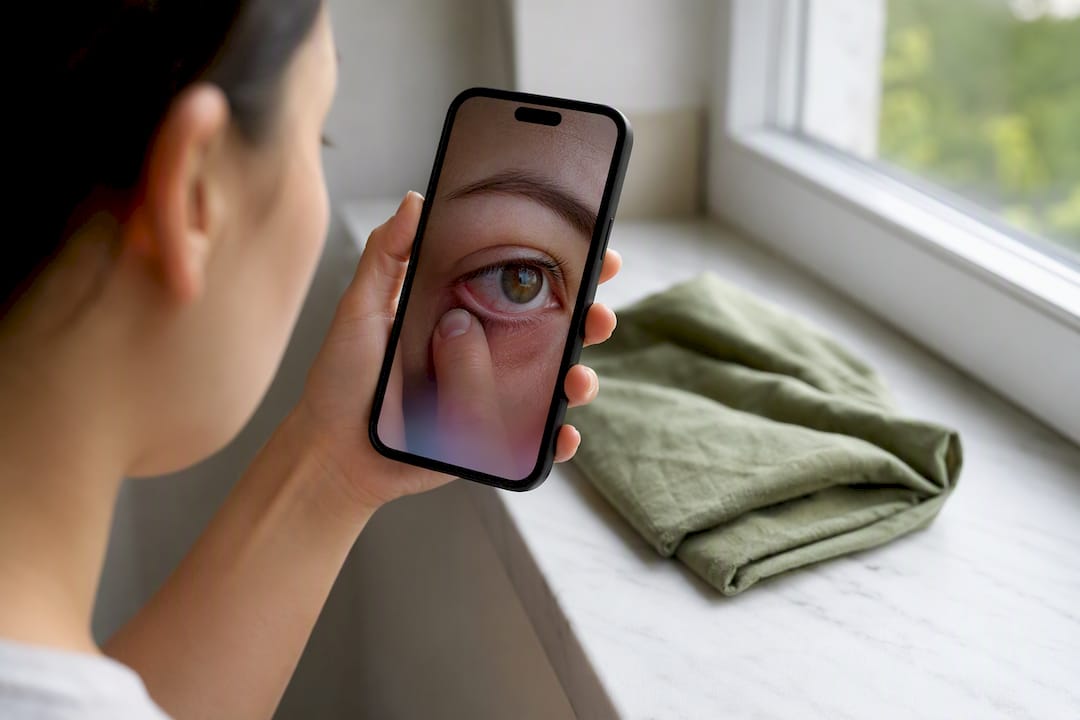
- Submit photos. You’ll usually upload one or two close-up images of the affected eye, sometimes alongside a short video showing how the eye moves and reacts to light.
- Connect with a clinician. Depending on the platform, this happens over live video or through a secure asynchronous chat where a provider reviews your case and messages back.
- Get a decision. The clinician either confirms a likely cause and sends a prescription electronically to your pharmacy, recommends supportive home care, or tells you to seek in-person evaluation.
- Follow up if needed. Many services allow a check-in message if symptoms don’t improve after a few days.
Photo quality genuinely changes diagnostic accuracy. Clinicians consistently say that photos taken in natural light, with the eye held fully open and the camera close enough to show the white of the eye clearly, give them the clearest read on redness pattern and discharge.
Pro Tip: Take your photo facing a window during daylight hours rather than under indoor lighting. Fluorescent and LED bulbs distort redness and can make mild irritation look more severe than it is, or hide genuine inflammation entirely.
Timelines vary by provider, but a straightforward case usually moves from booking to prescription in under an hour during business hours. Overnight submissions typically get a response first thing the next morning.
What Prescriptions and Home Care Look Like
Treatment for pink eye follows the diagnosis, not the other way around, and that’s the piece people often get backwards. A clinician won’t hand out antibiotic eye drops just because your eyes are red.
Bacterial conjunctivitis is the one case where a prescription antibiotic drop or ointment makes sense. These medications, along with their dosing and safety details, are documented in FDA drug labeling for ophthalmic antibiotics, and a telehealth clinician will route the prescription electronically once bacterial infection looks likely based on your symptoms and photos.
Viral conjunctivitis has no antibiotic fix, since antibiotics don’t touch viruses. Supportive care, cool compresses, artificial tears, and time is the standard approach, and most cases clear within one to two weeks.
Allergic conjunctivitis typically responds to antihistamine eye drops, some available over the counter, along with avoiding the allergen when you can identify it.
A few home-care and safety points apply across the board:
- Contact lens wearers should stop wearing lenses immediately and switch to glasses until symptoms fully resolve and a clinician clears you to resume.
- Wash your hands before and after touching your eyes or applying any drops or ointment.
- Never share eye drops, towels, or pillowcases while symptoms are active, and launder linens in hot water, guidance the CDC outlines in its prevention recommendations.
- Discard old prescription eye drops rather than reusing leftover medication from a previous infection, since contamination is a real risk with reused droppers.
Follow FDA dosing instructions exactly, and don’t extend treatment beyond what’s prescribed just because symptoms linger, since prolonged unnecessary antibiotic use can contribute to resistance without speeding recovery.
When Pink Eye Telehealth Isn’t Enough
Some symptoms are your body telling you to skip the video call and get in front of an actual ophthalmologist. Knowing these red flags ahead of time means you won’t waste time on a virtual visit when minutes matter.
Seek emergency or urgent in-person care if you notice:
- Vision changes, including blurriness, double vision, or spots that weren’t there before.
- Intense eye pain, as opposed to the mild ache or grittiness common with standard conjunctivitis.
- Severe light sensitivity that makes it hard to keep your eyes open.
- Recent trauma or chemical exposure, including anything splashed or sprayed into the eye.
- Contact lens wear with suspected keratitis symptoms. Lens wearers face a documented higher risk of bacterial keratitis, and this specific combination is one telehealth providers are trained to flag for immediate ophthalmology referral rather than remote treatment.
- Newborns with eye discharge or redness, since infant conjunctivitis can signal a more serious infection requiring pediatric evaluation right away.
- Immunocompromised patients with any conjunctivitis symptoms, since infections that would be mild in a healthy adult can progress faster in someone with a weakened immune system.
Light sensitivity deserves its own note, since it’s easy to dismiss as simple irritation. If your eyes hurt in normal light or you’re squinting even indoors, that’s outside standard pink eye and worth a closer look, a distinction covered well in this overview of eye light sensitivity.
What a Pink Eye Telehealth Visit Actually Costs
Pricing for eye health teleconsultations generally follows one of two models: a flat single-visit fee paid out of pocket, or a membership subscription that covers unlimited visits for a monthly or annual rate. Neither model requires insurance to use, which is often the whole point for people avoiding a copay or a high deductible.
Here’s what tends to trip people up on the insurance side: even when you pay for the telehealth visit itself out of pocket, your prescription can often still route through your regular pharmacy insurance benefit. The visit and the medication are frequently billed separately, so don’t assume a cash-pay visit means a cash-pay prescription.
A few practical questions worth asking before you book:
- Is the visit fee flat, or does it change based on whether a prescription gets issued?
- Does the platform send prescriptions to any pharmacy, or only specific in-network ones?
- Is there a follow-up message included if symptoms don’t improve?
- Can you check the generic price at your pharmacy before picking up, using a discount tool if the cash price seems high?
Comparing a couple of pharmacy prices for the same generic antibiotic drop can save real money, since cash prices for identical medications sometimes vary by more than double between pharmacies in the same town.
How to Choose a Telehealth Provider for Pink Eye
Not every eye doctor video call service is built the same, and the difference shows up most when something doesn’t go as smoothly as planned. Run through this short checklist before you commit to a platform.
- Confirm the clinician is licensed in your state. Telehealth providers must hold a license where you’re physically located, not just where the company is headquartered.
- Check that photo and video submission are actually built into the visit, not just a phone call with no way to show your eye.
- Ask whether the platform can prescribe medication directly, or whether it only offers advice and sends you elsewhere for a prescription.
- Look for pediatric availability if you’re booking for a child, since not every telehealth service treats younger patients.
- Ask about turnaround time and what happens if symptoms don’t improve. A platform with no stated follow-up path is a platform that leaves you guessing.
- Review pricing before you book, so there’s no surprise fee once a prescription enters the picture.
Pro Tip: Before booking, search for the platform’s stated escalation policy, meaning what happens if a clinician determines your case needs in-person care. A provider that clearly explains this step is one that’s thought through the limits of remote treatment for pink eye, rather than trying to stretch telehealth past where it should go.
Why Chameleon Healthcare Fits This Kind of Care Well
This telehealth model is designed for common, uncomfortable conditions that usually don’t need a waiting room, but do require a real clinician’s judgment.
- Same-day access can help avoid waiting days for an appointment while symptoms worsen.
- Transparent, upfront pricing removes guesswork about visit costs before commitment.
- No insurance required, which can benefit those uninsured or avoiding deductibles for minor infections.
- Online treatment for common conditions beyond pink eye means the same account and process may cover other everyday health issues.
You can read more about how the platform approaches conjunctivitis specifically, including what to expect from intake to prescription.
Using Telehealth Responsibly for Eye Problems
Telehealth genuinely changes the calculus for a condition like pink eye. You avoid a contagious wait in a crowded office, get treatment fast, and clinicians can walk you through hygiene steps in real time rather than handing you a printed sheet on the way out.
None of that replaces judgment, though. The responsible version of this care means taking red flags seriously rather than pushing through a virtual visit when the situation calls for an ophthalmologist. Use the signs that point toward needing more urgent care as your filter, prepare good photos before you log on, and let the clinician tell you when remote care isn’t the right fit.
— Vector
Booking a Pink Eye Visit With Chameleon Healthcare
There are options for treatment that avoid trips to urgent care or insurance runarounds: pay a clear fee per visit, or join a membership plan if you expect to need care more than once this year. Either way, there’s no waiting room and no guessing at the final cost before you start.

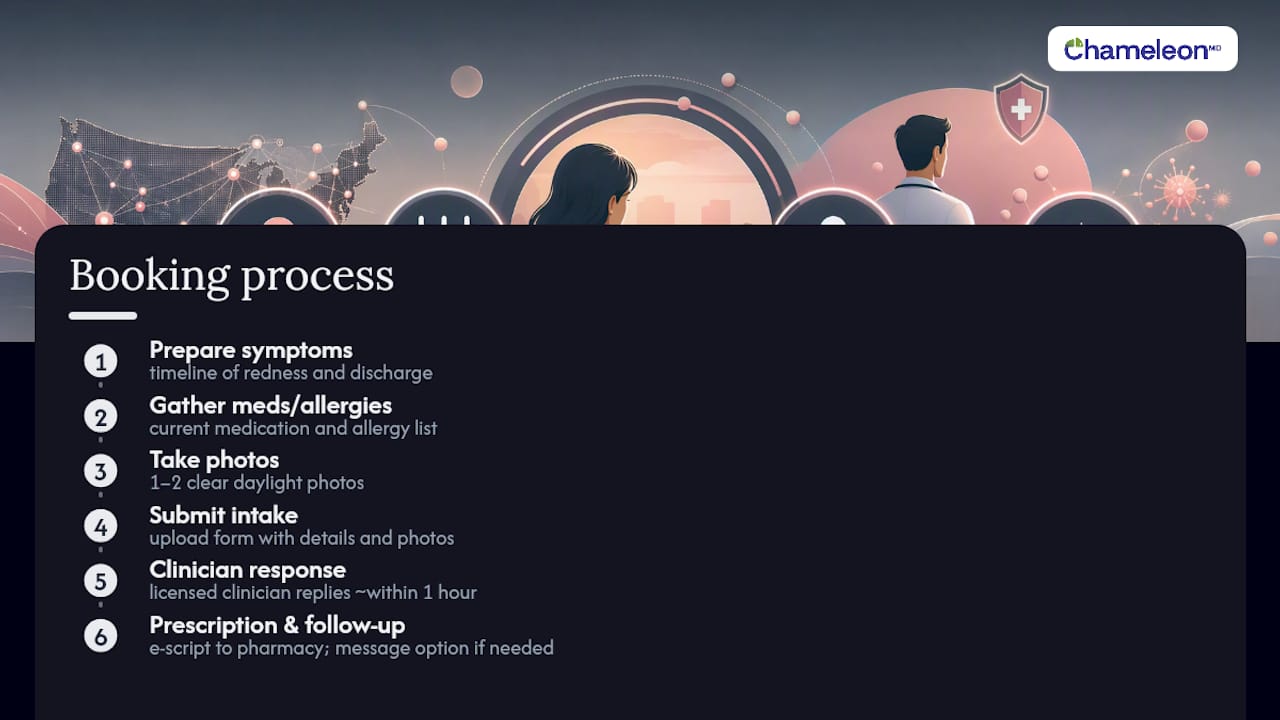
Booking generally takes a few minutes. Have your symptom timeline ready (when the redness started, what kind of discharge you’re seeing), a current medication and allergy list, and one or two clear photos taken in daylight. Submit those through the intake form, and a licensed clinician typically responds within an hour during business hours. If a prescription is warranted, it is sent electronically to your pharmacy of choice, and many visits include a follow-up message option if symptoms don’t improve in a few days.
Chameleonhc also treats a wide range of other everyday conditions through the same simple process, from asthma flare-ups to heartburn and beyond, so the account you set up for pink eye stays useful long after your eyes clear up. Check out the current plans and single-visit pricing to see which option fits how often you expect to need care.
Sources
For deeper reading beyond this guide, the CDC’s clinical overview of conjunctivitis covers causes and treatment in detail, while MedlinePlus offers a patient-friendly summary of symptoms and home care.
This article is general information, not a substitute for advice from a qualified doctor. Consult a qualified healthcare professional about your own circumstances before acting on anything here.
FAQ
Will Telehealth Prescribe Medication for Pink Eye?
Yes. If a clinician determines your symptoms point to bacterial conjunctivitis, they can send an antibiotic eye drop or ointment prescription electronically to your pharmacy during the same visit.
Can I Get Pink Eye Medication Online Without an In-Person Exam?
In most non-severe cases, yes. A telehealth clinician can review your photos and symptom history remotely and prescribe appropriate treatment, though contact lens wearers with suspected keratitis or anyone with severe pain or vision changes still needs an in-person exam.
Is There an Effective Virtual Treatment Option for Pink Eye?
Virtual visits work well for viral, bacterial, and allergic conjunctivitis, since each has a clear treatment path clinicians can determine from photos and history. Platforms like Chameleonhc route prescriptions directly to your pharmacy once a diagnosis is confirmed.
What Symptoms Mean I Should Skip Telehealth and See a Doctor in Person?
Severe eye pain, blurred vision, extreme light sensitivity, recent trauma or chemical exposure, and contact lens related infections all call for in-person evaluation rather than a virtual visit.
How Fast Can I Get Treated Through Pink Eye Telehealth?
Many visits move from booking to a treatment decision in under an hour during business hours, with overnight submissions typically answered the following morning.