

TL;DR:
- Patient-centered telehealth prioritizes your values, preferences, and goals, transforming virtual care into personalized, collaborative support. It integrates real-time and asynchronous technologies to foster trust, improve engagement, and accommodate diverse needs, including audio-only options for inclusivity. To maximize benefits, prepare thoroughly, communicate actively, and leverage continuous tools for ongoing partnership with your provider.
Most people assume telehealth is just a video call with a doctor. You log on, describe your symptoms, get a prescription, and log off. That’s it. But that framing leaves out what patient-centered telehealth actually means, and why understanding the difference matters, especially if you’re uninsured, short on time, or just tired of healthcare that feels like a transaction. What is patient-centered telehealth, exactly? It’s a model where your values, preferences, and goals shape every part of the care you receive, not just the delivery channel. This guide breaks down what that looks like in practice.
Table of Contents
- What is patient-centered telehealth and why it matters
- The whole-person approach in patient-centered telehealth
- Technologies that support patient-centered telehealth: synchronous and asynchronous care
- Accessibility and inclusion: audio-only and practical options in patient-centered telehealth
- How to make patient-centered telehealth work for you: practical tips and strategies
- Why patient-centered telehealth is more than technology: a clinician’s insider view
- Explore patient-centered telehealth options with Chameleon
- Frequently asked questions
Key Takeaways
| Point | Details |
|---|---|
| Patient-centered telehealth defined | It combines telehealth technology with communication that addresses your unique needs, values, and preferences. |
| Whole-person focus | Care considers your overall goals, abilities, and experience, not just symptoms. |
| Multiple tech modes | It uses both live and asynchronous tools to support continuous, convenient care. |
| Accessible for all | Audio-only visits and other options ensure care even if video devices aren’t available. |
| Active patient role | You participate in decision-making and use tools that fit your lifestyle for better health outcomes. |
What is patient-centered telehealth and why it matters
Patient-centered telehealth is not a feature or an upgrade. It’s a philosophy that changes how care is delivered when you connect with a provider online. Standard telehealth gets you access. Patient-centered telehealth gets you care that fits you.
According to research published in JAMA Network Open, patient-centered telehealth intentionally applies communication that addresses your needs and values, employs shared decision-making, and displays empathy to build trust and engagement. That last part matters more than most people realize. Empathy doesn’t disappear just because you’re on a screen. It has to be built deliberately into how the provider talks with you, listens to you, and involves you.
Here’s what separates patient-centered telehealth from a generic virtual visit:
- Shared decision-making: You and your provider discuss options together, rather than receiving instructions.
- Values-based care: Your lifestyle, work schedule, and personal preferences shape treatment recommendations.
- Trust-building communication: Providers ask open-ended questions and take time to understand your full situation.
- Respect for your goals: Whether you want to avoid medication or return to work quickly, your goals guide the plan.
- Higher treatment adherence: When you understand and agree with your care plan, you’re more likely to follow through.
The telehealth benefits of this model go beyond convenience. Patients report feeling more confident in their care decisions and more engaged with their own health when providers actively involve them. That’s not a small thing.
The whole-person approach in patient-centered telehealth
Your sore throat is not just a sore throat. It’s happening to a person who may be stressed, sleep-deprived, uninsured, or managing three other responsibilities. Patient-centered telehealth recognizes that context, and builds it into the care you receive.
Research shows that patient-centered care in telehealth integrates your goals, needs, abilities, and opinions, aiming to build a trustworthy relationship where you are cared for as a person, not just treated for a condition. That distinction changes everything about how a visit feels and how useful it actually is.
What this looks like in practice:
- A provider asks what your main concern is before jumping into clinical questions.
- Your work schedule or caregiving responsibilities are factored into treatment options.
- You’re encouraged to ask questions, push back, and clarify anything that doesn’t feel right.
- Follow-up plans are built around what you can realistically commit to.
This approach particularly benefits people managing ongoing health concerns or navigating care without a regular doctor. When you understand virtual healthcare through this lens, it stops feeling like a workaround and starts feeling like a real healthcare relationship.
Technologies that support patient-centered telehealth: synchronous and asynchronous care
Patient-centered telehealth isn’t limited to one format. It uses two categories of technology to keep you supported at every stage of your care, not just during a scheduled appointment.
Synchronous care happens in real time. This includes live video visits, phone calls, and real-time chat with your provider. You describe your symptoms, ask questions, and get answers on the spot. It mirrors a traditional office visit in many ways, but without the waiting room.

Asynchronous care happens on your schedule. You send a message, submit a photo of a rash, log symptoms in an app, or update your health data without needing anyone available at the same moment. Your provider reviews it and responds when they’re ready. This format is particularly valuable if your schedule doesn’t allow for a dedicated 30-minute window.
Patient-centered telehealth supports engagement, improved monitoring, and coordinated care through both synchronous and asynchronous technologies, as well as remote monitoring devices that track vital signs or symptoms between visits.
Here’s a practical breakdown of how these tools work together:
- Live video visit for diagnosis and initial care planning.
- Secure messaging to follow up on symptoms without rescheduling.
- App-based symptom tracking to log how you’re feeling day to day.
- Remote monitoring devices (like blood pressure cuffs or glucose monitors) that send data directly to your care team.
- Asynchronous check-ins to report progress or ask questions between appointments.
The telehealth technology options available today make it possible to stay connected with your provider without taking more time off work or arranging transportation. That flexibility is central to what makes this model work for real life.
Pro Tip: If your provider offers a patient messaging portal, use it. Sending a quick update between visits takes two minutes and keeps your care team informed without requiring another appointment.
Accessibility and inclusion: audio-only and practical options in patient-centered telehealth
Not everyone has a smartphone with a reliable camera and fast Wi-Fi. That’s not an edge case. It’s the reality for millions of people, including older adults, rural residents, and individuals without insurance who may be working with limited resources.
Patient-centered telehealth takes this seriously. Accessibility is not an add-on. It’s built into the foundation of what patient-focused telemedicine is supposed to do.
Here’s how a genuinely inclusive telehealth model adapts:
- Audio-only visits for patients without video-capable devices or a stable internet connection.
- Plain language communication so medical information is clear regardless of health literacy.
- Flexible scheduling including evenings and weekends to fit around work or family commitments.
- Multiple contact options so you can reach your provider by phone, message, or video, whichever works for you.
- No-insurance-required access so cost doesn’t become the final barrier.
The American Hospital Association confirms that audio-only visits are essential to ensure care access for patients without video-capable devices or stable internet, and that this benefit is especially significant for older adults and low-income patients.
“Patient-centered telehealth meets you where you are, not where the system expects you to be.”
The telehealth accessibility options available through inclusive providers mean that your ability to participate in quality care shouldn’t depend on your tech setup or your zip code.
How to make patient-centered telehealth work for you: practical tips and strategies
Knowing what patient-centered telehealth is only helps if you can actually use it well. Here’s how to get the most out of every virtual visit, whether you’re managing a new symptom or checking in on something ongoing.
- Write down your symptoms and concerns before you log on. Be specific. When did it start? How severe? What makes it better or worse?
- Identify your main goal for the visit. Do you need a diagnosis, a prescription refill, or just a clear answer about whether you need further testing?
- Use asynchronous messaging between appointments. If something changes after your visit, send a message instead of waiting for your next scheduled time.
- Ask about audio-only options if video isn’t working for you on a given day. A good provider will accommodate.
- Participate in shared decision-making actively. If a treatment option doesn’t fit your schedule or budget, say so. There may be alternatives.
- Track your symptoms or health data using an app or device. This gives your provider better information and reduces the need for you to remember every detail during a short visit.
The telehealth tips for uninsured patients are especially relevant here. Without insurance, every visit counts, so preparation helps you make the most of the time you have with your provider.
Patient-centered telehealth works best as an ongoing partnership using both live and asynchronous tools, so you can stay engaged without always needing a scheduled live interaction. That continuity is what turns a one-time visit into an actual care relationship.
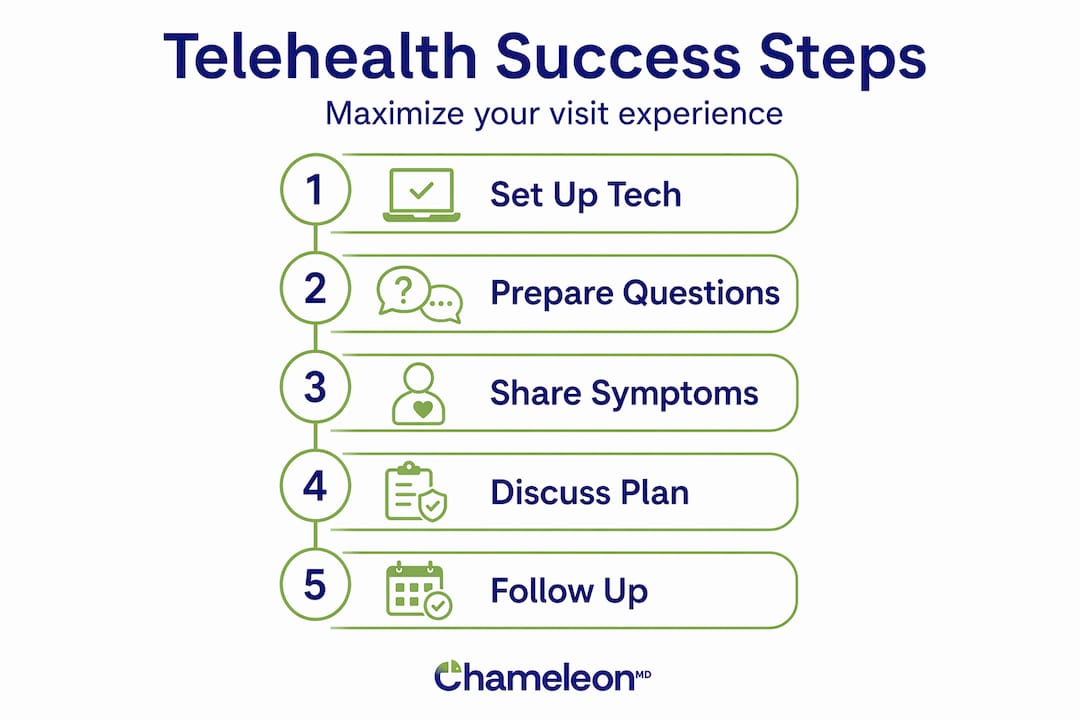
Pro Tip: Before your visit ends, confirm the follow-up plan. Ask specifically: “What should I do if my symptoms get worse?” and “When should I check in again?” This takes 60 seconds and prevents a lot of confusion later.
For busy parents and caregivers, same-day virtual appointments combined with asynchronous check-ins can make consistent care genuinely manageable, even in the middle of a packed week.
Why patient-centered telehealth is more than technology: a clinician’s insider view
Here’s something worth saying plainly: most telehealth criticism, that it’s impersonal, shallow, or inferior to in-person care, is not really a critique of telehealth. It’s a critique of bad telehealth. And bad telehealth usually fails for the same reason bad in-person care fails: the provider isn’t listening.
Technology is the platform, not the product. The real work of patient-centered care happens in how a clinician communicates during a 10-minute virtual visit. That means asking about your priorities first, not at the end. It means not defaulting to the most common treatment without exploring whether it fits your life.
Research published in JAMA Network Open makes clear that clinicians need workflows that support shared decision-making and relationship-building in shorter virtual interactions, intentionally eliciting patient goals early in the visit. That’s a structural change in how care is delivered, not just a technology upgrade.
Virtual visits are shorter on average than in-person appointments. That creates pressure. A skilled clinician uses that constraint to get to what matters faster. They ask better questions, cut less relevant small talk, and focus on your specific situation. When that works well, a 10-minute telehealth call can be more useful than a 20-minute office visit where half the time was spent in a waiting room.
The clinician perspective on telehealth also involves continuous feedback loops. Patient experience should be measured and used to adjust how care is delivered. That’s not common in traditional practice, but it’s central to what makes patient-focused telemedicine genuinely better over time.
If you’re evaluating telehealth providers, this is where the real difference shows up. Not in the interface. In whether the provider asks what you want out of the visit before telling you what to do.
Explore patient-centered telehealth options with Chameleon
You’ve just spent time learning what real patient-centered care looks like in a virtual setting. Now the question is where to find it.
At Chameleon Healthcare, we built our model around exactly this kind of care. Whether you’re dealing with a sore throat, a sinus infection, a rash, or something you’ve been putting off, you can connect with a licensed provider today without insurance and without a waiting room. Our virtual care plans are designed for real life, with clear pricing, same-day access, and support for both video and audio-only visits. Browse our full list of treatable symptoms and conditions to see if we can help with what you’re managing right now. Getting started takes just a few minutes.
Frequently asked questions
What does patient-centered telehealth mean?
It means telehealth designed around your individual needs, values, and preferences, with providers using shared decision-making and empathy to build trust and improve your overall care experience rather than just treating symptoms.
How does patient-centered telehealth help people with chronic conditions?
It supports ongoing engagement and care coordination through live and asynchronous tools, and remote monitoring technologies help patients track and manage conditions more effectively between appointments.
What if I don’t have access to video technology for telehealth?
Patient-centered telehealth includes audio-only visit options so that patients without video-capable devices or reliable internet can still receive quality care without technology being a barrier.
How can I make the most of a patient-centered telehealth visit?
Prepare by writing down your symptoms and health goals, participate actively in treatment discussions, and use asynchronous tools between visits to stay connected with your provider without always needing a scheduled appointment.