
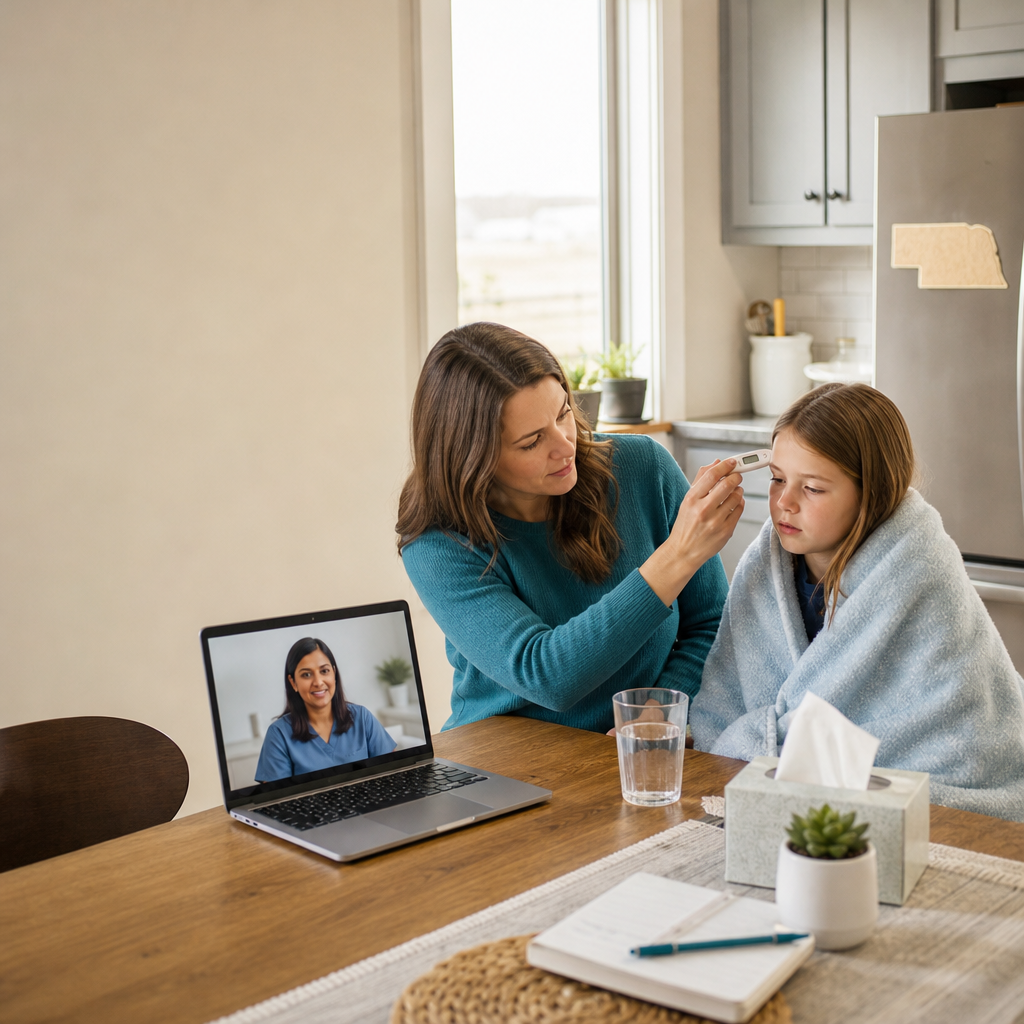
Online Doctor for Kids Nebraska: A Parent’s Guide to Virtual Sick Visits
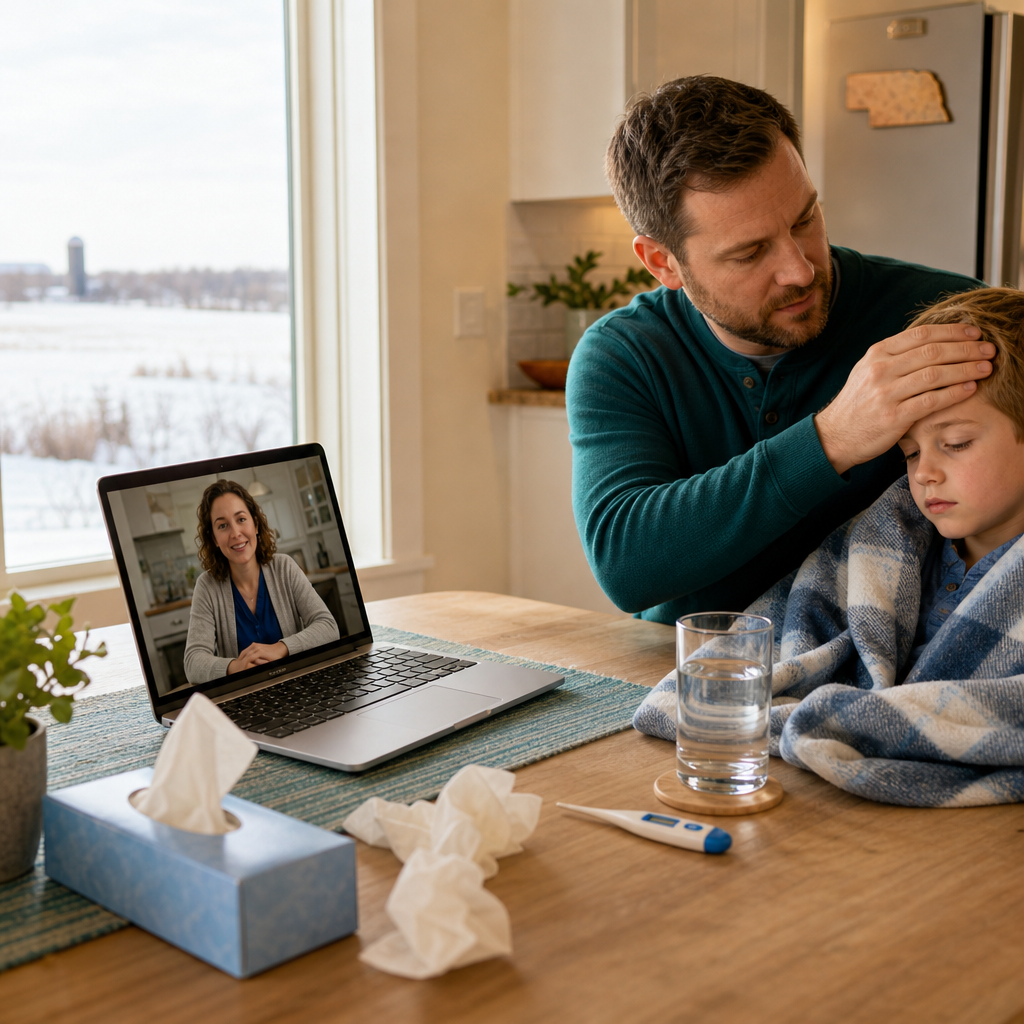
An online doctor for kids Nebraska families can access may evaluate many mild, non-emergency childhood illnesses through secure messaging or video. A Nebraska-licensed healthcare provider can review symptoms, medical history, photos, and other details before recommending home care, prescribing medication when appropriate, or referring the child for an in-person examination.
This guide explains how Nebraska pediatric telehealth works, which symptoms may be appropriate for online care, how to prepare, and when your child needs an in-person examination or emergency help. It also covers virtual pediatric care, same-day pediatric visits, remote medical consultations, and online urgent care for children. This information is general and does not replace individualized medical advice.
Key Takeaways
| Point | Details |
|---|---|
| Best uses | Virtual care may help with mild rashes, pink eye symptoms, cold symptoms, minor stomach concerns, and other non-emergency illnesses. |
| How it works | A parent shares symptoms, health history, medications, photos, and other details through secure messaging or video. |
| What to prepare | Have your child's temperature, approximate weight, medication list, allergies, symptom timeline, and clear photos ready. |
| Possible next steps | The provider may recommend home care, send a prescription when medically appropriate, or direct the family to an in-person clinic. |
| Emergency limits | Breathing trouble, blue lips, severe dehydration, seizures, major injuries, or difficulty waking require immediate emergency care. |
| Costs | Fees and insurance coverage vary, so review plan details and ask about visit, prescription, laboratory, or follow-up costs. |
Table of Contents
How an Online Doctor for Kids Nebraska Visit Works
Virtual doctor visits for kids in Nebraska usually begin when a parent or legal guardian creates an account and provides the child's basic information. Depending on the service, the remote medical consultation may happen by secure text messaging, photo sharing, video, or a combination of these methods.
With a text-first platform such as ChameleonMD, parents can describe symptoms without spending time in a waiting room. A licensed Nebraska provider reviews the information, asks follow-up questions, and recommends an appropriate next step. That may include home-care instructions, a prescription when clinically appropriate, or an in-person evaluation. Parents who are new to the process can read how to see an online doctor in Nebraska without leaving home.
Practical care principle: The safest virtual visit is not necessarily the one that ends online. A responsible provider will recommend hands-on care whenever a physical examination, test, imaging, or urgent treatment is needed.
Online care can be especially useful for busy families, rural households, or parents who need timely guidance without a waiting-room trip. Families can review how telehealth in Nebraska works and when to use it or learn about 7 Reasons Nebraska Families Choose Telehealth For Everyday Health Needs before beginning a child's visit.
Get same-day Nebraska care from ChameleonMD: review available plans and start online. Same-day availability may vary, and emergencies should always be handled by calling 911 or visiting the nearest emergency department.
What Can an Online Doctor for Kids in Nebraska Treat?
An online pediatrician in Nebraska may evaluate many mild illnesses when a parent can clearly describe the symptoms and the child appears stable. Age, medical history, symptom severity, and the provider's clinical judgment all affect whether children's telemedicine in Nebraska is appropriate.
Common concerns may include cold or flu-like symptoms, mild cough, sore throat, pink eye symptoms, uncomplicated skin rashes, minor insect bites, mild stomach upset, and some urinary symptoms. Telehealth can also help parents decide whether continued home monitoring is reasonable or an in-person examination is necessary.
| Concern | What a Virtual Provider May Assess | When In-Person Care May Be Needed |
|---|---|---|
| Cold, cough, or sore throat | Duration, fever, breathing, hydration, exposure history, and visible throat symptoms | Breathing difficulty, persistent high fever, severe pain, or a need for testing |
| Pink eye symptoms | Redness, discharge, itching, pain, injury history, and photos of the eye | Vision changes, severe pain, light sensitivity, chemical exposure, or eye injury |
| Rash or insect bite | Appearance, location, spread, itching, fever, recent products, and clear photos | Rapid spread, blistering, severe pain, facial swelling, or trouble breathing |
| Vomiting or diarrhea | Frequency, fluid intake, urine output, pain, fever, and activity level | Dehydration, blood, severe abdominal pain, persistent symptoms, or unusual sleepiness |
| Minor injury | Swelling, movement, pain level, wound appearance, and how the injury happened | Deformity, uncontrolled bleeding, deep wounds, head-injury warning signs, or inability to use the limb |
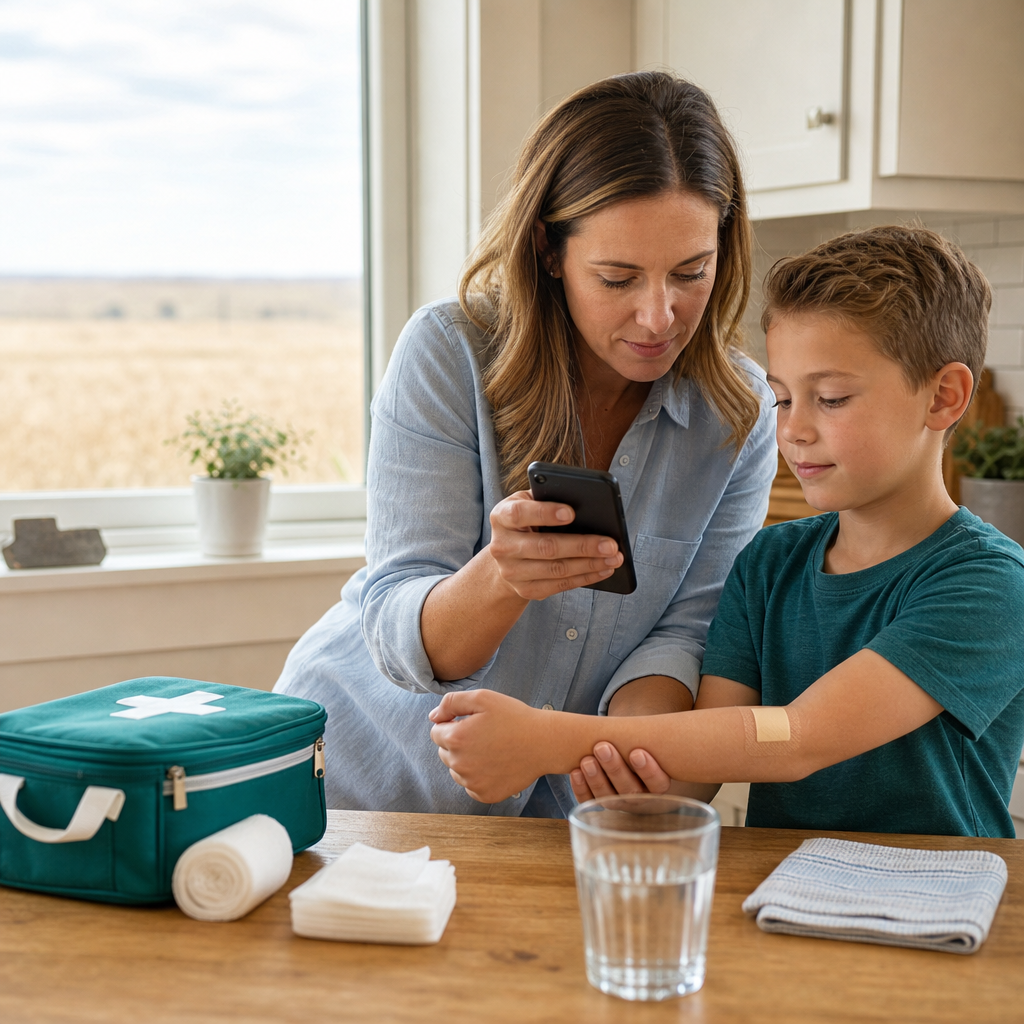
Pro Tip: Take photos of a rash, eye symptom, or minor wound in bright natural light before beginning the visit. Include one close image and one wider image showing where the symptom is located.
For condition-specific information, families can review online care information for pink eye and conjunctivitis, rashes and skin conditions, influenza symptoms, and insect bites. The American Academy of Pediatrics' HealthyChildren.org also provides parent-focused information about common childhood conditions.
How to Prepare Your Child for a Virtual Sick Visit
A little preparation helps the provider make a safer, faster assessment. Before opening the visit, move to a well-lit, quiet space and gather the information below.
- Your child's legal name, birth date, and approximate current weight
- Temperature and the time it was measured
- When symptoms started and whether they are improving or worsening
- Current medications, vitamins, recent doses, and medication allergies
- Relevant medical conditions, recent procedures, and prior reactions
- Recent sick contacts, travel, injuries, or new foods and products
- Clear photos or a short video if the platform permits them
- Your preferred pharmacy's name and location
For babies and young children, note how many wet diapers or bathroom trips they have had, whether they are drinking, and how alert and active they seem. The Centers for Disease Control and Prevention offers practical guidance for reducing the spread of illness among children.
Help Your Child Feel Comfortable
Explain that the clinician will ask questions to help them feel better and that there are usually no shots during the online conversation. Let older children answer simple questions themselves, while you remain available to clarify symptoms and provide consent.
Do not coach your child to minimize or exaggerate symptoms. Honest details about pain, breathing, drinking, urination, sleep, and behavior give a pediatric urgent care online Nebraska provider a clearer picture of what is happening.
Costs, Insurance, and Prescriptions for Pediatric Telehealth
The price of an online sick visit depends on the platform, membership, insurance plan, and services required. Before beginning, check whether there is a visit fee, subscription charge, deductible, copay, or separate cost for laboratory testing, prescriptions, or in-person follow-up.
Some telehealth services accept insurance, while others use transparent direct-pay or membership models. Contact your insurer using the number on your card to ask whether the specific provider and telehealth service are covered; the Nebraska Department of Insurance provides additional consumer resources. Families considering direct access can also compare the available telehealth plans before starting.
Can an Online Provider Prescribe Medicine for a Child?
A licensed provider may prescribe medication if it is medically appropriate, permitted by law, and supported by the virtual assessment. A prescription is never automatic; many viral illnesses improve with rest, fluids, symptom relief, and monitoring rather than antibiotics.
The provider may decide that testing or a physical examination is necessary before prescribing. Medication choice depends on the suspected condition, the child's age and weight, allergies, current medicines, and other safety considerations. Parents should give medicine only as directed and should never share a prescription between family members.
When In-Person or Emergency Care Is More Appropriate
Telehealth is not a substitute for emergency services or every hands-on examination. Call 911 or seek emergency care immediately if your child has severe trouble breathing, blue or gray lips, a seizure, uncontrolled bleeding, a serious allergic reaction, a major injury, or cannot be awakened normally.
Prompt in-person evaluation is also important for possible dehydration, severe or worsening pain, a stiff neck with fever, concerning head-injury symptoms, or a child who looks seriously unwell. For infants younger than 3 months, a rectal temperature of 100.4°F (38°C) or higher generally requires immediate medical guidance, as explained by the American Academy of Pediatrics.
- Struggling to breathe, ribs pulling inward, grunting, or inability to speak or cry normally
- Blue, gray, or unusually pale lips or skin
- Signs of severe dehydration, including very little urine, no tears, or unusual lethargy
- Sudden confusion, fainting, seizure, or difficulty waking
- Suspected poisoning or ingestion of a dangerous substance
- Severe abdominal pain, a rigid abdomen, or persistent vomiting
- A deep wound, possible broken bone, major burn, or uncontrolled bleeding
For suspected poisoning, call Poison Help at 1-800-222-1222 or visit the official Poison Help website. If you are unsure whether a symptom is an emergency and your child's condition appears severe or is deteriorating quickly, choose emergency care rather than waiting online.

For mild, non-emergency symptoms, secure messaging can provide a practical first step without a waiting-room trip. Get same-day Nebraska care from ChameleonMD: explore plans and begin a virtual visit.
Frequently Asked Questions
Can an online doctor treat my child in Nebraska?
Yes, a Nebraska-licensed provider can evaluate many non-emergency pediatric concerns through telehealth. The clinician may provide home-care guidance, prescribe when appropriate, or recommend an in-person examination.
What ages can use Nebraska pediatric telehealth?
Age limits vary by platform, provider, and condition. Infants, especially those younger than 3 months with fever or concerning symptoms, are more likely to need rapid in-person evaluation.
Can a virtual doctor diagnose an ear infection in a child?
A virtual provider can discuss ear pain and related symptoms, but confirming a middle-ear infection often requires looking inside the ear with an otoscope. The provider may recommend an in-person examination before treatment.
Can an online pediatrician prescribe antibiotics in Nebraska?
A licensed Nebraska provider may prescribe antibiotics when the diagnosis and clinical information support their use. Antibiotics do not treat viruses, and a clinician may require testing or an in-person examination first.
Does insurance cover virtual doctor visits for kids in Nebraska?
Coverage depends on your insurance plan, the provider, and the telehealth platform. Confirm network status, copays, deductibles, and prescription coverage with your insurer before the visit when possible.
What information do I need for an online pediatric sick visit?
Prepare your child's temperature, weight, symptom timeline, medication list, allergies, medical history, and pharmacy information. Clear photos and notes about eating, drinking, urination, breathing, and activity can also help.
Is children's telemedicine in Nebraska private and secure?
Reputable healthcare platforms use secure systems designed to protect medical information, but parents should still choose a private location and trusted internet connection. Review the service's privacy practices before sharing sensitive details.
When should I skip pediatric urgent care online in Nebraska?
Skip online care and seek emergency help for breathing difficulty, blue lips, seizures, severe dehydration, uncontrolled bleeding, major trauma, or difficulty waking your child. In-person care is also appropriate whenever symptoms require testing, imaging, or a hands-on examination.
Recommended Reading
- How to See an Online Doctor in Nebraska Without Leaving Home
- Telehealth in Nebraska: What It Is, How It Works, and When to Use It
- 7 Reasons Nebraska Families Choose Telehealth for Everyday Health Needs
Get same-day Nebraska care from ChameleonMD