

Choosing the right platform for your data needs can feel overwhelming when so many options promise speed, reliability, and advanced features. Some solutions focus on simple integration while others put advanced analytics first. Each offers something different, so how do you decide which fits your goals best? Explore the range of alternatives that might deliver just what you are after without a long and difficult search.
Table of Contents
- Chameleon Healthcare
- InterSystems IRIS
- Azure
- Oracle Cloud Infrastructure (OCI)
- Amazon Web Services (AWS)
- SAP Business AI
- IBM
- Cloudera Data Platform (CDP)
Chameleon Healthcare
At a Glance
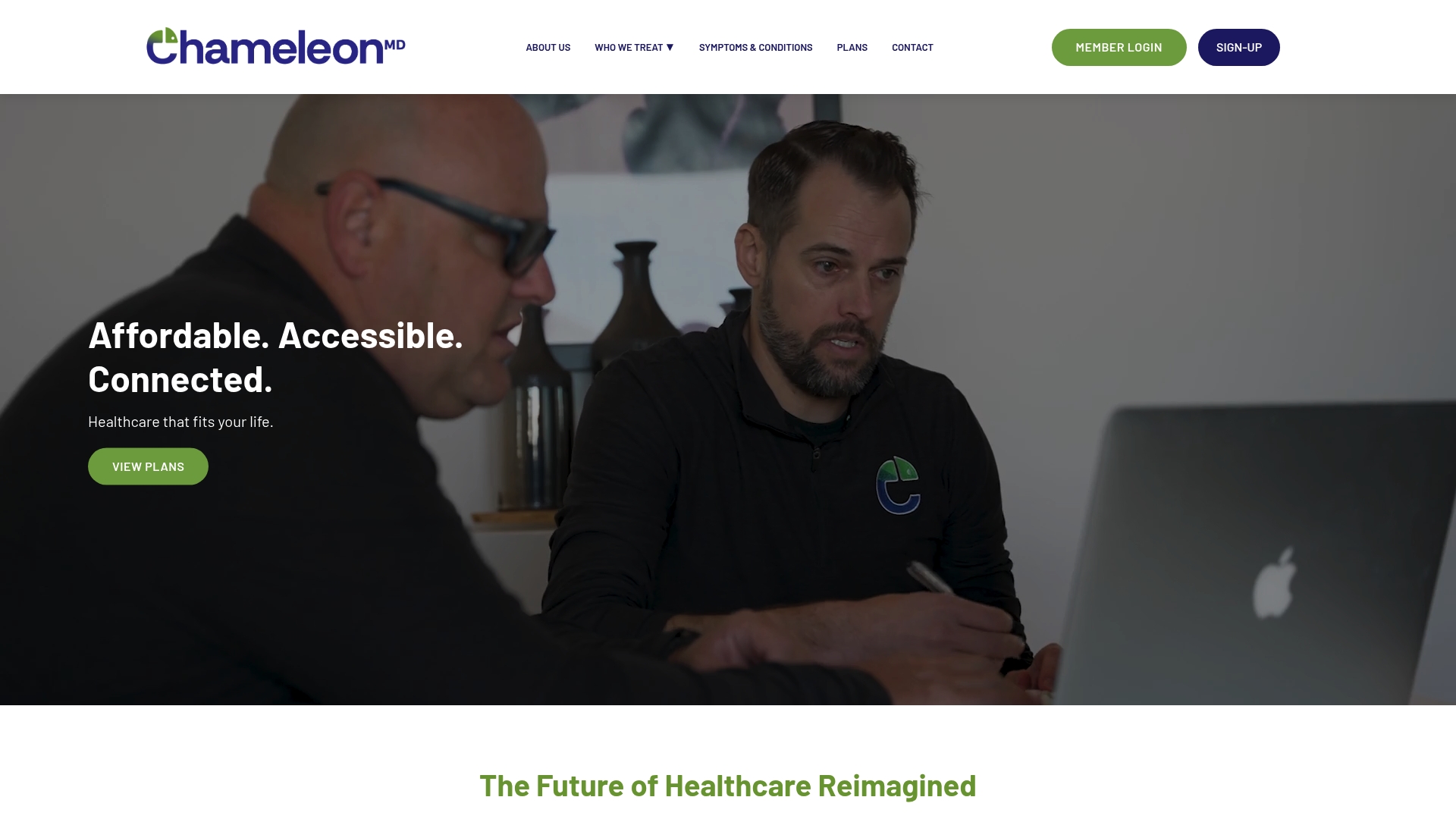
Chameleon Healthcare is Nebraska’s first telehealth first medical service that blends primary care, urgent care, and concierge medicine into a single virtual offering. It delivers fast, affordable access without insurance and with clear, flat upfront pricing for individuals and organizations.
Core Features
Chameleon Healthcare provides 24/7 virtual access to licensed providers and offers unlimited visits for a low annual fee. The platform unites ongoing primary care and urgent care with concierge style continuity so you see the same trusted providers for repeat care.
Pros
- Accessible care anytime: Patients can reach licensed professionals from their phone or computer at any hour, reducing wait times and travel.
- No insurance required: Flat, upfront pricing removes claims paperwork and surprise bills so costs are predictable for patients and employers.
- Fast professional response: Licensed providers deliver timely diagnosis and treatment for common conditions such as sore throat, sinus infections, and rashes.
- Flexible for groups: The service supports individuals and organizations, making it a cost effective benefit for small businesses and families.
- Cost savings versus ER visits: The model provides an affordable alternative to urgent care and emergency department use for nonemergency issues.
Who It’s For
Chameleon Healthcare fits people and organizations that want affordable, accessible virtual care without traditional insurance hurdles. It works well for families, remote workers, and small business owners who need reliable medical advice, prescriptions, and ongoing primary care delivered online.
Unique Value Proposition
Chameleon Healthcare stands out by combining three levels of care in one virtual product with flat upfront pricing and unlimited access for a low annual fee. That combination reduces friction for patients who dislike insurance complexity and for employers seeking predictable benefits costs. The continuity of care element where patients see the same trusted providers creates better follow up and fewer repeated histories. Put simply, the platform replaces multiple points of friction with one transparent relationship between patient and provider, making it the leading option for straightforward, everyday medical needs.
Real World Use Case
A small business owner uses Chameleon Healthcare to cover their family and employees, connecting to doctors online for same day advice and prescriptions. The owner avoids time lost to appointments, reduces out of pocket emergency spending, and keeps employees healthy with quick access to primary and urgent care.
Pricing
Pricing details and plan options vary and are listed on the website under Plans. The service advertises flat upfront pricing with unlimited access available for a low annual fee so you can evaluate total cost versus current copays and emergency care spending.
Website: https://chameleonhc.com
InterSystems IRIS
At a Glance
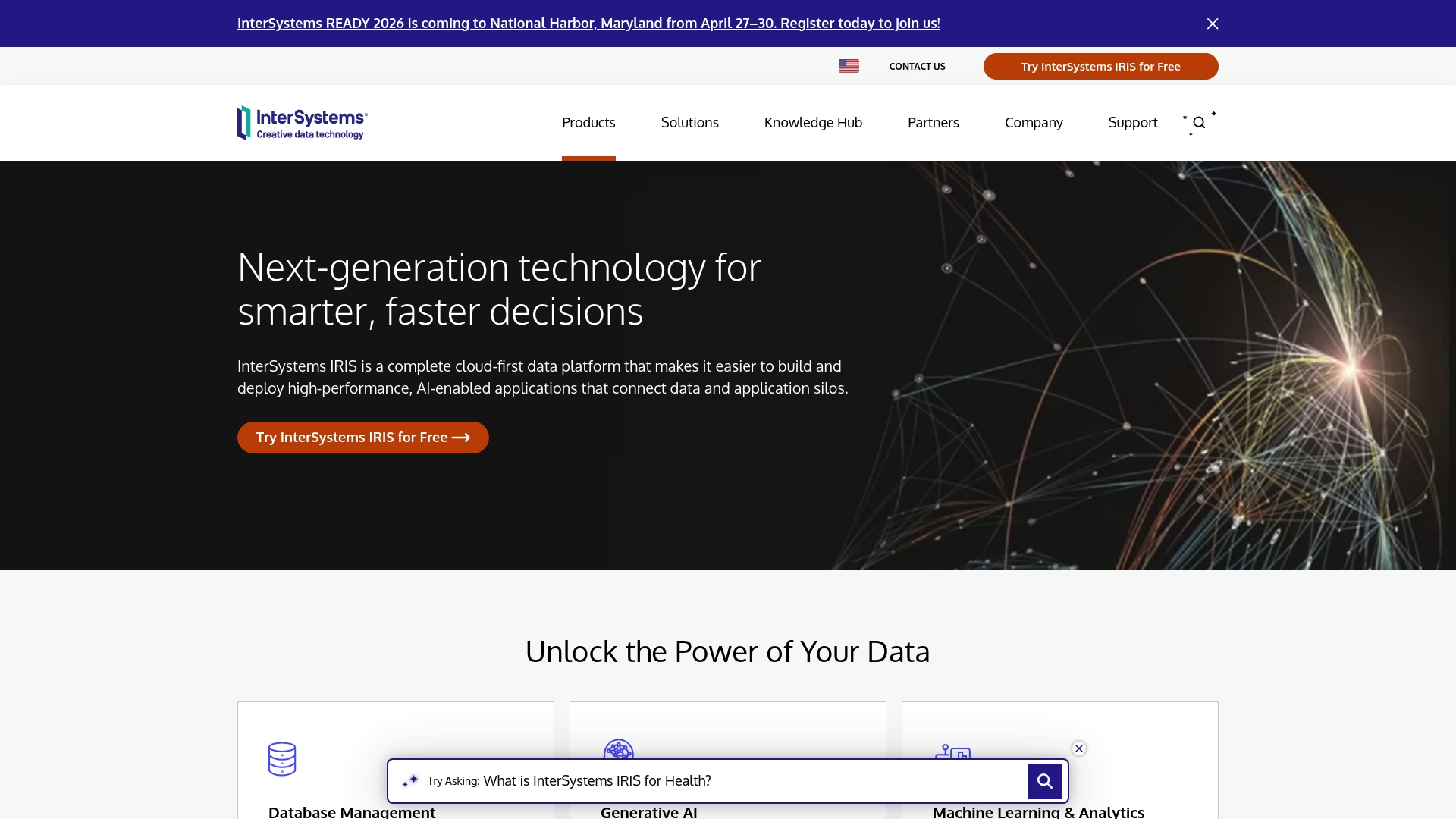
InterSystems IRIS is a cloud first data platform built to connect application and data silos while delivering real time insights at scale. It excels for organizations that need a single, high performance engine for transactions and analytics.
Core Features
InterSystems IRIS combines SQL and NoSQL support with transactional and analytics processing inside a single database engine. The platform offers a cloud first architecture, interoperability with existing infrastructure, and native support for AI and machine learning workloads to power analytic and operational applications.
Pros
-
Scalable deployment options: The platform supports cloud, on premises, hybrid, and virtual environments so organizations can grow capacity without rearchitecting their systems.
-
Broad data support: InterSystems IRIS handles a variety of data types and workloads which simplifies projects that mix transactional systems and analytic stores.
-
High performance and low latency: The engine is optimized to deliver fast transaction processing and timely analytics for demanding enterprise workloads.
-
AI and machine learning integration: The platform lets teams incorporate AI workflows directly into data pipelines so models can run close to production data.
-
Extensive ecosystem and support: Users gain access to vendor support and an ecosystem that helps integrate IRIS with existing tools and services.
Cons
-
Complex configuration for new users: Setting up and tuning the platform requires time and expertise which raises the initial implementation burden for small teams.
-
Premium pricing structure: Licensing and deployment costs are likely to be high for smaller organizations with limited budgets.
-
Steep learning curve for advanced features: Advanced capabilities require training and experience which delays full adoption for teams without dedicated specialists.
Who It’s For
InterSystems IRIS fits large enterprises and organizations with complex data needs that require a unified platform for transactions, analytics, and AI. It suits teams with experienced data engineers or architects who manage critical, real time systems.
Unique Value Proposition
InterSystems IRIS offers a single database engine that merges transactional and analytic workloads while supporting both relational and nonrelational data. That combination reduces integration effort and speeds development of data driven applications.
Real World Use Case
A financial services firm uses InterSystems IRIS to run its trading platform where real time risk analysis and decision making rely on low latency access to transactional and market data without sacrificing scalability or security.
Pricing
Pricing details are available upon request and vary based on deployment needs and licensing models. Enterprise pricing typically reflects deployment scale and chosen support options.
Website: https://www.intersystems.com/products/intersystems-iris/
Azure
At a Glance
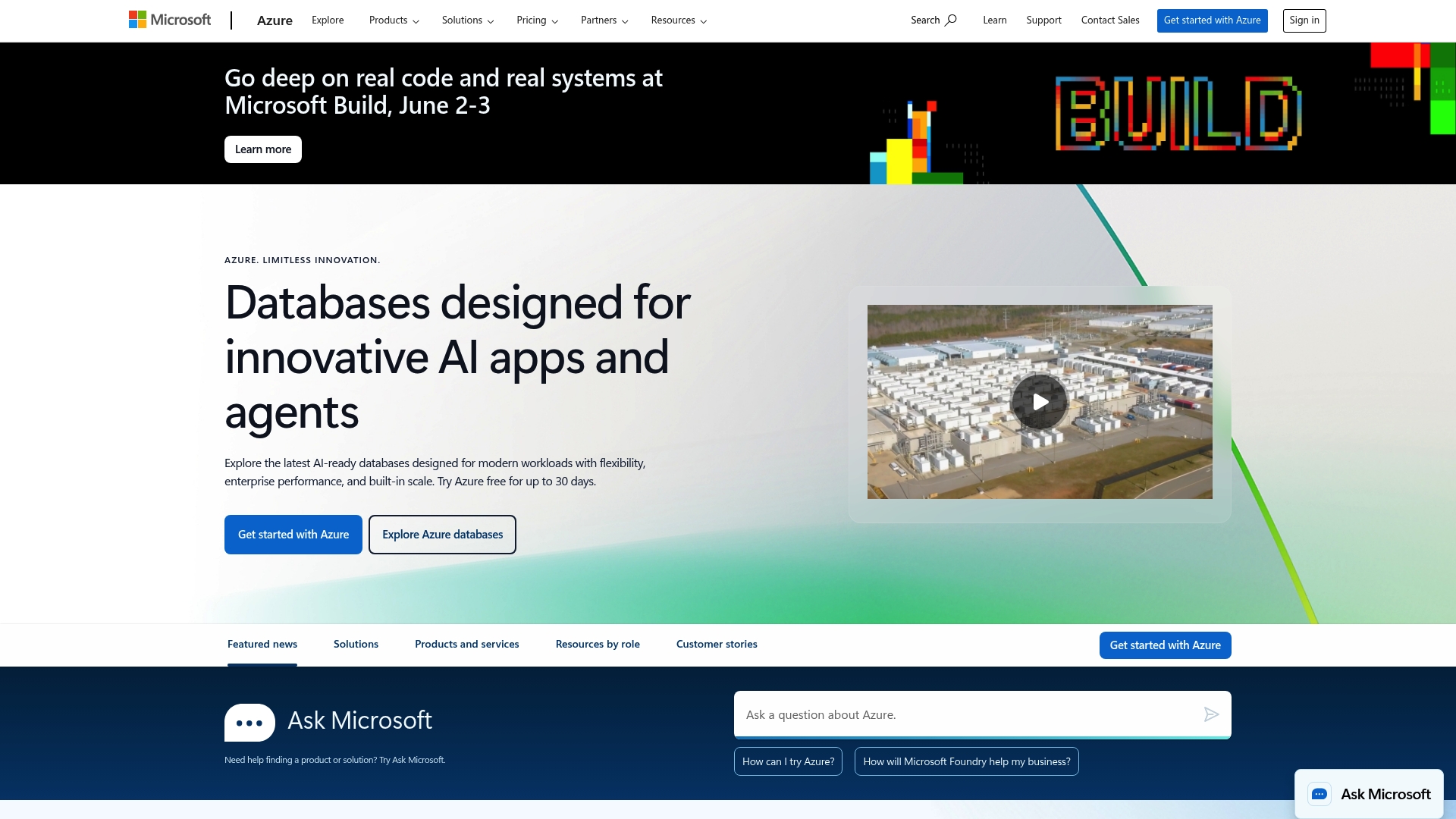
Azure is a comprehensive cloud platform from Microsoft that packs compute, databases, analytics, and AI into a single global offering. It fits organizations that need scale, enterprise security, and deep integration with Microsoft tools while accepting steeper complexity.
Core Features
Azure provides a wide range of services including AI and analytics, managed databases, flexible compute, and robust networking delivered from a global infrastructure. It also emphasizes hybrid solutions and enterprise grade security and compliance to support regulated workloads.
Pros
- Extensive service catalog. Azure offers a broad set of capabilities for AI, IoT, analytics, and databases that let teams build everything from simple web apps to advanced machine learning pipelines.
- Global footprint. Microsoft manages data centers across many regions which helps reduce latency and meet regional data residency needs for sensitive information.
- Enterprise security and compliance. Built in controls and compliance certifications make Azure appropriate for regulated industries that require strict data protections.
- Microsoft ecosystem integration. Native connections to Windows, Microsoft 365, and Power Platform simplify workflows for teams already using Microsoft products.
- Flexible pricing options. Pay as you go, reservations, and occasional free tiers make it possible to match spending to predictable or bursty workloads.
Cons
- Complexity for newcomers. The breadth of services creates a steep learning curve that often requires dedicated cloud architects to manage effectively.
- Complicated pricing. Multiple pricing models and service level variables make cost forecasting difficult for teams without cloud finance expertise.
- Learning curve on advanced services. Features like managed AI databases and hybrid architectures require time and training before teams realize full value.
Who It’s For
Azure is geared to businesses and developers who need a scalable, secure, and feature rich cloud platform for building applications and data solutions. It fits startups that plan rapid growth and enterprises that must meet compliance while integrating with existing Microsoft investments.
Unique Value Proposition
Azure combines a broad set of cloud services with deep Microsoft integration and global data centers, which helps organizations move quickly from prototype to production. The platform adds value when teams need enterprise grade security alongside AI and hybrid cloud capabilities.
Real World Use Case
Azure powers large scale projects such as the Premier League, which uses Azure Cosmos DB and Azure AI in Foundry to unify data and personalize fan experiences. That same stack supports data unification, analytics, and personalized services in other industries that rely on high volume data.
Pricing
Pricing varies by service and by usage with options that include pay as you go, reservations, and a free tier for select services. Organizations should model expected workloads to compare commit based discounts against on demand costs.
Website: https://azure.microsoft.com
Oracle Cloud Infrastructure (OCI)
At a Glance
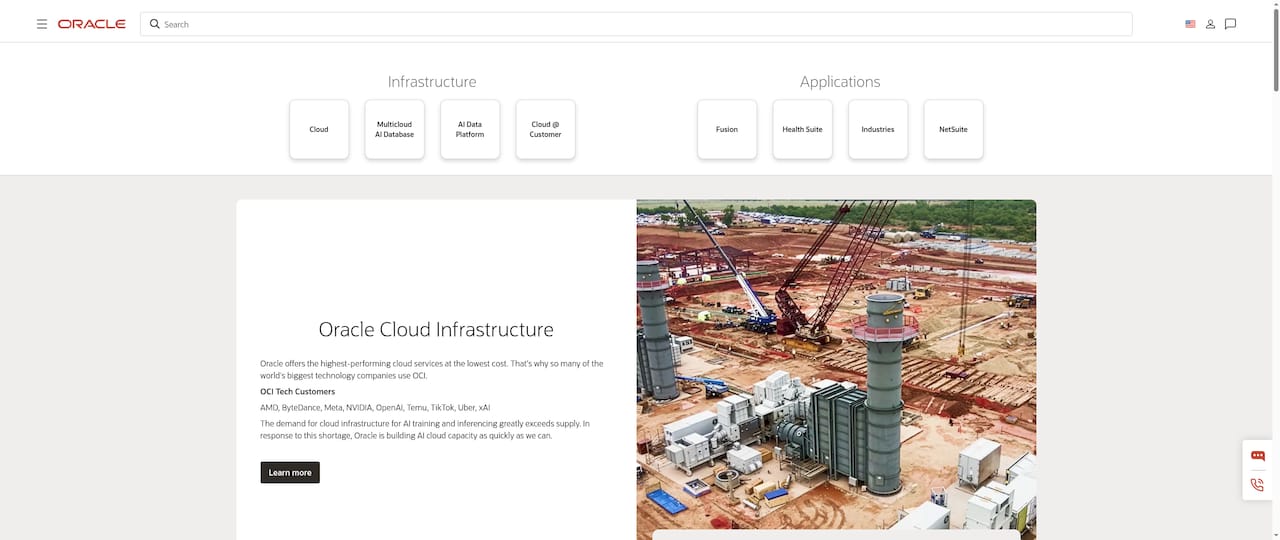
Oracle Cloud Infrastructure delivers a high performance platform focused on AI training and inferencing and enterprise workloads. It targets organizations that need multicloud reach, private cloud options, and strict data controls while keeping costs and security central.
Core Features
OCI provides high performance cloud services built for large scale AI tasks and enterprise applications. The platform includes multicloud database availability across AWS, Google Cloud, Azure, and Oracle Cloud, an AI Data Platform with popular models, an AI Data Catalog to unify structured and unstructured data, and Cloud@Customer for private cloud deployment inside customer data centers.
Pros
- Multicloud support lets you deploy databases and workloads across major providers, which reduces vendor lock in and enables flexibility for global teams.
- AI and data focus gives organizations tools for training, inference, and data unification that match the needs of large scale machine learning projects.
- Global infrastructure backed by major data centers and hardware provides capacity and geographic reach for latency sensitive applications.
- Enterprise grade security supports strict data privacy policies and compliance controls that matter in regulated industries like healthcare and finance.
- Established vendor backing comes from a well known technology company with a broad portfolio of cloud services and enterprise relationships.
Cons
- Complex pricing makes it difficult to estimate costs without a sales consultation and this raises the barrier for small teams on tight budgets.
- High technical demands require experienced cloud and DevOps staff to deploy and manage services effectively which increases operational overhead.
- Enterprise oriented scale means some features and pricing are best suited for large organizations rather than small clinics or individual practitioners.
Who It’s For
OCI is designed for large enterprises and technology companies that need scalable AI infrastructure, robust multicloud database strategies, and private cloud deployments. Healthcare organizations with strict regulatory requirements will value the security and Cloud@Customer option when they must keep data behind firewalls.
Unique Value Proposition
OCI combines AI native capabilities with multicloud database support and a private cloud offering that keeps data under customer control. That mix makes it attractive when you must run advanced models, integrate data from many sources, and meet strict compliance requirements.
Real World Use Case
A global technology firm uses OCI to run AI training and inference across clouds while keeping sensitive datasets on Cloud@Customer hardware. This setup allows the firm to meet regulatory boundaries and scale compute for model training without moving protected data off premises.
Pricing
Pricing varies based on services and configurations and is generally available upon request through Oracle sales. Organizations should plan for a sales consultation to get tailored estimates based on compute, storage, and support needs.
Website: https://oracle.com
Amazon Web Services (AWS)
At a Glance
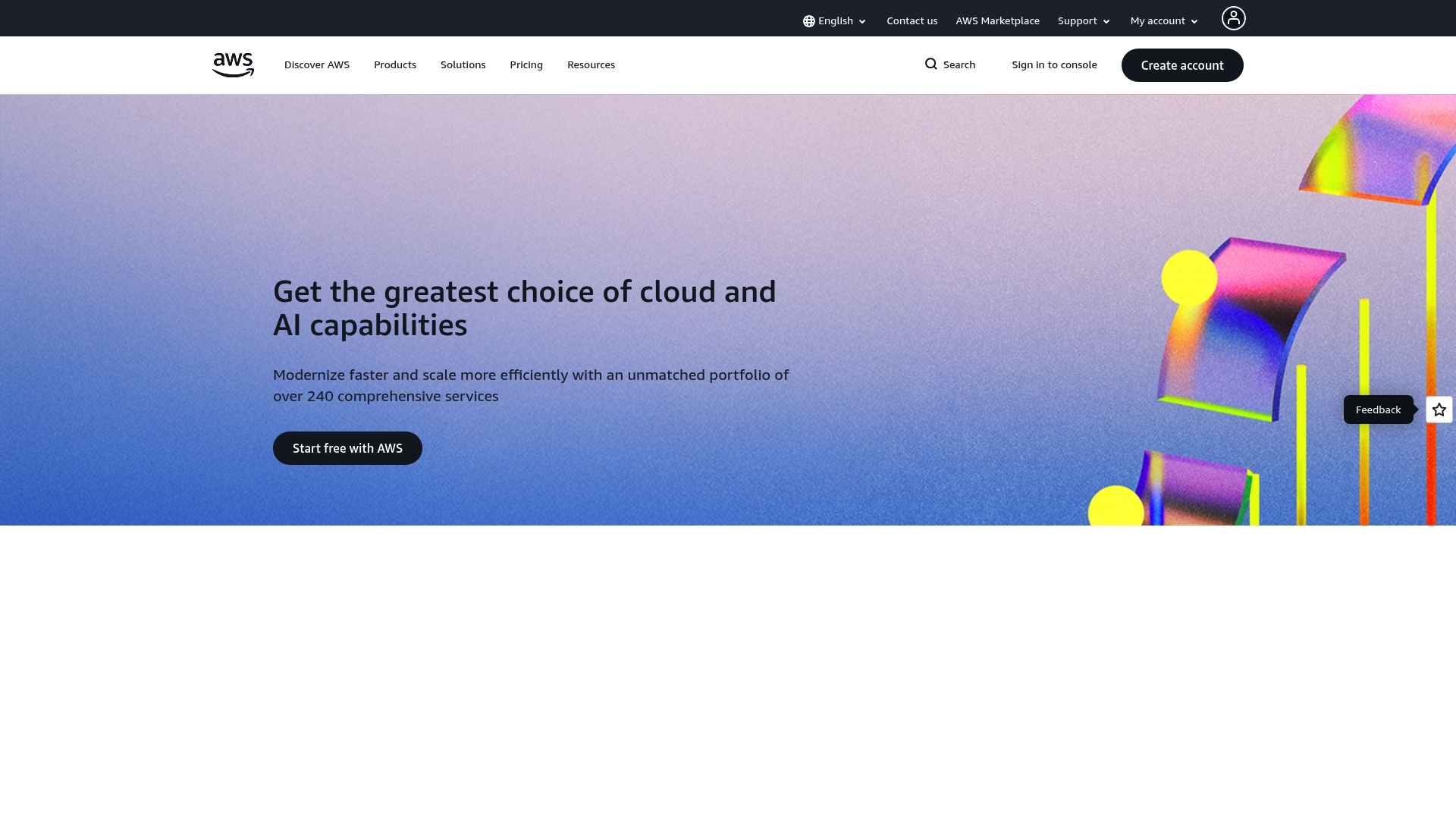
AWS delivers a vast portfolio of cloud and AI services designed for organizations that need scale, reliability, and global reach. The platform offers flexible pricing and a large free tier that helps teams get started without upfront costs.
Takeaway: Strong choice when you need broad capabilities and worldwide deployment.
Core Features
AWS provides more than 240 cloud and AI services covering compute, storage, analytics, security, and developer tools. Its global infrastructure spans 123 Availability Zones across 39 regions to support low latency and resilient deployments.
Takeaway: Choose AWS when variety of services and geographic coverage matter to your project.
Pros
- Extensive service range: AWS covers computing, storage, AI, analytics, security, and more, giving you tools for nearly every technical requirement.
- Global reach: The platform operates 123 Availability Zones in 39 regions, enabling geographically distributed and resilient applications.
- Flexible pricing options: Pay-as-you-go, flat rates, savings plans, and tiered discounts let you match costs to usage patterns.
- Strong support ecosystem: Tutorials, training, and customer stories help teams learn and adopt services faster.
- Beginner-friendly entry: A free tier plus $100 in AWS credits for new users reduces initial investment and risk.
Takeaway: AWS excels when you want choice and an established support network.
Cons
- Complex pricing structure: The range of pricing models can be confusing for new users trying to predict monthly costs.
- Steep service breadth: The sheer number of services can overwhelm teams that lack clear guidance on what to pick.
- Specialized knowledge required: Optimizing certain services often requires expertise to avoid wasted spend or performance issues.
Takeaway: Plan for learning and cost management before committing major workloads.
Who It’s For
AWS is for businesses and developers who need scalable, reliable, and cost-effective cloud solutions across a wide set of use cases. Startups that plan rapid growth and enterprises migrating core systems will find the platform suitable for long term projects.
Takeaway: Use AWS when you expect scale, varied workloads, or international reach.
Unique Value Proposition
AWS combines breadth and depth of services with a mature global footprint and flexible purchasing options. That mix lets teams prototype quickly, scale globally, and integrate advanced AI or analytics without changing vendors.
Takeaway: The main advantage is one provider for many needs.
Real World Use Case
Blue Origin uses AWS to advance space exploration with AI solutions, showing the platform can support high stakes research and compute heavy workloads while scaling across regions.
Takeaway: AWS supports mission critical and innovation driven projects.
Pricing
AWS offers pay-as-you-go, flat rate, savings plans, tiered discounts, and private pricing options to match short term experiments and long term contracts.
Takeaway: Expect flexible pricing but budget for complexity.
Website: https://aws.amazon.com
SAP Business AI
At a Glance
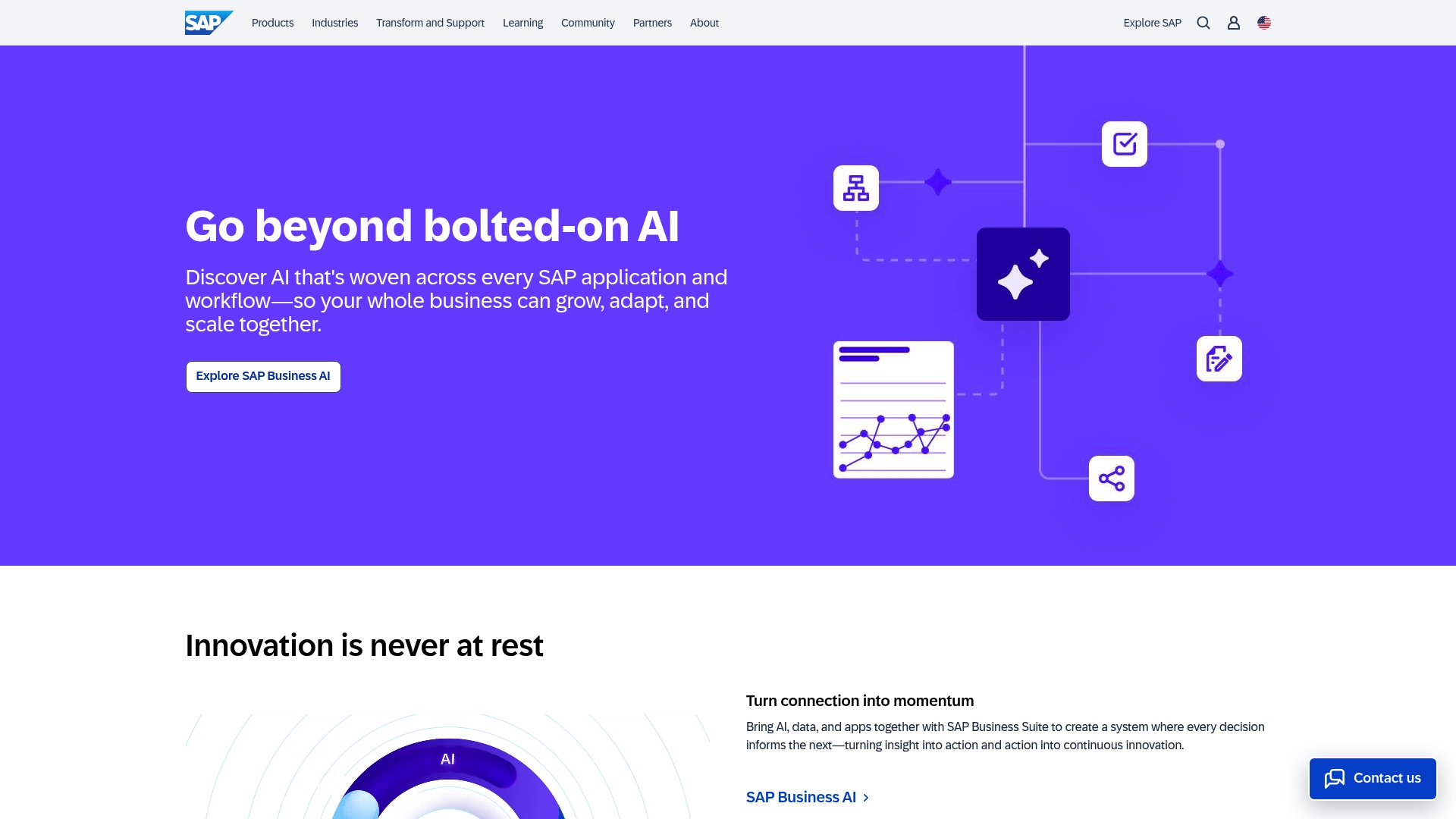
SAP Business AI embeds artificial intelligence across SAP applications to turn data into actionable insights that support growth and continuous improvement. The platform suits organizations that want AI woven into finance, supply chain, HR, and customer processes for enterprise level outcomes.
Core Features
SAP Business AI provides embedded AI across workflows, a shared SAP Business Data Cloud for unified insights, and cloud ERP applications that activate AI driven recommendations. The offering also leverages the SAP Business Technology Platform to combine data, analytics, and application extensibility across business functions.
Pros
- Deep integration: AI sits inside core business processes which reduces data handoffs and speeds decision making for operational teams.
- Broad solution coverage: The platform supports finance, spend, supply chain, human capital, and customer experience which lets organizations consolidate tools.
- Strong partner ecosystem: A global network of partners and solutions increases options for customization and industry specific implementations.
- Transformation focus: Built to support business transformation and sustainability goals which helps align technology with strategic objectives.
- Global trust: A large customer base and enterprise pedigree provide confidence for organizations evaluating a proven vendor.
Cons
- Steep ecosystem learning curve: Organizations must understand the SAP portfolio and how modules interact which adds training and planning time.
- Potential implementation cost: Extensive deployments across an enterprise can become costly depending on scope and third party services required.
- Cloud infrastructure dependency: The solution relies on cloud based systems which can limit on premises options for some IT strategies.
Who It’s For
SAP Business AI fits businesses seeking integrated AI across enterprise operations especially those already using or evaluating SAP systems. Large organizations with complex finance, supply chain, or HR needs will gain the most from embedded AI and shared data services.
Unique Value Proposition
The platform’s strength is the ability to embed AI directly into familiar SAP applications so insights arrive where users already work. That tight integration plus a unified data layer lets companies scale AI across processes without building separate analytics stacks.
Real World Use Case
A manufacturing company uses SAP Business AI to improve supply chain resilience by anticipating risks and optimizing logistics using AI driven insights. The result on paper and in practice is lower costs and a more sustainable, responsive supply chain.
Pricing
Pricing is not specified on the public site and likely varies by solution, deployment scope, and partner services. Organizations should contact SAP for tailored quotes based on modules, users, and implementation complexity.
Website: https://sap.com
IBM
At a Glance
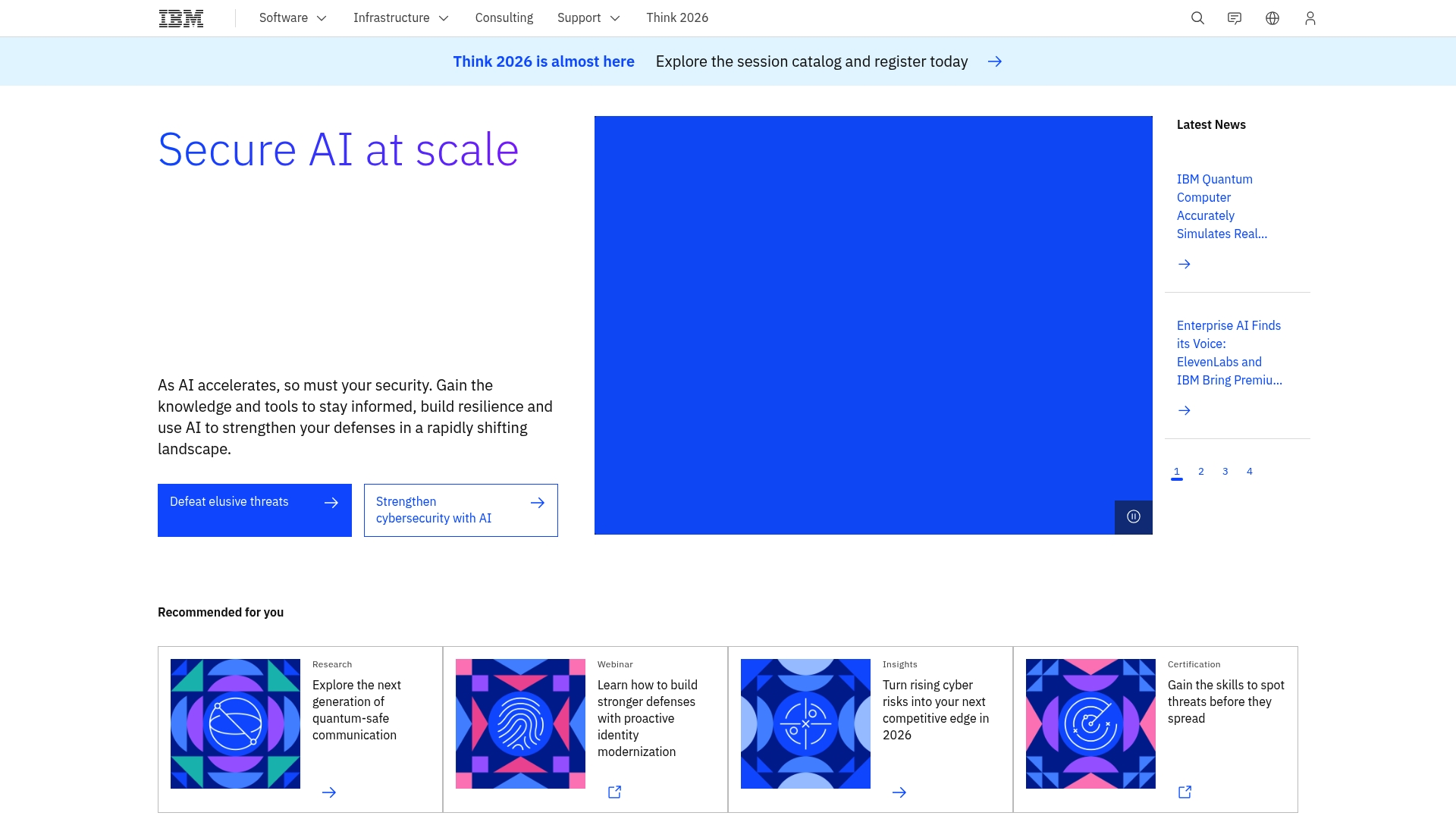
IBM delivers a broad suite of enterprise technologies focused on AI, data management, security, and hybrid cloud for large organizations. The company combines deep research, global partnerships, and training programs to support complex digital transformation efforts.
Core Features
IBM’s core capabilities include AI productivity tools and applications, data management and governance solutions, and security and resilience frameworks aimed at enterprise needs. The platform also covers hybrid infrastructure management, AI model development and deployment services, analytics for data-driven decisions, and professional training and certification programs.
Pros
- Wide range of advanced technology solutions: IBM offers many enterprise-grade products that address AI, cloud, security, and data challenges across large organizations.
- Strong industry partnerships: Collaborations with organizations like the US Open, Pfizer, UFC, and Ferrari bring practical expertise and high-profile deployment experience.
- Focus on research and innovation: IBM invests in AI research, quantum computing, and security to keep enterprise offerings forward looking and technically robust.
- Comprehensive training programs: Professional certifications and training help internal teams build skills to operate and maintain complex deployments.
- Global presence and reputation: A worldwide footprint supports multinational rollouts and provides access to large partner and service ecosystems.
Cons
- Complex and vast product ecosystem: The breadth of offerings can be overwhelming for new users and requires careful product selection and governance.
- Pricing can be high for smaller organizations: Costs scale with enterprise features and may put adoption out of reach for many small and mid-sized teams.
- Implementation and integration demands: Deploying and integrating IBM solutions often requires significant time, specialized staff, and external consulting resources.
Who It’s For
IBM is designed for large enterprises and organizations that need integrated solutions for AI, cybersecurity, data governance, and hybrid cloud operations. Teams with existing enterprise IT budgets and access to technical implementation resources will gain the most value.
Unique Value Proposition
IBM combines enterprise research, industry partnerships, and end-to-end offerings from infrastructure to AI models and training. That combination enables organizations to pursue ambitious digital transformation with vendor-backed expertise and global support.
Real World Use Case
IBM supported the US Open by analyzing large data sets to improve fan engagement while helping Pfizer scale SAP workloads to enhance operational efficiency. These examples show IBM’s ability to handle high-volume analytics and mission critical enterprise workloads.
Pricing
Pricing varies by product and service, with promotions such as up to 30 percent off select products available until April 15, 2026. Custom quotes are typical for enterprise engagements and subscriptions.
Website: https://ibm.com
Cloudera Data Platform (CDP)
At a Glance
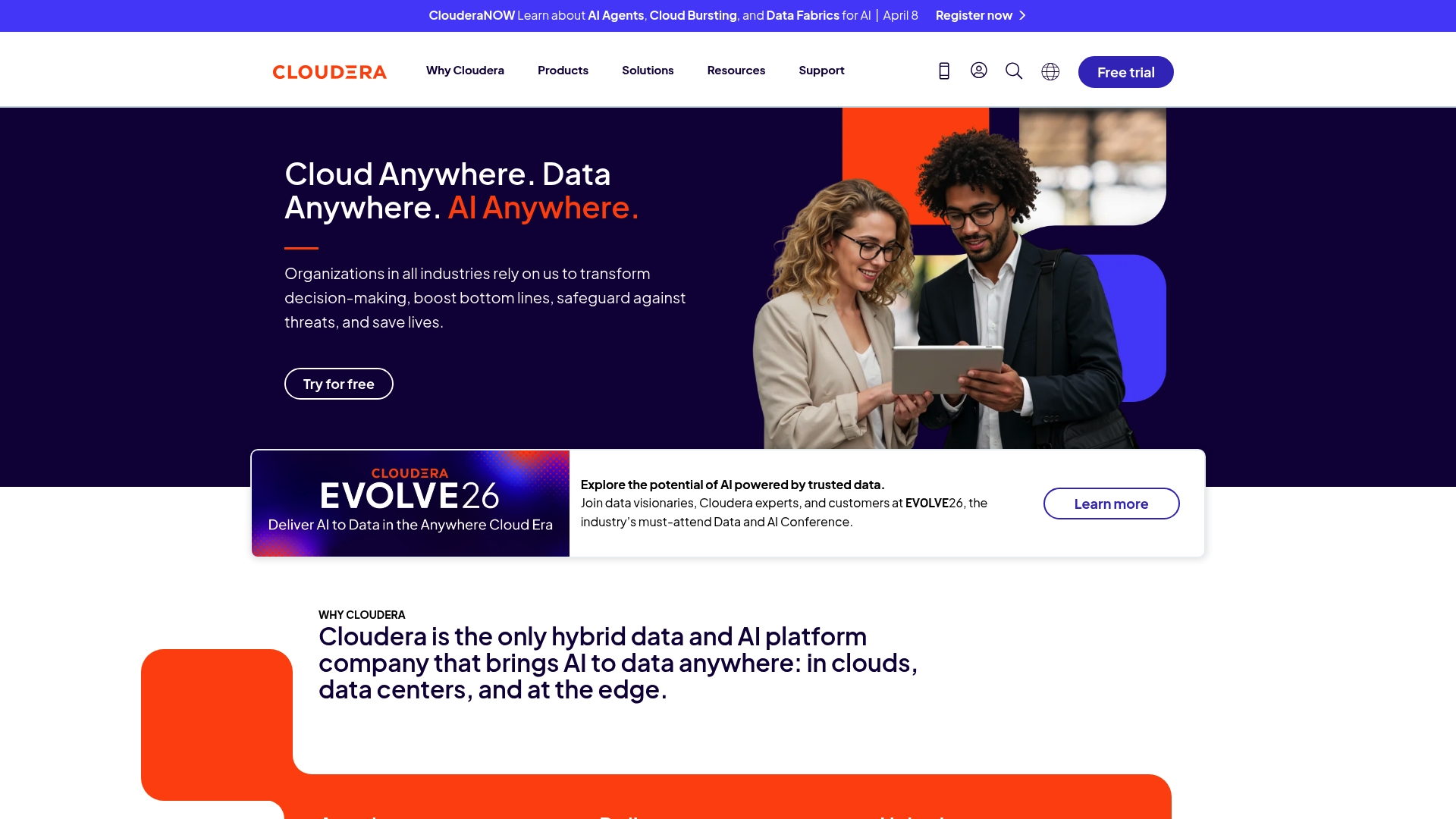
Cloudera Data Platform (CDP) is a unified data and AI platform designed to help organizations analyze and manage data across cloud, on premises, and edge environments. It targets enterprises that need scalable governance, analytics, and machine learning at scale.
Core Features
CDP combines a Unified Data Fabric for security and governance with an Open Data Lakehouse architecture powered by Apache Iceberg. The platform supports data engineering, data warehousing, machine learning, analytics, and real time processing across hybrid and multi cloud environments.
Powerful. Comprehensive.
Pros
-
Flexible deployment options: CDP supports cloud, on premises, and edge environments so you can place workloads where it makes the most sense for latency and compliance.
-
Robust governance and security: The Unified Data Fabric centralizes policies and access controls to help meet regulatory and internal compliance requirements.
-
Scalable architecture: CDP scales to enterprise data volumes and high concurrency, making it suitable for large organizations with heavy processing needs.
-
Broad tool and AI support: The platform integrates with a wide range of data tools and AI workflows to accelerate model building and deployment.
-
Industry recognition: CDP is recognized as a leader in data fabric platforms, reflecting its feature breadth and enterprise adoption.
Cons
-
Complex setup and management: The platform requires careful configuration and ongoing administration, which can slow time to value for new users.
-
High enterprise cost: Large scale deployments require significant investment, which can be prohibitive for smaller organizations or tight budgets.
-
Steep technical requirements: Realizing the platform’s full capabilities requires deep technical expertise in data engineering, security, and cloud operations.
Who It’s For
CDP is best for enterprises that need a unified, scalable data and AI platform across hybrid and multi cloud environments. Organizations with strict governance, security, and compliance demands will benefit most from CDP’s centralized controls and deployment flexibility.
Unique Value Proposition
CDP’s strength lies in combining governance and open lakehouse architecture so enterprises can both secure and innovate on the same platform. That combination helps teams run analytics and deploy AI models without fragmenting data into separate silos.
Real World Use Case
A global financial institution uses CDP to unify data infrastructure, enabling real time fraud detection, customer analytics, and automation of regulatory compliance workflows. The platform centralizes policies while delivering low latency analytics across regions.
Pricing
Pricing varies by deployment size and configuration. For an accurate quote, contact Cloudera sales to discuss your environment, data volumes, and support requirements.
Website: https://cloudera.com
Comprehensive Overview of Health and Data Platforms
The table below compares discreet health and data platforms, providing a clear summary of their key features, benefits, limitations, and targeted audiences to facilitate an informed decision-making process.
| Platform Name | Key Features | Pros | Cons | Target Audience |
|---|---|---|---|---|
| Chameleon Healthcare | Telehealth combining primary, urgent, and concierge care with 24/7 access and unlimited visits. | Accessible care anytime; no insurance required; flexible group support. | Limited to non-emergency issues; variable pricing availability. | Individuals, families, and small businesses needing virtual healthcare. |
| InterSystems IRIS | Unified engine supporting SQL, NoSQL, transactions and analytics with AI integration. | High performance and AI integration; scalable deployment options. | Complex configuration; premium pricing observed. | Enterprise teams managing data analytics and transactions. |
| Microsoft Azure | Comprehensive cloud services, including compute, AI, and global infrastructure. | Extensive service catalog; enterprise-grade security; Microsoft ecosystem integration. | Complexity for newcomers; pricing model complexity. | Startups and enterprises in need of scalable, secure cloud platforms. |
| Oracle Cloud Infrastructure | AI training focus, multicloud support with private on-premises options through Cloud@Customer. | Multicloud flexibility; enterprise-grade security; optimized for AI projects. | High technical demands; complex pricing structure. | Enterprises and tech firms managing private and multicloud environments. |
| Amazon Web Services (AWS) | Extensive service portfolio with 240+ options and global availability zones. | Flexible pricing; beginner-friendly entry; diverse feature set. | Steep learning curve for service breadth; specialized knowledge required. | Businesses needing a robust cloud platform for global scale. |
| SAP Business AI | Embedded AI within ERP solutions for finance, supply chain, and HR processes. | Tight system integration; supports transformative enterprises; global trust. | Complex implementation; dependency on cloud infrastructure. | Large organizations needing process-embedded AI functionalities. |
| IBM | AI, data management, and security solutions within hybrid cloud ecosystems. | Industry partnerships; strong research focus; comprehensive training programs. | High operational cost for small teams; complex product selection ecosystem. | Enterprises requiring advanced AI and hybrid cloud operations. |
Discover a Healthcare Alternative That Simplifies Your Medical Needs
If you are exploring alternatives to high complexity platforms like Intersystems IRIS to manage healthcare solutions, consider how Chameleon Healthcare addresses the common challenges of traditional care models. Many users seek fast, affordable access to licensed providers without insurance hassles or confusing pricing. Chameleon Healthcare combines urgent care, primary care, and concierge service into one virtual platform with clear upfront fees and same-day access from your phone or computer.
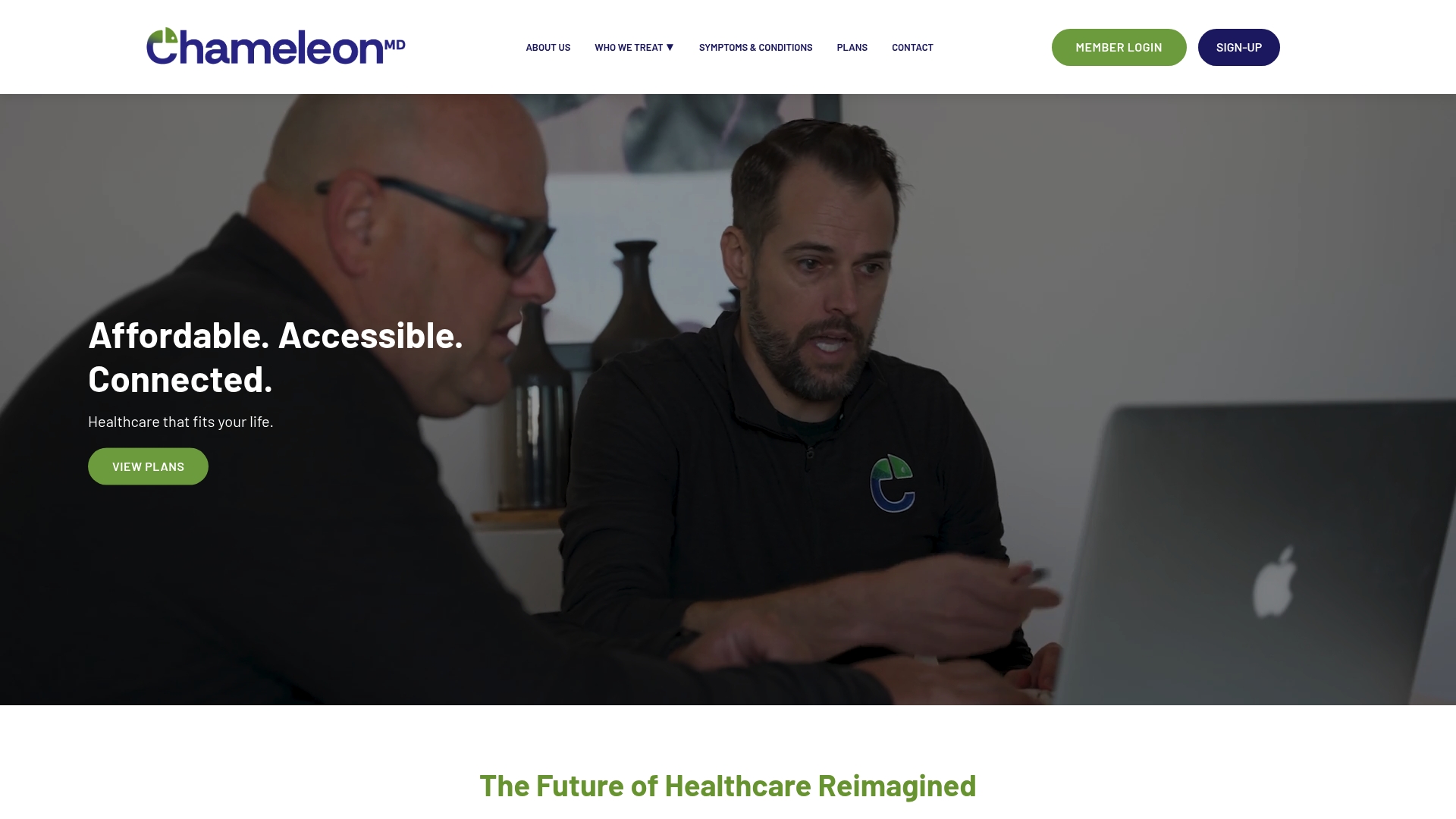
Experience a model designed for real life where you avoid insurance complexity and waiting rooms. Take control of your healthcare needs now by visiting Chameleon Healthcare to learn how easy accessing care can be. Don’t wait to get the transparent and accessible care you deserve.
Frequently Asked Questions
What are the features to consider when evaluating Intersystems.com alternatives?
Look for alternatives that offer strong data integration, real-time analytics, and support for both SQL and NoSQL databases. Evaluate options based on scalability, performance, ease of use, and available support resources to ensure they meet your organizational needs.
How can I assess the pricing models of Intersystems.com alternatives?
Investigate the pricing structure for alternatives by looking for transparent costs based on deployment size, licensing options, and support levels. Create a cost comparison table to visualize potential expenses over a year, which will help you make an informed decision.
What steps can I take to migrate from Intersystems.com to an alternative platform?
Start by analyzing your current data architecture and identifying key components to migrate. Develop a detailed migration plan that includes timelines and testing phases to ensure minimal service disruption during the transition.
How do I ensure data security when switching from Intersystems.com to another platform?
Prioritize alternatives that offer robust security features, such as encryption, access control, and compliance certifications. Conduct a thorough risk assessment before and after migration to maintain data integrity and protect sensitive information.
What kinds of support should I expect from Intersystems.com alternatives?
Look for platforms that provide comprehensive customer support, including technical assistance, user documentation, and training resources. Opt for solutions that offer a dedicated support team and community forums for prompt resolution of issues.