

Yes. Licensed telehealth providers can prescribe antibiotics when your symptoms match a condition that’s safe to diagnose remotely, like a straightforward UTI or strep throat. Expect a video or phone evaluation, possibly some questions about your symptom timeline, and an e-prescription sent straight to your pharmacy if antibiotics are the right call. The catch: state licensing rules and stewardship guidelines mean not every infection qualifies, and some situations still need an in-person exam or lab test first.
TL;DR:
- Telehealth providers can prescribe antibiotics for straightforward infections like uncomplicated UTIs and strep throat when symptoms are clear and diagnostics are feasible remotely.
- Certain conditions, including ear infections in children, pneumonia, and sepsis, still require in-person exams due to the need for physical assessments or imaging.
- Prescriptions are typically sent instantly to your pharmacy after a virtual visit, with local pharmacies dispensing within one or two hours, but some cases may require follow-up testing or in-person evaluation.
- Proper preparation, such as documenting symptoms and taking clear photos, improves diagnostic accuracy and ensures appropriate treatment during a telehealth visit.
- Telemedicine’s antibiotic prescribing practices vary depending on clinical guidelines and platform safeguards, with some risk of higher prescription rates for certain infections.
Table of Contents
- Which Common Infections Can Telehealth Treat?
- When You Need an In-Person Exam Instead
- How Antibiotic E-Prescriptions Reach Your Pharmacy
- How to Prepare for Your Telehealth Visit
- What the Evidence Says About Prescribing Safety
- Balancing Fast Access With Responsible Prescribing
- Get Antibiotics Through Chameleon Healthcare When You Need Them
- Sources
- FAQ
Which Common Infections Can Telehealth Treat?
Telehealth antibiotics work best for infections a provider can confidently diagnose through conversation, visual exam, and your reported symptoms, no lab required. That’s a narrower list than you might think, but it covers a lot of everyday misery.
Uncomplicated urinary tract infections in nonpregnant adults are one of the most common reasons people turn to virtual care, since the symptom pattern (burning, urgency, frequency) is usually distinctive enough to treat without a urine culture. UR Medicine’s guidance on virtual urgent care confirms providers can prescribe antibiotics remotely for conditions like this when the clinical picture is clear.
Here’s what typically fits a telehealth visit:
- Uncomplicated UTIs in adults who aren’t pregnant and have classic symptoms
- Suspected strep throat, when your provider can apply validated symptom scoring, though a rapid strep test still may need to happen locally
- Sinusitis, when symptoms have lasted long enough and match bacterial rather than viral patterns
- Some skin infections, when photos and video clearly show the affected area
- Certain STIs and minor dental or wound infections, especially when follow-up testing is arranged
When You Need an In-Person Exam Instead
Some situations are not a fit for a screen, and knowing the difference protects you. If you have trouble breathing, chest pain, a very high fever, or confusion, that’s an emergency room visit, not a video call.
A handful of common conditions almost always require hands-on evaluation:
- Ear infections in young children, since diagnosis depends on looking inside the ear canal
- Suspected pneumonia, which usually needs a stethoscope exam or chest imaging
- Complicated UTIs involving fever, back pain, or recurrent infections
- Suspected sepsis, a medical emergency requiring immediate in-person care
Good telehealth platforms don’t leave you stranded here. They’ll flag the concern and point you toward urgent care, a lab for testing, or an ER, rather than guessing at a prescription. Research on telemedicine’s diagnostic limitations backs this up: remote visits work well for many conditions, but physical exams and bedside tests still matter for others.
Pro Tip: If your symptoms have lasted more than a few days without improvement, or you’re not sure whether you need a test, say so upfront. A good provider would rather order a referral than guess.
How Antibiotic E-Prescriptions Reach Your Pharmacy
Once a provider decides antibiotics are appropriate, the process moves fast. Here’s the typical sequence:
- Video or phone visit where you describe symptoms and show affected areas if relevant
- Diagnosis and treatment decision, sometimes including a delayed prescription if watchful waiting makes sense
- Electronic prescription sent directly to the pharmacy of your choice, local or mail order
- Pickup or delivery, often ready within an hour or two for local pharmacies
Antibiotics aren’t controlled substances, so the prescribing rules are simpler than they’d be for something like a stimulant or opioid. That said, refills usually require a new evaluation rather than an automatic renewal, since ongoing symptoms could signal something the antibiotic isn’t addressing. One detail worth knowing: your provider has to be licensed in the state where you’re physically located during the visit, which is why some telehealth platforms ask for your address before matching you with a clinician.
How to Prepare for Your Telehealth Visit
A little prep work goes a long way toward getting an accurate diagnosis on the first try. Before you log in, gather:
- A symptom timeline: when things started, what’s gotten worse, what’s stayed the same
- Photos of any visible rash, wound, or skin issue, taken in good lighting
- Your current medications and allergies, especially antibiotic allergies
- Recent medical history, including any similar infections in the past
Be ready to show the affected area on camera and describe how it’s progressed day by day. It also helps to ask directly whether testing or a follow-up visit might be needed, since some conditions (like strep) benefit from confirmation even after a virtual assessment.
Pro Tip: Write your symptom timeline down before the call. Trying to remember exact dates on the spot, especially when you’re not feeling well, is harder than it sounds.
What the Evidence Says About Prescribing Safety
Telehealth antibiotic prescriptions carry a real stewardship question worth understanding before your visit. A systematic review and meta-analysis found telemedicine visits were associated with higher antibiotic prescribing rates for both otitis media and pharyngitis compared to in-person visits, though the study’s authors caution that variation across the studies means the finding needs cautious interpretation rather than a blanket verdict on telehealth itself.
Diagnostic uncertainty on a screen can push some providers toward prescribing “just in case.” Platforms with structured decision support and required documentation for atypical prescriptions counter that tendency directly.
The CDC’s stewardship guidance recommends prioritizing live video over phone-only visits, building in clinical decision support tools, and tracking prescribing patterns through audit and feedback. For upper respiratory infections specifically, AAFP guidance reinforces that most cases are viral and don’t need antibiotics at all, regardless of visit format. Ask your provider whether they follow standard clinical guidelines and what your follow-up plan looks like if symptoms don’t improve.
Balancing Fast Access With Responsible Prescribing
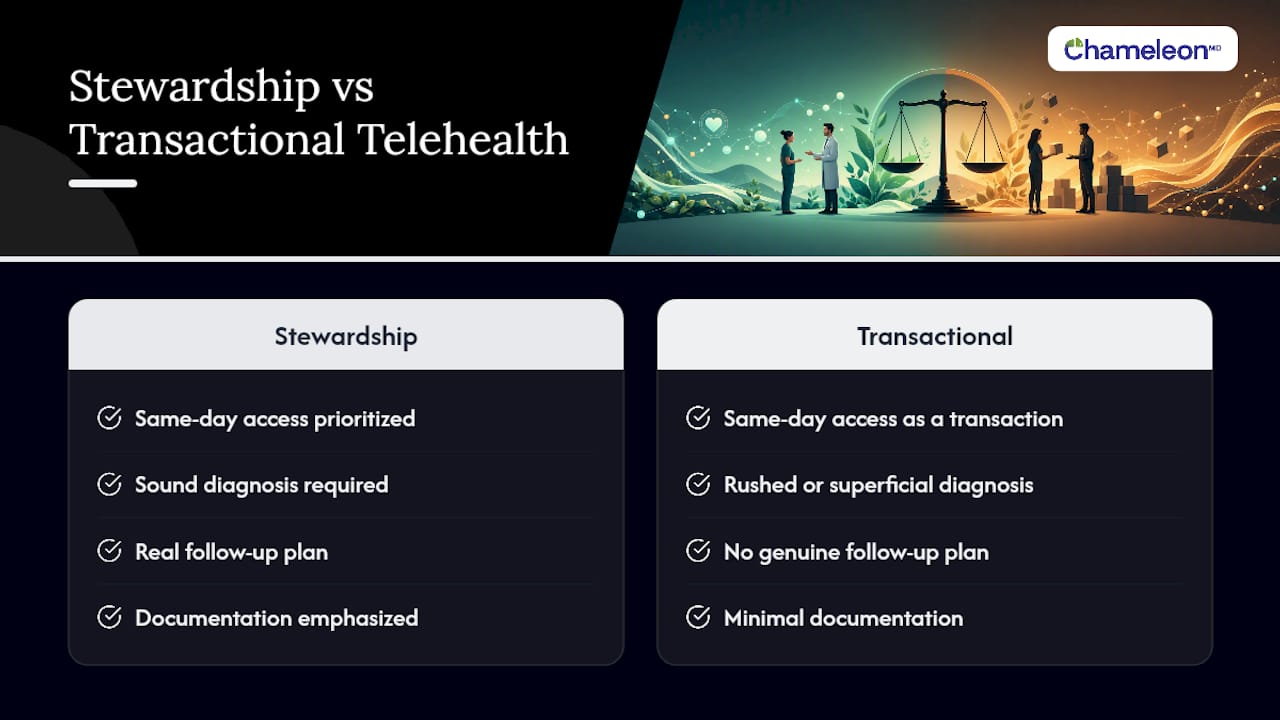
Speed and safety aren’t opposites, but plenty of telehealth critiques treat them that way. The real tension isn’t between fast and careful. It’s between platforms that build stewardship into their workflow and ones that treat every visit as a transaction to close quickly.
Chameleon Healthcare’s approach reflects what the evidence actually supports: same-day access matters to patients dealing with a miserable UTI or a throat that feels like swallowing glass, but that access only means something if the diagnosis is sound and the follow-up plan is real. Documentation, clear guidelines, and a willingness to say “you need a test for this” are what separate stewardship-minded telehealth from prescription vending.
— Vector
Get Antibiotics Through Chameleon Healthcare When You Need Them
Chameleon Healthcare gives you same-day virtual visits with licensed providers, without the insurance paperwork or the waiting room, so a UTI or sinus infection doesn’t have to eat your entire day.

When your symptoms fit the criteria for remote treatment, our providers can send an e-prescription straight to your pharmacy after your visit, and if something needs an in-person test or exam, we’ll tell you plainly rather than guessing. You can pay per visit with the Single Visit option at $55, or join the Single Adult Membership at $25 a month for unlimited virtual visits, a better deal if you or your family tend to need care more than twice a year. Families can also compare the Family Membership at $45 a month. If you’re dealing with a sore throat, sinus pressure, or a suspicious skin issue right now, visit Chameleonhc to see current options and start a visit today.
This article is general information, not a substitute for advice from a qualified doctor. Consult a qualified healthcare professional about your own circumstances before acting on anything here.
Sources
- Antibiotic Stewardship in Outpatient Telemedicine | CDC
- Outpatient antibiotic prescribing for common infections via telemedicine versus face-to-face visits: Systematic review and meta-analysis
- PMC review article on telemedicine diagnostic considerations
- Antibiotics for upper respiratory tract infections | AAFP
- How to Get Antibiotics Quickly | UR Medicine
FAQ
Can You Get Prescribed Antibiotics Over Telehealth?
Yes, licensed telehealth providers can prescribe antibiotics for infections they can safely diagnose remotely, like uncomplicated UTIs or strep throat matching a validated symptom pattern. The provider must be licensed in your state, and some conditions still require an in-person test first.
Is It Possible to Get Antibiotics Without Seeing a Doctor in Person?
Yes, a virtual visit with a licensed provider counts as being evaluated by a doctor, just remotely rather than in an office. You’ll still go through a real diagnostic conversation and, if needed, be referred for in-person testing before any prescription is written.
Can an Online Doctor Prescribe Amoxicillin?
An online doctor can prescribe amoxicillin or other common antibiotics when your symptoms match a condition where remote diagnosis is appropriate, such as certain skin or sinus infections. The specific antibiotic depends on your diagnosis, allergies, and local resistance patterns, which your provider will review during the visit.
How Much Does a Telehealth Antibiotic Visit Cost With Chameleon Healthcare?
A single telehealth visit through Chameleon Healthcare costs $55 with no membership required. Frequent visitors often save money with the Single Adult Membership at $25 a month, which includes unlimited virtual visits.
How Fast Will I Get My Antibiotics After a Telehealth Visit?
Once your provider decides antibiotics are appropriate, the prescription is sent electronically to your chosen pharmacy right after the visit. Most local pharmacies can fill it within an hour or two, while mail-order options typically take longer depending on the pharmacy’s shipping timeline.