

Yes, telehealth can safely evaluate and treat most sinus infections, including e-prescriptions when guideline criteria are met. Your provider will ask about symptom timeline and screen for red flags that need in-person care. Antibiotics only come into play when your symptoms match specific U.S. clinical thresholds, not just because your face hurts and you want relief today.
TL;DR:
- Most sinus infections are viral and do not require antibiotics unless symptoms persist for at least 10 days or worsen after initial improvement.
- Telehealth evaluations rely on symptom history and visual cues, but cannot replace nasal endoscopy or imaging for complicated or recurrent cases.
- Red flags such as vision changes, severe facial swelling, neurological symptoms, or high fever with purulent drainage require immediate in-person care.
- Supportive treatment includes saline irrigation, corticosteroid sprays, pain relievers, and limited decongestants, with antibiotics reserved for specific, guideline-based situations.
- Preparation for virtual visits involves documenting symptom timeline, treatments tried, recent test results, and having a well-lit space and pharmacy info ready.
Table of Contents
- How Telehealth Providers Evaluate Sinus Symptoms Remotely
- When Is Telehealth Appropriate, and What Needs In-Person Care?
- What Treatment Can Telehealth Actually Provide?
- How to Prepare for Your Virtual Sinus Visit
- What Happens After Your Visit?
- Why Guideline-Based Telehealth Matters More Than Speed
- Getting Same-Day Sinus Care Through Chameleonhc
- Sources
- FAQ
How Telehealth Providers Evaluate Sinus Symptoms Remotely
A virtual sinus infection consultation leans heavily on what you tell your provider, because that history carries most of the diagnostic weight. Clinicians are trained to listen for patterns that separate a run-of-the-mill cold from something that might need medication, and video adds a useful second layer on top of that conversation.
During your visit, expect questions built around the same criteria used in person:
- When your symptoms started and whether they’ve lasted 10 days or more without improvement
- Whether you felt better, then suddenly got worse again (clinicians call this “double worsening”)
- Fever history, especially anything reaching 102°F or higher
- Whether your nasal drainage is thick, colored, or has an odor
- Facial pressure location, especially over your cheeks, forehead, or teeth
Your camera can show your provider real things: facial swelling, visible nasal drainage, redness around your eyes, or the general look of someone who is clearly unwell versus someone managing a mild cold. If you have a thermometer at home, reporting your highest reading helps with triage almost as much as an in-office check would.
What video cannot do is replace nasal endoscopy, sinus cultures, or a CT scan. Those tools stay reserved for chronic cases, treatment failures, or suspected complications, not first-time sinus complaints. For the vast majority of people asking whether telehealth for sinus symptoms works, the honest answer is that a thorough history plus a visual check covers what matters most for a first evaluation.
When Is Telehealth Appropriate, and What Needs In-Person Care?
Telehealth fits well for uncomplicated sinus symptoms in an otherwise healthy adult. It’s the wrong choice when your symptoms suggest a complication that needs hands-on evaluation or imaging.
Your provider is watching for a specific set of red flags during every visit:
- Vision changes, double vision, or eye movement problems
- Severe or worsening headache with confusion, stiff neck, or neurological symptoms
- Swelling around one eye, especially if the eye looks pushed forward or won’t move normally
- Severe swelling on one side of the face
- High fever with purulent drainage that isn’t improving despite days of self-care
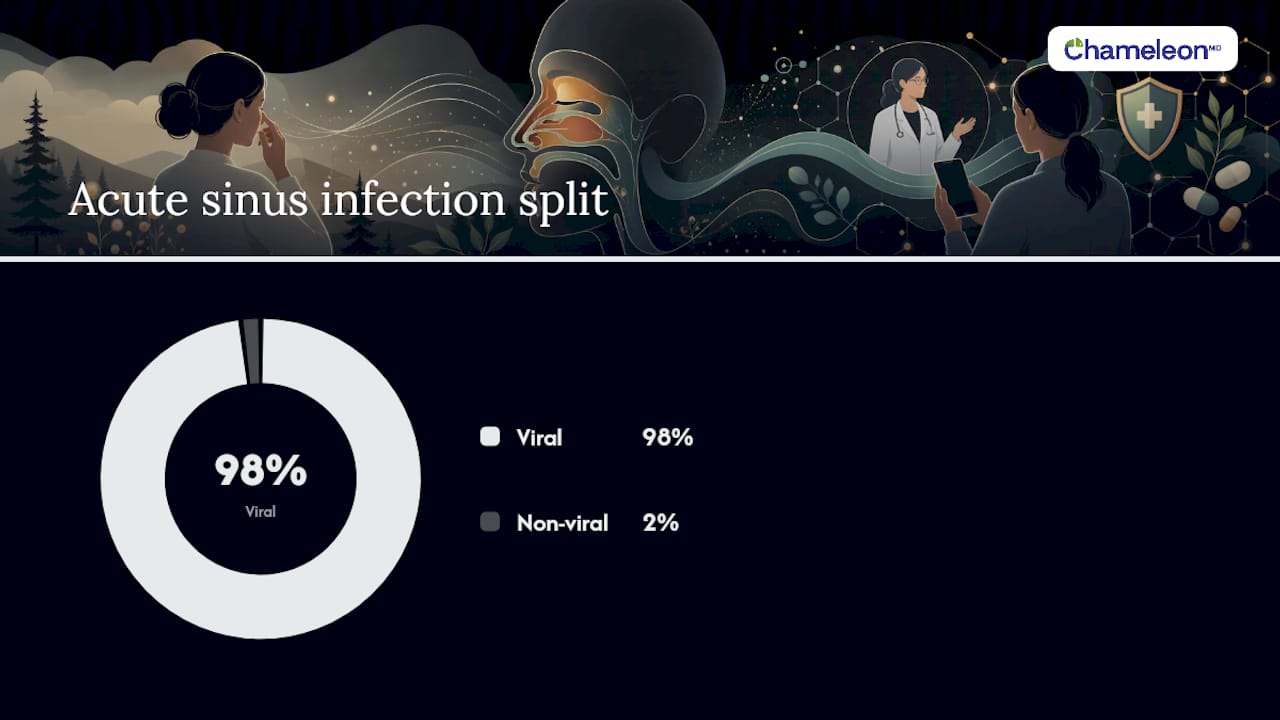
Around 98% of acute sinus infections are viral, according to AHRQ’s antibiotic stewardship guidance, meaning most people never needed a same-day trip to urgent care in the first place. But that other small percentage matters, which is why screening happens at every visit, not just once.
Recurrent or chronic sinus disease, immunocompromised patients, and anyone whose facial pain seems connected to a bad tooth are also better served with an in-person exam. A responsible telehealth provider will tell you directly when your case needs eyes-on-hands assessment and will point you toward emergency or urgent in-person care rather than trying to manage something remotely that shouldn’t be managed remotely.
What Treatment Can Telehealth Actually Provide?
Because most sinus infections are viral, most virtual visits end with a symptom-management plan rather than a prescription. That’s not your provider being cautious for no reason. It’s the guideline-backed standard of care.
Supportive treatment usually includes:
- Saline nasal irrigation, done a few times a day
- Intranasal corticosteroid sprays to reduce swelling
- Over-the-counter pain relievers for facial pressure and headache
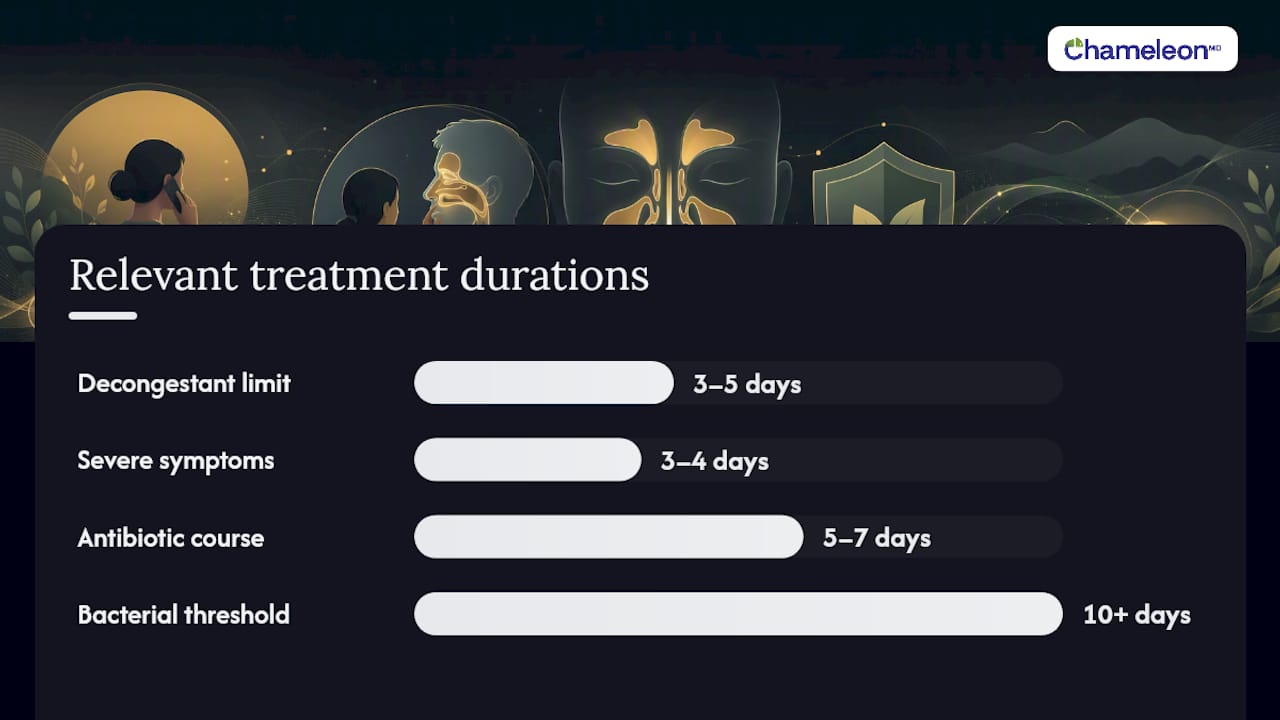
- Short-term decongestant use, limited to 3 to 5 days to avoid rebound congestion
Antibiotics only make clinical sense under specific conditions. The CDC’s guidance on diagnosing and treating acute bacterial rhinosinusitis sets the threshold at symptoms persisting 10 days or more without improvement, symptoms that improve and then worsen again, or severe symptoms (fever of 102°F or higher plus facial pain and purulent drainage) lasting 3 to 4 days straight.
When those criteria are met, AAO-HNS guidelines point to amoxicillin, with or without clavulanate, as first-line therapy for most adults, typically for 5 to 7 days. If you have a penicillin allergy, your provider has alternative options ready to discuss. E-prescribing sends your medication straight to your pharmacy, often before your video call even ends.
Pro Tip: Ask your provider to explain exactly which criteria justified (or ruled out) an antibiotic in your case. It’s a fast way to understand your own recovery timeline and spot early if something changes.
How to Prepare for Your Virtual Sinus Visit
A little prep turns a rushed call into a genuinely useful one. Before you log on for online sinus infection treatment, gather these details:
- Write down when your symptoms started and how they’ve changed day by day.
- Note any treatments you’ve already tried, including over-the-counter medications and doses.
- Record your highest measured temperature, if you have a thermometer at home.
- List chronic conditions, current medications, and any antibiotics you’ve taken recently.
- Find a quiet, well-lit space so your provider can see your face and nasal area clearly on camera.
- Charge your phone or laptop and check your camera angle before the call starts.
- Have your pharmacy name and address ready in case a prescription is needed.
- Note any recent COVID-19 or flu test results, since overlapping symptoms are common.
That last step matters more than people expect. Sinus infection telehealth visits often untangle overlapping respiratory illnesses, and a recent test result can save several minutes of back-and-forth questioning.
What Happens After Your Visit?
Most viral sinus infections improve within 7 to 10 days with supportive care alone. If you’re not feeling better by day 10, or if your symptoms improve and then take a sharp turn for the worse, that’s your cue to check back in, according to Mayo Clinic’s guidance on acute sinusitis.
Good remote care for sinus infection includes a follow-up plan, not just a one-time chat. Depending on your case, that might mean:
- A scheduled check-in within 48 to 72 hours if your symptoms were borderline at the first visit
- A referral for imaging or an ENT evaluation if symptoms drag on or keep recurring
- Clear instructions to seek emergency care immediately if vision changes, severe facial swelling, or neurological symptoms appear
Sinus infections rarely need a hospital visit, but knowing your exit ramps in advance takes the guesswork out of a bad week.
Why Guideline-Based Telehealth Matters More Than Speed
Acute rhinosinusitis drives roughly 30 million outpatient visits a year in the U.S., and it’s one of the most common reasons doctors overprescribe antibiotics for something the body would clear on its own. That’s the real tension in sinus care: patients want relief fast, and antibiotics feel like the fast answer even when they aren’t the right one.
The clinicians who do this well aren’t the ones handing out prescriptions on request. They’re the ones who ask the right questions, apply the same 10 day and double worsening thresholds you’d get in an exam room, and set a clear follow-up window so watchful waiting doesn’t quietly turn into a missed complication. Chameleon Healthcare’s same-day, transparent-pricing model works because it’s built around that discipline, not around speed for its own sake.
— Vector
Getting Same-Day Sinus Care Through Chameleonhc
You can get in front of a licensed provider with no insurance paperwork slowing things down. A sinus visit covers a full symptom review, red-flag screening, a personalized symptomatic care plan, and an e-prescription sent to your pharmacy if you meet the guideline criteria for antibiotics.

You can book a single visit if you just need this one issue handled, or join a membership if sinus infections, sore throats, and other common conditions tend to recur. Either way, you skip the waiting room entirely. Browse the telehealth plans and visit options to see current pricing and pick the path that fits how often you actually need care, then book your visit and get a treatment plan the same day.
This article is general information, not a substitute for advice from a qualified doctor. Consult a qualified healthcare professional about your own circumstances before acting on anything here.
Sources
- CDC guidance on diagnosing and treating acute bacterial rhinosinusitis
- AHRQ sinusitis antibiotic stewardship one-pager
- Executive summary: clinical practice guideline on adult sinusitis (AAO-HNS)
- Mayo Clinic — Acute sinusitis: diagnosis and treatment
FAQ
Can Telehealth Diagnose Sinusitis Accurately?
Telehealth can diagnose most uncomplicated sinus infections through detailed symptom history and visual assessment, though it cannot perform endoscopy, cultures, or CT scans reserved for chronic or complicated cases.
How Long Should Sinus Symptoms Last Before I Need Antibiotics?
Guidelines point to antibiotics only after symptoms persist 10 days or more without improvement, worsen after initially improving, or stay severe with high fever and purulent drainage for 3 to 4 days.
Is a Sinus Infection Usually Viral or Bacterial?
Roughly 98% of acute sinus infections are viral, which is why most telehealth visits end with symptomatic care recommendations rather than a prescription.
What Symptoms Mean I Should Skip Telehealth and Go to the ER?
Vision changes, severe swelling around one eye, confusion, stiff neck, or severe one-sided facial swelling all need immediate in-person emergency evaluation, not a virtual visit.
Can Chameleonhc Prescribe Antibiotics for a Sinus Infection?
Providers can e-prescribe antibiotics through a virtual visit when your symptoms meet guideline criteria, sending the prescription directly to your pharmacy the same day.