

Telehealth works well for most cases of uncomplicated acute bronchitis. Providers can review your symptoms, rule out red flags, and build a treatment plan without an office visit. What virtual care can’t do is a hands-on lung exam, so if you have a high fever, trouble breathing, or a cough that just won’t quit, in-person care is the safer next move.
TL;DR:
- Telehealth relies on detailed symptom descriptions and visual checks, but cannot replace hands-on lung exams for severe breathing issues.
- Most bronchitis cases managed remotely are viral, and providers follow guidelines to avoid unnecessary antibiotics, reducing antibiotic overuse.
- Urgent in-person care is required if symptoms worsen significantly, such as high fever, blood in sputum, or severe breathing difficulty, especially in high-risk groups.
- At-home management focuses on rest, hydration, humidified air, and OTC remedies, with follow-up needed if there is no improvement by day 10.
- Same-day virtual visits offer transparent pricing, quick access, and clear next steps, but require patient preparation with symptom timelines and red flag awareness.
Table of Contents
- How telehealth providers evaluate and manage bronchitis remotely
- What to expect in a telehealth visit: booking, steps, timing, and cost
- When telehealth isn’t enough: red flags that need urgent or in-person care
- At-home symptom management telehealth clinicians recommend
- Why choose a telehealth-first provider for bronchitis care
- Our take: what actually matters when you have bronchitis
- Book a same-day virtual visit for your bronchitis symptoms
- Sources
How telehealth providers evaluate and manage bronchitis remotely
A virtual visit isn’t a shortcut version of an office exam. It’s a different way of gathering the same clinical information, and the questions a provider asks are just as targeted as the ones you’d get sitting in an exam room.
During your check in, expect a provider to ask about:
- When your cough started and how it’s changed
- Whether you’ve had a fever, and how high
- The color and amount of any sputum you’re coughing up
- Any shortness of breath, wheezing, or chest tightness
- Underlying conditions like asthma, COPD, or a weakened immune system
Providers also do a limited visual check. They’ll watch you breathe on camera, listen to how you describe your cough, and sometimes ask you to take a few deep breaths so they can hear the sound and rhythm. If something about your breathing looks or sounds off, that’s the moment a provider will tell you to seek an in-person exam instead of pushing forward remotely.
This is also where antibiotic stewardship comes in. CHEST’s expert panel advises against routine antibiotics for uncomplicated bronchitis in adults, because most cases are viral and antibiotics won’t speed recovery. Telehealth providers follow that same standard, and the results back it up: one text-based primary care study found that most telehealth-managed bronchitis cases avoided unnecessary antibiotics, demonstrating strong stewardship.
Pro Tip: Write down your symptom timeline before your visit, day by day. It helps your provider spot patterns faster and cuts down on back-and-forth questions.
What to expect in a telehealth visit: booking, steps, timing, and cost
Most telehealth respiratory care starts with same-day booking. You typically don’t need an appointment made days in advance. Here’s the general flow once you log in:
- Check in and fill out a symptom form covering your cough duration, fever history, and any breathing concerns.
- Connect with a provider by video or phone, usually within minutes to an hour depending on demand.
- Answer follow-up questions and, if needed, show your breathing on camera.
- Get a treatment plan on the spot, including guidance on symptom relief and whether medication is appropriate.
- Receive an e-prescription sent directly to your pharmacy, often within minutes of the visit ending.
Most visits typically last a brief period, often around 10 to 20 minutes. Pricing varies by model: a single-visit fee, a monthly membership covering unlimited visits, or an insurance copay if your plan covers virtual care. Single visits often run in the range of a modest flat fee, while memberships can lower the cost per visit if you expect to need to care more than once or twice a year.
Before you log on, have these ready:
- A photo ID
- A list of current medications and allergies
- Any recent vitals you’ve taken (temperature, oxygen level if you have a pulse oximeter)
When telehealth isn’t enough: red flags that need urgent or in-person care
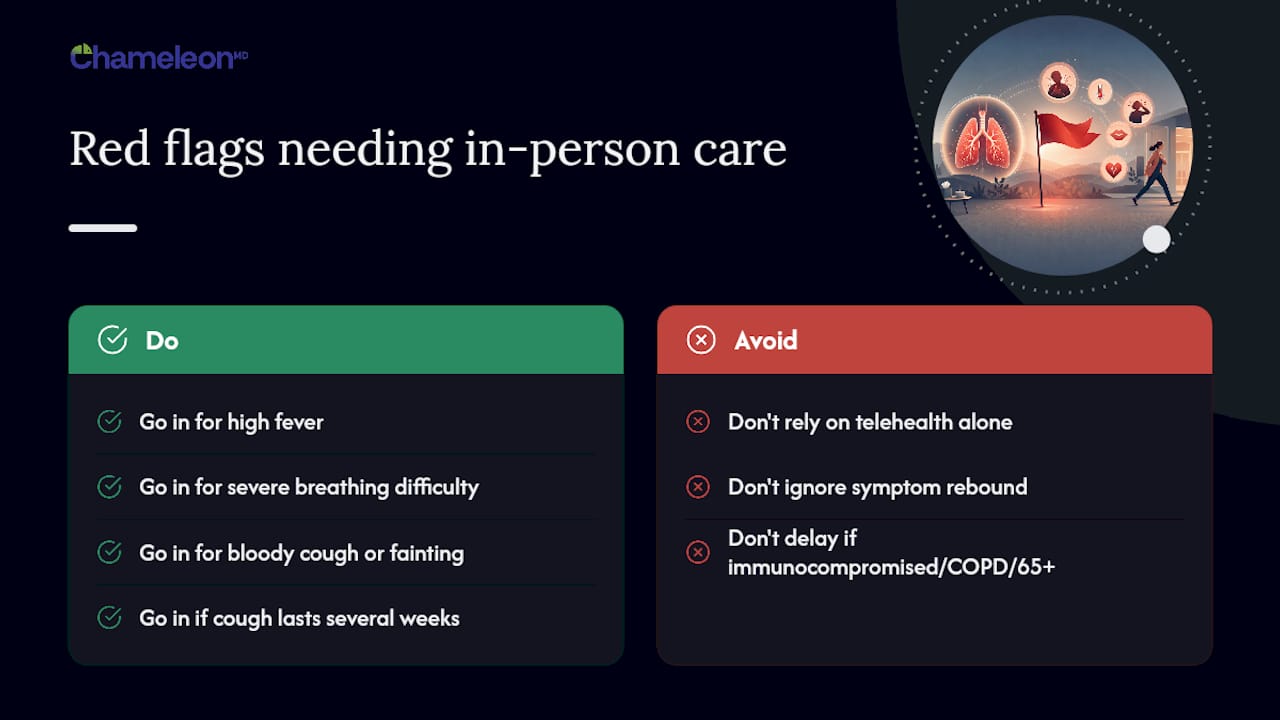
Certain symptoms mean it’s time to stop the video call and get seen in person. According to CDC guidance on acute bronchitis, you should seek immediate care for serious or worsening symptoms such as high fever, severe breathing difficulties, coughing up blood, fainting, or a cough that does not improve after several weeks.
That last point catches a lot of people off guard. Bronchitis usually follows a clear pattern of gradual improvement, and a symptom rebound is often the clearest sign something else is going on, like pneumonia. If you’re immunocompromised, have COPD, or you’re over 65, your threshold for going in person should be lower than someone otherwise healthy. When a telehealth provider sees any of these red flags, they’ll typically refer you for a chest X-ray or direct you to urgent care or the emergency department, echoing the same escalation path Mayo Clinic recommends when pneumonia is a concern.
At-home symptom management telehealth clinicians recommend
Most bronchitis recovery happens at home, and the goal is comfort, not curing an infection that will resolve on its own. CDC data shows most people feel better within one to two weeks, though the cough itself can linger for several weeks.
What actually helps:
- Rest and staying well hydrated
- Humidified air to loosen mucus and ease coughing
- Acetaminophen or ibuprofen for fever and body aches
- Honey for cough relief, but only for children older than one year
- Dextromethorphan or guaifenesin for symptom relief, with modest evidence behind each
If you have a history of asthma or you’re wheezing, a provider may consider an inhaler or bronchodilator, but that’s a targeted call, not a default treatment. Evidence reviews note many common bronchitis medications, including antibiotics and corticosteroids, don’t move the needle for most patients.
Pro Tip: If your cough hasn’t improved at all by day 10, that’s the natural checkpoint to follow up, not day 21.
Why choose a telehealth-first provider for bronchitis care
Some telehealth providers build their models around same-day access and pricing you can see before you book, which matters when you’re deciding between “wait it out” and “get checked.” No insurance card required, no waiting room, and no guessing what the visit will cost.
That structure lines up with the clinical approach this article has walked through:
- Same-day virtual visits with transparent, upfront pricing
- Membership options for unlimited visits or a single-visit fee if you only need care occasionally
- Providers who follow the same antibiotic stewardship standards outlined by CHEST’s guidance
- Clear next steps when your symptoms need more than a virtual exam can offer
If you’re also managing wheeze or a history of asthma alongside your cough, Chameleonhc’s asthma telehealth guide walks through how remote breathing assessments work in more detail.
Care that’s fast and clearly priced isn’t a lesser version of a doctor’s visit. It’s what most bronchitis cases actually need: a provider who can rule out the serious stuff and get you a plan the same day.
Our take: what actually matters when you have bronchitis
The conventional advice on bronchitis has always leaned too hard on urgency. People assume a cough means they need antibiotics fast, or that skipping the doctor’s office means skipping real care. Neither is true. The research is consistent: most cases resolve on their own, and antibiotics rarely help. What actually matters is knowing your red flags cold and getting a provider who won’t reach for a prescription pad out of habit.
Where telehealth earns its place isn’t in replacing hands-on medicine. It’s in removing the friction between “I feel bad” and “someone qualified looked at this.” A same-day virtual visit that correctly tells you to rest and hydrate is doing exactly what a same-day office visit would do, minus the waiting room and the copay uncertainty.
If there’s one thing worth prioritizing, it’s preparation. Know your symptom timeline, know your red flags, and know when day 10 without improvement means it’s time to follow up. That’s the difference between a smooth virtual visit and one that leaves you with more questions than answers.
— Vector
Book a same-day virtual visit for your bronchitis symptoms
Telehealth services can give you a faster, clearer path than sitting in a waiting room wondering what your visit will cost. You may get same-day access to a licensed provider, upfront pricing before you book, and no insurance card required to get seen.

When you log in, you’ll go through a quick symptom check, connect with a provider by video, and walk away with a treatment plan and, if appropriate, a prescription sent straight to your pharmacy. If you’re weighing a single visit against ongoing coverage, explore Chameleonhc’s plans to see membership pricing versus one-time visit fees side by side. Not sure if bronchitis is even what you’re dealing with? Chameleonhc’s guide on which symptoms to consult online can help you decide before you book. Either way, the next step is simple: log in, describe what you’re feeling, and get a same-day answer.
This article is general information, not a substitute for advice from a qualified doctor. Consult a qualified healthcare professional about your own circumstances before acting on anything here.
Sources
- Acute bronchitis — CDC
- CHEST expert panel report on acute cough due to acute bronchitis — PMC
- Reducing unnecessary antibiotic treatment for acute bronchitis using real-time, text-based primary care — Telehealth and Medicine Today
- Bronchitis — Diagnosis and treatment — Mayo Clinic